
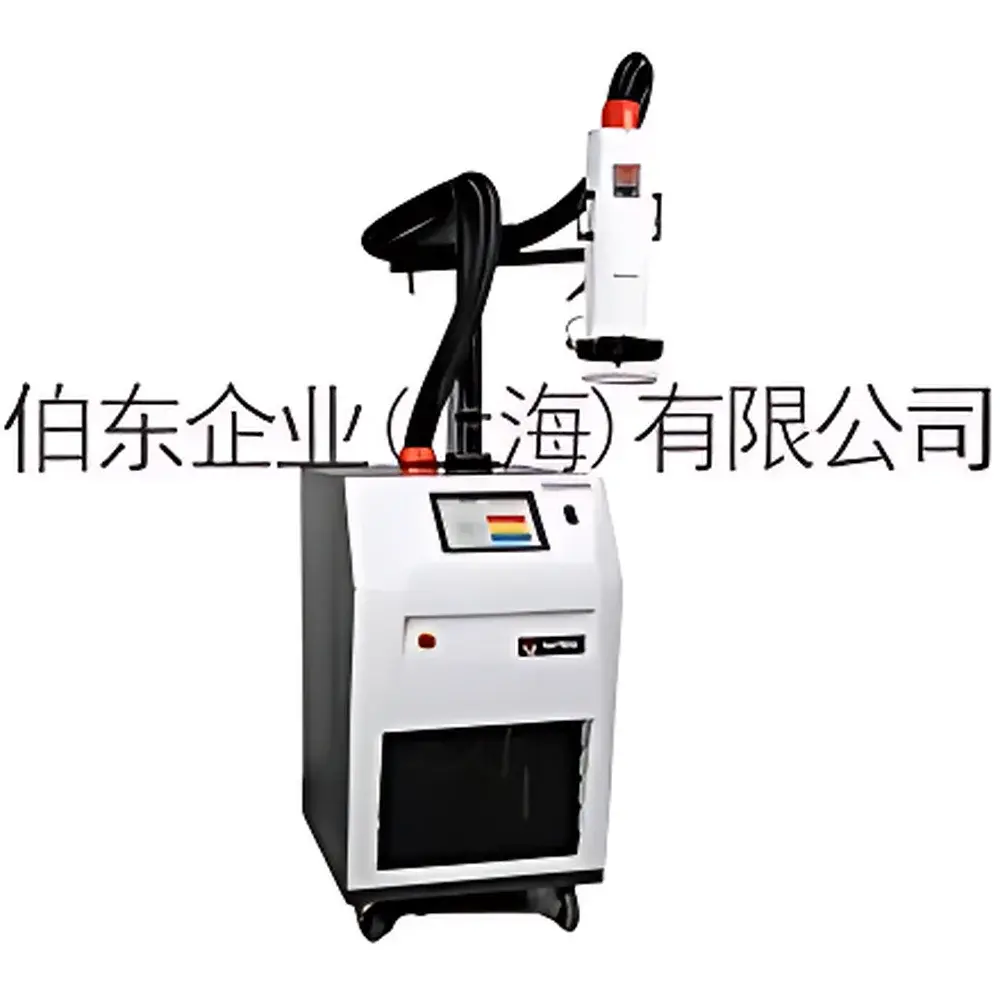
inTEST Temptronic ATS-730 High-Speed Thermal Shock Test System
| Brand | inTEST Temptronic |
|---|---|
| Origin | USA |
| Model | ATS-730 |
| Temperature Range | -85°C to +225°C |
| Transition Rate | <10 s from -55°C to +125°C and vice versa |
| Airflow Capacity | 4–18 scfm (1.8–8.5 L/s) |
| Temperature Resolution | ±1°C |
| Temperature Accuracy | ±1°C (NIST-traceable calibration) |
| Control Interface | Touchscreen HMI |
| Remote Interfaces | IEEE-488 (GPIB), RS-232 |
| Sensor Compatibility | Type T or K thermocouples (DUT mode) |
| Compliance | CE-marked, CFC-free |
| Optional Configurations | ATS-730-M robotic arm, ATS-730-H extended-height arm, ATS-730-T test chamber variant |
Overview
The inTEST Temptronic ATS-730 is a high-speed, non-cryogenic thermal shock test system engineered for precision transient thermal characterization of electronic components, semiconductor packages, MEMS devices, and optoelectronic assemblies. Unlike conventional thermal chambers reliant on liquid nitrogen or CO₂ cooling, the ATS-730 employs a proprietary forced-air thermoelectric and compressor-based dual-zone architecture to achieve rapid temperature transitions—reaching <10 seconds between -55°C and +125°C—without phase-change coolants. This eliminates operational hazards, infrastructure dependencies (e.g., LN₂ supply lines or dewar storage), and condensation risks during low-temperature exposure. The system operates across a full range of -85°C to +225°C, supporting both air-mode (ambient airflow control) and DUT-mode (direct device-under-test temperature feedback), enabling closed-loop thermal profiling aligned with JEDEC JESD22-A104 and MIL-STD-883H Method 1010.8 requirements.
Key Features
- High-fidelity thermal transition: Achieves ≤10 s ramp times between extreme setpoints (-55°C ↔ +125°C) via optimized airflow dynamics and responsive thermal mass management.
- NIST-traceable accuracy: Temperature display resolution and accuracy both specified at ±1°C, verified through documented NIST-traceable calibration protocols.
- Dual operational modes: Air Mode maintains precise ambient airflow conditions; DUT Mode uses user-supplied Type T or K thermocouples for real-time, closed-loop thermal regulation at the device surface.
- Modular mechanical integration: Supports optional robotic arm configurations—including the ATS-730-M standard arm, ATS-730-H extended-height arm, and ATS-730-T enclosed test chamber—enabling automated test sequencing in production or reliability labs.
- Regulatory-compliant control architecture: CE-marked, fully CFC-free, and compatible with LabVIEW™ via IEEE-488 (GPIB) and RS-232 interfaces for integration into automated test systems requiring audit-ready data logging.
- Condensation mitigation design: Integrated heating lid and optional handheld thermal probe allow localized thermal conditioning to suppress moisture accumulation on sensitive DUT surfaces during cold soak phases.
Sample Compatibility & Compliance
The ATS-730 accommodates a broad spectrum of sample geometries—from bare die and QFN/QFP packages to populated PCBs and optical subassemblies—via configurable mounting fixtures and optional turntables or robotic positioning stages. Its airflow delivery system (4–18 scfm / 1.8–8.5 L/s) ensures uniform thermal exchange without mechanical contact, preserving device integrity during repeated thermal cycling. The system complies with international environmental testing standards including IEC 60068-2-14 (change of temperature), ASTM E1545 (thermal transition measurement), and supports validation under GLP and GMP frameworks through configurable audit trails and electronic signature-capable software extensions. All calibration documentation conforms to ISO/IEC 17025 requirements when performed by accredited service providers.
Software & Data Management
The ATS-730 operates via an embedded touchscreen HMI running deterministic real-time firmware, enabling standalone operation without host PC dependency. For system-level integration, native LabVIEW™ drivers and SCPI-compliant command sets are provided for seamless interoperability with existing ATE platforms. Data acquisition supports timestamped thermal profiles with user-defined sampling intervals, exportable in CSV or TDMS format. When deployed in regulated environments, optional software modules provide 21 CFR Part 11 compliance features—including role-based access control, electronic signatures, and immutable audit logs—ensuring traceability for qualification reports submitted to FDA, automotive OEMs, or aerospace certification bodies.
Applications
- Accelerated reliability screening of solder joints, wire bonds, and die attach materials under extreme thermal gradients.
- Thermal validation of power modules, RF amplifiers, and laser diodes prior to burn-in or final test.
- Failure analysis correlation: Synchronizing thermal transients with electrical parametric measurements (e.g., leakage current, threshold voltage drift) using external SMUs or parameter analyzers.
- Qualification testing per AEC-Q200 (passive components), AEC-Q100 (ICs), and IPC-9701 (solder joint reliability).
- Research-grade thermal boundary characterization for advanced packaging technologies, including fan-out wafer-level packaging (FOWLP) and silicon interposers.
FAQ
Does the ATS-730 require liquid nitrogen or CO₂ for low-temperature operation?
No. The system uses a closed-cycle refrigeration and thermoelectric hybrid system, eliminating the need for cryogenic consumables.
Can the ATS-730 be integrated into an automated test cell with robotics?
Yes. Optional robotic arm variants (ATS-730-M, ATS-730-H) and chamber-integrated configurations (ATS-730-T) support SECS/GEM and custom PLC interfacing.
Is NIST-traceable calibration included with shipment?
A factory NIST-traceable calibration certificate is supplied with each unit; field recalibration services are available through authorized inTEST service centers.
What thermocouple types are supported in DUT Mode?
Type T (copper-constantan) and Type K (chromel-alumel) thermocouples are natively supported for direct DUT temperature feedback.
Does the system comply with environmental regulations regarding ozone-depleting substances?
Yes. The ATS-730 is fully CFC-free and adheres to EU Regulation (EC) No 1005/2009 and U.S. EPA SNAP program requirements.



