
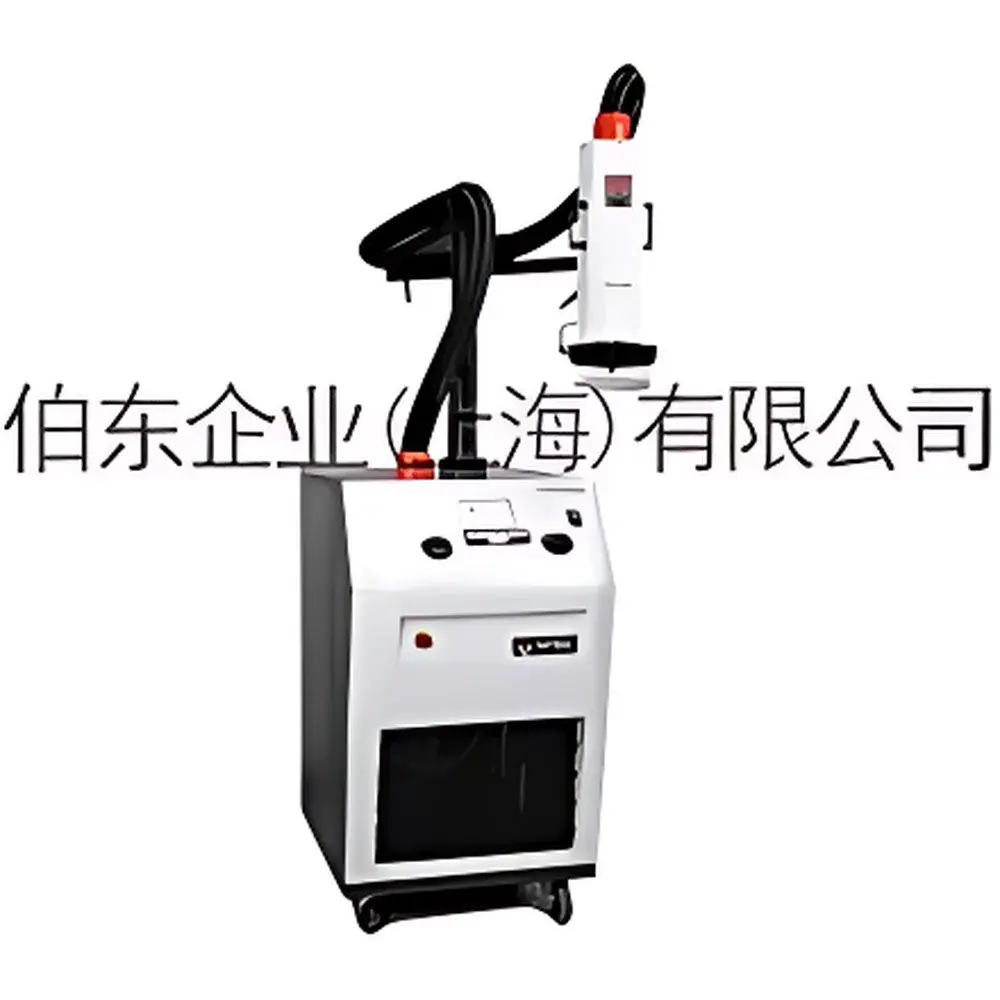
inTEST Temptronic ATS-535-S-7 Thermal Shock Test System for Fiber Optic Transceivers
| Brand | inTEST Temptronic |
|---|---|
| Origin | USA |
| Model | ATS-535-S-7 |
| Temperature Range | -80°C to +225°C |
| Cooling/Heating Method | Compressed Dry Air with Integrated Refrigeration & Resistive Heating |
| Thermal Transition Rate | Up to 150°C/min (typical, dependent on DUT thermal mass and fixture) |
| Control Accuracy | ±1°C |
| Compliance | Designed for ASTM F2069, IEC 61340-5-1, Telcordia GR-468-CORE, and JEDEC JESD22-A104 environmental stress screening protocols |
Overview
The inTEST Temptronic ATS-535-S-7 Thermal Shock Test System is a high-performance, air-based thermal transient platform engineered specifically for precision temperature stress testing of fiber optic transceivers and other compact optoelectronic assemblies. Unlike conventional chamber-style thermal shock systems, the ATS-535-S-7 employs a localized, directed-air delivery architecture—leveraging in-line refrigeration, rapid resistive heating, and dynamically controlled airflow—to deliver precise, repeatable thermal transients directly onto individual devices under test (DUTs). Its core operating principle relies on thermodynamic modulation of compressed, desiccated air: ambient air is first dried and cooled via a closed-loop refrigeration unit, then routed through a high-response heater block where temperature is finely adjusted before being delivered through a calibrated nozzle positioned within millimeters of the DUT surface. This enables true device-level thermal shock without cross-contamination or thermal inertia from surrounding components—critical for validating the operational integrity of 40G/100G/400G optical modules deployed in outdoor telecom infrastructure, data center switches, and high-density server backplanes.
Key Features
- Targeted thermal shock delivery: Isolates single transceivers (e.g., SFP+, QSFP28, OSFP) for independent thermal cycling without affecting adjacent circuitry or PCB traces.
- Wide operational temperature envelope: Achieves stable setpoints from –80°C to +225°C with <±1°C steady-state accuracy and sub-second response time to step changes.
- High-fidelity air management: Integrated desiccant dryer and particulate filtration ensure ISO Class 5–compatible airflow, eliminating moisture-induced condensation and particle-related failure modes during cold-to-hot transitions.
- Modular thermal head interface: Standardized nozzle mounts accommodate custom fixtures for pluggable module form factors including MSA-compliant cages, enabling rapid DUT swap without recalibration.
- Real-time thermal monitoring: Optional integrated thermocouple input (Type K or T) with 0.1°C resolution supports closed-loop temperature feedback synchronized to stimulus timing.
- Rugged industrial design: Stainless steel fluid paths, sealed electronics enclosure, and ESD-safe construction comply with ANSI/ESD S20.20 requirements for semiconductor handling environments.
Sample Compatibility & Compliance
The ATS-535-S-7 is validated for use with industry-standard optical transceiver packages including but not limited to SFP, SFP+, XFP, QSFP, QSFP28, QSFP-DD, and OSFP modules. It supports both powered-on (functional burn-in) and unpowered (structural integrity) thermal shock profiles per Telcordia GR-468-CORE Section 4.4.2 (Thermal Shock), JEDEC JESD22-A104F (Temperature Cycling), and IEC 60068-2-14 (Change of Temperature). The system’s airflow geometry and thermal inertia characteristics are characterized per ASTM F2069 Annex A for optoelectronic component qualification. All firmware and hardware configurations adhere to GLP/GMP documentation standards, with audit-ready calibration logs traceable to NIST-certified references.
Software & Data Management
Control and data acquisition are managed via inTEST’s proprietary ThermoStream® Control Suite v5.x, a Windows-based application supporting deterministic waveform generation (ramp, dwell, step, and custom profile modes), real-time temperature logging at up to 10 Hz, and automated pass/fail reporting against user-defined limits. The software includes built-in compliance templates for Telcordia, JEDEC, and MIL-STD-883H test methods. Full audit trail functionality satisfies FDA 21 CFR Part 11 requirements—including electronic signatures, change history, and role-based access control—enabling deployment in regulated manufacturing and qualification labs. Export formats include CSV, PDF test reports, and XML-compatible datasets for integration into LIMS or MES platforms.
Applications
- Qualification testing of pluggable optical modules under accelerated thermal stress conditions prior to field deployment.
- Failure analysis root cause investigation for solder joint fatigue, hermetic seal leakage, or wavelength drift in DFB/VCSEL-based transmitters.
- Process validation of reflow soldering, underfill dispensing, and thermal interface material (TIM) selection for optical subassemblies.
- Reliability screening of active optical cables (AOCs) and co-packaged optics (CPO) prototypes under dynamic thermal load.
- Environmental stress screening (ESS) per MIL-HDBK-344A for high-reliability aerospace and defense communication subsystems.
FAQ
What distinguishes the ATS-535-S-7 from traditional thermal shock chambers?
It eliminates thermal mass limitations by applying controlled air streams directly to the DUT—achieving >100× faster transition rates than chamber-based systems and avoiding thermal crosstalk across densely populated PCBs.
Can the system perform simultaneous hot/cold shock on multiple transceivers?
No—it is optimized for sequential, high-fidelity testing of individual modules; multi-DUT capability requires optional parallel thermal heads (ATS-535-M series).
Is dry air supply included or customer-provided?
A dedicated oil-free, desiccated compressed air source (≥7 bar, dew point ≤ –40°C) must be supplied externally; inTEST offers compatible air prep skids as accessories.
Does the system support remote operation and integration into automated test lines?
Yes—via TCP/IP and RS-232 interfaces with SCPI command set; full API documentation and LabVIEW/Python drivers are provided for seamless ATE integration.
What maintenance intervals are recommended for long-term reliability?
Refrigerant charge verification every 24 months; desiccant replacement every 6 months; nozzle inspection and cleaning after every 500 thermal cycles.



