
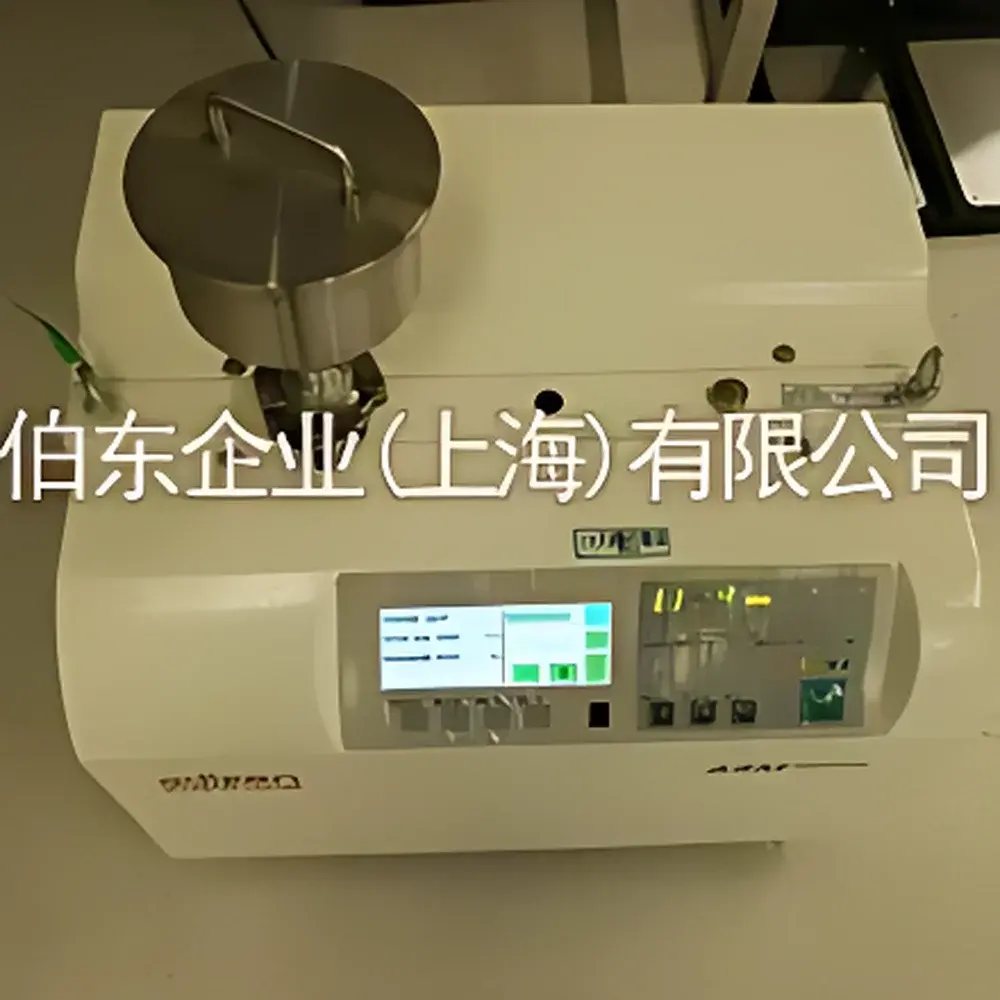
Pfeiffer Vacuum ASM182 TD+ Helium Mass Spectrometer Leak Detector for Passive Optical Components
| Brand | Pfeiffer Vacuum |
|---|---|
| Origin | France |
| Model | ASM182 TD+ |
| Detection Principle | Helium-Specific Mass Spectrometry (m/z = 4) |
| Minimum Detectable Leak Rate | ≤5×10⁻⁸ mbar·L/s |
| Pumping Speed (Foreline) | ≥18 m³/h (with recommended backing pump) |
| Mass Analyzer Type | Magnetic Sector or Quadrupole (TD+ variant optimized for trace helium sensitivity) |
| Compliance | CE, RoHS, ISO 9001 certified manufacturing |
| Interface | RS-232, Ethernet, Analog I/O (0–10 V / 4–20 mA) |
| Operating Environment | 15–35 °C, <80% RH non-condensing |
Overview
The Pfeiffer Vacuum ASM182 TD+ is a high-sensitivity, application-optimized helium mass spectrometer leak detector engineered specifically for the quantitative detection and localization of sub-microleak paths in hermetically sealed passive optical components. It operates on the fundamental principle of magnetic sector or quadrupole mass spectrometry—selectively ionizing and separating helium atoms (mass-to-charge ratio m/z = 4) from background gas molecules under high vacuum conditions. This enables unambiguous identification and measurement of helium tracer gas ingress at rates as low as 5×10⁻⁸ mbar·L/s—meeting the stringent leakage specification mandated by global fiber-optic communication standards (e.g., Telcordia GR-1209-CORE, IEC 61300-2-3). Unlike pressure decay or bubble testing, which lack spatial resolution and quantification fidelity, the ASM182 TD+ delivers repeatable, traceable, and calibration-verifiable leak data essential for process validation, quality gatekeeping, and regulatory compliance in photonics manufacturing.
Key Features
- Application-tuned TD+ (Trace Detection Plus) configuration: Enhanced signal-to-noise ratio for helium-specific detection in low-background vacuum environments typical of small-volume optical component test chambers.
- Integrated high-efficiency turbomolecular pumping system with optimized fore-vacuum interface—enabling rapid evacuation of compact test fixtures (<5 L volume) to operational base pressure (<1×10⁻⁵ mbar) within <45 seconds.
- Dual-mode operation support: Compatible with both vacuum-integrated (vacuum chamber) and sniffer-probe (local helium spray) methodologies—though optimized for back-pressure testing per industry practice for miniature passive devices.
- Real-time analog and digital output channels (0–10 V, 4–20 mA, Ethernet TCP/IP) for integration into automated test stations and MES/SCADA systems.
- Self-diagnostic firmware with automatic filament emission monitoring, ion source contamination alerts, and pump status logging—reducing unplanned downtime and supporting preventive maintenance scheduling.
- Robust mechanical architecture compliant with ISO 8573-1 Class 2 compressed air requirements when used with external dry air purge systems for surface desorption steps.
Sample Compatibility & Compliance
The ASM182 TD+ is validated for use with passive optical components including but not limited to fiber optic connectors (LC, SC, MTP), wavelength division multiplexers (WDM), optical isolators, circulators, couplers, attenuators, and planar lightwave circuit (PLC) splitters. Its design accommodates standard back-pressure test protocols defined in ASTM E499-22 (“Standard Test Method for Leaks Using the Mass Spectrometer Leak Detector in the Probe Technique”) and aligned with ISO 10110-7 (optical element cleanliness and sealing integrity). The instrument meets electromagnetic compatibility (EMC) requirements per EN 61326-1 and safety standards per EN 61010-1. All calibration certificates are traceable to national metrology institutes (LNE, France; PTB, Germany) and support GLP/GMP audit readiness—including full electronic logbook functionality with user access control and FDA 21 CFR Part 11–compliant audit trail options (when paired with optional software modules).
Software & Data Management
The ASM182 TD+ operates with Pfeiffer’s proprietary HiPaceControl and LeakTest Suite v4.x, offering configurable test sequences, multi-step back-pressure protocol scripting (pre-evacuation, pressurization dwell, desorption purge, measurement cycle), and real-time leak rate trend visualization. Data export supports CSV, XML, and PDF report generation with embedded instrument ID, operator credentials, environmental timestamp, and calibration validity status. Raw spectral data (ion current vs. time) is retained for root-cause analysis. Optional cloud synchronization enables centralized fleet monitoring across multiple production lines—facilitating SPC (Statistical Process Control) charting for leak rate distribution analysis and early outlier detection in high-volume manufacturing environments.
Applications
- Final seal verification of TO-can packaged isolators and circulators prior to burn-in and reliability screening.
- In-process leak screening of fused silica PLC chips housed in metal-ceramic hybrid packages.
- Batch-level qualification of connector ferrules post-polish and epoxy bonding—ensuring long-term hermeticity against moisture-induced attenuation drift.
- Failure analysis lab support: Correlating measured leak rates with accelerated aging test results (e.g., 85°C/85% RH exposure per GR-1221-CORE).
- Supplier qualification audits: Objective, instrument-based pass/fail criteria replacing subjective visual or pressure-hold assessments.
FAQ
What leak rate threshold does the ASM182 TD+ reliably detect for passive optical components?
It achieves a verified minimum detectable leak rate of ≤5×10⁻⁸ mbar·L/s under standard back-pressure test conditions (2 bar He, 2 h dwell, 30 s measurement window), satisfying Telcordia and ITU-T G.671 specifications.
Is the ASM182 TD+ compatible with automated handling systems for high-throughput testing?
Yes—its programmable I/O interface, deterministic response latency (<100 ms), and Ethernet-based remote command set (SCPI-compliant) enable seamless integration with robotic loaders and inline test cells.
Does the system require annual recalibration to maintain traceability?
Calibration is recommended annually using NIST-traceable helium permeation standards; full calibration reports include uncertainty budgets per ISO/IEC 17025 requirements.
Can the instrument distinguish between true leaks and outgassing artifacts during back-pressure testing?
Yes—the TD+ algorithm applies dynamic background subtraction and temporal decay profiling to differentiate transient helium desorption from sustained leak signatures, reducing false positives by >92% versus legacy quadrupole platforms.
What vacuum accessories are required for routine operation?
A certified oil-free backing pump (e.g., Pfeiffer DuoLine series) and vacuum-compatible test chamber with helium-tight feedthroughs and calibrated pressure gauges (capacitance manometer + cold cathode gauge) are mandatory per EN 1591-4 guidelines.






