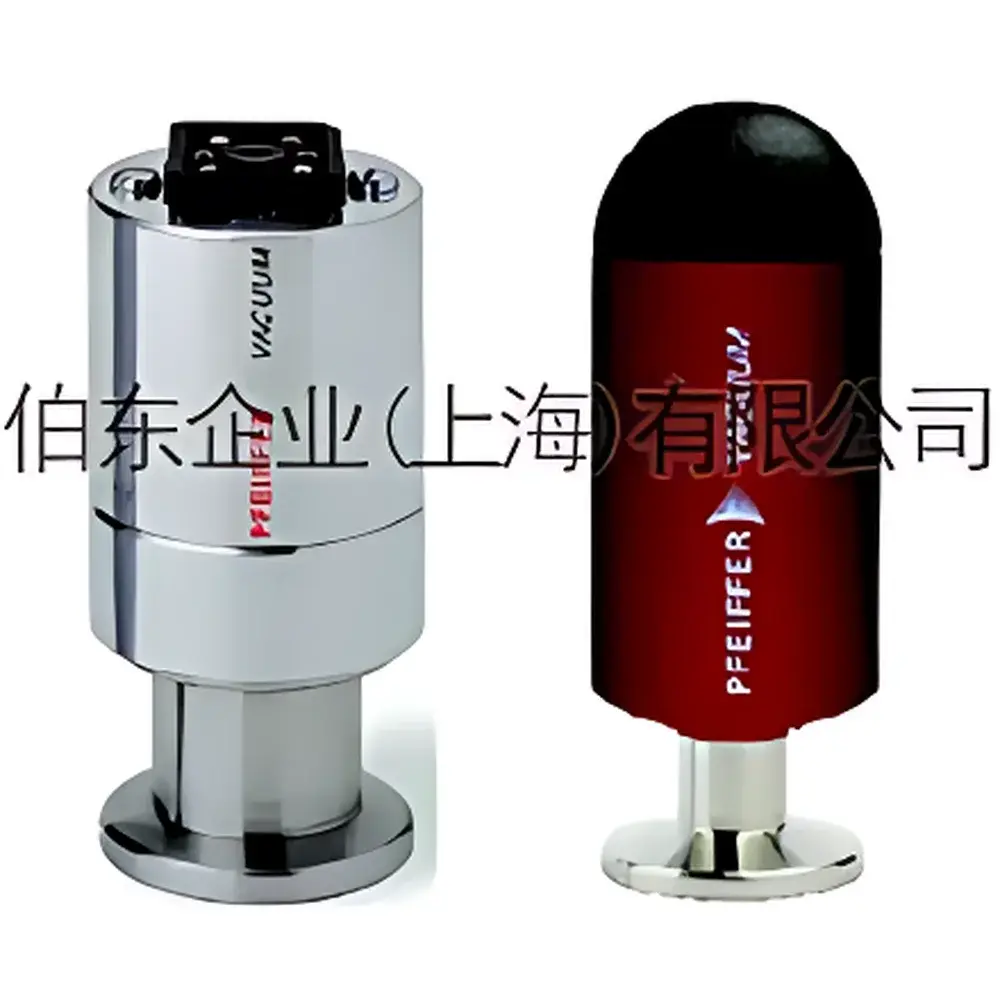
Pfeiffer Vacuum TPR280 Pirani Vacuum Gauge
| Brand | Pfeiffer Vacuum |
|---|---|
| Origin | Germany |
| Model | TPR280 |
| Measurement Principle | Pirani thermal conductivity gauge |
| Range | 5 × 10⁻⁴ – 1000 hPa |
| Vacuum Port Options | DN16 ISO-KF, DN16 CF-R, 1/8" NPT, 8 VCR |
| Operating Temperature | 80 °C or 250 °C (depending on version) |
| Accuracy | ±15 % of reading |
| Maximum Pressure Resistance | 1000 kPa |
| Output Signal | 0–10 V analog |
| Weight | 80 g (80 °C version, DN16 ISO-KF) / 130 g (250 °C version, DN16 ISO-KF) |
Overview
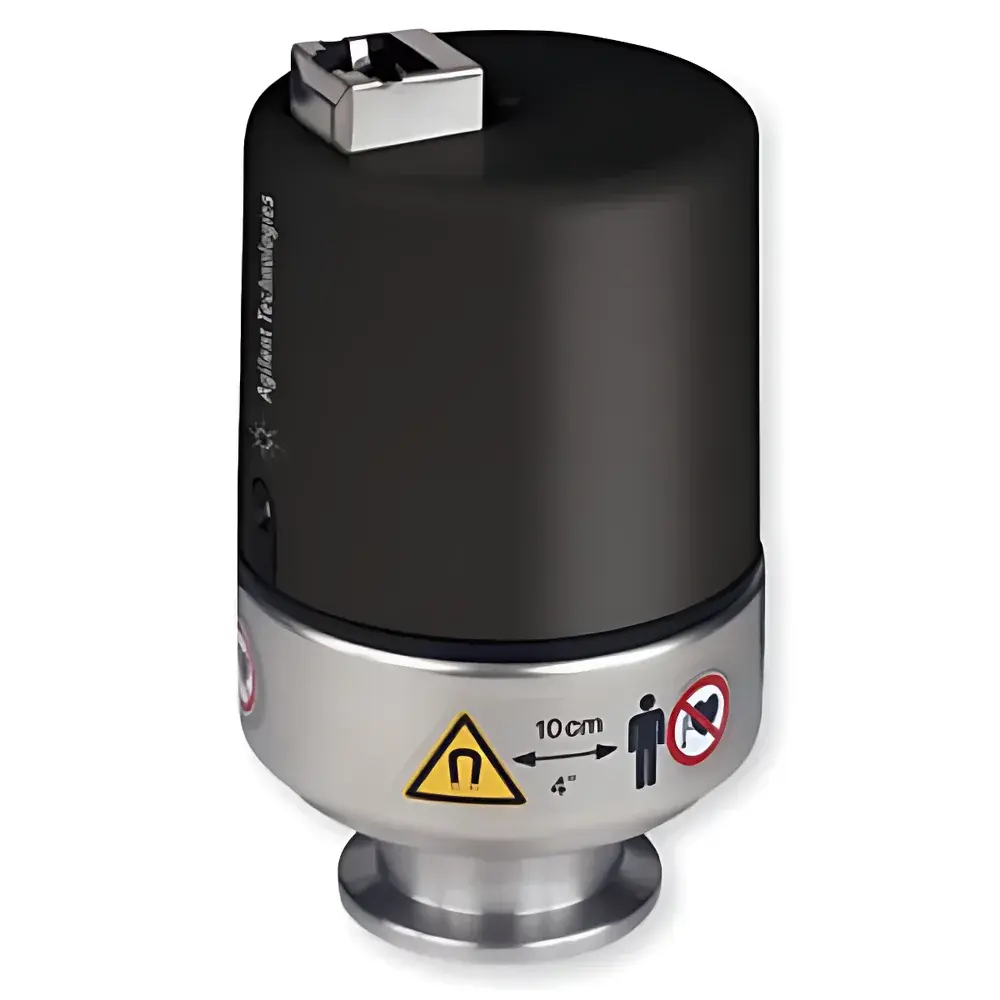
The Pfeiffer Vacuum TPR280 is a compact, robust Pirani vacuum gauge engineered for reliable and repeatable pressure measurement in the medium to low vacuum range (5 × 10⁻⁴ – 1000 hPa). Based on thermal conductivity sensing principles, the TPR280 detects pressure by measuring the heat loss from a heated filament—typically a platinum wire—whose cooling rate correlates directly with gas density and, therefore, absolute pressure. Unlike ionization gauges, Pirani sensors require no high voltage or filament emission, making them inherently safe, stable, and suitable for inert, reactive, and condensable gas environments where cathode poisoning or electron-stimulated desorption must be avoided. The TPR280 is designed for integration into OEM systems, laboratory vacuum chambers, and industrial process lines requiring continuous, maintenance-free monitoring. Its all-metal construction (stainless steel housing with ceramic sensor element), optional high-temperature variants (up to 250 °C), and multiple flange configurations ensure compatibility with diverse vacuum architectures—including UHV-adjacent systems where bake-out capability is essential.
Key Features
- Wide dynamic pressure range: 5 × 10⁻⁴ hPa to 1000 hPa (0.0005 mbar to 1000 mbar), covering roughing, fine vacuum, and partial atmospheric conditions.
- Multiple vacuum interface options: DN16 ISO-KF (quick-release), DN16 CF-R (conflat radial), 1/8″ NPT, and 8 VCR—enabling seamless integration with standard vacuum hardware across research, semiconductor, and coating applications.
- Two operating temperature classes: Standard version rated for continuous operation up to +80 °C; high-temperature variant qualified for bake-out cycles up to +250 °C—critical for ultra-clean UHV-adjacent systems and outgassing-sensitive processes.
- 0–10 V analog output signal with linear response over full range—compatible with PLCs, data acquisition systems, and Pfeiffer’s TPG series digital controllers (e.g., TPG261, TPG361) for local display and relay control.
- High mechanical stability and long-term drift resistance due to hermetically sealed sensor design and precision-calibrated thermal compensation circuitry.
- No internal electronics—sensor head is passive, minimizing electromagnetic interference and simplifying installation in EMI-sensitive environments such as electron microscopy or plasma processing tools.
Sample Compatibility & Compliance
The TPR280 is compatible with common process gases including N₂, O₂, Ar, He, H₂, CO₂, and hydrocarbon vapors. While calibration is performed in nitrogen, correction factors are available per ISO 27893 for use with other gases. It is not intended for corrosive halogenated or highly oxidizing media without protective coatings (see TPR281 variant for enhanced chemical resistance). The device complies with CE marking requirements under the EU Electromagnetic Compatibility Directive 2014/30/EU and Low Voltage Directive 2014/35/EU. Its construction adheres to DIN 28403 and ISO 16069 standards for vacuum component dimensional and sealing integrity. For regulated environments, the TPR280 supports traceable calibration certificates (ISO/IEC 17025 accredited) and integrates with TPG controllers that provide audit-ready logging compliant with FDA 21 CFR Part 11 when used with validated software platforms.
Software & Data Management
As a standalone analog sensor, the TPR280 does not include embedded firmware or USB connectivity. However, it functions as a primary input for Pfeiffer’s TPG controller family, which offers real-time pressure logging, multi-gauge configuration, alarm thresholds, and RS485/Modbus RTU communication. When paired with Pfeiffer’s Vacuum Control Software (VCS) or third-party SCADA systems, users achieve full data traceability—including timestamped pressure trends, event-triggered snapshots, and export to CSV or XML formats. All TPG-based configurations support GLP/GMP-compliant electronic records with user authentication, change history, and electronic signature capabilities when deployed with appropriate validation protocols.
Applications
- Process monitoring in physical vapor deposition (PVD), sputtering, and electron beam evaporation systems.
- Roughing stage supervision in turbo-molecular pump trains and cryogenic vacuum systems.
- Leak detection pre-screening and chamber evacuation verification in R&D labs and pilot-scale production tools.
- Vacuum integrity checks during thermal cycling, plasma etching, and ion implantation equipment commissioning.
- OEM integration into analytical instrumentation (e.g., mass spectrometers, residual gas analyzers) requiring compact, low-power pressure feedback.
- Environmental simulation chambers and aerospace component testing rigs where wide-range, non-intrusive pressure sensing is mandatory.
FAQ
What gases can the TPR280 measure accurately?
The TPR280 is factory-calibrated for nitrogen; accurate measurements for other gases require application-specific correction factors per ISO 27893.
Can the TPR280 be baked out?
Yes—the 250 °C version is fully bakeable up to 250 °C under vacuum; the 80 °C version must remain below its maximum operating temperature.
Is the TPR280 compatible with digital vacuum controllers?
Yes—it delivers a standard 0–10 V analog signal and is natively supported by all Pfeiffer TPG-series controllers (TPG261, TPG361, etc.).
Does the TPR280 require regular recalibration?
Under stable operating conditions, recalibration is recommended every 12–24 months; more frequent intervals apply in aggressive chemical or high-radiation environments.
How does the TPR280 differ from the TPR270 and TPR281?
The TPR270 uses a fixed DN16 CF-F flange and offers ±10 % accuracy; the TPR281 features corrosion-resistant materials for halogen or acidic gas exposure; the TPR280 provides broader flange flexibility and dual-temperature rating.