
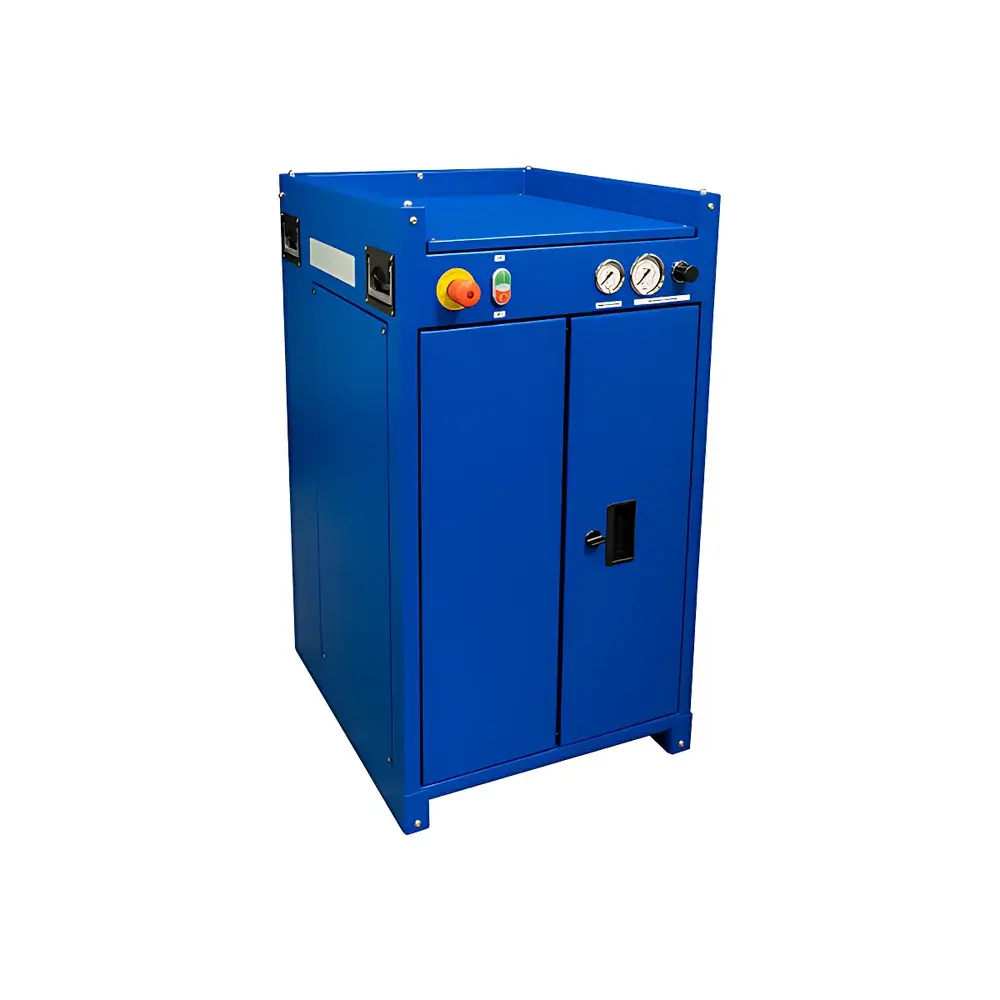
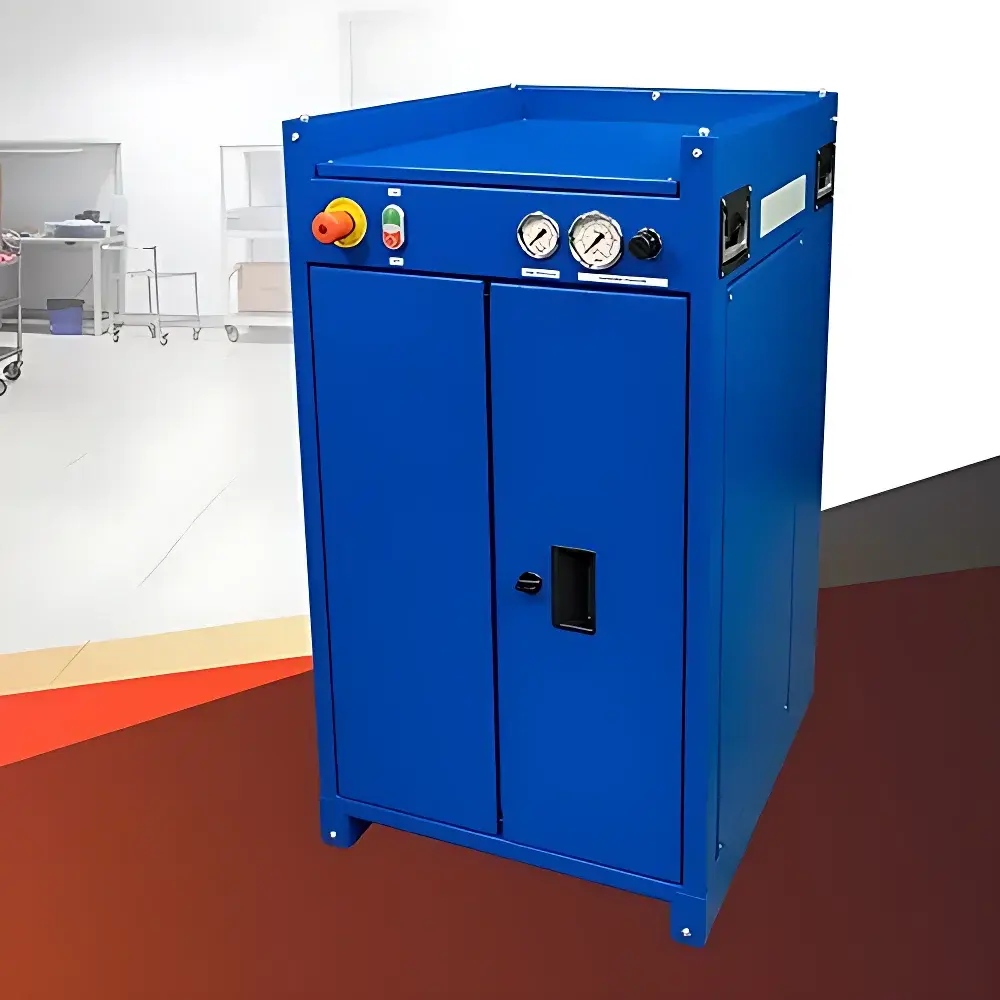
TSI Model 8150 Automated Filter Tester
| Brand | TSI |
|---|---|
| Origin | USA |
| Model | 8150 |
| Instrument Type | Aerosol Filter Tester |
| Compliance Standards | 42 CFR Part 84, EN 143, EN 149, ISO 16900-3, ISO 23328-1, ASTM F3502-2021, GB 2626 |
| Measurement Principle | Dual-channel photometric aerosol challenge & filtration efficiency quantification |
| Optical Detection | Simultaneous upstream/downstream photometry |
| Control Interface | PLC-driven with embedded diagnostics |
| Form Factor | Modular benchtop unit with stackable base and detachable photometer housing |
Overview
The TSI Model 8150 Automated Filter Tester is an industrial-grade, production-line-integrated instrument engineered for real-time, 100% quality assurance testing of respiratory filter media—including P100, FFP3, N95-equivalent, and surgical mask-grade materials. It operates on the principle of photometric aerosol challenge: a stable, neutralized polydisperse sodium chloride (NaCl) or dioctyl phthalate (DOP) aerosol is generated upstream of the test sample; dual synchronized photometers simultaneously measure incident and transmitted light intensity at 635 nm to calculate filtration efficiency with high reproducibility. Unlike laboratory-based testers, the 8150 is purpose-built for continuous operation in manufacturing environments—featuring robust mechanical architecture, minimized valve count, and thermally stabilized optical paths to ensure measurement stability across shifts and ambient temperature fluctuations. Its design directly addresses the metrological requirements of regulatory frameworks including U.S. 42 CFR Part 84, European EN 143/EN 149, ISO 16900-3 (respirator fit testing methodology), ISO 23328-1 (anesthetic gas filter testing), and ASTM F3502-2021 (performance specification for barrier face coverings). The system delivers traceable, audit-ready data without requiring operator intervention during routine cycles.
Key Features
- Dual-channel photometric detection: Independent upstream and downstream photometers eliminate signal drift caused by aerosol generator output variation—ensuring <0.5% relative standard deviation in repeated efficiency measurements.
- PLC-integrated control architecture: Native Modbus TCP and discrete I/O support enable seamless integration into factory automation systems (e.g., Siemens S7, Rockwell Logix) for automated start/stop, pass/fail flagging, and batch logging.
- Modular physical configuration: Photometer modules are mechanically decoupled from the base unit and can be mounted remotely (up to 2 m via shielded fiber-optic cable); two base units may be vertically stacked to conserve floor space in constrained cleanroom or ISO Class 7 production lines.
- Enhanced uptime engineering: Reduced pneumatic valve count (vs. legacy 8130A platform) lowers failure probability; built-in self-diagnostics continuously monitor aerosol concentration stability, photometer zero drift, and flow sensor calibration status.
- Regulatory alignment by design: Preconfigured test sequences for EN 143 Annex A (flow rate: 95 L/min ± 5%), 42 CFR 84 subpart K (NaCl challenge at 100 mg/m³), and ASTM F3502 (30 L/min ± 2% with particle size distribution verification) are embedded in firmware.
Sample Compatibility & Compliance
The Model 8150 accommodates flat-sheet filter media up to 150 mm × 150 mm and pleated respirator elements (e.g., cup-style, fold-flat) using standardized clamping fixtures compliant with ISO 16900-3 Annex B. All test protocols adhere to the aerosol generation, sampling, and data reporting conventions mandated under FDA-recognized consensus standards. Full compliance documentation—including EN 143 conformance reports (issued per EU Notified Body requirements), 21 CFR Part 11–ready audit trails, and GLP/GMP-aligned electronic records—is generated automatically. Optional accessories—including integrated bipolar ionizer (for aerosol neutralization per ISO 8503-2), auto-refillable aerosol generator, and external vacuum pump (110/220 V AC)—extend operational flexibility without compromising measurement integrity.
Software & Data Management
The embedded controller runs TSI’s proprietary FilterTest OS v4.x, supporting password-protected user roles (Operator, Supervisor, Administrator), encrypted SQLite database storage, and CSV/Excel export with timestamped metadata (test ID, operator ID, environmental conditions, raw photometer voltages, calculated penetration %). Data files include digital signatures compliant with FDA 21 CFR Part 11 for electronic records and signatures. Remote monitoring is enabled via Ethernet with HTTPS web interface for live status dashboards, historical trend analysis, and alarm notification (SNMP v3 or email alert on failed test criteria). Firmware updates are delivered via signed .bin packages validated against SHA-256 checksums.
Applications
- End-of-line QA for NIOSH-certified respirator manufacturers validating P100, R95, and N95 filter media batches.
- In-process monitoring of melt-blown nonwovens during extrusion line commissioning and process parameter optimization.
- Third-party certification labs performing EN 149:2001+A1:2009 conformity assessments for FFP1/FFP2/FFP3 classification.
- Medical device OEMs verifying bacterial filtration efficiency (BFE) and particulate filtration efficiency (PFE) per ASTM F2101 and ASTM F2299 in controlled environments.
- Government test facilities conducting interlaboratory comparison studies under ISO/IEC 17025 accreditation scope.
FAQ
Does the Model 8150 meet ISO/IEC 17025 requirements for accredited testing laboratories?
Yes—the system supports full traceability of calibration certificates (photometer NIST-traceable, flow meter ISO 17025-accredited), documented uncertainty budgets, and version-controlled firmware/software, satisfying Clause 7.7 of ISO/IEC 17025:2017.
Can it operate unattended for extended periods (e.g., 72-hour validation runs)?
Yes—continuous operation mode is supported with automatic aerosol reservoir refill (when equipped with 8150R option), thermal management for photometer stability, and watchdog-triggered shutdown on critical fault detection.
Is raw photometer voltage data accessible for custom algorithm development?
Yes—via RS-232 serial port or Ethernet socket API, the instrument outputs time-synchronized analog-to-digital values from both channels at 10 Hz sampling rate, enabling third-party integration with MATLAB, Python, or LabVIEW.
What maintenance intervals are recommended for GMP-compliant operation?
Photometer optics cleaning every 200 hours; aerosol generator nozzle inspection every 500 hours; annual NIST-traceable calibration of flow sensor and photometric reference standards—documented in TSI’s Maintenance Kit (8150-MKIT).







