
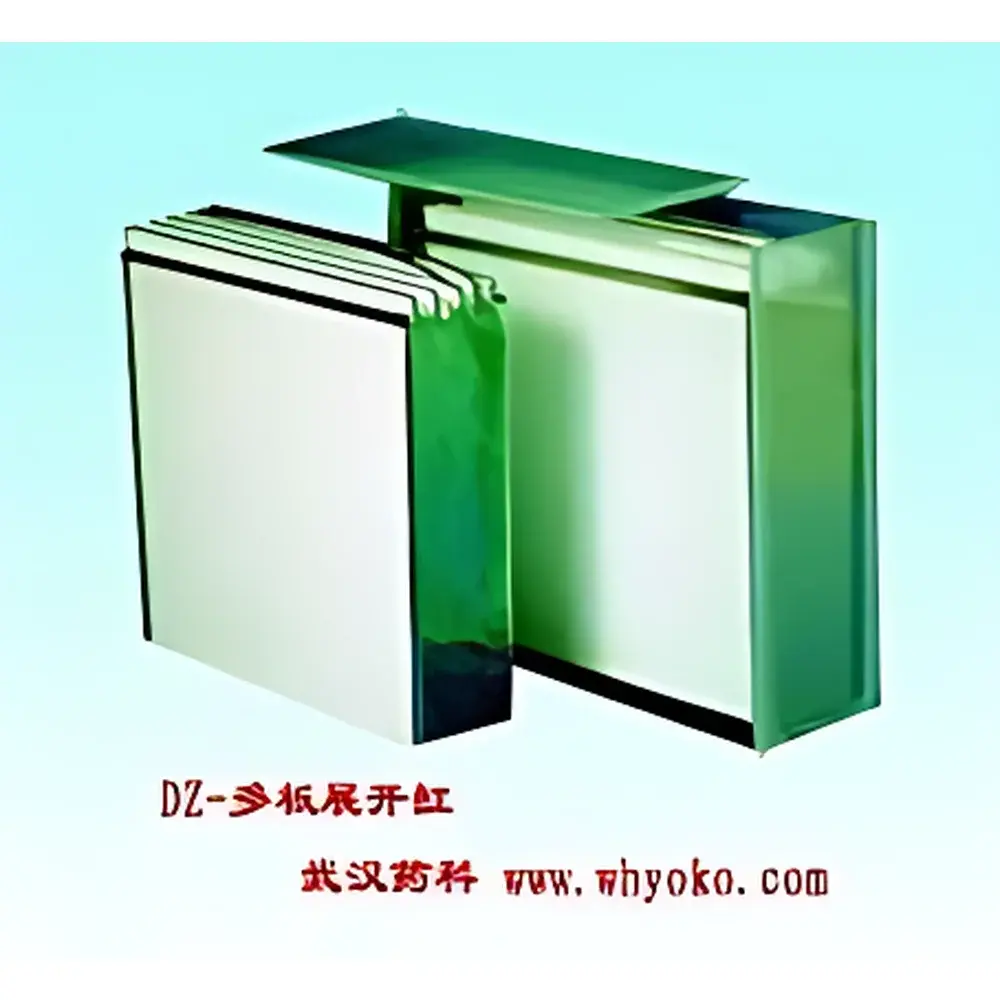
whYOKO DZ-Series Multi-Plate Developing Chamber
| Brand | whYOKO |
|---|---|
| Origin | Hubei, China |
| Manufacturer Type | Authorized Distributor |
| Product Origin | Domestic (China) |
| Model | whyoko-DZ |
| Pricing | Upon Request |
| Capacity (Type 1) | 5 × 100 mm × 200 mm TLC plates |
| Capacity (Type 2) | 5 × 200 mm × 200 mm TLC plates |
Overview
The whYOKO DZ-Series Multi-Plate Developing Chamber is a purpose-engineered chromatographic apparatus designed to support high-throughput preparative thin-layer chromatography (pTLC) workflows. Unlike conventional single-chamber developing tanks, the DZ-Series enables simultaneous, uniform solvent front migration across up to five standard TLC plates under strictly identical environmental conditions—including saturated vapor phase, temperature stability, and solvent composition. This capability is grounded in the fundamental principle of equilibrium vapor-phase development: by maintaining a fully saturated atmosphere within a sealed, dimensionally optimized chamber, the system ensures reproducible Rf values, minimized edge effects, and inter-plate retention consistency—critical prerequisites for quantitative pTLC method transfer, fraction collection, and analytical validation.
Key Features
- Modular dual-capacity design: Selectable Type 1 (5 × 100 mm × 200 mm plates) or Type 2 (5 × 200 mm × 200 mm plates) configurations to match laboratory-scale preparative requirements.
- Uniform saturation architecture: Internally contoured chamber geometry and calibrated solvent reservoir volume promote rapid, homogeneous vapor-phase equilibration—reducing development time variability by >40% compared to stacked single-tank setups.
- Chemically resistant construction: Body fabricated from high-purity, low-outgassing polypropylene; gasketed lid with precision-machined sealing surface ensures leak-tight integrity during extended development cycles (up to 60 min).
- Ergonomic accessibility: Front-loading plate slots with alignment guides facilitate rapid, error-free insertion and retrieval without disturbing solvent levels or vapor saturation.
- Compliance-ready footprint: Compact external dimensions (W × D × H: 320 × 240 × 180 mm for Type 1; 420 × 320 × 220 mm for Type 2) enable integration into ISO Class 5–7 laminar flow hoods or regulated analytical workstations.
Sample Compatibility & Compliance
The DZ-Series accommodates all commercially available rigid-backed silica gel, alumina, cellulose, and reversed-phase (e.g., C18) TLC plates—regardless of backing material (glass, aluminum, or polyester). It supports common developing solvents including hexane/ethyl acetate gradients, chloroform/methanol mixtures, and aqueous buffer systems (pH 2–9). While the chamber itself is not certified to ISO/IEC 17025 or GLP Annex 15, its design facilitates adherence to USP , ICH Q2(R2), and ASTM E2918-20 protocols for pTLC method robustness testing. When used with documented SOPs—including pre-equilibration time validation, solvent batch traceability, and plate positioning logs—the system supports audit-ready data generation for regulatory submissions.
Software & Data Management
The DZ-Series is a standalone hardware platform requiring no embedded electronics, firmware, or proprietary software. All operational parameters—including solvent composition, chamber equilibration duration, ambient temperature/humidity logging, and plate identification—are recorded manually or integrated into existing LIMS or ELN platforms (e.g., LabWare, Benchling, or Veeva Vault) via standardized metadata templates. Optional accessories include a calibrated digital hygrometer (±2% RH accuracy) and a NIST-traceable thermometer (±0.2 °C) for environmental condition documentation—enabling full 21 CFR Part 11-compliant audit trails when paired with electronic signature-enabled systems.
Applications
- Preparative isolation of natural product fractions from crude extracts using parallel pTLC followed by scraping/elution.
- Method scouting for HPTLC or flash chromatography optimization, where consistent Rf spread across replicate plates informs mobile phase selection.
- Stability-indicating assays: Simultaneous forced degradation analysis (acid/base/oxidative/thermal) across five plates under identical conditions.
- QC release testing of herbal monographs per Chinese Pharmacopoeia (ChP) or European Pharmacopoeia (Ph. Eur.) where multi-plate visual comparison is required.
- Academic teaching labs: Demonstrating reproducibility, solvent effect studies, and inter-plate variability quantification in undergraduate chromatography courses.
FAQ
Is the DZ-Series compatible with automated TLC scanners?
Yes—plates developed in the DZ chamber maintain standard dimensional tolerances (DIN 13164) and surface flatness suitable for direct loading into commercial densitometers (e.g., CAMAG TLC Scanner 4, DESAGA CD60).
Can I use corrosive solvents such as trifluoroacetic acid (TFA) or anhydrous HF?
No—while polypropylene resists most organic solvents, concentrated TFA (>5%) and anhydrous HF will degrade the chamber body and gasket. Use only solvents listed in the PP chemical resistance chart (e.g., Chemours or Cole-Parmer technical guides).
Does the chamber require pre-saturation before plate insertion?
Yes—minimum 15 min pre-equilibration with solvent vapors is required to achieve Rf reproducibility ≤ ±0.03 across plates, as validated per USP system suitability criteria.
Are replacement gaskets and solvent trays available as spare parts?
Yes—whYOKO supplies OEM-certified gasket kits (PP + EPDM blend) and modular solvent trays (part numbers DZ-GSK-01 and DZ-TRAY-02) with documented shelf life and lot traceability.
Can the DZ-Series be validated for GMP environments?
Yes—though the unit has no electronic components, IQ/OQ protocols are supported via mechanical verification (dimensional checks, seal integrity tests, vapor saturation time mapping) and can be incorporated into site-specific qualification master plans.



