

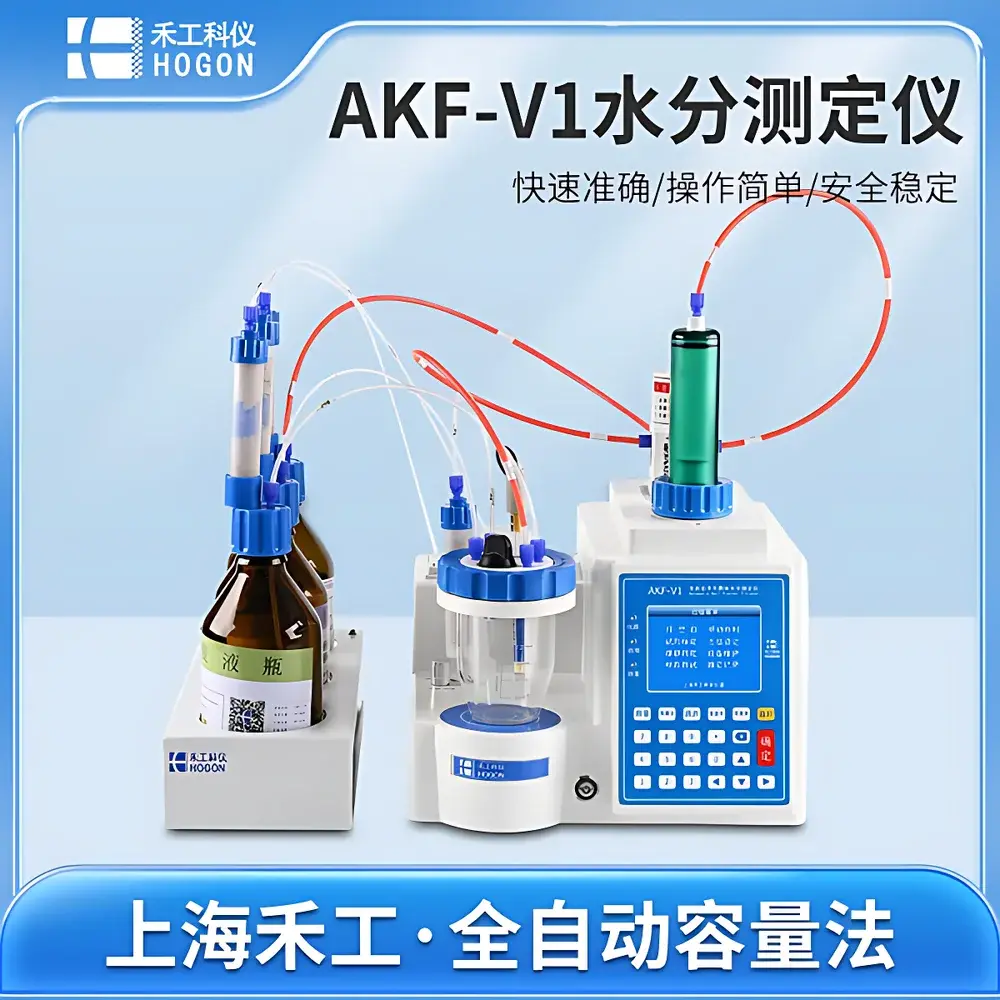
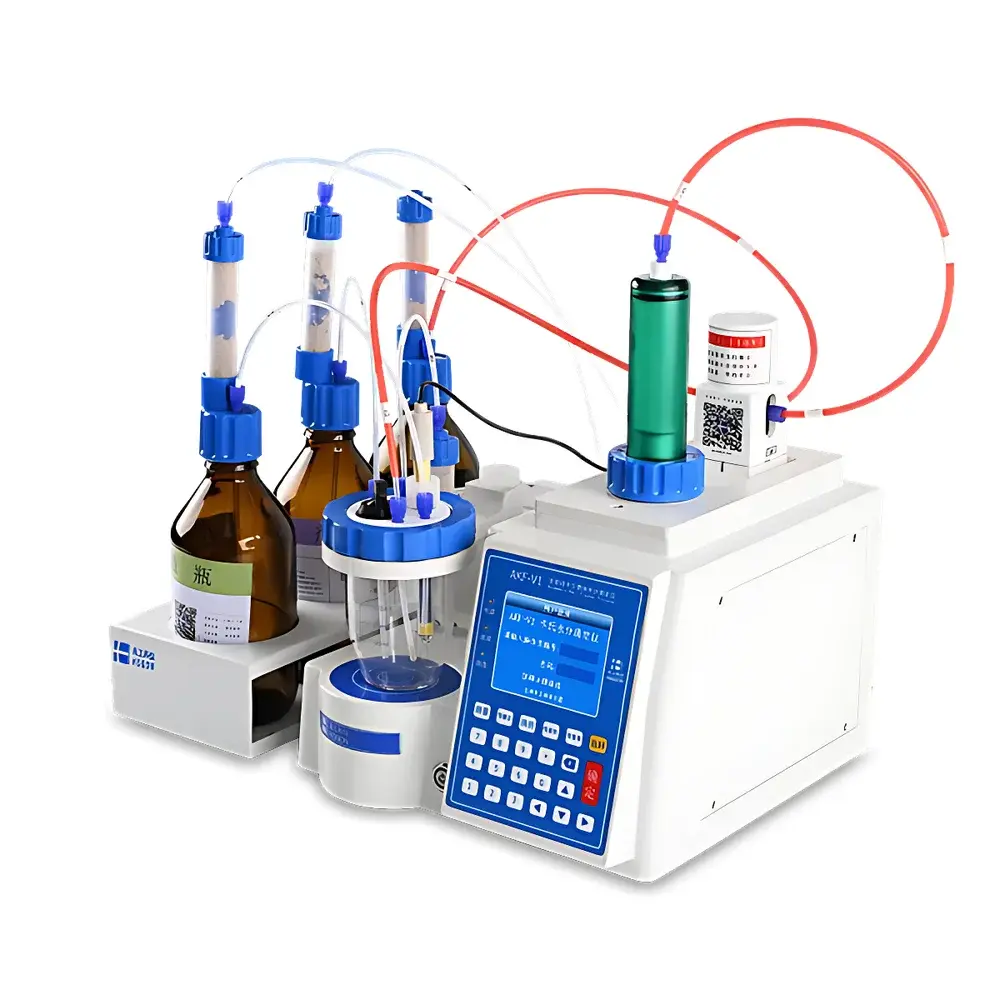
HOGON AKF-V1 Fully Automated Volumetric Karl Fischer Moisture Titrator
| Brand | HOGON |
|---|---|
| Origin | Shanghai, China |
| Manufacturer Type | Direct Manufacturer |
| Product Category | Domestic (China-Made) |
| Model | AKF-V1 |
| Titration Method | Fully Automated Volumetric Titration |
| Instrument Type | Volumetric Karl Fischer Moisture Titrator |
| Moisture Content Range | 0.001–100.00% (10 ppm – 100% w/w) |
| Measurement Resolution | 1 ppm |
| Endpoint Detection Precision | ±1 mV |
| Minimum Dispensing Volume | 1 µL |
| Repeatability | RSD ≤ 0.5% (at 20 mg H₂O) |
| Linearity of Water Titration Calibration Curve | ≥ 0.998 |
| Polarization Voltage Adjustment Range | 0–120 mV |
| Burette Configuration | 20 mL Long-Life Automatic Burette |
| Burette Dispensing Accuracy | ±0.001 mL (with 20 mL high-precision burette) |
| Power Supply | 110–240 V AC, 50–60 Hz |
| Data Storage Capacity | 100 test records |
Overview
The HOGON AKF-V1 is a fully automated volumetric Karl Fischer (KF) moisture titrator engineered for precision, robustness, and regulatory compliance in routine and quality-controlled laboratory environments. It operates on the principle of coulometric-free volumetric KF titration—where iodine generated in situ via stoichiometric reaction with water in the sample is quantified by precise delivery of standardized KF reagent into the titration cell. The instrument employs bipotentiometric endpoint detection (dual-platinum electrode system), ensuring high reproducibility and minimal interference from side reactions or electrode polarization drift. Designed for broad applicability across pharmaceuticals, polymers, petrochemicals, food, and fine chemicals, the AKF-V1 delivers trace-level moisture quantification from 10 ppm to 100% w/w—covering crystalline hydrates, surface-adsorbed water, and free moisture in solids, liquids, and gases.
Key Features
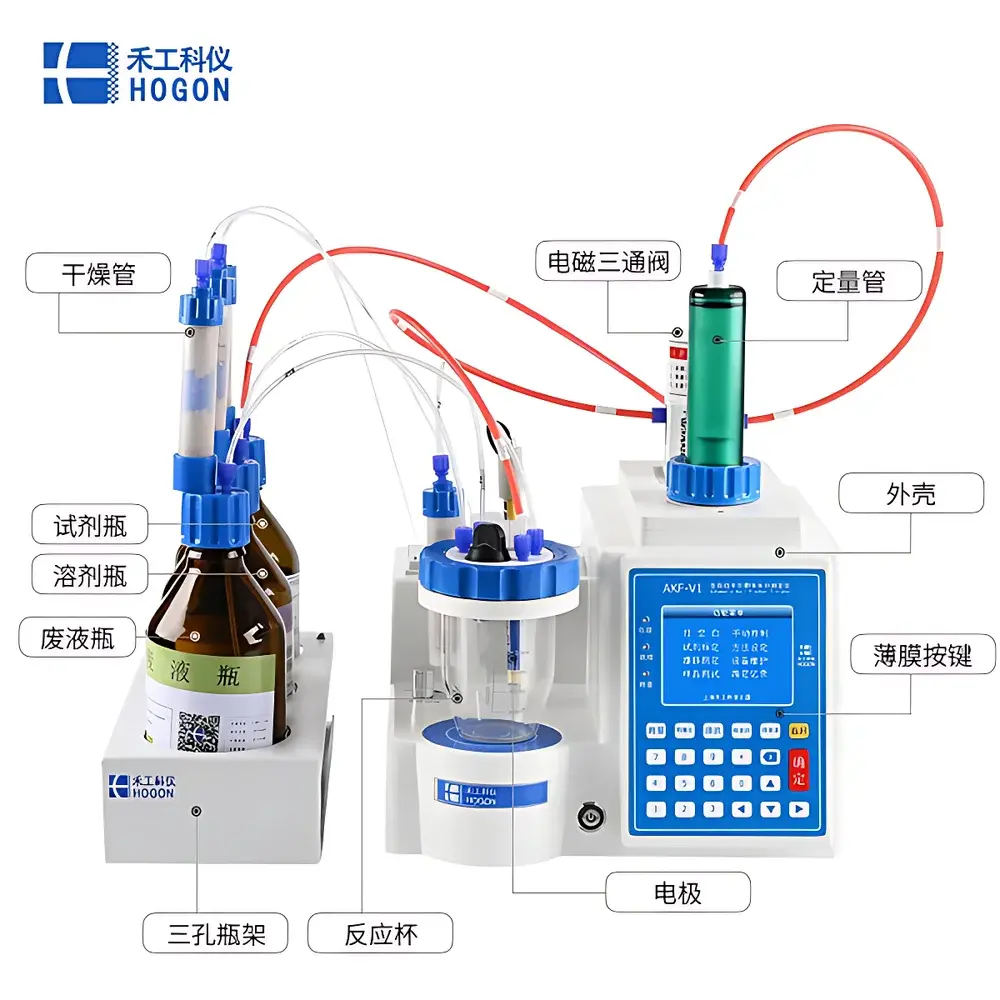
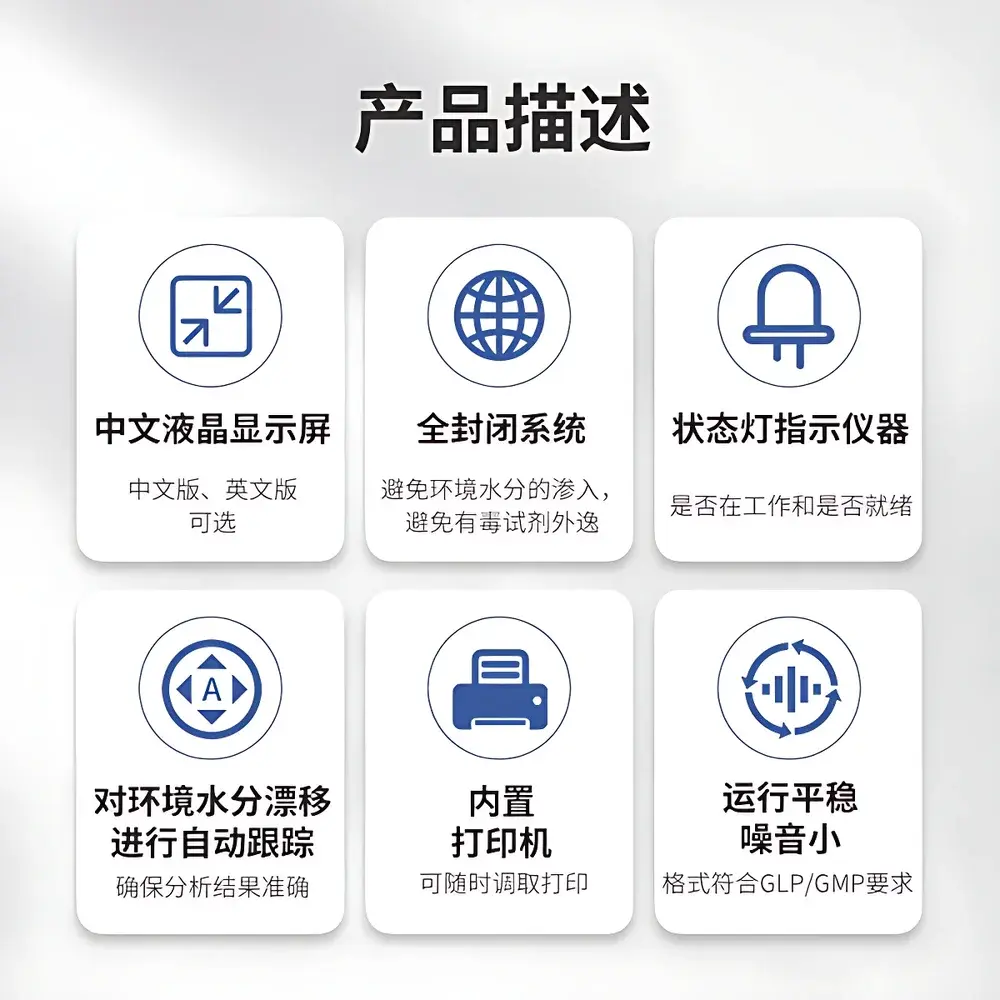
- Fully enclosed titration system with desiccant-dried inlet lines and corrosion-resistant PTFE/FFKM seals on all solvent, reagent, and waste connections—preventing ambient moisture ingress and minimizing KF reagent exposure.
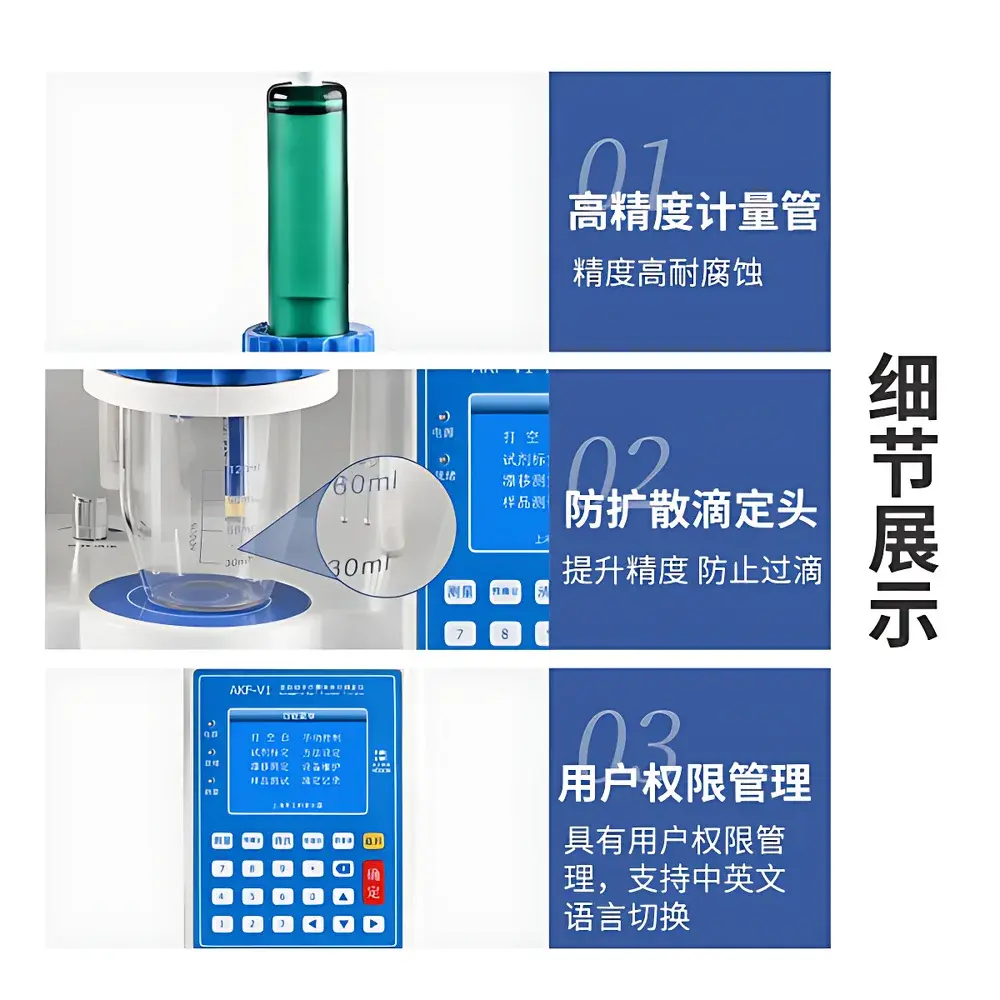
- Integrated 20 mL high-precision automatic burette with ±0.001 mL dispensing accuracy and extended service life under continuous operation; compatible with all commercially available volumetric KF reagents (single-component and two-component).
- Intelligent adaptive titration algorithm: real-time adjustment of reagent feed rate based on dynamic water concentration in the titration vessel, with concurrent display of dispensed volume, feed rate, and electrode potential signal.
- Automatic drift compensation: continuous background moisture drift monitoring during idle periods; drift-corrected results automatically applied during calculation per ASTM E203 and ISO 760 protocols.
- Onboard status indicators (LED) for operational readiness, active titration, and error conditions; live titration curve visualization on integrated LCD interface with zoom and cursor functions.
- User-accessible maintenance routines—including automatic burette cleaning, solvent aspiration, waste evacuation, and reagent priming—executed via intuitive keypad navigation.
- Dual-language UI (English/Chinese) with configurable user roles (Administrator, Operator, Auditor) supporting password-protected access control and audit trail readiness.
Sample Compatibility & Compliance
The AKF-V1 accommodates diverse sample matrices without modification: low-viscosity liquids (e.g., solvents, monomers), suspensions (e.g., catalyst slurries), hygroscopic powders (e.g., APIs, excipients), and gas-phase samples via optional headspace adapter. All wetted components comply with USP , EP 2.5.12, and JP 2.05 standards for KF methodology. The instrument’s data handling architecture supports GLP/GMP alignment: timestamped result records include operator ID, sample ID, method name, calibration date, endpoint voltage, drift value, and raw titration curve metadata. While not inherently 21 CFR Part 11 compliant out-of-the-box, its audit-ready data structure enables seamless integration with validated LIMS or ELN systems requiring electronic signature and change control.
Software & Data Management
Data is stored locally in non-volatile memory (100 test records maximum), each containing full analytical metadata: sample weight, titrant consumption, calculated water content (% or ppm), RSD, drift correction factor, and endpoint stability index. Export is supported via USB interface in CSV format for external analysis. Firmware includes built-in calibration verification tools—standard addition checks, blank titration validation, and linearity assessment using certified water standards (e.g., sodium tartrate dihydrate). All method parameters (polarization voltage, endpoint threshold, delay time, feed rate profiles) are programmable and recallable per sample type.
Applications
- Pharmaceutical QC: water content verification in active pharmaceutical ingredients (APIs), lyophilized products, and excipients per USP .
- Polymer manufacturing: residual monomer moisture in PET, nylon, and polyacrylates affecting polymerization kinetics and final product clarity.
- Electronics-grade solvents: ultra-trace moisture detection in NMP, DMF, and GBL used in lithium-ion battery electrolyte formulation.
- Food ingredient certification: water activity correlation in dairy powders, starches, and hygroscopic sweeteners.
- Research labs: kinetic studies of hydration/dehydration equilibria in metal-organic frameworks (MOFs) and zeolites.
FAQ
What KF reagent types are compatible with the AKF-V1?
The instrument supports both single-solution (iodine, sulfur dioxide, base, and solvent in one bottle) and two-solution (iodine-containing titrant + separate solvent/base) volumetric KF reagents from major suppliers including Honeywell, Merck, and Mitsubishi Chemical.
Does the AKF-V1 meet ISO/IEC 17025 requirements for accredited testing labs?
Yes—when operated with documented SOPs, calibrated electrodes, certified reference materials, and maintained logbooks, the AKF-V1 satisfies measurement uncertainty estimation, traceability, and equipment qualification criteria outlined in ISO/IEC 17025:2017 clause 6.4.
Can the instrument be connected to a laboratory network for centralized data collection?
It features a standard USB host port for direct file transfer; Ethernet or RS-232 interfaces are not included but may be added via third-party hardware bridges compatible with Modbus RTU or ASCII command protocols.
How often does the platinum electrode require cleaning or replacement?
Under normal use (≤20 titrations/day), electrode cleaning with ethanol and soft lint-free tissue is recommended after every 10–15 analyses; full replacement is typically required only after 12–18 months of continuous operation or if baseline noise exceeds 2 mV RMS.
Is method validation support provided by HOGON?
HOGON supplies application notes, IQ/OQ templates, and basic validation protocols aligned with ICH Q2(R2); full PQ execution and documentation must be performed by the end-user lab per internal quality system requirements.





