
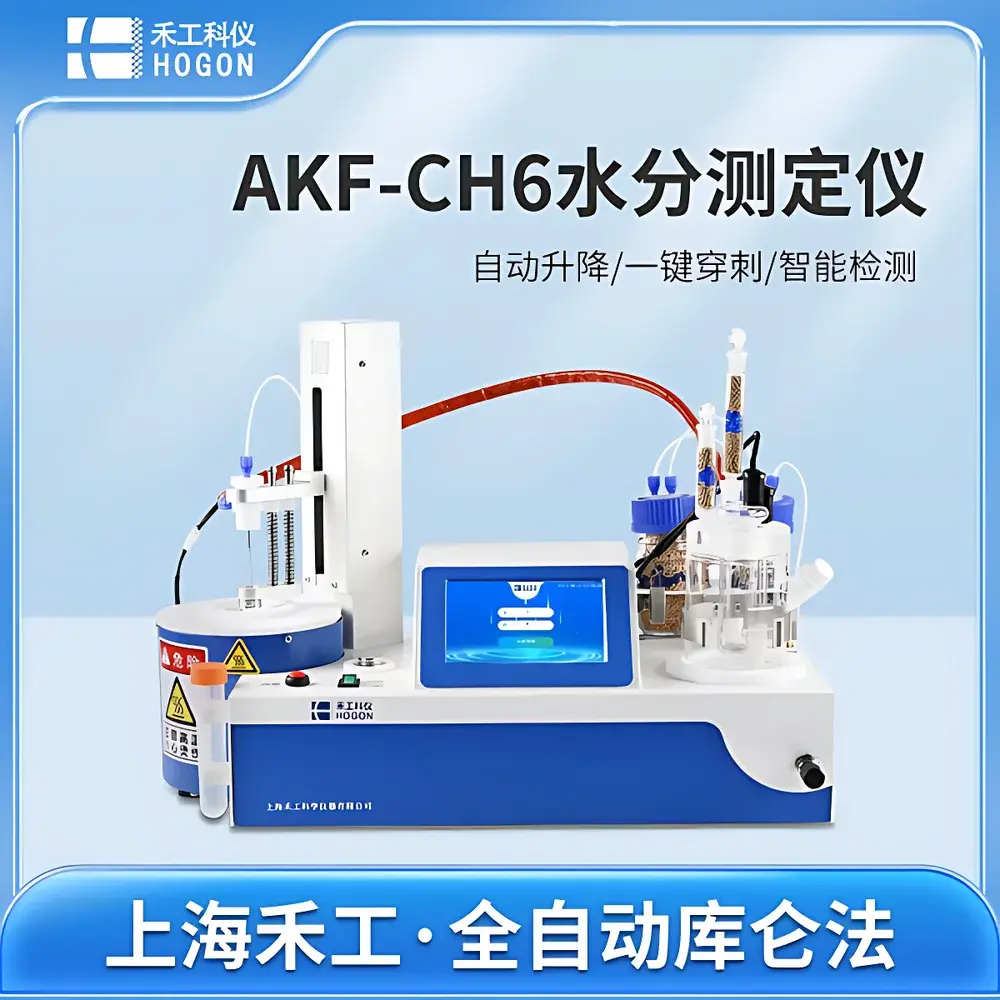
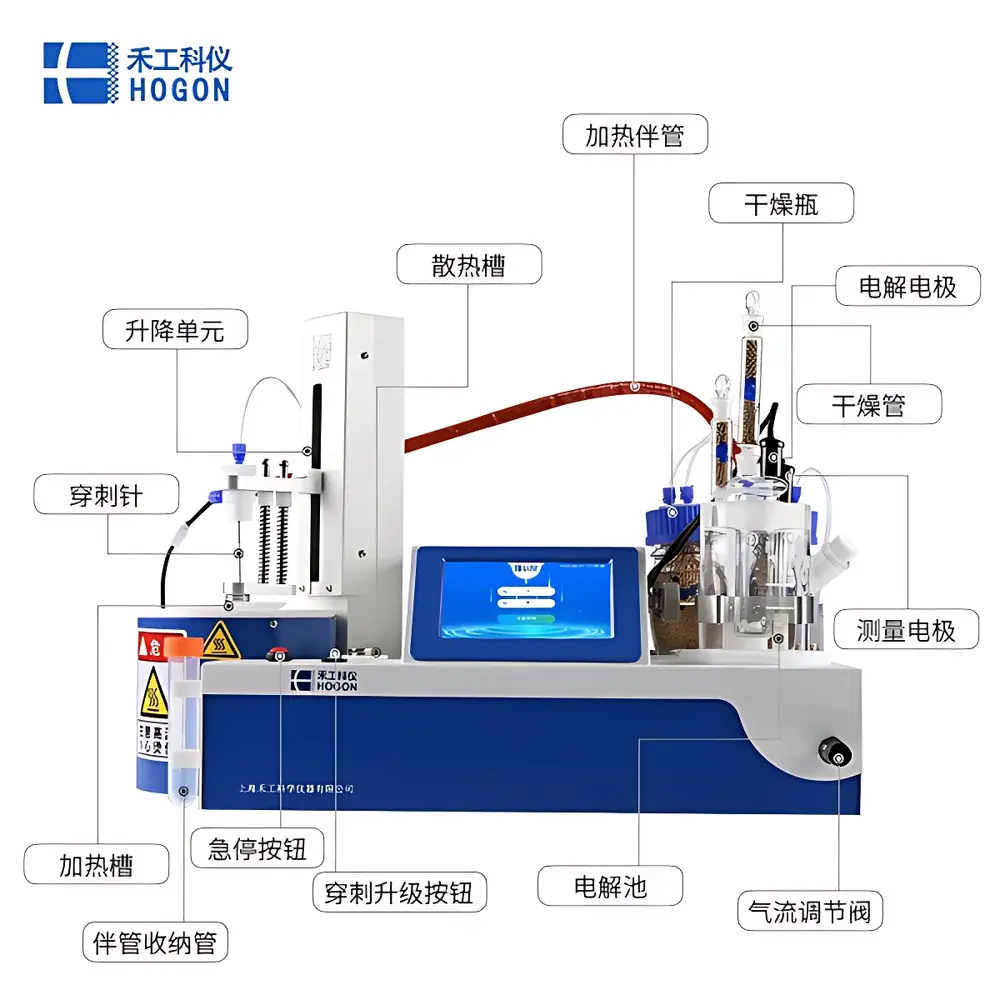
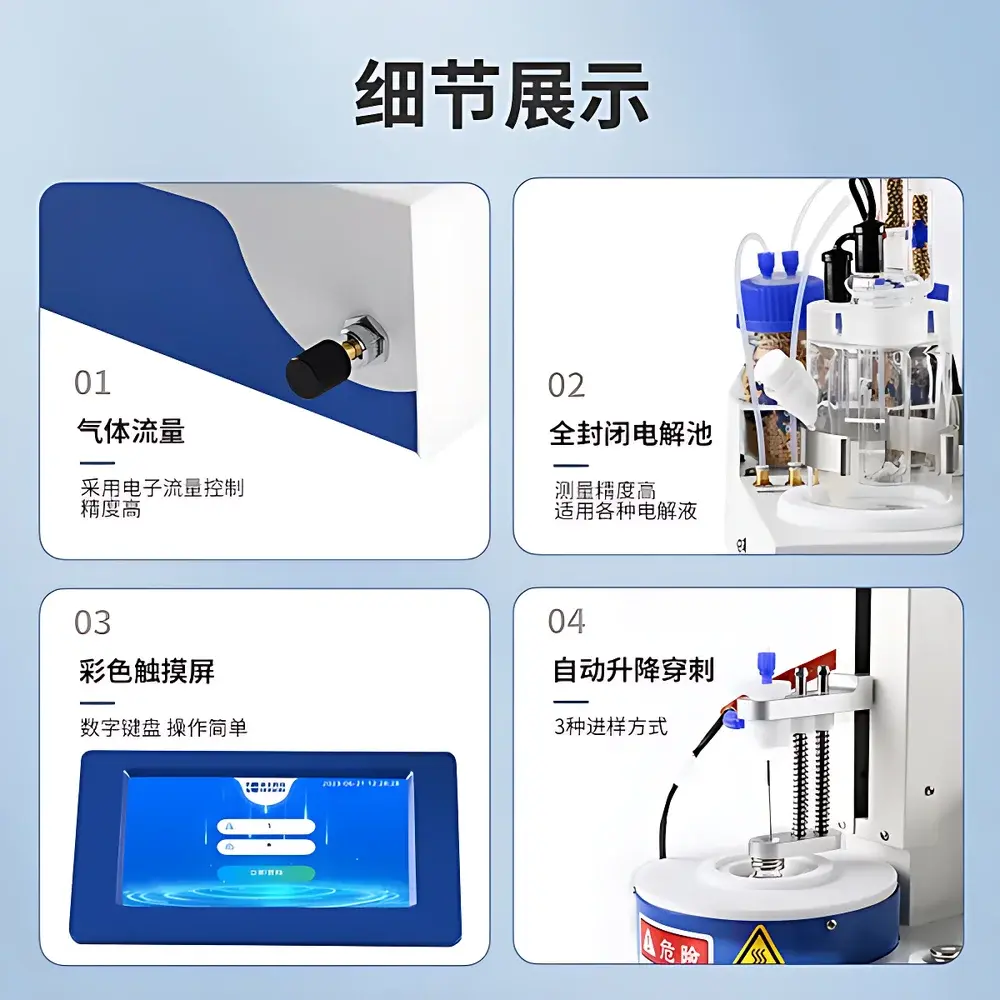
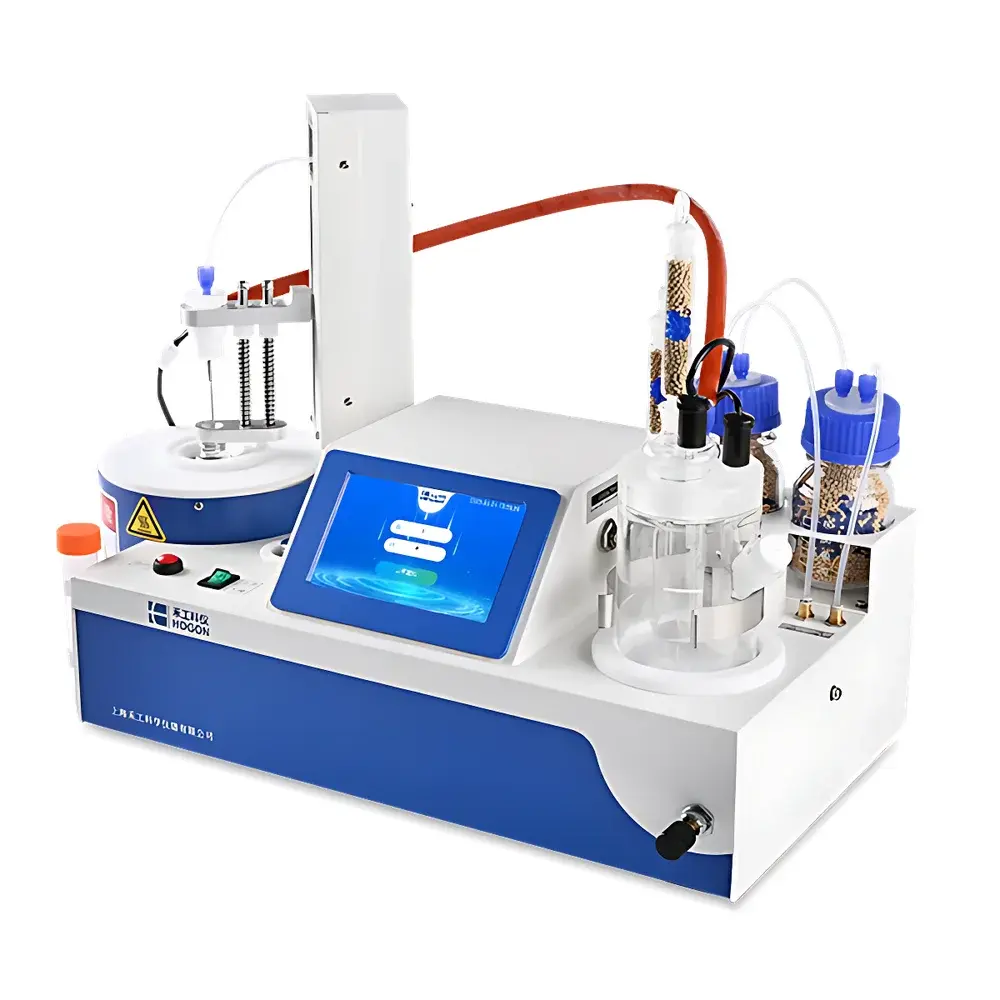
HOGON AKF-CH6 Coulometric Karl Fischer Moisture Titrator
| Brand | HOGON |
|---|---|
| Origin | Shanghai, China |
| Manufacturer | Yes |
| Type | Coulometric Moisture Analyzer |
| Model | AKF-CH6 |
| Price | USD 9,500 (approx.) |
| Measurement Principle | Coulometric Karl Fischer Titration |
| Detection Method | Polarization Current Detection |
| Electrode Configuration | Dual Platinum Microelectrodes |
| Titration Cell | Sealed, Dry-Gas Purged Coulometric Cell |
| Typical Analysis Time | ≤7 min per sample |
| Sample Mass Range | 0.25–0.28 g |
| Water Quantification Range | 1–500 µg H₂O |
| Resolution | 0.1 µg H₂O |
| Compliance | ASTM E203, ISO 760, USP <921>, EP 2.5.12, GLP-ready architecture |
Overview
The HOGON AKF-CH6 is a dedicated coulometric Karl Fischer moisture titrator engineered for high-precision, trace-level water quantification in low-moisture organic compounds—particularly reactive or hydrophobic materials such as stearyl acrylate and other acrylate esters. Unlike volumetric KF systems, the AKF-CH6 employs coulometric generation of iodine at the anode via controlled electrolysis, enabling direct, stoichiometric quantification of water according to the classic Karl Fischer reaction: H₂O + I₂ + SO₂ + 3RN + CH₃OH → 2RN·HI + RN·HSO₄CH₃. This principle delivers sub-microgram detection limits (0.1 µg) and exceptional reproducibility (RSD < 0.5% at 10–100 µg level), making it suitable for QC release testing, stability studies, and raw material qualification where regulatory compliance demands rigorous trace moisture control.
Key Features
- Sealed, gas-purged coulometric titration cell with integrated dual platinum microelectrodes for stable polarization current detection and minimized atmospheric interference
- Automated electrolytic iodine generation with real-time current monitoring and adaptive endpoint determination
- Programmable heating module and mass-flow-controlled carrier gas (dry nitrogen or argon) for consistent sample introduction and solvent drying
- Self-calibrating reagent system using certified anhydrous methanol-based KF coulometric reagents (e.g., Hydranal-Coulomat AG)
- Onboard temperature stabilization (±0.5 °C) and humidity-sealed optical path to prevent ambient moisture ingress during analysis
- GLP-compliant audit trail with timestamped method parameters, operator ID, reagent lot tracking, and raw current/time curve export
Sample Compatibility & Compliance
The AKF-CH6 is validated for direct injection and oven-heating-assisted analysis of thermally stable, non-volatile acrylates—including stearyl acrylate, lauryl acrylate, and behenyl acrylate—as well as pharmaceutical excipients (e.g., PVP, cellulose derivatives), polymer precursors, catalysts, and electronic-grade solvents. It meets method validation requirements under ICH Q2(R2) for specificity, linearity (1–500 µg), accuracy (recovery 98.5–101.2%), and precision. Instrument design supports compliance with FDA 21 CFR Part 11 (electronic signatures, audit trail), ISO/IEC 17025 (calibration traceability to NIST SRMs), and pharmacopoeial standards including USP , EP 2.5.12, and JP 2.07.
Software & Data Management
The AKF-CH6 operates with HOGON’s proprietary TitraSoft v3.2 software, running on an embedded industrial PC with touchscreen interface. The software enables method-driven workflows: users define heating profiles (40–150 °C), carrier gas flow (20–100 mL/min), titration sensitivity thresholds, and automatic blank subtraction. All raw polarization current vs. time data are stored in .csv and .tdf formats. Reports include calculated ppm values, statistical summaries (mean, SD, RSD), calibration verification logs, and electronic signatures compliant with ALCOA+ principles. Data export supports LIMS integration via OPC UA or secure FTP.
Applications
- QC release testing of acrylate monomers per ASTM D6304 and ISO 15512
- Stability-indicating moisture profiling of photoinitiators and UV-curable resins
- Residual solvent and hydration state assessment in API intermediates
- Moisture mapping across polymer synthesis batches to correlate with gel time and crosslink density
- Validation of desiccant efficiency in sealed packaging for moisture-sensitive electronics materials
- Supporting ISO 8502-2 surface cleanliness testing in metal pretreatment processes
FAQ
What sample preparation is required for stearyl acrylate analysis?
No derivatization or solvent dilution is needed; samples are weighed directly into the oven vial (0.25–0.30 g typical) and introduced via heated carrier gas. Pre-drying of vials at 120 °C for 30 min is recommended.
Does the AKF-CH6 support automated sample changers?
Yes—optional 12-position autosampler (HOGON AS-12) with programmable vial heating and inert gas purging is available for unattended batch analysis.
How is reagent consumption monitored and managed?
The system tracks cumulative electrolysis charge (coulombs) and correlates it with theoretical iodine generation; reagent exhaustion triggers visual and audible alerts, and usage logs are archived per batch.
Can the instrument be calibrated using certified water standards?
Yes—traceable 1.00 mg/g and 10.0 mg/g water-in-methanol standards (NIST-traceable) are supported for daily system suitability verification per USP .
Is remote diagnostics and firmware updates supported?
Yes—via secure HTTPS-enabled web interface with role-based access control; firmware updates are digitally signed and validated prior to installation.




