
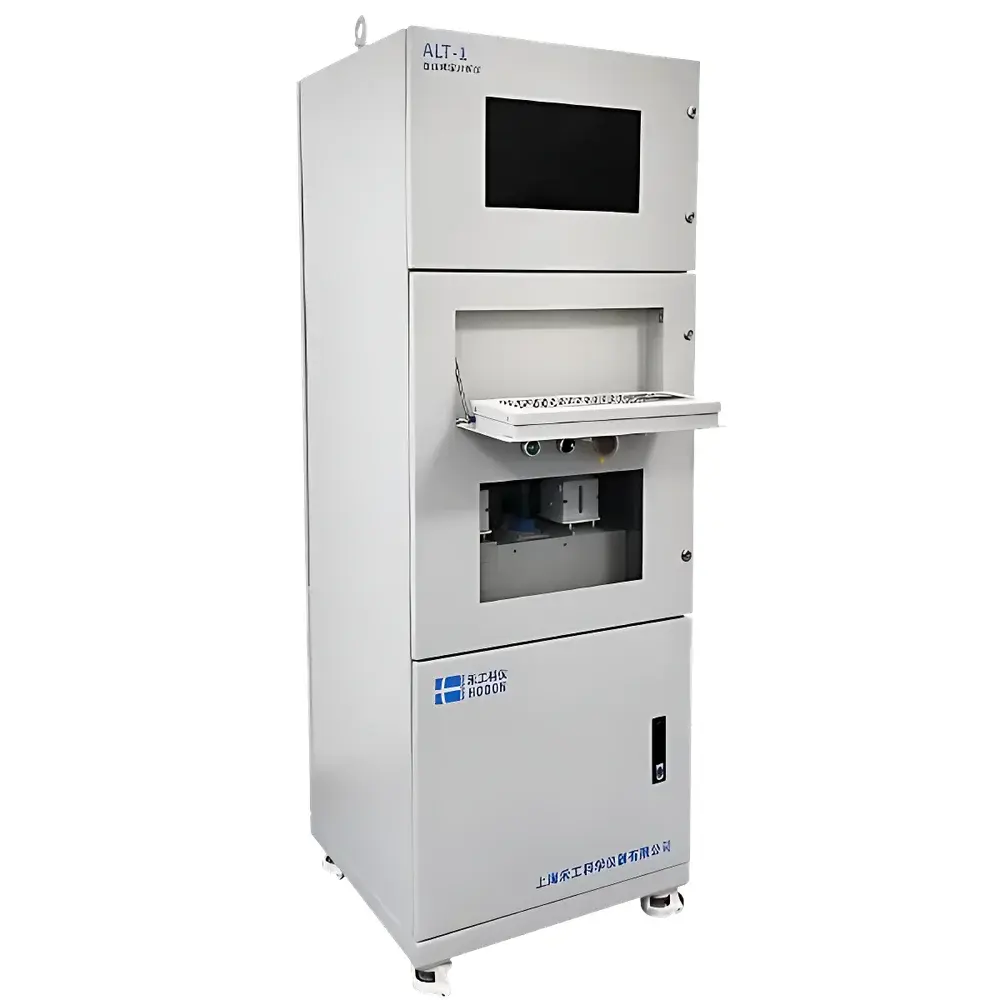
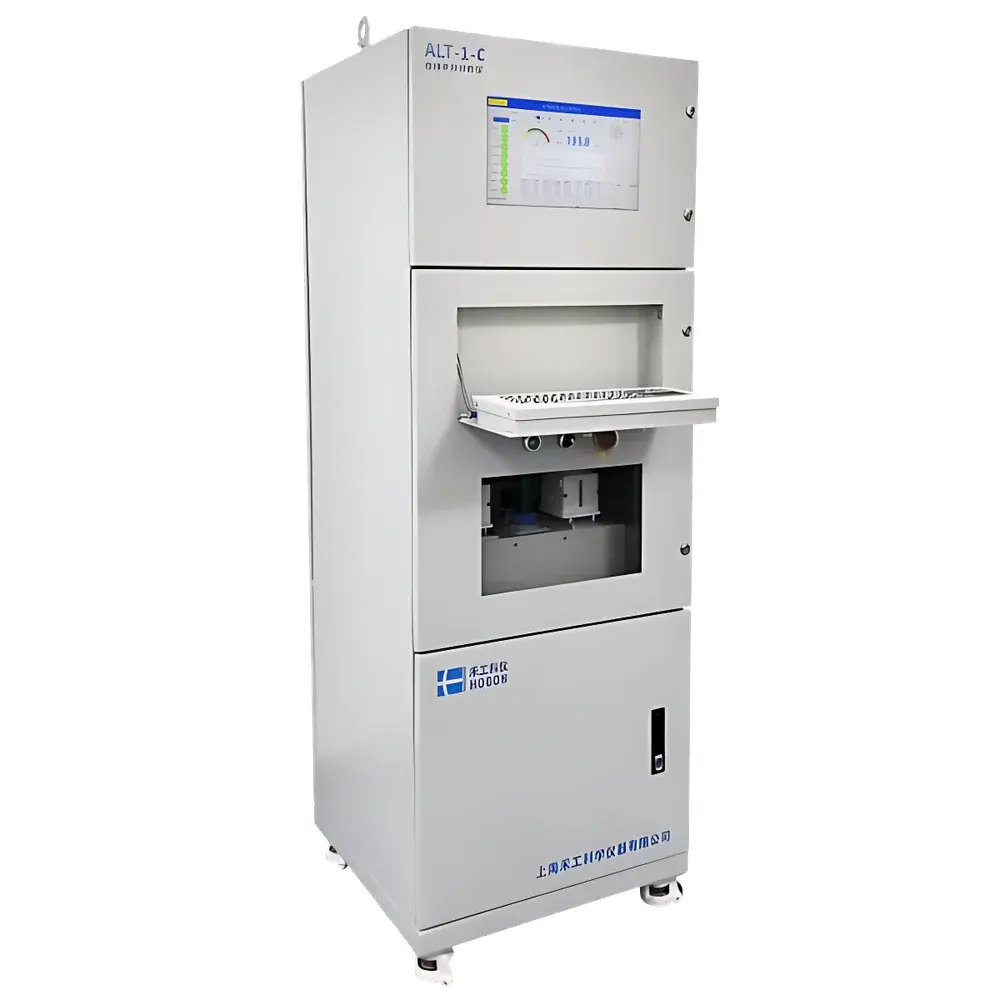
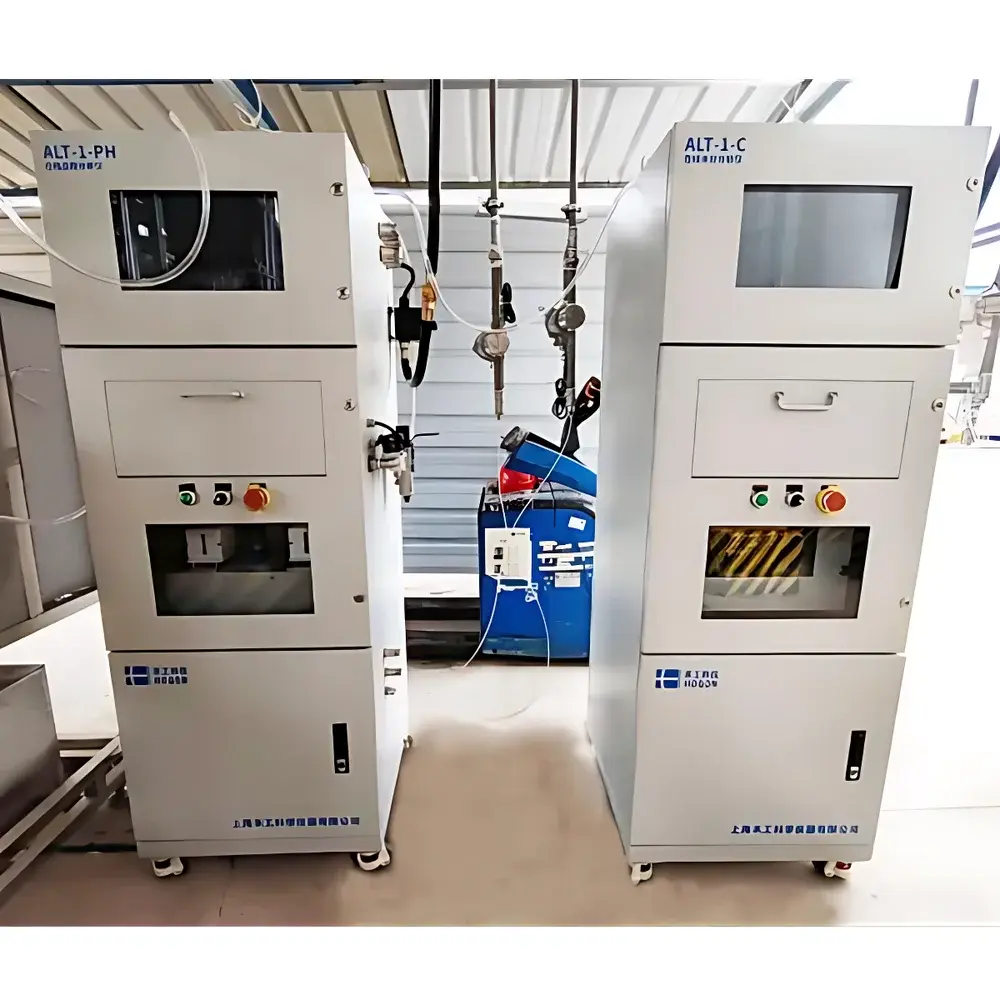
HOGON ALT-1 Online Automatic Potentiometric Titrator
| Brand | HOGON |
|---|---|
| Origin | Shanghai, China |
| Manufacturer Type | Original Equipment Manufacturer (OEM) |
| Product Category | Domestic |
| Model | ALT-1 Online Automatic Potentiometric Titrator |
| Instrument Type | General-purpose Potentiometric Titrator |
| Application Scope | Universal |
| Measurement Range | pH: 0–20 |
| mV | −2000 to +2000 |
| Resolution | 0.001 pH / 0.1 mV / 0.003 Abs |
| Titration Accuracy | ±1 µL (using 20 mL burette) |
| Analysis Interval | 15–999 minutes adjustable |
| Output Signals | 4–20 mA / Modbus TCP / CAN |
Overview
The HOGON ALT-1 Online Automatic Potentiometric Titrator is an industrial-grade electrochemical analyzer engineered for continuous, unattended operation in process-critical environments. It implements potentiometric titration — a thermodynamically grounded analytical technique that detects endpoint transitions via potential change across a reference–indicator electrode pair — to quantify acid-base, redox, complexometric, and precipitation reactions in real time. Unlike laboratory benchtop titrators, the ALT-1 integrates directly into production lines, enabling closed-loop control of chemical baths through automated sampling, reagent delivery, endpoint detection (via potentiometric, photometric, or colorimetric modes), and digital signal output. Designed for 24/7 deployment in electroplating, battery electrolyte manufacturing, petrochemical refining, and wastewater treatment facilities, it eliminates manual grab sampling and offline lab analysis, reducing analytical latency from hours to under 10 minutes while maintaining metrological traceability per ISO/IEC 17025-aligned calibration protocols.
Key Features
- Multi-Mode Endpoint Detection: Simultaneous support for potentiometric (pH/mV), photometric (absorbance at user-defined wavelengths), and colorimetric (visual endpoint recognition) titration methods — enabling accurate quantification of Cu²⁺ in PCB plating baths, H₂O in Li-ion battery electrolytes, Cr(VI) in effluent streams, and acidity in transformer oil.
- Triple Sampling Architecture: Combines overflow volumetric sampling, titration loop recirculation, and high-precision syringe-driven metering (±1 µL accuracy with 20 mL burette) to ensure representative sub-sampling across temperature ranges of 5–60 °C and viscous or particulate-laden matrices.
- Industrial-Grade Enclosure: IP65-rated housing with optional ATEX-certified explosion-proof configuration (IICT4); wetted components fabricated from PTFE, ETFE, and ceramic-reinforced polymers to resist corrosion from strong acids, oxidizers, and metal salts — extending service life by ≥3× versus standard stainless-steel systems.
- Closed-Loop Process Integration: Native Modbus TCP and 4–20 mA analog outputs interface directly with DCS/SCADA systems; enables real-time actuation of dosing pumps, valve arrays, or pH controllers based on validated titration results — fulfilling ISA-88 batch control and ISA-95 enterprise-control integration requirements.
- Modular Sensor Expansion: Hot-swappable probe modules for pH, ion-selective electrodes (e.g., Cu²⁺, Ni²⁺, F⁻), UV-Vis photometers (190–850 nm), and conductivity cells — allowing field-adaptation to evolving process chemistry without hardware replacement.
Sample Compatibility & Compliance
The ALT-1 accommodates aqueous and low-viscosity non-aqueous samples including sulfuric acid copper baths (PCB manufacturing), lithium hexafluorophosphate (LiPF₆) electrolytes, mineral insulating oils, and municipal/industrial wastewater. All fluidic pathways comply with USP and material compatibility guidelines. Data integrity adheres to FDA 21 CFR Part 11 requirements via electronic signature-capable audit trails, role-based access control (RBAC), and immutable result logging. Analytical performance meets ASTM D6304 (Karl Fischer water determination), ASTM D974 (acid number), and GB/T 7600–2014 (water content in insulating oil) specifications. Calibration verification follows ISO 8655-6 for piston burettes and NIST-traceable pH buffer standards.
Software & Data Management
HOGON TitrOS v3.2 firmware provides embedded instrument control, method sequencing, and data visualization via a ruggedized touchscreen HMI. Remote monitoring and configuration are supported over secure TLS-enabled web interface or OPC UA server. All titration curves, raw electrode potentials, absorbance traces, and metadata (operator ID, sample ID, timestamp, environmental conditions) are stored in SQLite databases with SHA-256 hashing for tamper evidence. Export formats include CSV, PDF analytical reports (with GLP-compliant headers), and XML for LIMS integration. Audit logs record every parameter change, calibration event, and user login — supporting GMP/GLP compliance audits and ISO 9001:2015 quality system documentation.
Applications
- Lithium Battery Manufacturing: In-line moisture monitoring in LiPF₆ electrolyte tanks; maintains H₂O ≤ ±5 ppm deviation, reducing cell swelling defects by 18% (validated per IEC 62660-1).
- Electroplating & PCB Fabrication: Real-time [Cu²⁺] and free acid concentration tracking in acidic sulfate copper baths; achieves ≤0.5% relative error vs. certified reference materials (CRMs) per IPC-4552A.
- Power Transformer Maintenance: Automated water-in-oil analysis per ASTM D1533; replaces manual Karl Fischer titration with 92% labor reduction and <2% inter-day RSD.
- Environmental Compliance Monitoring: Continuous hexavalent chromium (Cr(VI)) and nickel speciation in industrial effluents using diphenylcarbazide photometric titration — fully compliant with EPA Method 7196A and GB/T 7467–1987.
FAQ
What communication protocols does the ALT-1 support for DCS integration?
Modbus TCP (primary), Modbus RTU over RS-485, and CAN bus — all configurable via web-based setup utility with register mapping documentation provided.
Can the ALT-1 perform back-titration or multi-step titration sequences?
Yes. Method editor supports up to 8 sequential titration steps per sample, including pre-treatment additions, waiting intervals, dual-indicator endpoints, and conditional branching logic.
Is validation documentation available for regulated industries?
Factory-issued IQ/OQ protocols, as well as customizable PQ templates aligned with ASTM E2500 and Annex 11, are included with each unit shipment.
How often does the system require recalibration?
Electrode offset verification is recommended before each shift; full 3-point pH and mV calibration every 24 hours or after 10 titrations — automated alerts notify operators when thresholds are exceeded.
What maintenance intervals apply to wetted components?
Burette pistons and tubing kits are rated for ≥50,000 cycles; scheduled replacement every 6 months under continuous operation — extended to 12 months with nitrogen purge option.





