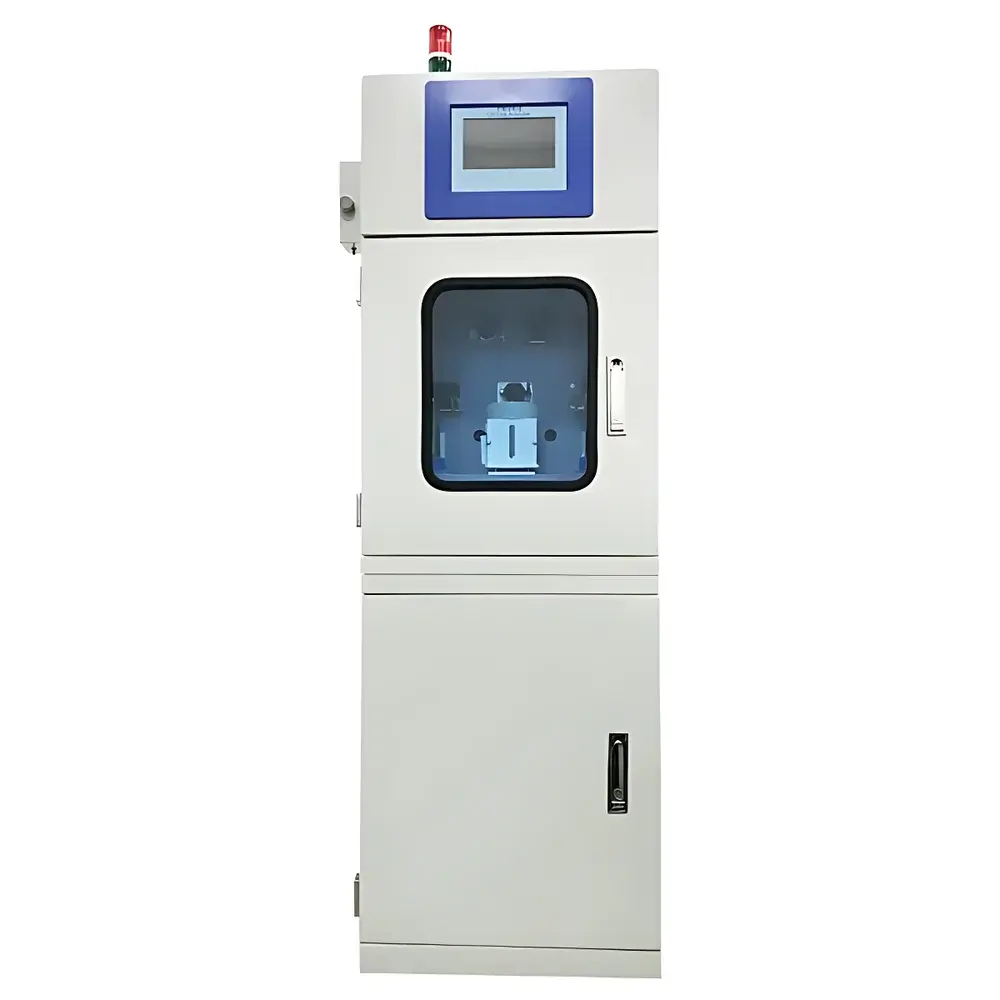
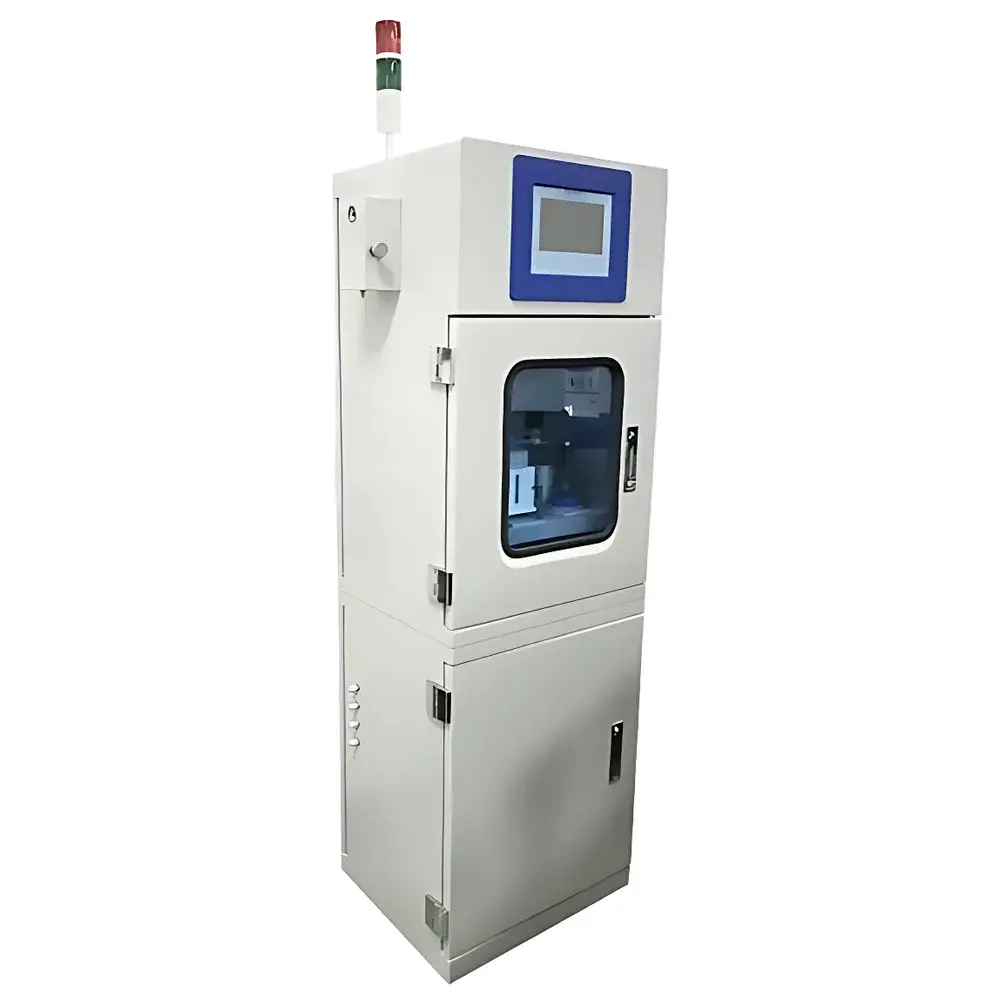
HOGON ALT Online Alkalinity Analyzer for Na₂CO₃ and NaOH Excess in Brine
| Brand | HOGON |
|---|---|
| Model | ALT Online Alkalinity Analyzer for Na₂CO₃ and NaOH Excess in Brine |
| Origin | Shanghai, China |
| Manufacturer | HOGON Scientific Instruments Co., Ltd. |
| Type | Industrial Online Potentiometric and Photometric Titration System |
| Compliance | Designed for continuous process monitoring per ISO 9001-manufactured quality system |
| Interface | RS232, TCP/IP, Modbus RTU/TCP |
| Display | 7-inch full-color TFT touchscreen (Chinese UI) |
| Processor | ARM Cortex-A8 |
| Detection Modes | Potentiometric (pH, redox), photometric (colorimetric endpoint), complexometric, precipitation, non-aqueous titration |
| Electrode Options | Dual-platinum indicator electrode, combination pH electrode (optional), ion-selective electrodes (customizable) |
| Fluid Handling | High-precision burette (±0.1% volumetric accuracy), electromagnetic switching valves, solvent-resistant peristaltic pumps (≥50,000 cycles lifespan) |
| Sample Throughput | Up to 6 analyses/hour (configurable cycle time) |
| Data Output | Structured CSV/JSON via Ethernet |
| Environmental Rating | IP65 enclosure (industrial cabinet) |
| Power Supply | 220 VAC ±10%, 50/60 Hz |
Overview
The HOGON ALT Online Alkalinity Analyzer for Na₂CO₃ and NaOH Excess in Brine is an industrial-grade, fully automated titration-based process analyzer engineered for continuous, unattended monitoring of total alkalinity and excess alkali species—specifically sodium carbonate (Na₂CO₃) and sodium hydroxide (NaOH)—in saturated brine streams used in chlor-alkali electrolysis, salt purification, and caustic soda production. Unlike conventional offline lab titrations, this system implements dual-mode endpoint detection: potentiometric measurement via high-stability dual-platinum or pH electrodes, coupled with photometric analysis using a high-resolution color-sensing module to detect subtle chromatic shifts during indicator-based titrations (e.g., phenolphthalein/methyl orange double-endpoint methods). The instrument operates on the principle of sequential acid-base titration under controlled flow dynamics, enabling real-time quantification of both phenolphthalein alkalinity (P-alkalinity, primarily OH⁻ + ½CO₃²⁻) and total alkalinity (M-alkalinity, OH⁻ + CO₃²⁻ + HCO₃⁻), from which NaOH and Na₂CO₃ concentrations are calculated using stoichiometric mass-balance algorithms embedded in firmware.
Key Features
- True walk-away automation: Integrated sample aspiration, filtration (optional inline filter module), temperature stabilization (ambient-compensated measurement path), reagent dosing, endpoint detection, back-titration validation, and post-analysis cleaning—all executed without operator intervention.
- Modular architecture: Swappable titration modules support pH, redox, complexometric (e.g., EDTA for Ca²⁺/Mg²⁺ interference correction), and precipitation titrations—enabling cross-parameter validation and matrix compensation in complex brine matrices containing Cl⁻, SO₄²⁻, Ca²⁺, and suspended solids.
- Industrial-grade fluidics: Electromagnetic multi-port valves rated for >1 million actuation cycles; ceramic-coated precision burettes (10 mL, Class A tolerance); chemically resistant peristaltic pumps with pulseless flow control for consistent reagent delivery.
- Embedded intelligence: ARM Cortex-A8 processor running real-time Linux OS; onboard data logging (72-hour buffer); configurable alarm thresholds for reagent depletion, electrode drift (>5 mV/min), turbidity-induced photometric noise, and power interruption.
- Process integration ready: Native Modbus TCP/RTU and OPC UA (via optional firmware upgrade) for direct PLC communication; analog 4–20 mA outputs for NaOH and Na₂CO₃ concentration; digital I/O for pump control signals and emergency shutdown interlocks.
Sample Compatibility & Compliance
The ALT analyzer is validated for use with clarified or filtered saturated brine (25–30% w/w NaCl), operating within a temperature range of 10–40 °C and conductivity up to 120 mS/cm. It accommodates sample matrices containing ≤50 ppm suspended solids (with optional 5-µm pre-filter), ≤10 ppm free chlorine (requires dechlorination cartridge), and trace heavy metals (Ni, Fe, Cr) typical of membrane-cell or diaphragm-cell chlor-alkali effluents. The system conforms to design principles aligned with ISO 22196 (antimicrobial surface testing instrumentation guidelines), ASTM D1068 (standard test methods for alkalinity of water), and IEC 61511 (functional safety for SIS in process industries). All wetted parts contact materials meet USP Class VI biocompatibility requirements; electrical design complies with CE/EMC Directive 2014/30/EU and RoHS 2011/65/EU.
Software & Data Management
The embedded HOGON Titration Control Suite provides role-based access (Operator, Engineer, Administrator) with audit-trail functionality compliant with FDA 21 CFR Part 11 requirements—including electronic signatures, immutable event logs (timestamped electrode calibration, reagent lot entry, result export), and password-protected method editing. Analytical methods (e.g., “Brine_P-M_Alkalinity_v2.1”) are stored as encrypted XML files with version control and rollback capability. Raw sensor data (mV vs. time, RGB intensity curves) and final reports (NaOH mg/L, Na₂CO₃ g/L, % excess alkalinity) are exported via FTP/SFTP or MQTT to MES/SCADA databases. Optional cloud gateway enables remote diagnostics, predictive maintenance alerts (e.g., pump wear estimation from current draw profiles), and over-the-air firmware updates.
Applications
This analyzer is deployed in chlor-alkali plants for real-time optimization of brine purification units (e.g., lime-soda softening), where precise NaOH/Na₂CO₃ ratio control prevents scaling in ion-exchange membranes and electrolytic cells. It is also applied in wastewater neutralization cascades treating caustic rinse streams from metal finishing lines, pulp & paper bleach plants requiring alkalinity balance for chlorine dioxide generation, and pharmaceutical API synthesis reactors where stoichiometric base addition must be tightly constrained. Field installations include PCB etching line make-up tanks (monitoring NaOH carryover from stripping baths) and textile dye-house effluent equalization basins (tracking alkalinity surges from mercerization processes).
FAQ
What titration methods does the ALT analyzer support for brine alkalinity determination?
It implements standardized double-indicator titration (ASTM D1068 Annex A1) with automatic endpoint recognition via combined potentiometric and photometric detection—eliminating subjectivity in color interpretation.
Can the system compensate for chloride interference during NaOH quantification?
Yes; optional Ag/AgCl reference electrode pairing and adaptive baseline correction algorithms suppress junction potential drift caused by high [Cl⁻], ensuring ±0.8% RSD in NaOH measurements across 0.1–5.0 g/L range.
Is remote calibration and method validation possible?
Calibration verification (using NIST-traceable Na₂CO₃ standards) and spike-recovery tests can be initiated remotely via secure web interface; all validation records are auto-archived with digital signature.
How is electrode maintenance handled in continuous operation?
The system performs automated electrode cleaning cycles using ultrasonic agitation and low-conductivity water flushes every 24 hours; lifetime expectancy exceeds 18 months under typical brine conditions.
Does the analyzer support integration with DCS systems from Siemens, Yokogawa, or Honeywell?
Native Modbus TCP support ensures plug-and-play connectivity; custom DCS drivers (e.g., DeltaV CIP, CS3000 FCS) are available under NDA with OEM engineering collaboration.
Related Products