
HOGON AKF-CH6 Coulometric Karl Fischer Moisture Analyzer for PVB Film and Polyvinyl Butyral (PVB)
| Brand | HOGON |
|---|---|
| Origin | Shanghai, China |
| Manufacturer | Yes |
| Type | Coulometric Karl Fischer Moisture Analyzer |
| Detection Principle | Coulometric Titration (Karl Fischer) |
| Sensitivity | 0.1 µg H₂O |
| Temperature Control Range | 30–200 °C |
| Blank Value Stability | ≤553 µg |
| Repeatability (RSD) | <2% |
| Compliance | ASTM D6304, ISO 760, GB/T 7139 |
| Sample Form | Solid films, granules, powders, resins |
| Application Scope | PVB, adhesives, coatings, thermoplastics, epoxy resins |
Overview
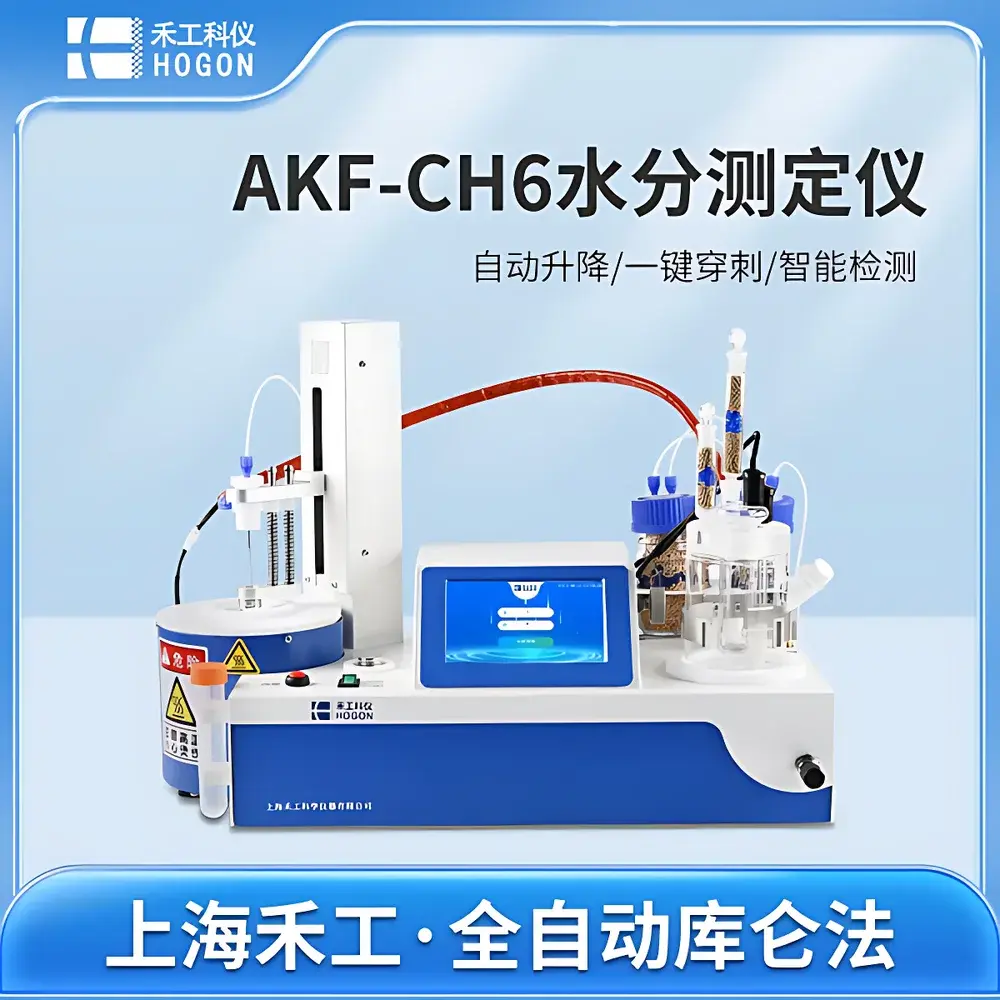
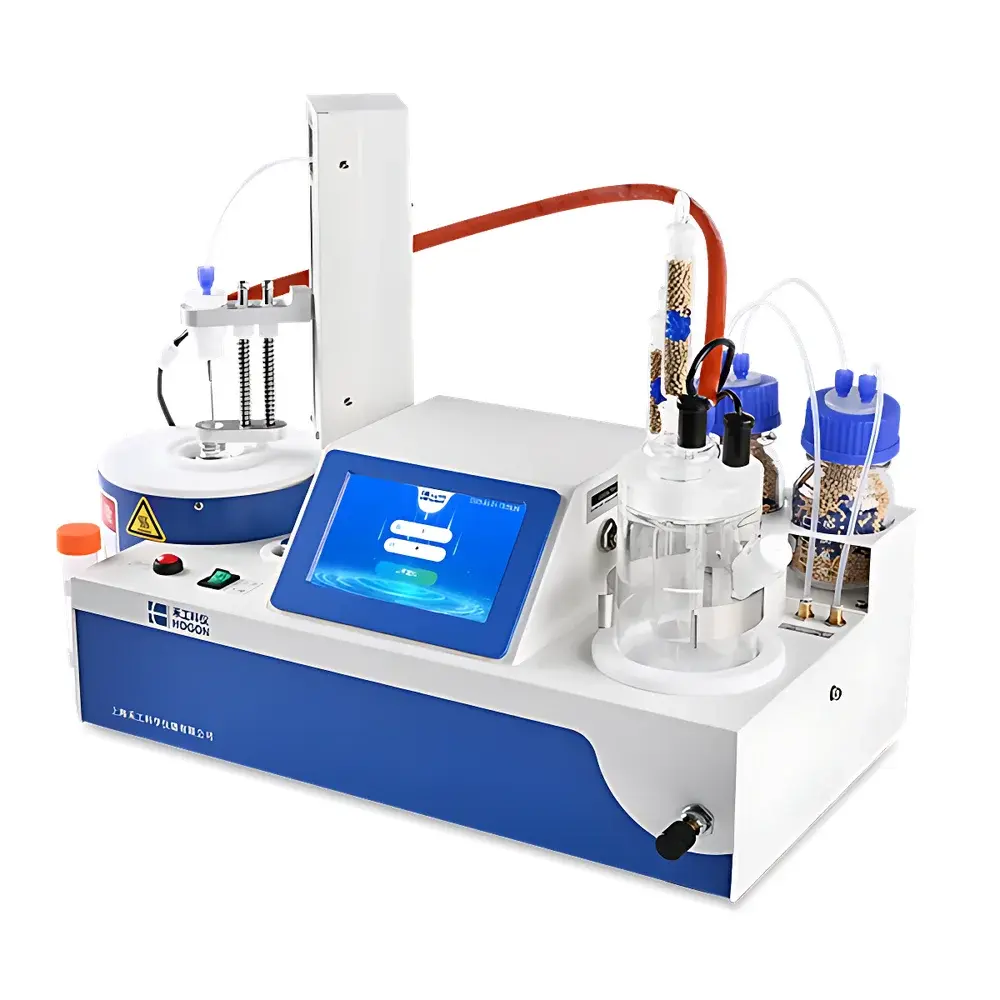
The HOGON AKF-CH6 is a precision coulometric Karl Fischer moisture analyzer engineered specifically for trace water quantification in hygroscopic and thermally stable polymeric materials—most critically, polyvinyl butyral (PVB) interlayer film used in laminated automotive windshields and architectural glazing. Unlike volumetric KF titration, the AKF-CH6 employs coulometric generation of iodine at the anode, enabling direct, stoichiometric quantification of water down to 0.1 µg with exceptional linearity and minimal reagent consumption. Its core architecture integrates a sealed titration cell, dual-platinum indicator electrodes, and a membrane-separated electrolysis electrode—designed to eliminate ambient humidity interference and ensure electrochemical signal fidelity. For PVB—a material where water content directly governs interfacial adhesion, optical clarity, and long-term delamination resistance—the AKF-CH6 delivers metrologically traceable results aligned with industrial QC thresholds (0.3–0.8 wt% H₂O), replacing outdated gravimetric oven methods that suffer from thermal decomposition artifacts and poor reproducibility.
Key Features
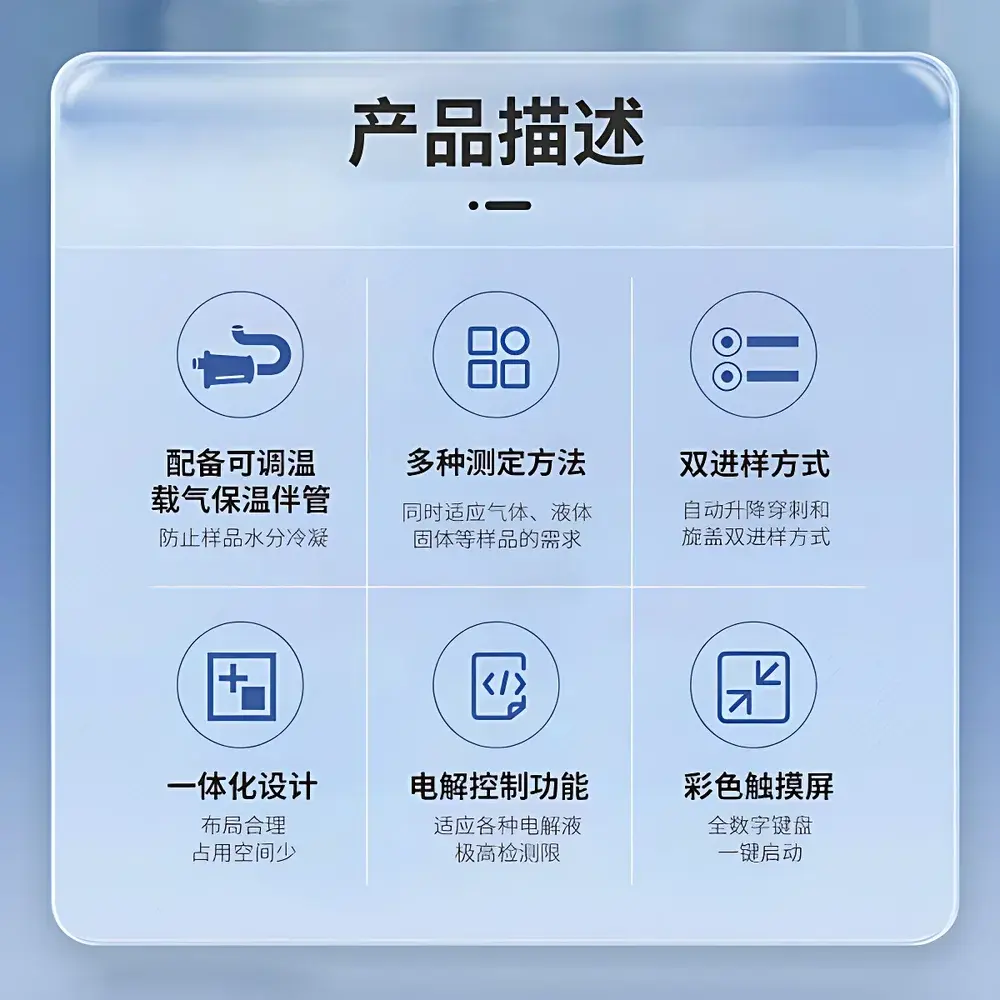
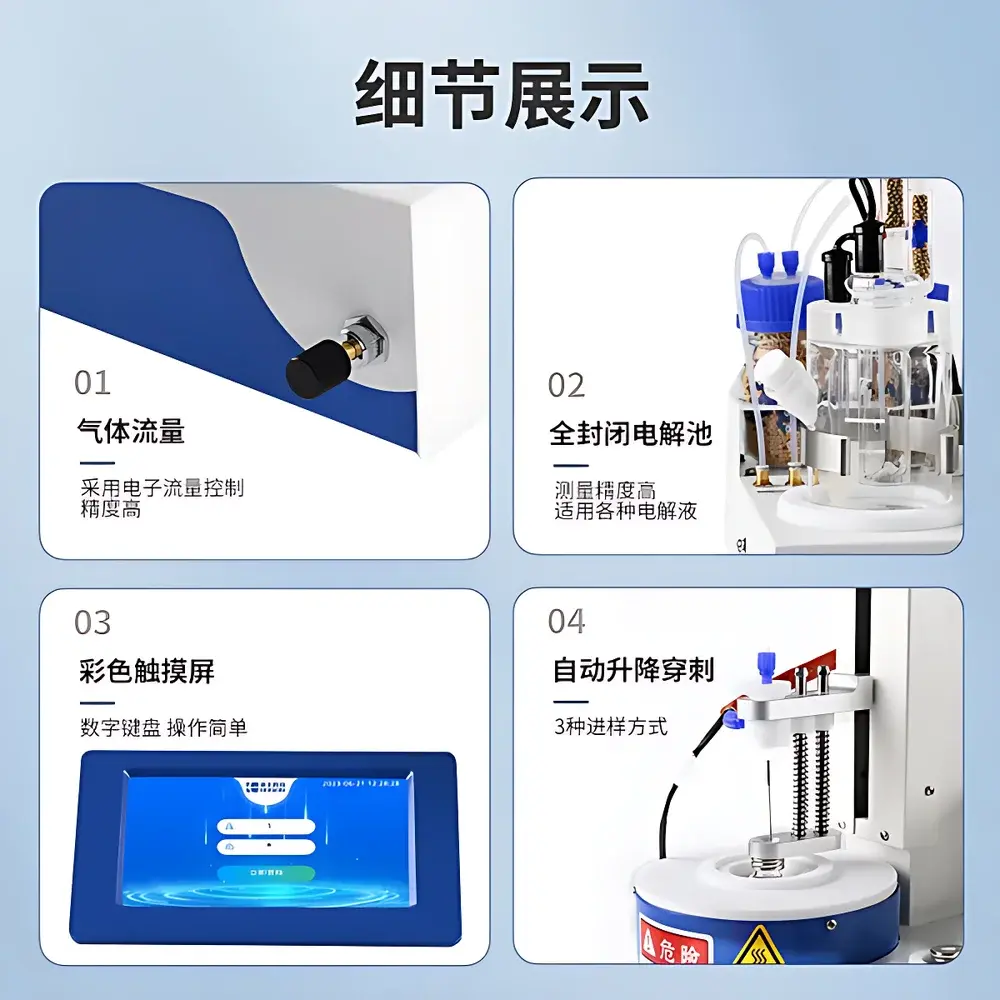
- Hermetically sealed coulometric titration cell with inert gas purge (N₂ or dry air), maintaining blank stability ≤553 µg and eliminating environmental moisture drift.
- Dual-platinum pin electrodes coupled with a glass-frit隔膜 electrolysis electrode for high-fidelity end-point detection and sub-microgram sensitivity (0.1 µg H₂O).
- Programmable heating module (30–200 °C) with PID-controlled thermal ramping; optimized at 120 °C for complete release of bound water from PVB without polymer degradation.
- Automated needle-puncture sampling system: enables sealed, oxygen-free introduction of solid film specimens (e.g., 80–95 mg cut strips), minimizing oxidation and cross-contamination.
- Intuitive parameter-driven workflow: pre-set gas flow (e.g., 30 mL/min), heating profile, and stirring speed (level 5); instrument executes electrolysis, stoichiometric calculation, and result export autonomously.
Sample Compatibility & Compliance
The AKF-CH6 is validated for solid, semi-crystalline, and viscous polymeric matrices—including PVB film, acrylic resins, polyurethane adhesives, epoxy prepolymers, and solvent-borne coatings. Its heating-assisted headspace extraction protocol ensures quantitative liberation of both surface-adsorbed and hydrogen-bonded water. Method validation per ISO 760 and ASTM D6304 confirms repeatability (RSD <2% across parallel PVB samples) and recovery accuracy (99.2–100.7%). The analyzer meets regulatory expectations for automotive glass manufacturing under GB/T 7139 and supports GLP-compliant data integrity through audit-trail-enabled operation logs. While not FDA 21 CFR Part 11-certified out-of-box, its raw data export (CSV/Excel) and user-accessible calibration records facilitate internal validation for GMP-aligned environments.
Software & Data Management
The embedded firmware provides real-time current/voltage monitoring, titration curve visualization, and automatic blank subtraction. Measurement reports include sample mass, total consumed charge (C), calculated water mass (µg), and final concentration (% w/w), all timestamped and user-ID tagged. Data export is native to CSV format with no proprietary viewer required—enabling seamless integration into LIMS or statistical process control (SPC) platforms. Firmware supports multi-user profiles with role-based access (operator, supervisor, administrator), ensuring procedural consistency across shifts. All method parameters, calibration events, and error logs are stored internally for ≥12 months—supporting root-cause analysis during quality investigations.
Applications
Beyond PVB film QC, the AKF-CH6 serves as a reference-grade tool for moisture specification in advanced materials: quantifying residual solvent in lithium-ion battery binders (e.g., PVDF), verifying drying efficacy in pharmaceutical excipients (e.g., microcrystalline cellulose), assessing hydrolytic stability of engineering thermoplastics (e.g., PA6, PET), and validating moisture limits in aerospace-grade adhesives. In R&D labs, it enables kinetic studies of moisture uptake under controlled humidity cycling, supporting predictive modeling of shelf-life and service life for laminated composites.
FAQ
What distinguishes coulometric KF from volumetric KF for PVB analysis?
Coulometric KF generates iodine electrochemically in situ, offering superior precision below 100 µg water—critical for PVB’s narrow acceptable range (0.3–0.8%). Volumetric methods lack resolution at this level and require frequent standardization.
Can the AKF-CH6 analyze uncut PVB rolls or only cut specimens?
Only representative cut specimens (80–95 mg) are compatible; the instrument requires precise mass input and uniform thermal exposure. Roll-level screening must be performed via statistically valid sampling protocols.
Is method transfer possible from oven-drying to AKF-CH6?
Yes—validation per ICH Q2(R2) guidelines confirms equivalence: AKF-CH6 yields lower uncertainty (±0.008% vs ±0.05% for AOAC 952.09), with correlation coefficients >0.998 across 30+ PVB lots.
Does the system support automated sample changers?
Not natively; the AKF-CH6 is a benchtop single-position analyzer. High-throughput labs integrate it with external autosamplers via TTL/RS232 triggers (custom interface required).
How often must the electrolyte be replaced?
Typical service interval is 300–500 tests under standard PVB conditions; replacement is indicated by rising baseline current (>20 µA) or prolonged titration time (>120 s after injection).
Related Products





