PMM RA-01 / BC-01 / LP-02 / LP-03 / AS-02 / AS-03 Antenna Kits & RF Accessories for EMC and Field Strength Measurement
| Brand | PMM |
|---|---|
| Origin | Italy |
| Model | RA-01, RA-01-HV, BC-01, LP-02, LP-03, AS-02, AS-03 |
| Frequency Range | 9 kHz – 6 GHz |
| Max Input Power | 1000 W (LP-series), 300 W (Horn) |
| Gain | up to 18.77 dBi |
| Compliance | CISPR 16-1-4, ANSI C63.4, IEC 61000-4-3 |
Overview
PMM antenna systems are precision-engineered electromagnetic field sensors designed for standardized radiated emissions and immunity testing in electromagnetic compatibility (EMC) laboratories, calibration facilities, and regulatory compliance centers. These antennas operate across a continuous frequency span from 9 kHz to 6 GHz, covering the full scope of CISPR, FCC Part 15/18, MIL-STD-461, and IEC 61000-4 series test requirements. Each antenna type is optimized for specific field geometry, polarization stability, and impedance matching—ensuring traceable, repeatable measurements under both near-field and far-field conditions. The RA-01 active rod antenna employs calibrated broadband amplification for low-frequency magnetic field dominance (9–30 MHz), while the BC-01 biconical and LP-series log-periodic antennas deliver balanced E-field response with linear phase characteristics essential for time-domain scanning and swept-frequency analysis. All units are supplied with N-type or 7/16 DIN connectors, factory-calibrated amplitude and phase response data, and certified calibration certificates traceable to national metrology institutes (e.g., INRIM, PTB).
Key Features
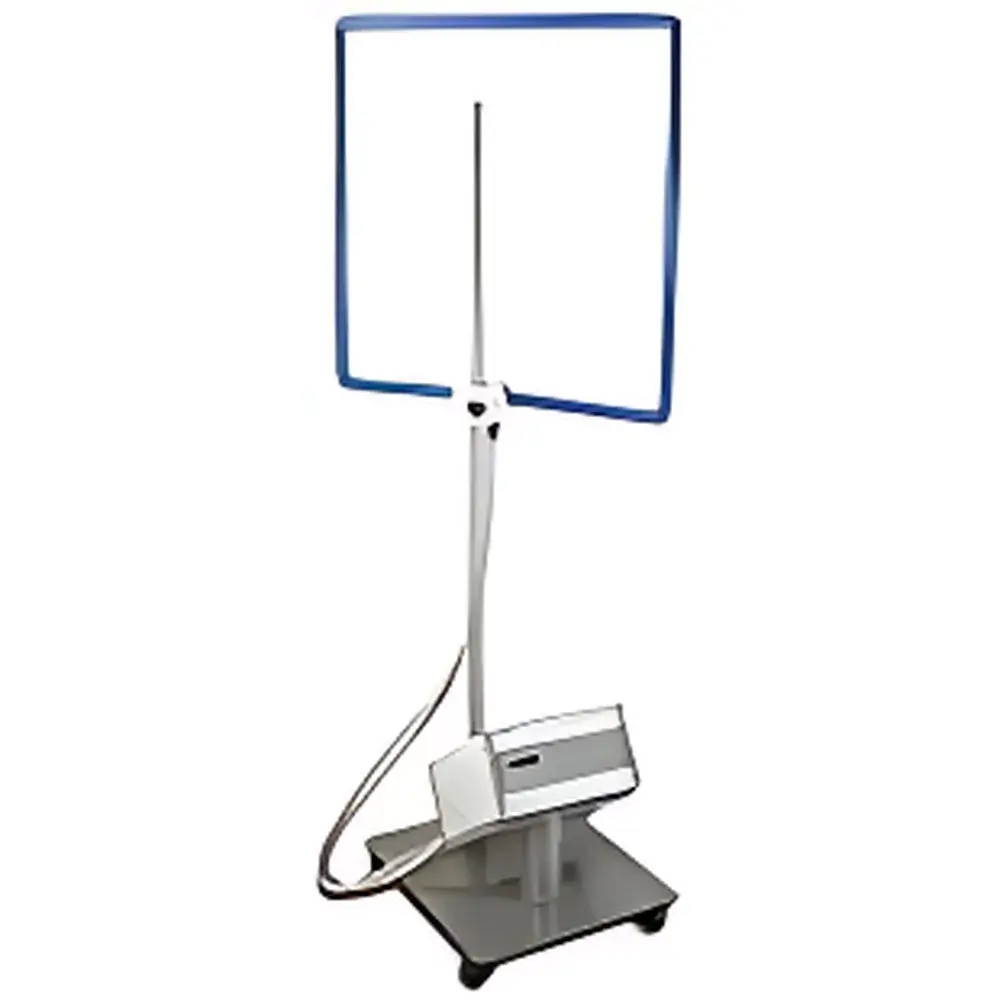
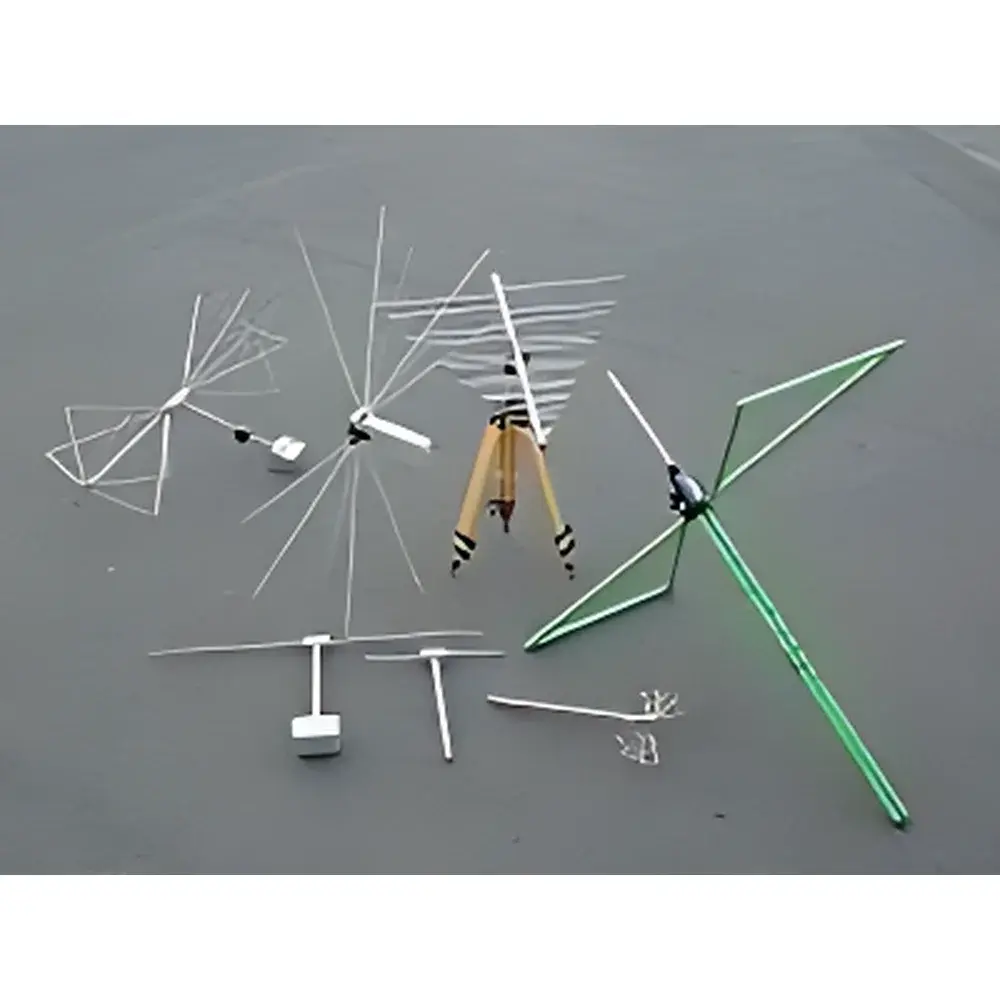
- RA-01 rod antenna: Active design with integrated preamplifier; optimized for magnetic near-field coupling at 9–30 MHz; includes HV variant (RA-01-HV) rated for continuous exposure to electric fields up to 20 kV/m in the 150 kHz–30 MHz band.
- BC-01 biconical antenna: Passive, broadband dipole-based structure; 30–200 MHz operation; symmetrical radiation pattern; VSWR ≤ 2.0 across full band; ruggedized fiberglass housing for long-term environmental stability.
- LP-02 and LP-03 log-periodic antennas: Self-similar geometric design ensuring constant input impedance and consistent gain over octave-spanning bands (200–2700 MHz and 800–6000 MHz respectively); aluminum alloy elements with gold-plated contacts for corrosion resistance and RF continuity.
- AS-02 and AS-03 antenna sets: Pre-configured kits integrating complementary antenna types (e.g., BC-01 + LP-02 for 30–2700 MHz coverage) with unified mounting hardware, cable assemblies, and calibration file bundles—reducing setup variability and inter-lab measurement uncertainty.
- All antennas meet mechanical and electrical durability requirements per IEC 60068-2 environmental testing standards; connector interfaces comply with IEC 61169-16 (N-type) and IEC 61169-4 (7/16 DIN) specifications.
Sample Compatibility & Compliance
These antennas are compatible with all major EMC test receivers (e.g., Rohde & Schwarz ESRP, Keysight N9048B, Tektronix RSA5000), spectrum analyzers equipped with preselection and IF output, and vector network analyzers used for antenna factor verification. They support standardized test configurations defined in CISPR 16-1-4 (antenna calibration), ANSI C63.4 (radiated emission limits), and IEC 61000-4-3 (radiated immunity). Calibration data—including antenna factors, correction factors, and cable loss tables—is provided in IEEE 1528-compliant .s2p and .csv formats. Traceability is documented to primary standards maintained by INRIM (Italy) and accredited per ISO/IEC 17025:2017. No proprietary firmware or driver dependencies exist; antenna factor application is fully manual or script-automatable via SCPI command sets.
Software & Data Management
Calibration files are delivered as ASCII-encoded tabular data with frequency-stamped antenna factor (AF), effective height (heff), and reflection coefficient (S11) values. Users integrate these into test software environments such as EMCO’s EMC32, Teseq’s WaveSurfer, or custom Python/Matlab post-processing pipelines using standard interpolation routines (linear or cubic spline). No vendor-locked software platform is required. Audit trails for calibration validity, revision history, and uncertainty budgets are embedded in each certificate. For GLP/GMP-regulated environments, raw calibration reports include operator signatures, environmental monitoring logs (temperature/humidity during calibration), and equipment ID traceability per ISO/IEC 17025 clause 7.7.
Applications
- Radiated emissions testing per CISPR 32, EN 55032, FCC Part 15B
- Radiated immunity evaluation under IEC 61000-4-3 (including modulated and pulsed field methods)
- Field strength mapping in anechoic chambers, open-area test sites (OATS), and semi-anechoic rooms (SAC)
- Antenna factor validation and system verification per CISPR 16-1-6
- Pre-compliance screening and troubleshooting of PCB-level and enclosure-level EMI sources
- Calibration services for accredited EMC laboratories seeking ISO/IEC 17025 scope expansion
FAQ
Are calibration certificates included with each antenna?
Yes—each unit ships with a manufacturer-issued calibration certificate traceable to INRIM, including measured antenna factors, uncertainties, and environmental conditions at time of calibration.
Can these antennas be used with real-time spectrum analyzers for transient EMI detection?
Yes—the LP-02 and LP-03 models exhibit fast rise-time response (<1 ns) and minimal group delay variation, supporting time-domain EMI capture when paired with real-time bandwidths ≥ 40 MHz.
Is there documentation supporting compliance with FDA 21 CFR Part 11 for regulated medical device testing?
While the antennas themselves are passive measurement transducers, their calibration records and associated metadata (timestamps, operator IDs, instrument IDs) are structured to support Part 11 audit readiness when managed within validated laboratory information management systems (LIMS).
What mounting options are available for repeatable positioning in OATS or chamber environments?
Standard tripod mounts with 3/8″-16 UNC threads, azimuth/elevation rotators (optional), and non-magnetic carbon-fiber extension booms are available to minimize metallic perturbation and ensure reproducible antenna height and orientation per ANSI C63.4 section 5.3.
Do you offer extended calibration intervals or on-site recalibration services?
PMM partners with ISO/IEC 17025-accredited labs across North America, EMEA, and APAC to provide scheduled recalibration with turnaround times under 10 business days; on-site service is available for multi-unit installations under contract.