
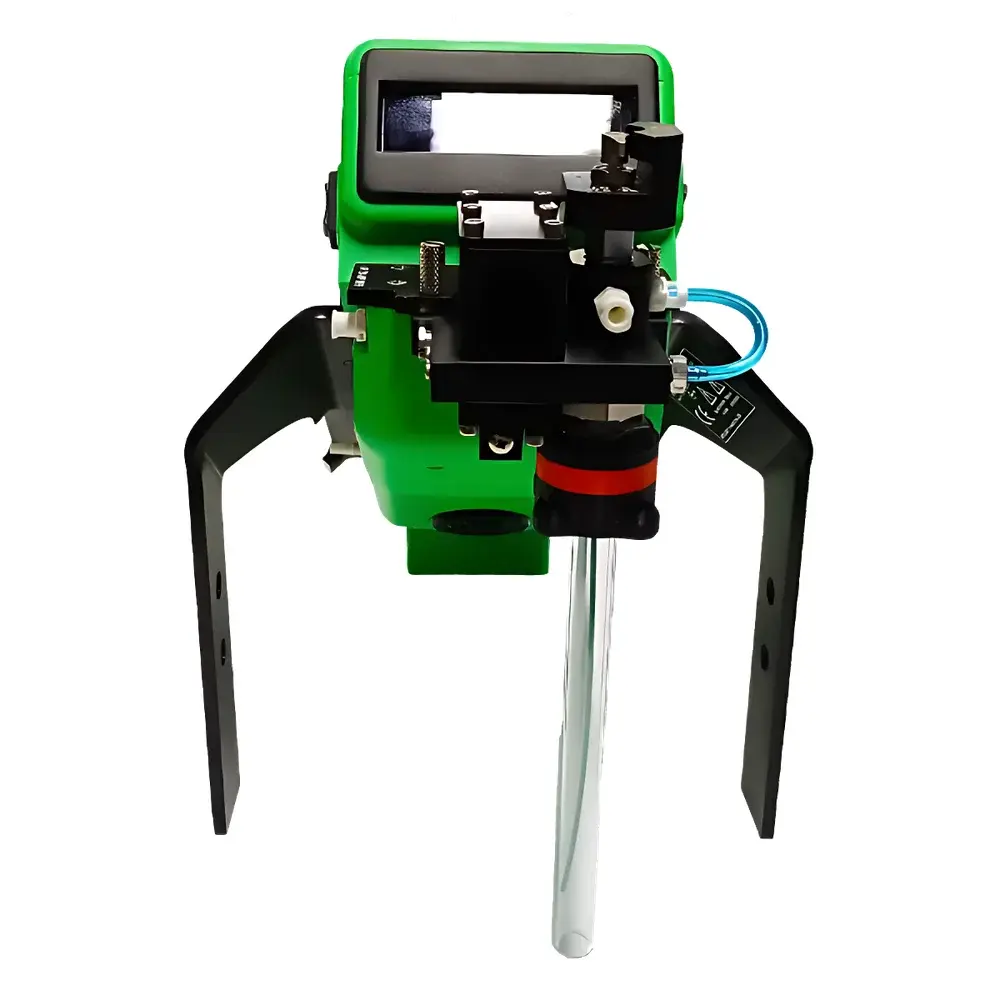
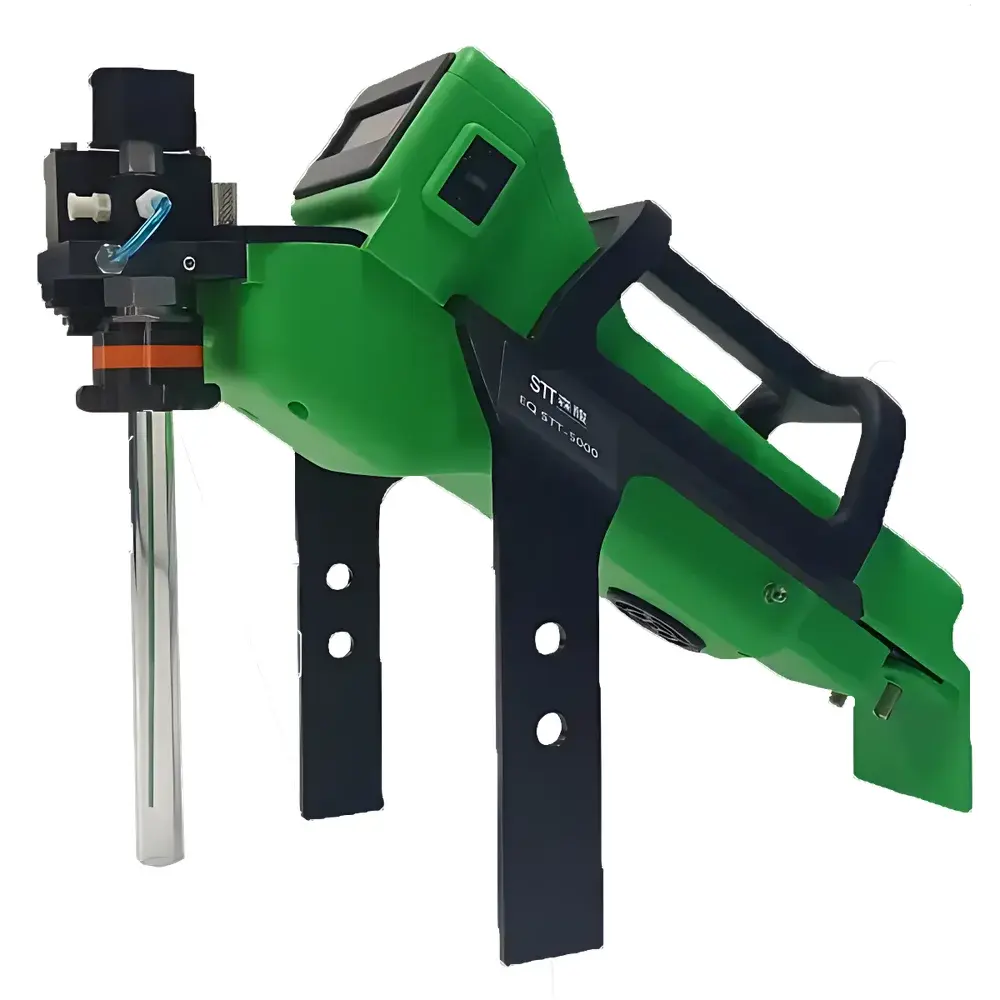
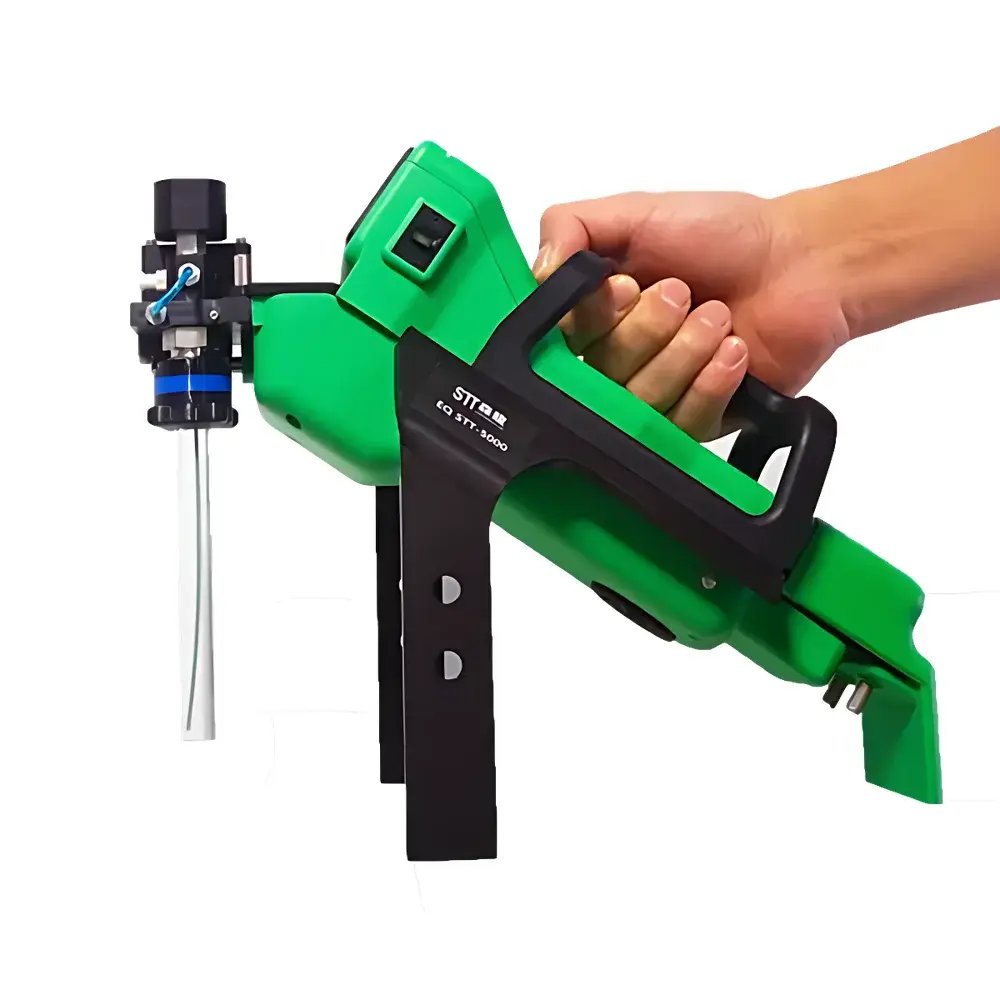
STT EQ STT-5000 Portable Micro Gas Chromatograph
| Brand | STT |
|---|---|
| Origin | Beijing, China |
| Manufacturer Type | Original Equipment Manufacturer (OEM) |
| Country of Origin | China |
| Model | EQ STT-5000 |
| Detection Limit | 0.1 ppb for benzene |
| Weight | 2.2 kg |
| Dimensions | 267 × 197 × 308 mm |
Overview
The STT EQ STT-5000 Portable Micro Gas Chromatograph is an engineered field-deployable analytical instrument designed for rapid, on-site qualitative and quantitative analysis of volatile organic compounds (VOCs) in air, water, and soil matrices. It employs micro-electromechanical systems (MEMS)-based capillary column technology coupled with a 10.6 eV photoionization detector (PID), enabling high-sensitivity separation and detection without requiring cryogenic cooling or external gas cylinders. The system operates on the fundamental principle of gas-phase partitioning between a mobile phase (carrier gas—ambient air filtered through activated carbon and molecular sieve) and a stationary phase (microfabricated fused-silica column), followed by ionization and electron current measurement. Its architecture supports compliance with standardized methodologies including GB/T 18883–2022 Annex C.3 (Portable GC Method for Indoor Air), U.S. EPA Method 5035 (VOCs in Soil and Water via Purge-and-Trap/GC-PID), and EPA Method 8021B (Aromatic Hydrocarbons by GC-PID), making it suitable for indoor air quality monitoring, environmental emergency response, industrial hygiene, and field-based regulatory screening.
Key Features
- MEMS-integrated micro-column platform enabling miniaturized, robust chromatographic separation with thermal stability up to 200 °C
- Integrated pre-concentration module enhancing sensitivity for trace-level benzene detection down to 0.1 ppb (0.0003 mg/m³)
- Self-contained operation: built-in rechargeable battery (>9 hours continuous runtime), embedded touchscreen display, and onboard data storage eliminate dependency on external PCs or power infrastructure
- Modular sampling interface supporting direct air aspiration, headspace vial analysis, and optional accessories for aqueous and solid-phase extraction (e.g., purge-and-trap, thermal desorption tubes)
- Full-range calibration capability across 0.1–300 ppb (low-range mode) and 50 ppb–10 ppm (high-range mode) for benzene and structurally analogous aromatics and chlorinated hydrocarbons
- Real-time chromatogram visualization and peak integration using STT ChromoView™ firmware, with retention time locking for inter-unit method transferability
Sample Compatibility & Compliance
The EQ STT-5000 is validated for analysis of gaseous, liquid, and semi-solid samples. Air samples are drawn directly via internal diaphragm pump; water samples require optional headspace equilibration or purge-and-trap enrichment; soil samples are analyzed following EPA 5035-compliant solvent extraction or thermal desorption. The instrument meets design and performance criteria outlined in ISO/IEC 17025:2017 for field-portable analytical equipment, supports audit-ready electronic records per FDA 21 CFR Part 11 (when paired with STT DataLink™ secure cloud sync), and maintains traceability to NIST-traceable VOC standards. All hardware and firmware comply with IEC 61000-6-3 (EMC emissions) and IEC 60529 IP54 rating for dust and splash resistance.
Software & Data Management
Instrument control, method development, and result interpretation are managed through STT ChromoView™ v3.2 firmware—installed natively on the device’s ARM-based embedded processor. Data files (.sttgc) include raw analog detector signals, calibrated concentration values, retention indices, and metadata (GPS coordinates, ambient T/RH, operator ID, sampling duration). Export options include CSV, PDF reports (with digital signature), and encrypted binary archives compatible with LIMS integration via STT DataLink™ API. Firmware updates and method libraries are distributed through STT’s secure portal, with version-controlled change logs maintained for GLP/GMP environments.
Applications
- Indoor air quality assessment per GB/T 18883–2022 and WHO guidelines for benzene, toluene, ethylbenzene, xylenes (BTEX), trichloroethylene, tetrachloroethylene
- Rapid environmental incident response: identification and quantification of VOC plumes from chemical spills, landfill leachate, or industrial fugitive emissions
- Occupational exposure monitoring in petrochemical plants, paint manufacturing, and printing facilities
- Soil vapor intrusion studies and groundwater remediation verification
- Research-grade screening in academic and governmental laboratories requiring mobility without sacrificing chromatographic resolution
FAQ
Does the EQ STT-5000 require external carrier gas cylinders?
No—it uses filtered ambient air as carrier gas, conditioned through dual-stage filtration (activated carbon for VOC removal and molecular sieve for moisture elimination).
Can the instrument be calibrated using certified standard gases?
Yes—supports multi-point external calibration with NIST-traceable BTEX and chlorinated hydrocarbon standards in permeation tube or dynamic dilution formats.
Is method validation documentation available for regulatory submissions?
STT provides IQ/OQ documentation packages, limit-of-detection (LOD) and limit-of-quantitation (LOQ) verification reports, and inter-laboratory reproducibility data upon request.
What is the column lifetime under typical field use conditions?
The MEMS-fabricated column demonstrates >500 injections at ≤100 ppb benzene level before measurable resolution loss; column replacement kits are field-serviceable without tools.
How is data integrity ensured during offline field operation?
All measurements are timestamped, digitally signed, and stored in write-once/read-many (WORM) memory with SHA-256 hash logging to prevent post-acquisition modification.






