
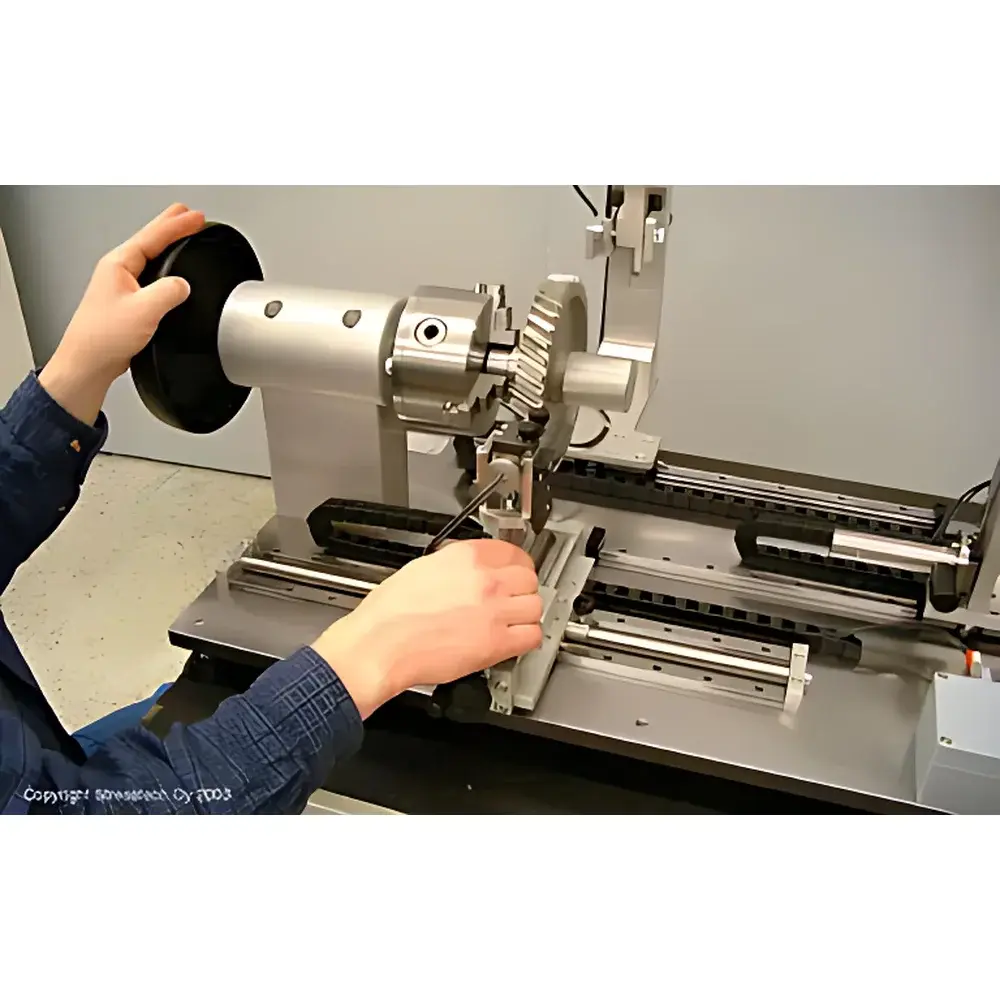
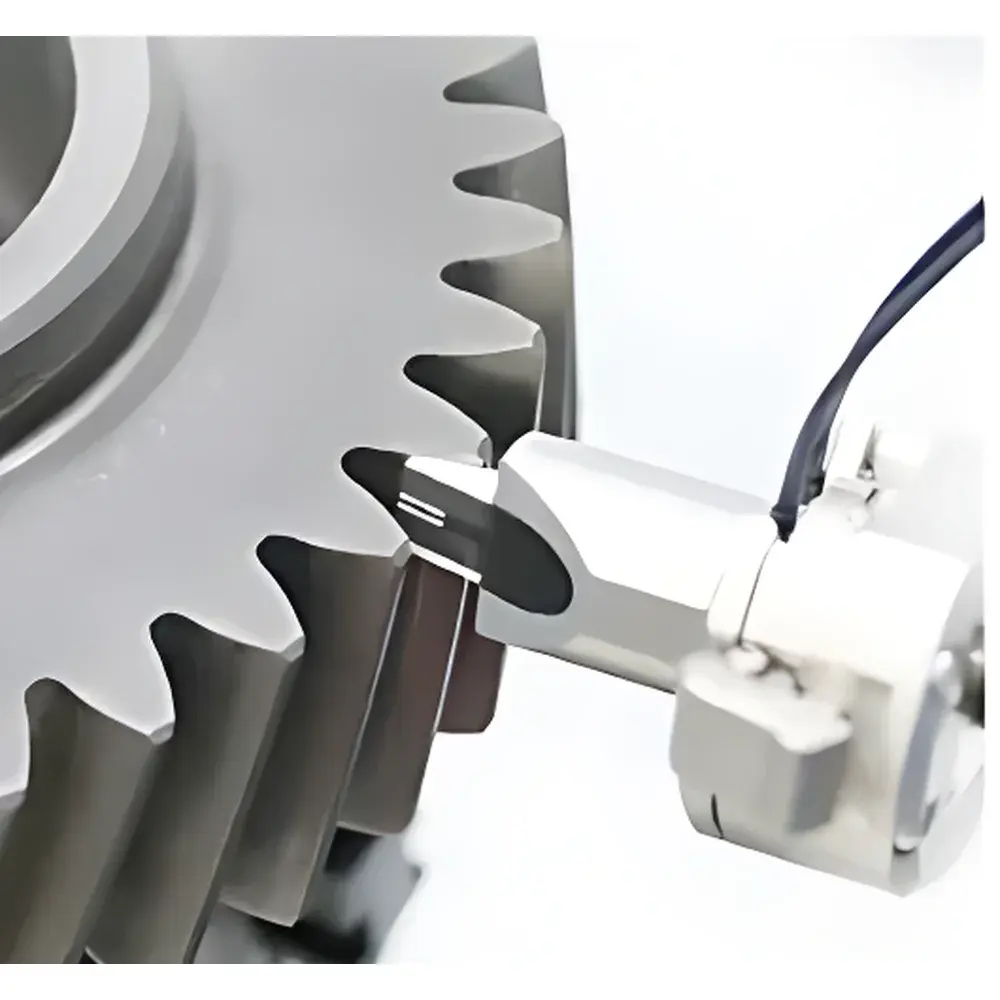
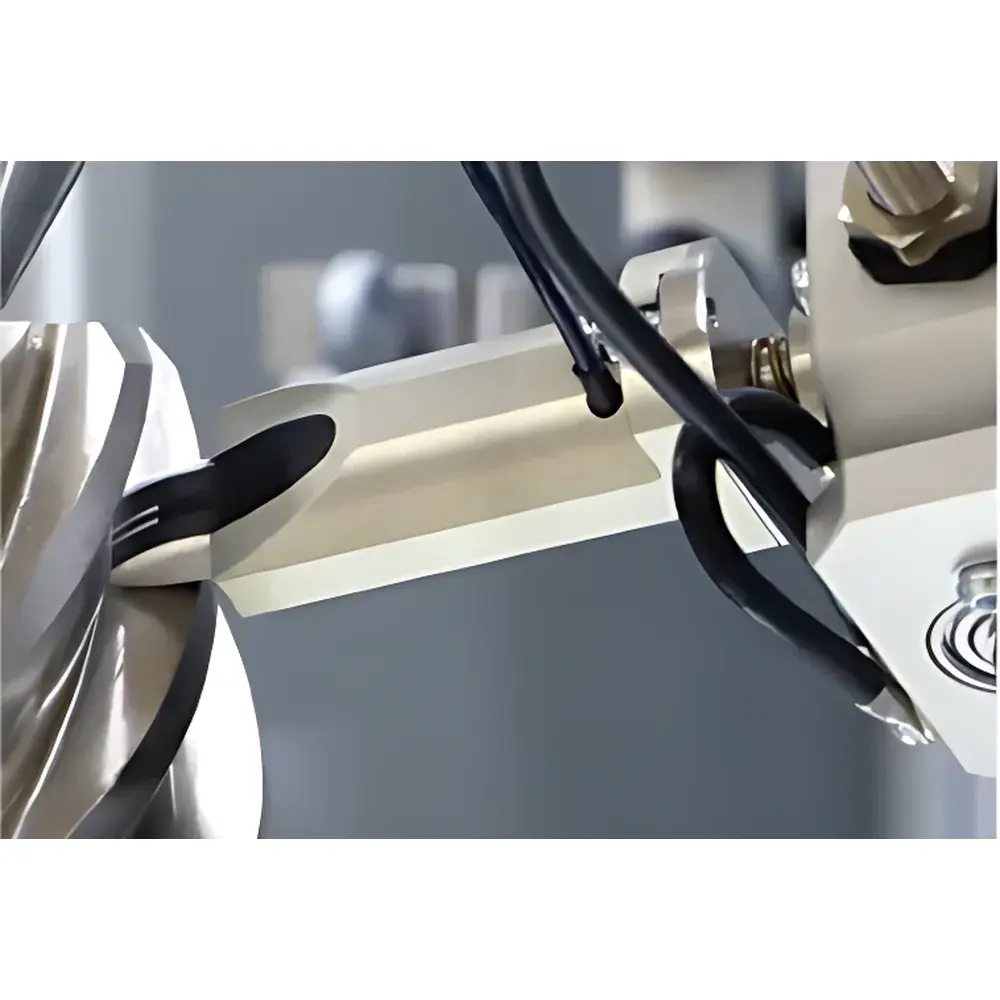
Stresstech GearScan Gear Grinding Burn Detection System
| Brand | Stresstech Oy |
|---|---|
| Origin | Finland |
| Model | GearScan |
| Sensor Types | Multiple options available (surface, contour, bore, extended-reach) |
| Measurement Principle | Magnetic Barkhausen Noise (MBN) Analysis |
| Material Compatibility | Ferritic steels, iron-based alloys, nickel-based superalloys, cobalt-based alloys |
| Power Supply | Rechargeable Li-ion battery (≥20 h continuous operation) |
| Data Storage | 100+ raw waveform datasets with timestamps |
| Software | ViewScan data acquisition & analysis software (optional) |
| Compliance | Designed for ISO 13304-1, ASTM E3085, and industrial NDT QA/QC workflows |
| Enclosure | Ruggedized all-metal housing, IP54-rated |
| Interface | USB-C for PC connectivity, optional printer output |
| Alarm Function | User-definable threshold-based pass/fail indication |
| Display | Integrated high-contrast LCD with real-time voltage/current monitoring, battery status, and menu navigation |
Overview
The Stresstech GearScan Gear Grinding Burn Detection System is a portable, non-destructive magnetic Barkhausen noise (MBN) analyzer engineered for rapid, quantitative assessment of grinding-induced thermal damage in case-hardened and through-hardened ferromagnetic components. Unlike destructive acid etching or time-intensive metallography, the GearScan leverages the magnetoelastic coupling effect—where localized microstructural changes (e.g., untempered martensite, residual tensile stress, and plastic deformation zones) alter the domain wall mobility under controlled magnetic excitation—to generate diagnostic MBN signals. This physics-based method enables sub-surface detection of grinding burn at depths up to 0.1–0.3 mm, with sensitivity to both white-layer formation and underlying heat-affected zone (HAZ) degradation. The system is calibrated for use on critical rotating components including gear teeth, bearing races (inner/outer rings, rolling elements), camshafts, crankshafts, piston pins, and landing gear assemblies—common failure points in aerospace, powertrain, and heavy machinery manufacturing.
Key Features
- Real-time MBN signal acquisition with dual-parameter display: excitation voltage and magnetizing current, both visible during measurement for immediate process correlation.
- Modular sensor architecture supporting flat, curved, bore, and contoured geometries—enabling full inspection coverage of gear flanks, root fillets, and internal raceways without part repositioning.
- Onboard digital signal processor (DSP) with adaptive filtering and adjustable pulse width, frequency, and gain—optimized for signal-to-noise ratio across varying surface finishes and hardness gradients.
- Integrated lithium-ion battery with intelligent charge management, ≥20 hours of uninterrupted field operation, and graphical battery-level indicator with charging progress feedback.
- Ruggedized all-metal enclosure conforming to MIL-STD-810G shock/vibration requirements and rated IP54 for dust and water resistance in shop-floor environments.
- Full-featured embedded interface: real-time waveform visualization, statistical summary (RMS, peak amplitude, spectral centroid), pass/fail alarm thresholds, and timestamped data logging with built-in real-time clock.
- Low-power design with automatic sleep mode (after 2 min inactivity) and auto-shutdown (after 15 min idle), preserving battery life without compromising measurement readiness.
Sample Compatibility & Compliance
The GearScan is validated for use on ferritic and martensitic steels (e.g., AISI 4340, 52100, 16MnCr5), nickel-based superalloys (Inconel 718, Waspaloy), and cobalt-chromium alloys (Stellite 6). It does not require surface preparation beyond standard cleaning—no coupling agents, coatings, or electrical contact are needed. All measurements comply with ISO 13304-1:2019 (“Non-destructive testing — Magnetic Barkhausen noise testing — Part 1: General principles”) and align with ASTM E3085-21 (“Standard Practice for Magnetic Barkhausen Noise Testing of Ferromagnetic Materials”). The system supports traceable QA documentation required under AS9100 Rev D and IATF 16949, and its data structure is compatible with GLP/GMP audit trails when used with ViewScan software and FDA 21 CFR Part 11-compliant configurations.
Software & Data Management
ViewScan is a Windows-based data acquisition and analysis platform (sold separately) that transforms raw MBN waveforms into actionable quality metrics. It provides synchronized multi-channel recording, comparative overlay of reference and test signatures, automated defect classification using statistical pattern recognition, and customizable reporting templates compliant with internal QA standards or customer-specific PPAP requirements. Data files include metadata (operator ID, part number, serial number, date/time stamp, sensor ID, calibration status), enabling full traceability. Export formats include CSV, PDF, and XML for integration with MES, SPC, and PLM systems. Firmware updates and sensor calibration certificates are managed via ViewScan’s secure update portal.
Applications
- In-process verification of gear grinding parameters (wheel speed, feed rate, coolant flow) to prevent thermal overload before final hardening.
- Final inspection of transmission gears, differential pinions, and wind turbine gearbox components prior to assembly.
- Root cause analysis of premature bearing spalling or pitting linked to subsurface grinding damage.
- Supplier qualification audits where acid etch validation is prohibited due to part geometry or material sensitivity.
- Re-work screening of repaired aerospace landing gear components to confirm absence of heat-affected zone degradation.
- Periodic health monitoring of high-value tooling and fixtures subjected to repeated thermal cycling.
FAQ
Does the GearScan require calibration against reference standards?
Yes—initial calibration uses certified MBN reference blocks traceable to NIST or PTB standards. Field recalibration is recommended every 90 days or after 500 measurements, using the included calibration jig and procedure documented in the operator manual.
Can it detect grinding burn on nitrided or carburized surfaces?
Yes—provided the case depth is within the effective penetration range of the selected sensor (typically ≤0.3 mm for standard surface probes; deeper cases require low-frequency excitation and specialized sensors).
Is ViewScan software mandatory for basic operation?
No—the GearScan operates autonomously with onboard analysis and pass/fail decision logic. ViewScan is required only for advanced waveform analysis, report generation, and enterprise data integration.
What is the minimum feature size the system can resolve?
Spatial resolution is governed by sensor footprint and lift-off; standard 3-mm-diameter probes resolve localized burn zones ≥1.5 mm in diameter with ≥50 µm depth sensitivity under optimal conditions.
How is measurement repeatability ensured across operators?
The system enforces consistent probe orientation and pressure via ergonomic handles with tactile feedback; additionally, ViewScan includes operator ID tagging and measurement parameter locking to enforce procedural adherence.
Related Products




