
Stresstech xstress3000 (G2) X-Ray Residual Stress Analyzer
| Brand | Stresstech Oy |
|---|---|
| Origin | Finland |
| Model | xstress3000 (G2) |
| X-ray Tube | 5–30 kV / 0–10 mA, 300 W max |
| Target Materials | Cr, Cu, Co, Ti, Mn |
| Detector | MOS linear position-sensitive proportional counter, 512 pixels, angular resolution 0.029°/pixel |
| 2θ Range | 117–170° continuous adjustment |
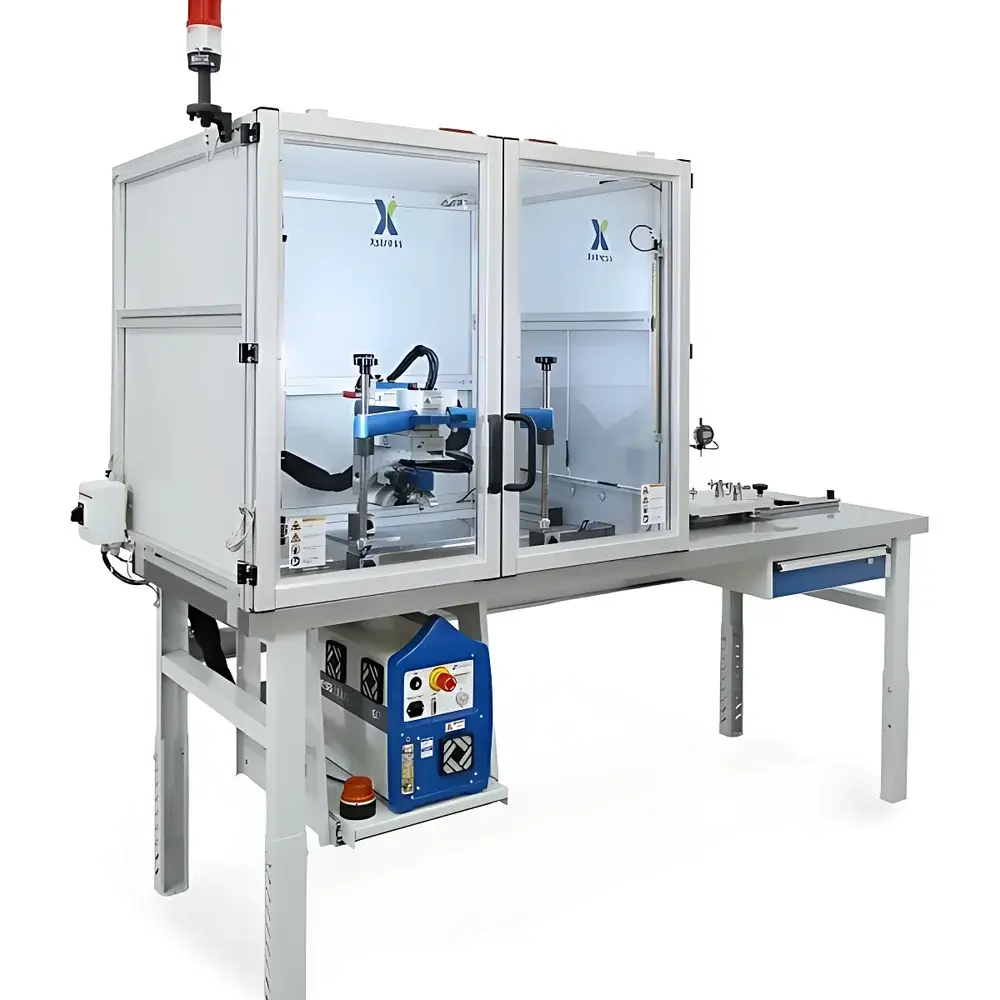
| Safety | Interlocked enclosure, fail-safe HV control, CE/IEC 61010 compliant |
| Cooling | Closed-loop recirculating chiller with forced-air assist |
| Power Supply | 100–240 VAC, 50/60 Hz |
| Weight | <25 kg (portable configuration) |
Overview
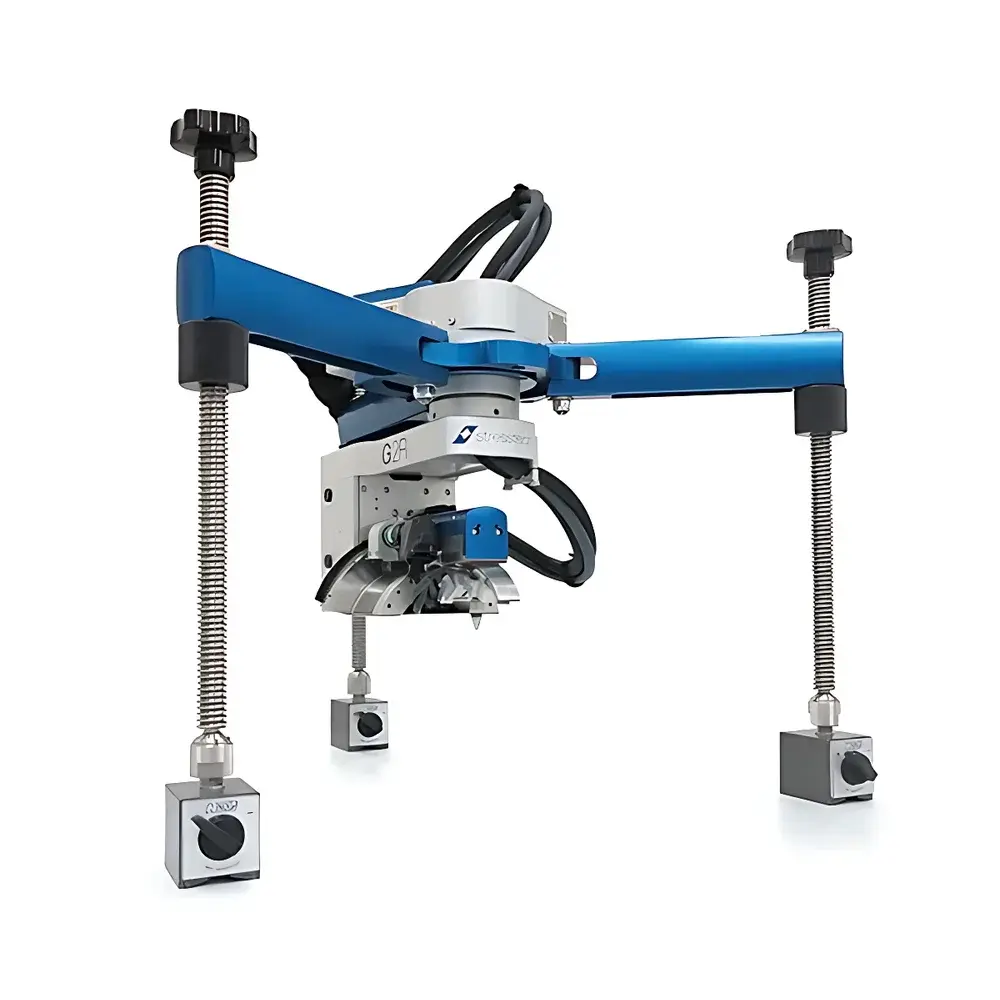
The Stresstech xstress3000 (G2) is a portable, laboratory-grade X-ray diffraction (XRD)-based residual stress analyzer engineered for precise, non-destructive determination of near-surface macro-stresses in polycrystalline metallic components. It operates on the sin²ψ method—measuring lattice strain via angular shifts in Bragg diffraction peaks under controlled sample tilting—and delivers quantitative stress values (MPa) aligned to ASTM E915, ISO 21948, and EN 15305 standards. Designed for both shop-floor deployment and metrology lab use, its compact architecture enables rapid in-situ evaluation of critical parts—including gears, crankshafts, camshafts, bearing races, rolling mill rolls, pressure vessel welds, and aerospace landing gear—without disassembly or surface preparation beyond standard polishing.
Key Features
- Field-deployable design: Total system mass <25 kg; integrated battery option available for cordless operation at remote sites.
- Modular X-ray source: Replaceable micro-focus X-ray tube (300 W max) with user-selectable anode targets (Cr, Cu, Co, Ti, Mn) optimized for material-specific diffraction efficiency and peak separation.
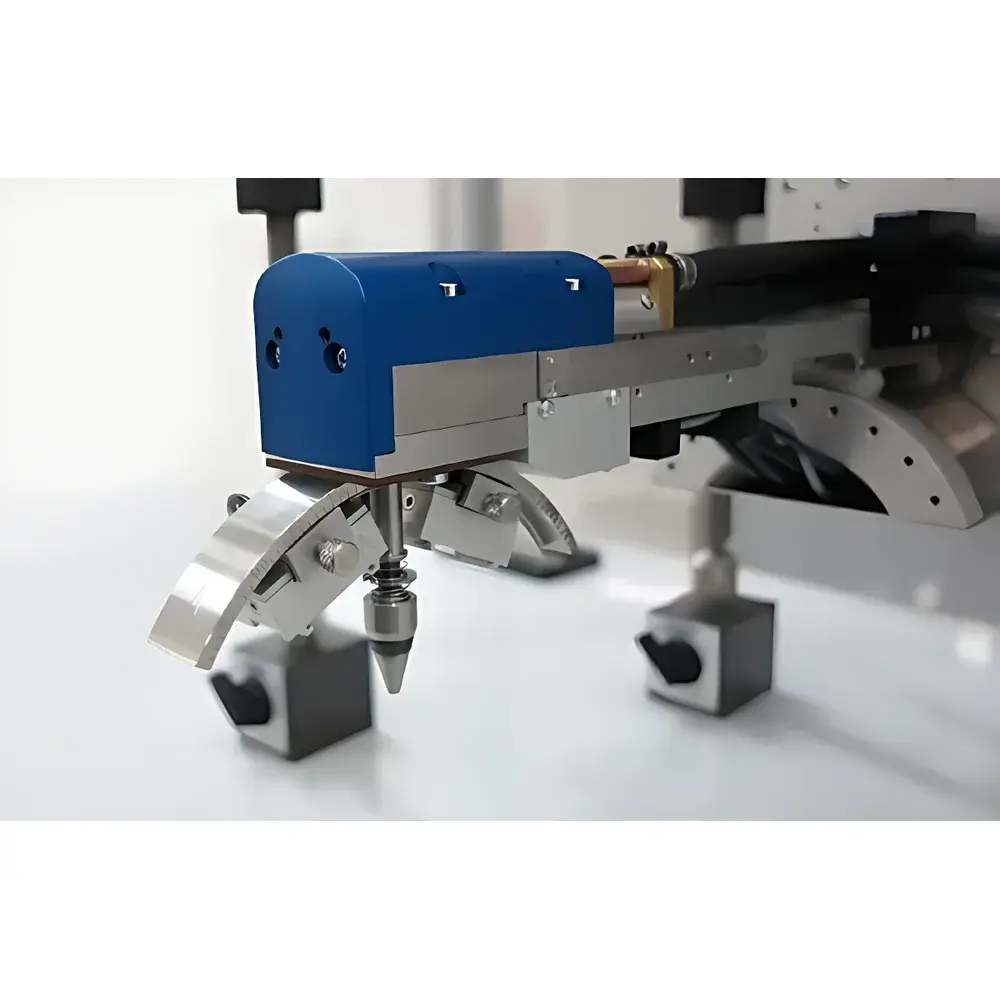
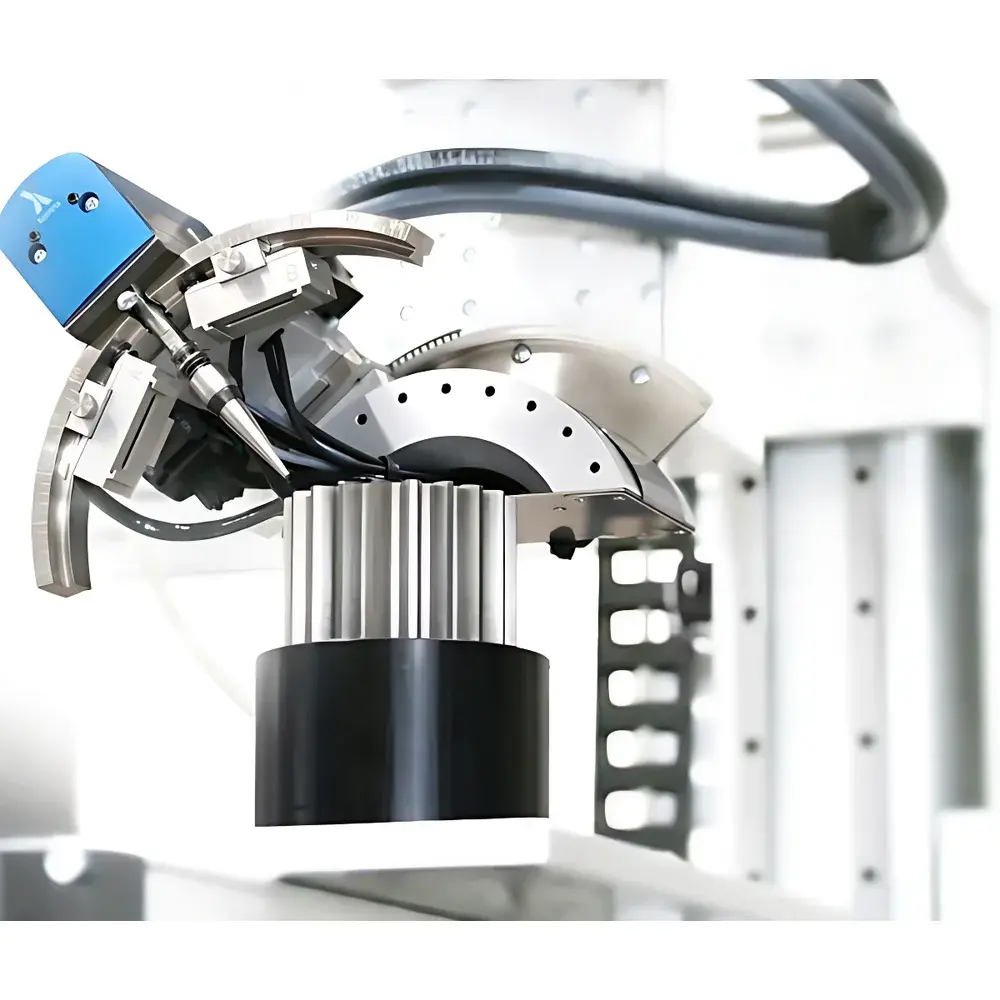
- High-fidelity detection: MOS-based linear position-sensitive proportional counter with 512-pixel resolution and intrinsic angular precision of 0.029° per pixel—enabling robust peak centroiding even under low-intensity or overlapping reflections.
- Advanced goniometry: Motorized ψ-tilt and φ-rotation axes with improved side-inclination (y-geometry) configuration; fully automated 2θ scanning across 117–170° range with sub-arcminute repeatability.
- Integrated thermal management: Closed-loop recirculating chiller with auxiliary forced-air cooling ensures stable tube output and detector performance during extended measurement sequences.
- Comprehensive safety architecture: Dual-channel hardware interlocks, real-time high-voltage monitoring, shutter-controlled beam gating, and full compliance with IEC 61010-1 and EU Directive 2011/65/EU (RoHS).
Sample Compatibility & Compliance
The xstress3000 (G2) accommodates flat, curved, and contoured surfaces up to Ø300 mm diameter and 150 mm height. Its adjustable sample stage supports manual or motorized positioning for localized mapping (grid step resolution down to 0.1 mm). The system is validated for ferrous alloys (steel, cast iron), non-ferrous metals (Ti-6Al-4V, Inconel 718, Al 2024/7075), and hard-coated substrates (e.g., PVD/CVD TiN, CrN). All measurement protocols adhere to ISO/IEC 17025-accredited calibration traceability. Data acquisition and reporting support audit-ready documentation per FDA 21 CFR Part 11 requirements, including electronic signatures, immutable audit trails, and version-controlled method files.
Software & Data Management
Controlled via Windows 10/11-compatible xstress Software Suite v5.x, the platform provides synchronized operation of X-ray generation, goniometer motion, detector readout, and real-time stress computation. Key capabilities include: multi-exposure averaging with adaptive background subtraction; automatic peak search and full-width-at-half-maximum (FWHM) fitting using pseudo-Voigt functions; stress tensor decomposition for biaxial and triaxial analysis; export to CSV, XML, and industry-standard .udf formats for integration with CAE tools (e.g., ANSYS, MSC Nastran). Raw diffraction patterns and processed results are stored in encrypted project databases with time-stamped metadata, supporting GLP/GMP-compliant record retention.
Applications
- Verification of stress relief efficacy after heat treatment (annealing, quenching, tempering) and thermo-mechanical processing.
- Quantification of detrimental tensile stresses induced by welding, grinding, EDM, or laser cladding—correlating directly with fatigue crack initiation thresholds per ASTM E466.
- Validation of beneficial compressive stress profiles generated by shot peening, roller burnishing, or laser shock peening per SAE AMS 2430 and J443.
- In-process quality assurance for high-value rotating components (turbine blades, transmission shafts) where residual stress gradients govern service life.
- Root-cause failure analysis in field-recovered parts exhibiting premature cracking or stress corrosion cracking (SCC).
FAQ
What X-ray diffraction geometry does the xstress3000 (G2) employ?
It uses the side-inclination (y-geometry) configuration per ISO 21948, enabling optimal accessibility for complex geometries and minimizing absorption artifacts in thick-section components.
Can the system measure residual stress through coatings or surface treatments?
Yes—by selecting appropriate target materials (e.g., Cr Kα for steel substrates beneath thin oxide or nitride layers) and optimizing penetration depth via voltage/current tuning, subsurface stress profiling down to ~10–50 µm is achievable.
Is calibration required between measurements?
No routine recalibration is needed; the system maintains long-term stability via internal reference crystal checks and automated detector gain normalization before each measurement sequence.
Does the software support automated stress mapping?
Yes—programmable XY raster scanning enables full 2D stress distribution maps with configurable grid density, dwell time, and statistical confidence intervals.
How is data integrity ensured for regulated industries?
The software enforces role-based access control, digital signature workflows, and tamper-evident audit logs compliant with 21 CFR Part 11 Annex 11 and ISO 13485 requirements.






