
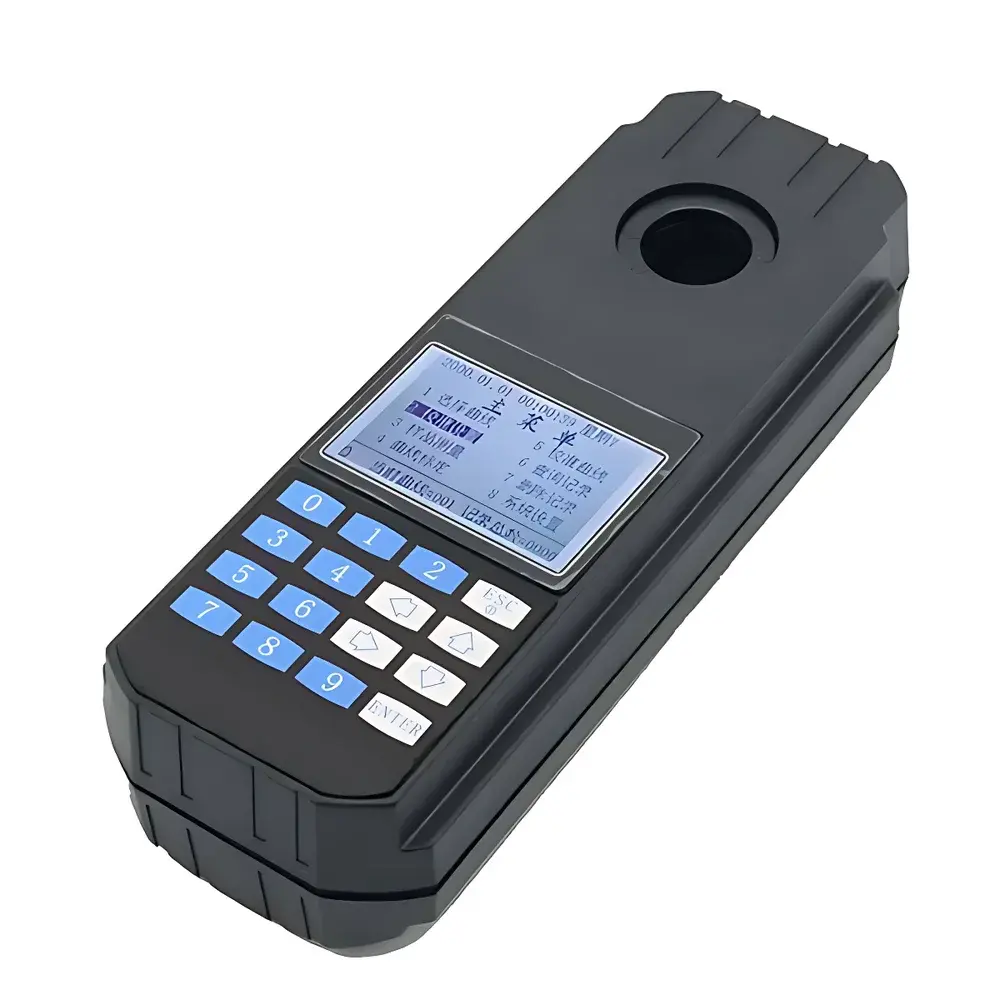
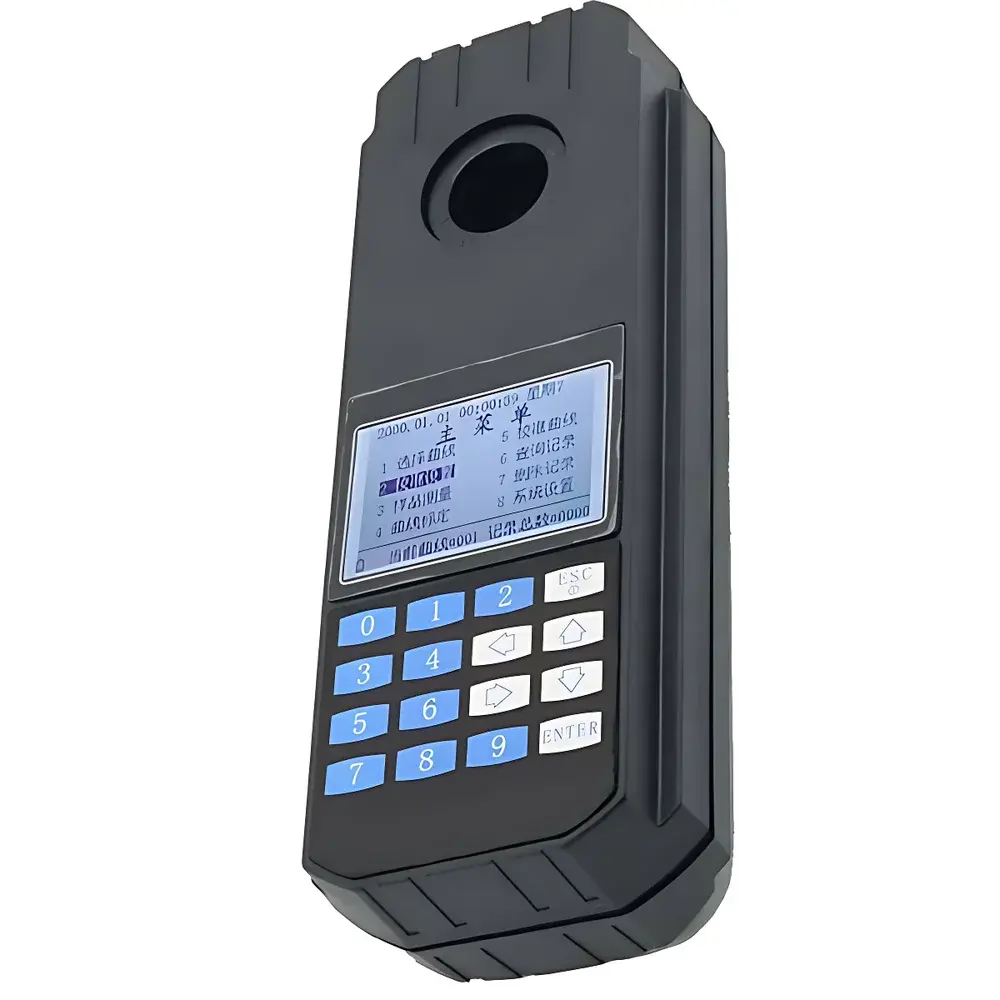
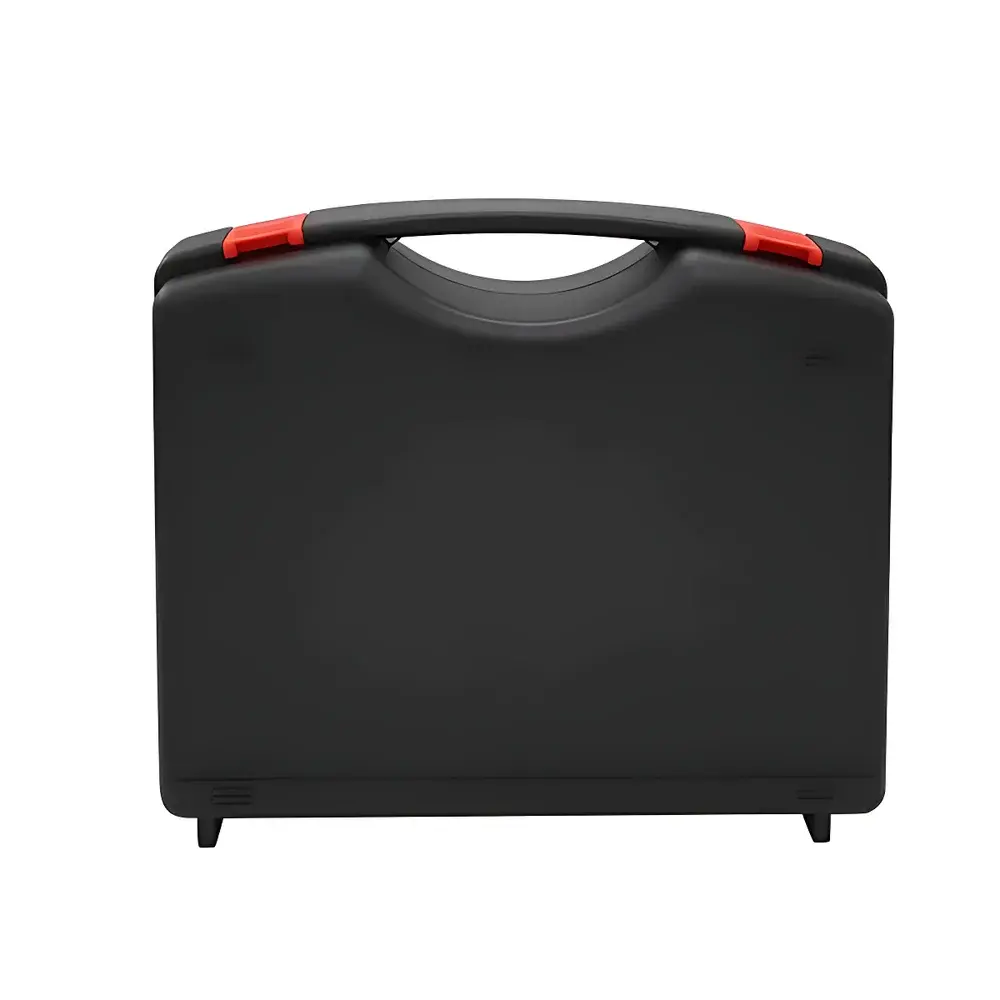
Shenchanghong PCHFE-160 Portable Iron Photometer
| Brand | Shenchanghong |
|---|---|
| Model | PCHFE-160 |
| Instrument Type | Portable |
| Detection Principle | Colorimetric Photometry (Fe²⁺/Fe³⁺ via 1,10-Phenanthroline Method) |
| Target Analyte | Total Iron (as Fe) |
| Measurement Range | 0.0–10.0 mg/L |
| Accuracy | ±5% of Full Scale |
| Repeatability | ≤3% RSD |
| Resolution | 0.0 mg/L |
| Response Time | 20 min per sample |
| Dimensions | 80 × 230 × 55 mm |
| Weight | 500 g |
| Power Supply | 4 × AA alkaline batteries |
| Operating Temperature | 5–40 °C |
| Relative Humidity | ≤85% RH (non-condensing) |
| Protection Rating | IP65 |
| Data Storage | 199 measurement records with timestamp (YYYY-MM-DD hh:mm:ss), plus 20 user-programmable calibration curves |
| Light Source | Imported high-intensity LED (100,000 h lifetime), narrow-band optical filter system |
| Optical Stability | Engineered for minimal drift under ambient light interference |
Overview
The Shenchanghong PCHFE-160 Portable Iron Photometer is a field-deployable, battery-powered analytical instrument engineered for rapid, on-site quantification of total iron concentration in water samples using standardized colorimetric photometry. It implements the well-established 1,10-phenanthroline method (ASTM D1068–22, ISO 6332:2021), wherein ferrous ions form an orange-red complex with high molar absorptivity at 510 nm. The instrument integrates a stabilized LED light source, precision narrow-band optical filtering, and a calibrated silicon photodetector to deliver reliable absorbance-to-concentration conversion without laboratory-grade infrastructure. Designed explicitly for environmental monitoring personnel, drinking water operators, and field technicians, the PCHFE-160 eliminates the need for benchtop spectrophotometers or wet chemistry labs while maintaining metrological traceability to certified reference standards.
Key Features
- High-stability optical architecture featuring an imported long-life (≥100,000 h) high-brightness LED and thermally compensated narrow-band interference filter—minimizing spectral drift and ambient light sensitivity.
- Embedded 16-bit low-power microcontroller enabling extended battery operation: up to 6 months in standby mode and ≥2,000 measurements per set of four AA alkaline cells.
- Rugged handheld housing constructed from impact-resistant ABS polymer with IP65 ingress protection—certified against dust ingress and water jets, suitable for humid, rainy, or dusty field environments.
- On-device data management supporting storage of 20 user-defined calibration curves and 199 full measurement records—including concentration (mg/L), absorbance, transmittance, and full timestamp (year, month, day, hour, minute, second).
- Ergonomic, one-handed operation with intuitive button interface and backlit LCD display optimized for outdoor readability under variable lighting conditions.
Sample Compatibility & Compliance
The PCHFE-160 is validated for use with raw surface water, groundwater, treated drinking water, wastewater effluents, and industrial process water. Sample preparation requires only standard reagent kits (1,10-phenanthroline, reducing agent, buffer) compliant with EPA Method 3500-Fe B and ISO 6332. No digestion step is required for soluble iron; for total recoverable iron, optional acid digestion (per EPA 200.2 or ISO 11969) must precede analysis. The instrument meets functional requirements for field screening under China’s HJ 535–2009 and supports data integrity practices aligned with GLP principles. While not 21 CFR Part 11–certified out-of-the-box, audit-trail-ready data export (via optional USB adapter) enables integration into LIMS workflows requiring electronic record retention.
Software & Data Management
All calibration and measurement data reside onboard with non-volatile memory. Calibration curves may be established using up to six standard points (0.0–10.0 mg/L), with linear or polynomial regression options. Timestamped results are stored with metadata including operator ID (manually entered), sample ID, and environmental conditions (temperature/humidity logged manually). Data export is supported via ASCII-formatted CSV files through a micro-USB port (adapter sold separately), compatible with Microsoft Excel, LabArchives, and common environmental data management platforms. Firmware updates are delivered via PC-based utility software—no internet connection required in the field.
Applications
- Field verification of iron removal efficiency in municipal water treatment plants (e.g., after aeration, filtration, or ion exchange units).
- Routine monitoring of iron leaching from cast iron pipes or galvanized infrastructure in distribution networks.
- Compliance screening for iron limits in discharge permits (e.g., ≤0.3 mg/L per China’s GB 8978–1996 or EPA NPDES thresholds).
- Environmental impact assessments near mining sites, steel processing facilities, or acid mine drainage zones.
- Educational use in university environmental science labs for teaching fundamental spectrophotometric analysis and water quality parameter interrelationships.
FAQ
What iron species does the PCHFE-160 measure?
It measures total soluble iron (Fe²⁺ and Fe³⁺) after reduction to Fe²⁺. For total recoverable iron, acid digestion per EPA 200.2 is required prior to analysis.
Can the instrument be recalibrated in the field?
Yes—users may perform multi-point calibration at any time using NIST-traceable iron standards; no tools or service technician required.
Is the device suitable for seawater analysis?
Not directly—high chloride content causes interference; matrix-matched standards or dilution with deionized water is recommended for brackish applications.
How is photometric accuracy verified during routine use?
A built-in zero-check function using blank cuvettes and optional certified check standards (e.g., 2.0 mg/L Fe SRM) support daily performance verification per ISO/IEC 17025 internal quality control protocols.
Does the PCHFE-160 comply with international shipping regulations for lithium batteries?
No lithium batteries are used—it operates exclusively on standard AA alkaline cells, fully compliant with IATA Packing Instruction 950 and UN 3090 transport classifications.
Related Products







