
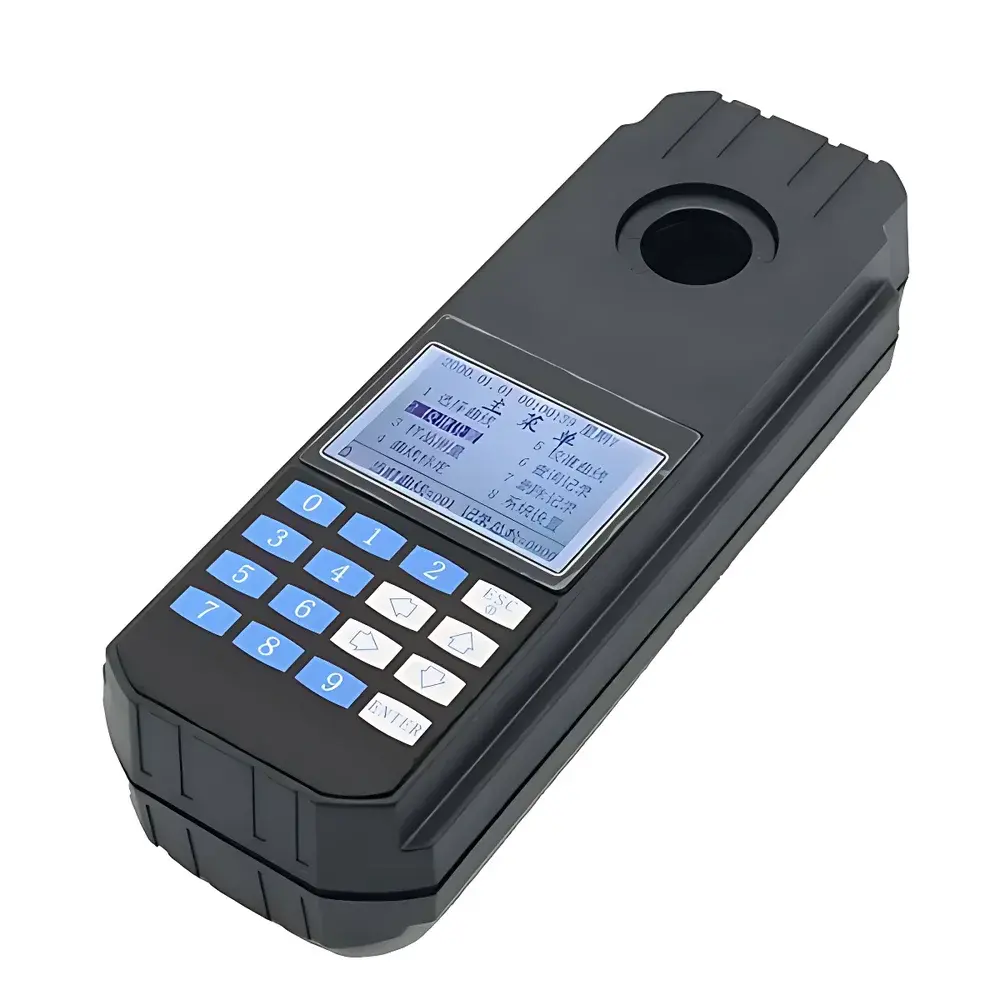
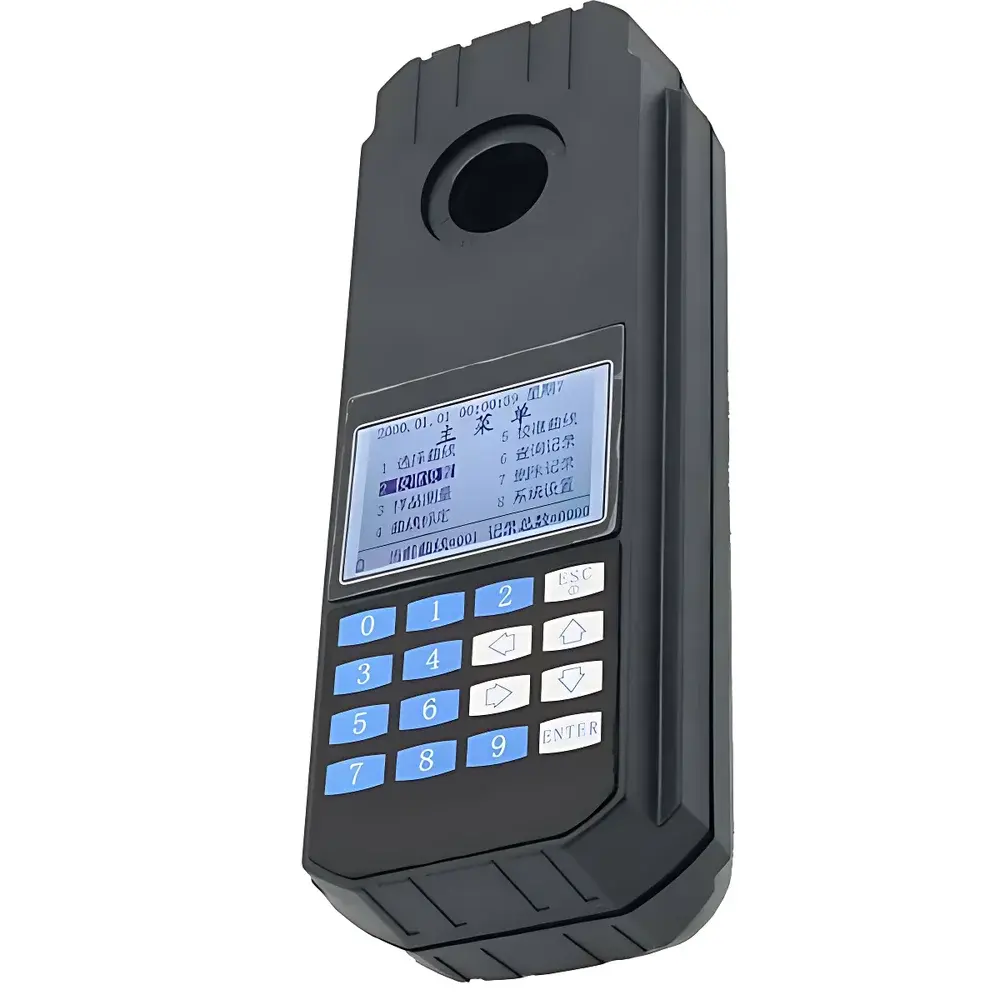
Shenchanghong PCHCU-100 Portable Copper Photometer
| Brand | Shenchanghong |
|---|---|
| Origin | Shenzhen, China |
| Manufacturer Type | Direct Manufacturer |
| Country of Origin | China |
| Model | PCHCU-100 |
| Instrument Type | Portable |
| Detection Principle | Photometric (Colorimetric) Method |
| Target Analyte | Copper (Cu²⁺) |
| Analysis Time | 20 min |
| Accuracy | ±5% of Full Scale (F.S.) |
| Resolution | 0.02 mg/L |
| Measurement Range | 0.02–10.0 mg/L |
| Repeatability | ≤3% RSD |
| Dimensions | 80 mm × 230 mm × 55 mm |
| Weight | 500 g |
| Power Supply | 4 × AA batteries |
| Operating Temperature | 5–40 °C |
| Relative Humidity | ≤85% RH |
| Protection Rating | IP65 |
| Data Storage | 20 calibration curves + 199 measurement records with timestamp (YYYY-MM-DD hh:mm:ss), absorbance, transmittance, and concentration |
Overview
The Shenchanghong PCHCU-100 Portable Copper Photometer is a field-deployable, single-analyte water quality analyzer engineered for rapid, on-site quantification of dissolved copper (Cu²⁺) in environmental and municipal water samples. It operates on the standardized photometric (colorimetric) principle: copper ions in sample water react with a proprietary chromogenic reagent—typically a bis-cyclohexanone oxaldihydrazone (BCO) or neocuproine derivative—to form a stable, intensely colored complex. The intensity of absorbance at a precisely defined wavelength (typically 450–470 nm) is measured via a high-stability optical path and correlated to copper concentration using a pre-programmed calibration curve. This method complies with core principles outlined in ISO 8692:2012 (water quality — determination of copper by spectrophotometry) and aligns with EPA Method 200.7 (ICP-OES) validation frameworks for trace metal screening, serving as a rapid prescreening tool prior to confirmatory laboratory analysis.
Key Features
- High-performance, long-life (≥100,000 h) LED light source with narrow-band interference filter, ensuring optical stability and immunity to ambient light interference.
- Integrated 16-bit low-power microcontroller enabling extended battery life: up to 6 months in standby mode and ≥2,000 measurements per set of 4 AA alkaline batteries.
- Rugged handheld enclosure fabricated from impact-resistant ABS polymer, rated IP65 for dust-tight and water-jet resistant operation—suitable for field use in rain, high humidity, or dusty conditions.
- Onboard memory stores up to 20 user-defined or factory-calibrated standard curves and 199 full measurement records, each embedded with full timestamp (year, month, day, hour, minute, second), absorbance, transmittance, and calculated Cu concentration (mg/L).
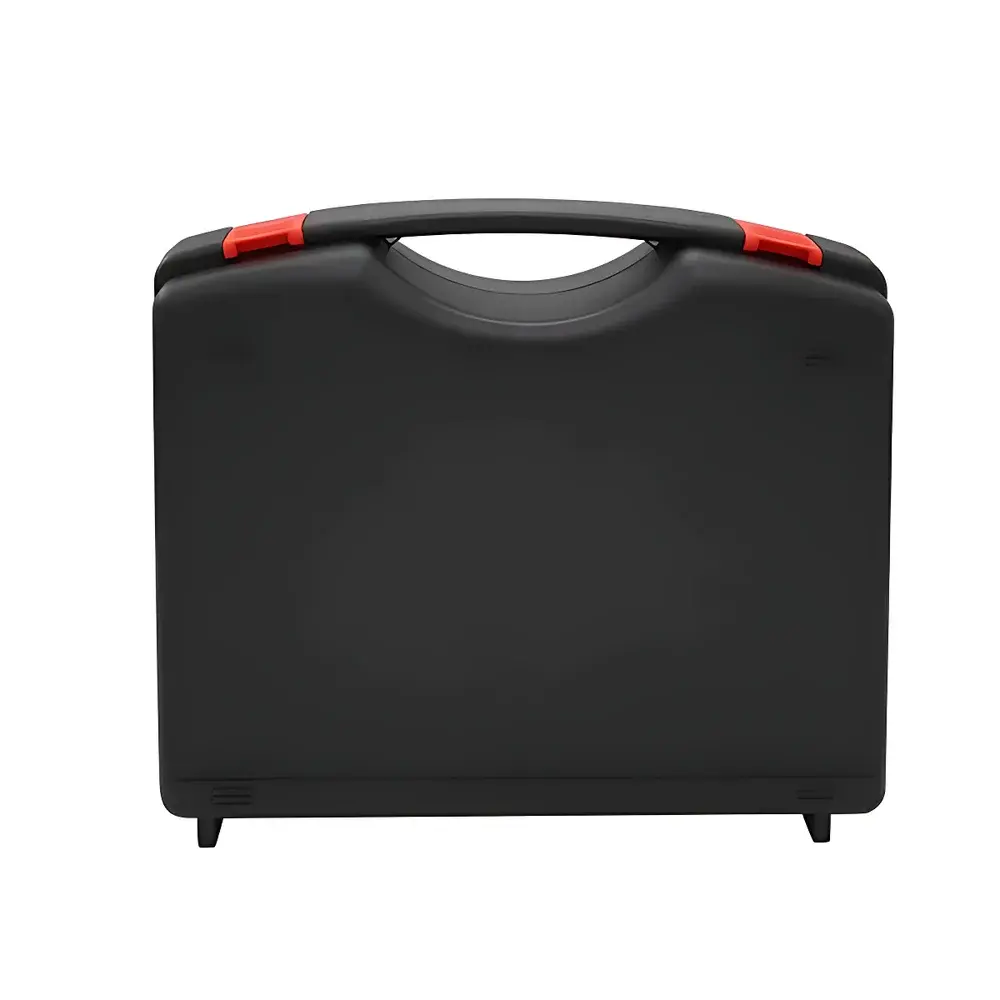
- Compact ergonomic design (80 × 230 × 55 mm; 500 g) with integrated carry handle and optional portable case—including pre-loaded cuvettes, reagent vials, and calibration standards—for true walk-up-and-measure deployment.
Sample Compatibility & Compliance
The PCHCU-100 is validated for use with raw surface water, treated drinking water, wastewater effluents, and industrial process water matrices. Sample turbidity must be <5 NTU (pre-filtration recommended if exceeded); chelated or organically bound copper may require acid digestion (e.g., HNO₃/H₂O₂ microwave-assisted) prior to analysis to ensure total recoverable copper quantification. While not a GLP-compliant primary instrument, its data structure supports audit-ready documentation: all stored results include immutable timestamps and raw photometric values, facilitating traceability in QA/QC workflows aligned with ISO/IEC 17025 requirements. The device does not meet FDA 21 CFR Part 11 electronic record criteria natively but exports data via USB or manual transcription for integration into validated LIMS environments.
Software & Data Management
No external software is required for basic operation. All calibration, measurement, and data review occur via the built-in monochrome LCD interface with tactile keypad navigation. Calibration curves can be generated in-field using certified reference standards (e.g., NIST-traceable Cu stock solutions). Stored data can be reviewed directly on-device or exported manually. For laboratory integration, users may log results into spreadsheets or LIMS using the timestamped format. Firmware updates (if released) are delivered via USB connection and require no proprietary software—only standard mass-storage mode recognition.
Applications
- Field monitoring of copper leaching from plumbing systems (e.g., post-flush testing per NSF/ANSI 61 compliance checks).
- Rapid assessment of copper discharge compliance at industrial outfalls (e.g., electroplating, PCB manufacturing, mining runoff).
- Environmental site assessments—screening sediments pore water or shallow groundwater near abandoned mines or agricultural fungicide application zones.
- Educational laboratories for teaching fundamental spectrophotometric principles and EPA-relevant metal analysis protocols.
- Emergency response teams evaluating acute copper contamination following pipeline breaches or chemical spills.
FAQ
What is the detection limit and linear range of the PCHCU-100?
The instrument achieves a resolution of 0.02 mg/L and maintains linearity across 0.02–10.0 mg/L, covering WHO drinking water guideline (2.0 mg/L) and US EPA secondary maximum contaminant level (SMCL) thresholds.
Does the PCHCU-100 require annual recalibration or third-party certification?
No scheduled recalibration is mandated; however, users must verify performance before each sampling campaign using a mid-range check standard (e.g., 2.0 mg/L Cu). Certificate of Conformance is supplied with each unit; NIST-traceable calibration verification kits are available separately.
Can the PCHCU-100 measure other heavy metals?
No—it is dedicated solely to copper. Shenchanghong offers parallel models (e.g., PCHCD-100 for cadmium, PCHPB-100 for lead) with chemically optimized reagents and optical filters.
Is the reagent kit compatible with international standards such as ISO or ASTM?
Yes—the supplied reagent formulation follows the reaction chemistry specified in ISO 8692 and APHA Standard Method 3111 B (Bathocuproine disulfonate method), ensuring cross-method comparability when used under controlled conditions.
How is measurement uncertainty reported?
Total uncertainty is derived from repeatability (≤3% RSD), accuracy specification (±5% F.S.), and reagent lot variability (±1.5% per certificate of analysis), yielding an expanded uncertainty (k=2) of ≤12% for concentrations >1 mg/L.







