
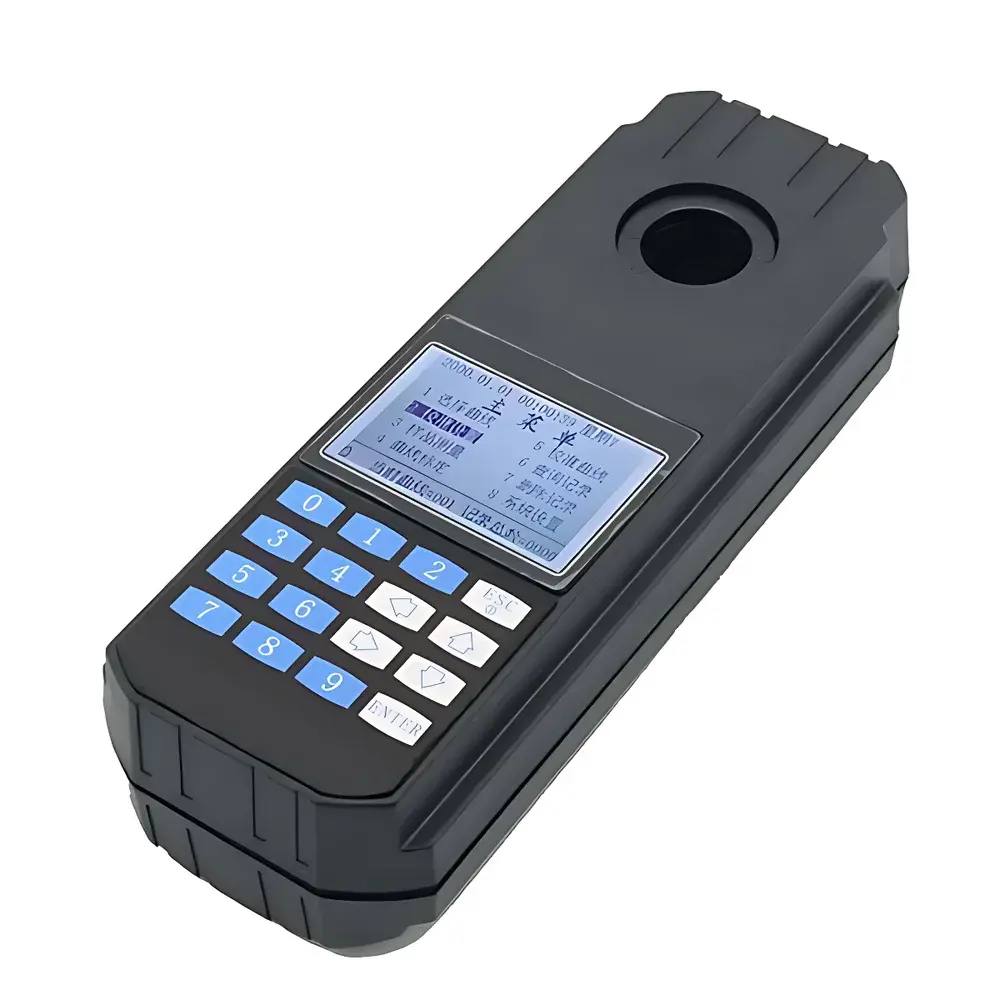
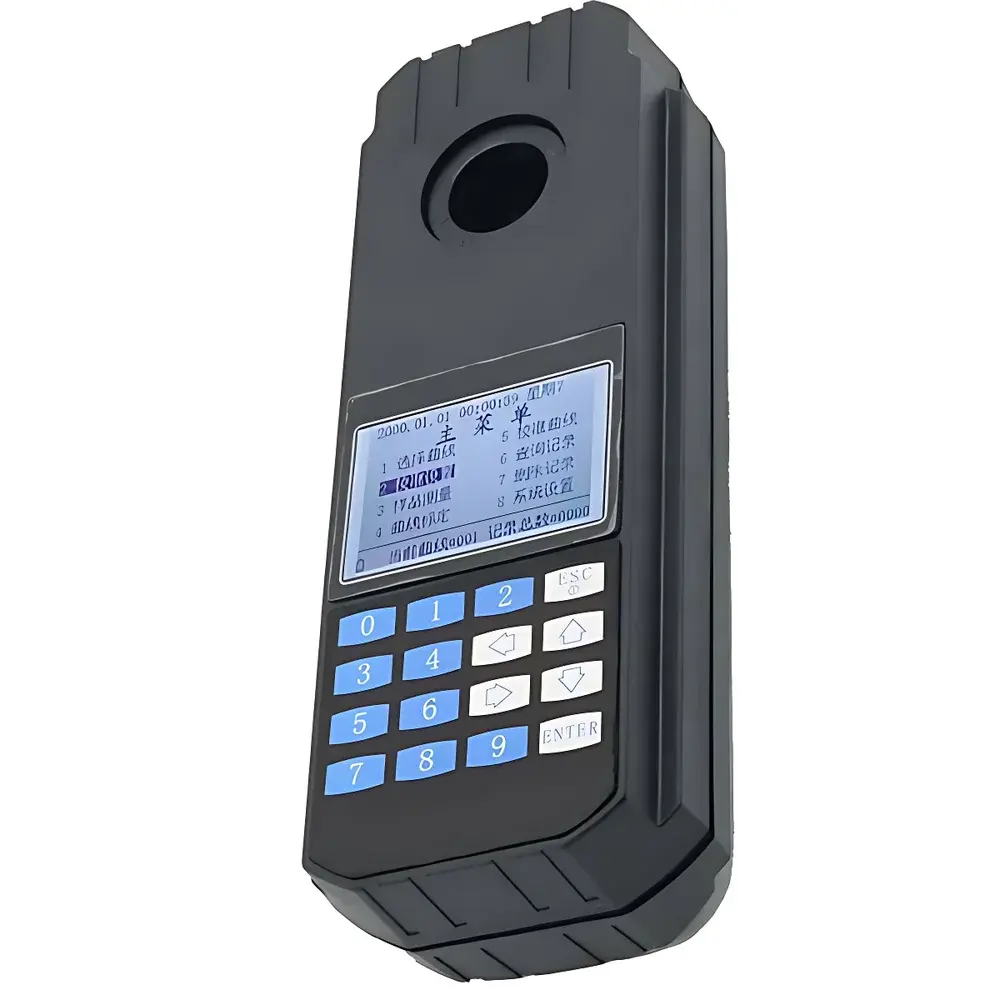
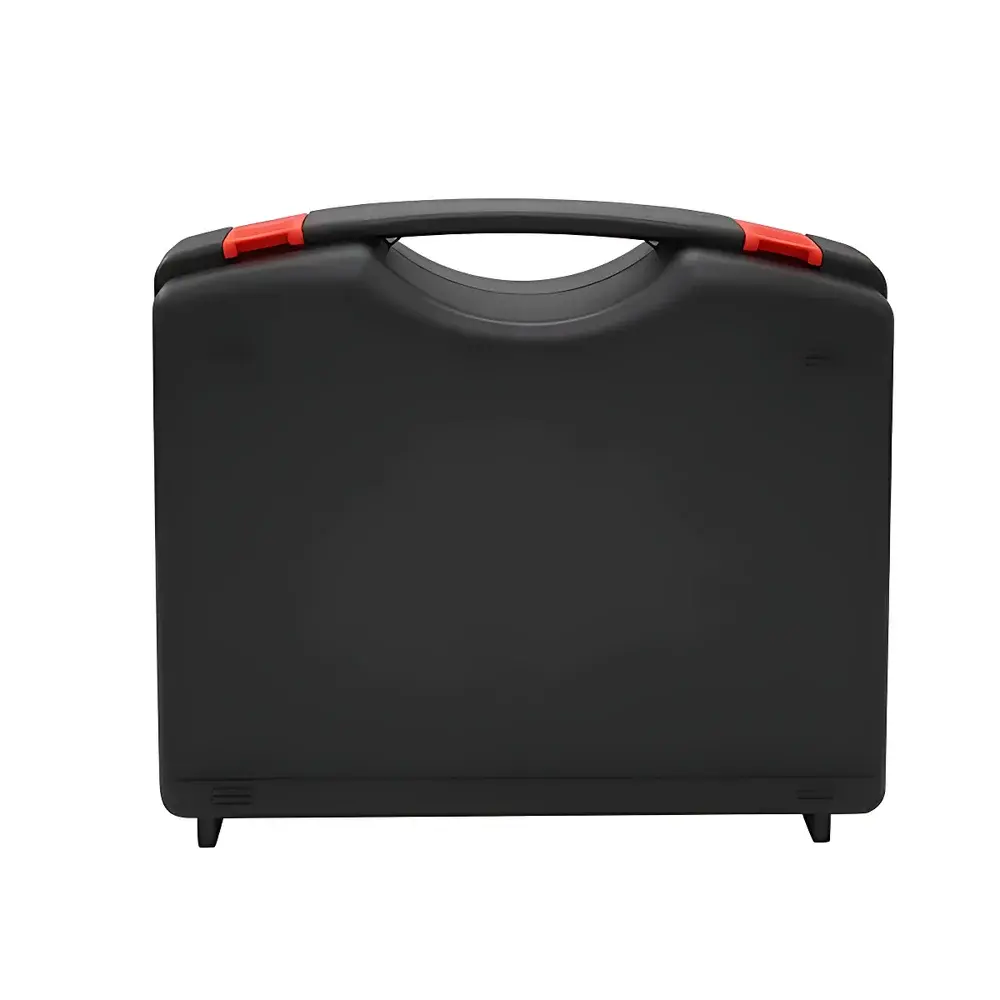
Shenchanghong PCHTCR-140 Total Chromium Analyzer with Integrated Digestion Unit
| Brand | Shenchanghong |
|---|---|
| Origin | Shenzhen, China |
| Manufacturer Type | Direct Manufacturer |
| Product Origin | Domestic (China) |
| Model | PCHTCR-140 |
| Instrument Type | Portable |
| Detection Principle | Spectrophotometry (Diphenylcarbazide Method) |
| Target Analyte | Total Chromium (Cr(III) + Cr(VI)) |
| Measurement Range | 0.02–1.00 mg/L |
| Accuracy | ≤ ±5% |
| Repeatability | ≤ 3% |
| Optical Drift | < 0.002 A over 20 min |
| Digestion Temperature Range | Ambient to 180 °C (default Cr digestion: 120 °C) |
| Temperature Control Accuracy | ±1 °C |
| Digestion Time Setting Range | 1–999 min |
| Standard Digestion Duration | 30 min |
| Batch Capacity | 16 samples |
| Resolution | 0.02 mg/L |
| Display | Backlit LCD with Chinese menu interface |
| Data Storage | 10 calibration curves + 199 measurement records (non-volatile memory) |
| Power Supply | Rechargeable battery (standby >6 months) |
| Enclosure | IP65-rated molded ABS housing |
| Connectivity | USB port for data export and PC communication |
| Dimensions (Analyzer) | 80 × 230 × 55 mm |
| Dimensions (Digestor) | 105 × 160 × 90 mm |
| Weight | ≤1.2 kg (total system) |
Overview
The Shenchanghong PCHTCR-140 Total Chromium Analyzer is a field-deployable, integrated analytical system engineered for the quantitative determination of total chromium (sum of Cr(III) and Cr(VI)) in aqueous environmental matrices. It combines a precision spectrophotometric analyzer with a dedicated, thermally regulated digestion unit—designed in accordance with standard EPA Method 200.7, ISO 11047:1993, and GB/T 7466-1987 for chromium speciation-independent total metal quantification. The instrument operates on the diphenylcarbazide colorimetric principle: after acidic persulfate digestion under controlled thermal conditions, Cr(VI) reacts with diphenylcarbazide to form a stable violet-colored complex measurable at 540 nm. The system’s optical architecture employs a high-intensity, long-life (≥100,000 h) LED light source coupled with a narrow-band interference filter, minimizing spectral interference from turbidity, organic chromophores, or ambient light—ensuring robust performance in variable field environments.
Key Features
- Integrated dual-module architecture: independent digestion and photometric modules prevent thermal cross-interference and preserve optical stability during sequential analysis.
- PID-controlled digital heating system with ±1 °C accuracy and programmable ramp/hold profiles (1–999 min), enabling method flexibility beyond chromium—e.g., for COD, phosphorus, or nickel digestion protocols.
- Optical system optimized for low-drift operation: absorbance drift < 0.002 A over 20 minutes ensures repeatability without frequent zero recalibration.
- IP65-rated molded ABS enclosure with corrosion-resistant internal components—validated for operation in humid, dusty, or splash-prone field settings including wastewater pump stations and river monitoring sites.
- Onboard non-volatile memory stores up to 10 user-defined calibration curves and 199 measurement records; data retention persists through power loss or battery replacement.
- USB interface compliant with CDC ACM serial emulation standards—enables direct connection to Windows/Linux PCs for data logging via included software or third-party LIMS integration.
- Ultra-low-power 16-bit microcontroller architecture extends battery standby time to >6 months (typical usage: 50 analyses/week), reducing logistical dependency on external power sources.
Sample Compatibility & Compliance
The PCHTCR-140 is validated for use with raw and treated water samples—including surface water, groundwater, municipal wastewater effluent, industrial discharge streams, and leachates—within pH 2–12 and turbidity ≤ 100 NTU (pre-filtration recommended above 50 NTU). All digestion and measurement procedures align with regulatory requirements for environmental compliance reporting under China’s HJ 636-2012 and the U.S. EPA’s “Determination of Metals and Trace Elements” framework. While not certified to ISO/IEC 17025 as a standalone testing laboratory, the instrument meets functional equivalency criteria for field screening per ISO 17294-2:2016 (water quality — rapid screening methods) and supports GLP documentation workflows via timestamped data export and audit-ready calibration logs.
Software & Data Management
The embedded firmware supports full traceability: each measurement record includes sample ID, date/time stamp, digestion temperature/duration, calibration curve ID, operator code (user-configurable), and raw absorbance values. USB data export generates CSV files compatible with Excel, MATLAB, or laboratory information management systems (LIMS). Optional PC software provides curve fitting (linear, quadratic), statistical summary (mean, SD, CV%), outlier detection (Dixon’s Q-test), and automated report generation conforming to GB/T 8170-2008 numerical rounding conventions. All stored calibration data retain metadata (preparation date, standard lot number, analyst ID)—facilitating 21 CFR Part 11–compliant audit trails when deployed with supplementary electronic signature modules.
Applications
- Regulatory compliance monitoring at municipal wastewater treatment plants (WWTPs) for chromium discharge limits per GB 8978-1996.
- Industrial pretreatment verification in electroplating, tanning, and pigment manufacturing facilities.
- Field-based assessment of chromium migration in contaminated aquifers or near chromite ore processing sites.
- Educational laboratories conducting EPA-aligned water chemistry experiments with documented uncertainty budgets.
- Emergency response teams performing rapid on-site triage of suspected hexavalent chromium spills in drinking water distribution networks.
FAQ
What digestion reagents are required for total chromium analysis?
The system requires potassium persulfate and nitric-sulfuric acid mixture (provided in the standard reagent kit); no mercury-based catalysts are used, ensuring compliance with RoHS and REACH substance restrictions.
Can the instrument measure Cr(VI) separately from total Cr?
No—the PCHTCR-140 is configured exclusively for total chromium post-digestion. Speciation requires separate Cr(VI)-specific methods (e.g., EPA 7196A) and instrumentation.
Is method validation documentation available?
Yes—Shenchanghong provides a technical validation report detailing LOD (0.01 mg/L), LOQ (0.02 mg/L), spike recovery (92–105% across 0.1–0.8 mg/L), and inter-laboratory reproducibility (RSD ≤ 4.1%, n=6 labs).
How often must the optical path be cleaned or calibrated?
The cuvette chamber and LED/filter assembly require cleaning only if visible residue accumulates; factory calibration is stable for ≥12 months under normal use—field verification with NIST-traceable Cr standard (SRM 1643e) is recommended quarterly.
Does the system support multi-point calibration with non-linear curves?
Yes—quadratic and cubic polynomial fits are supported, with automatic residual error calculation and forced-zero intercept option for low-concentration linearity assurance.







