
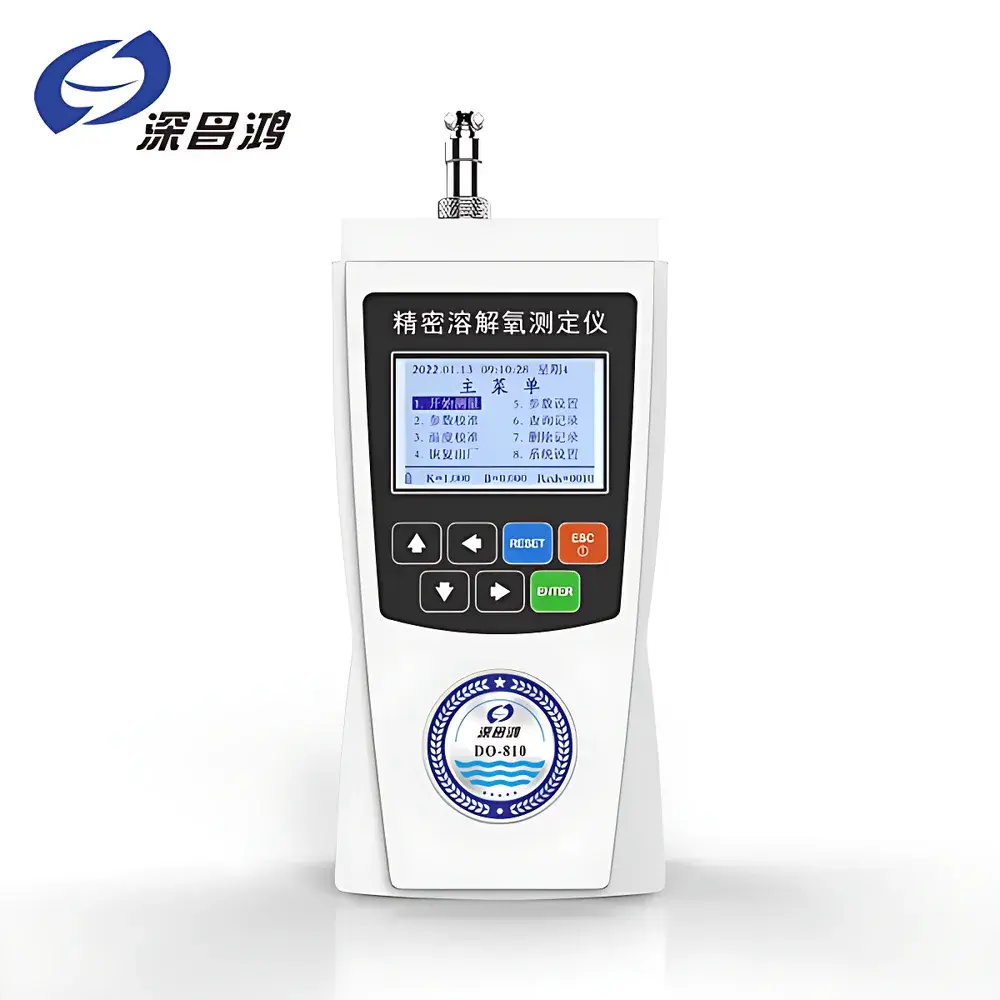
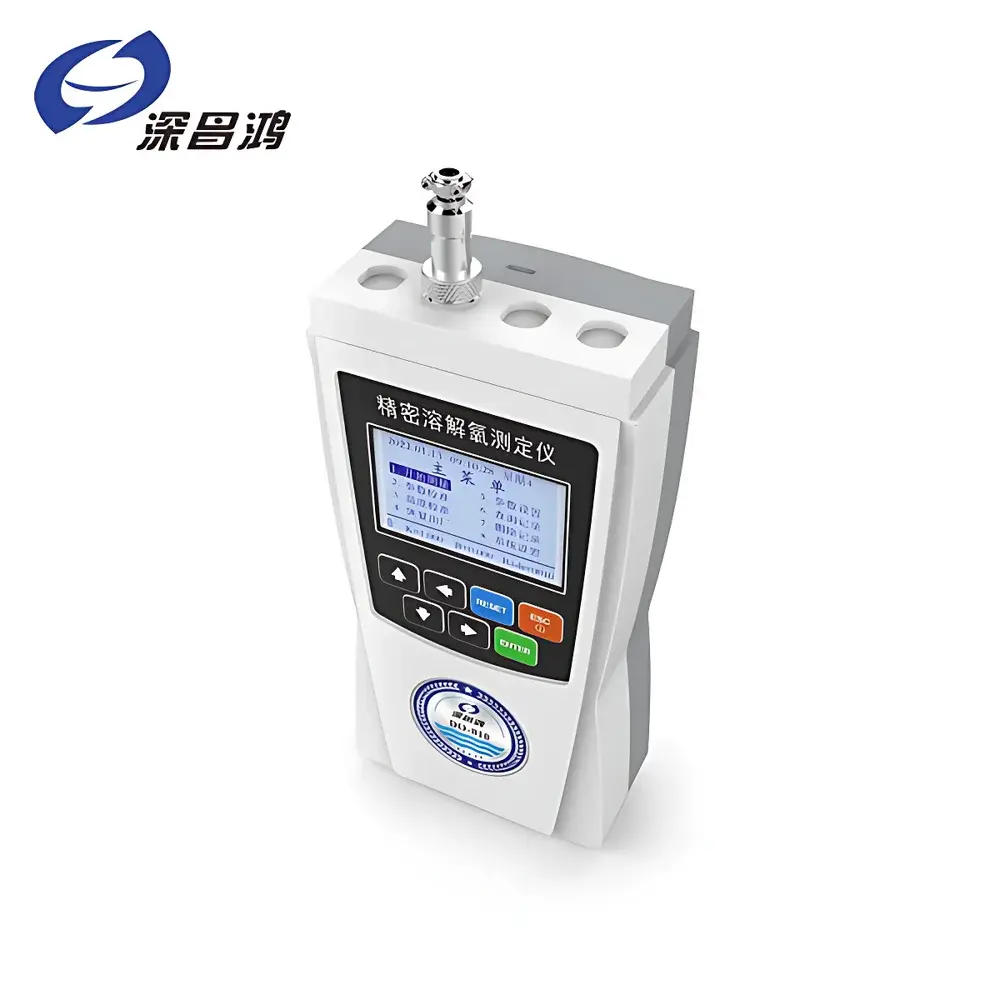
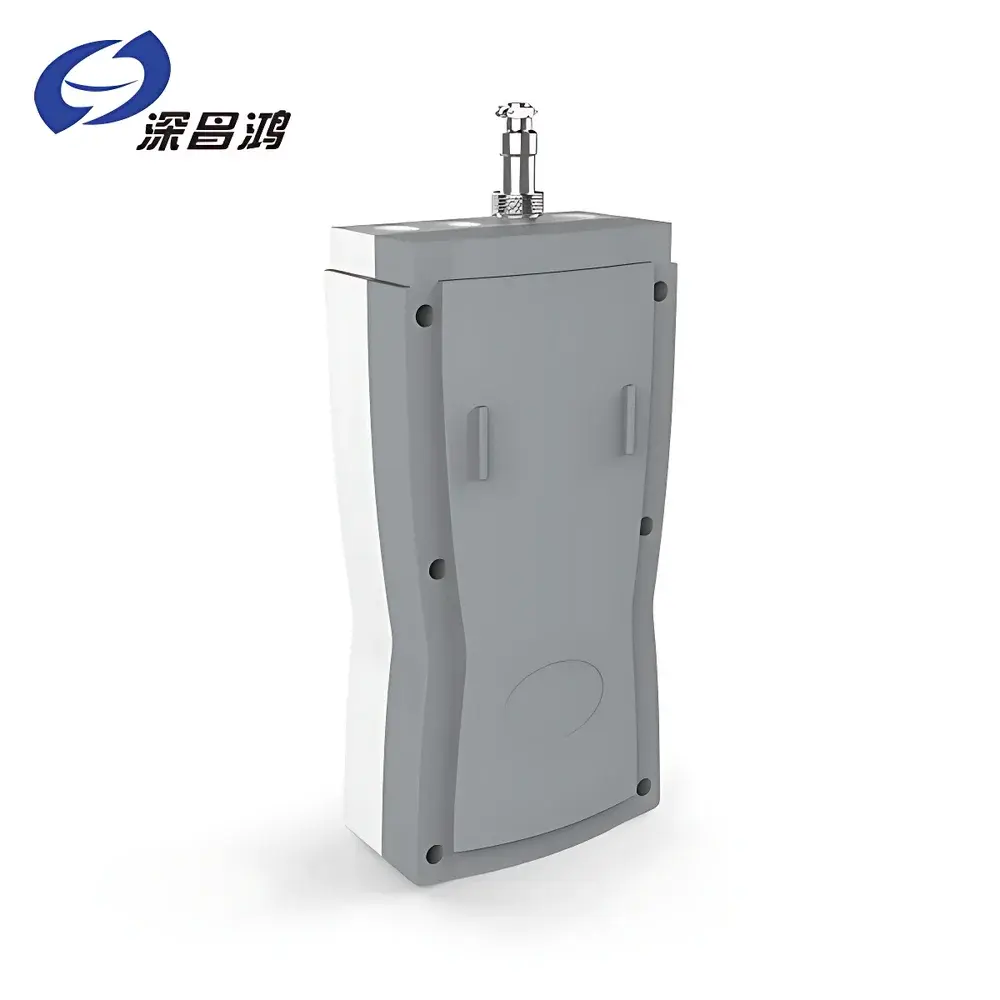
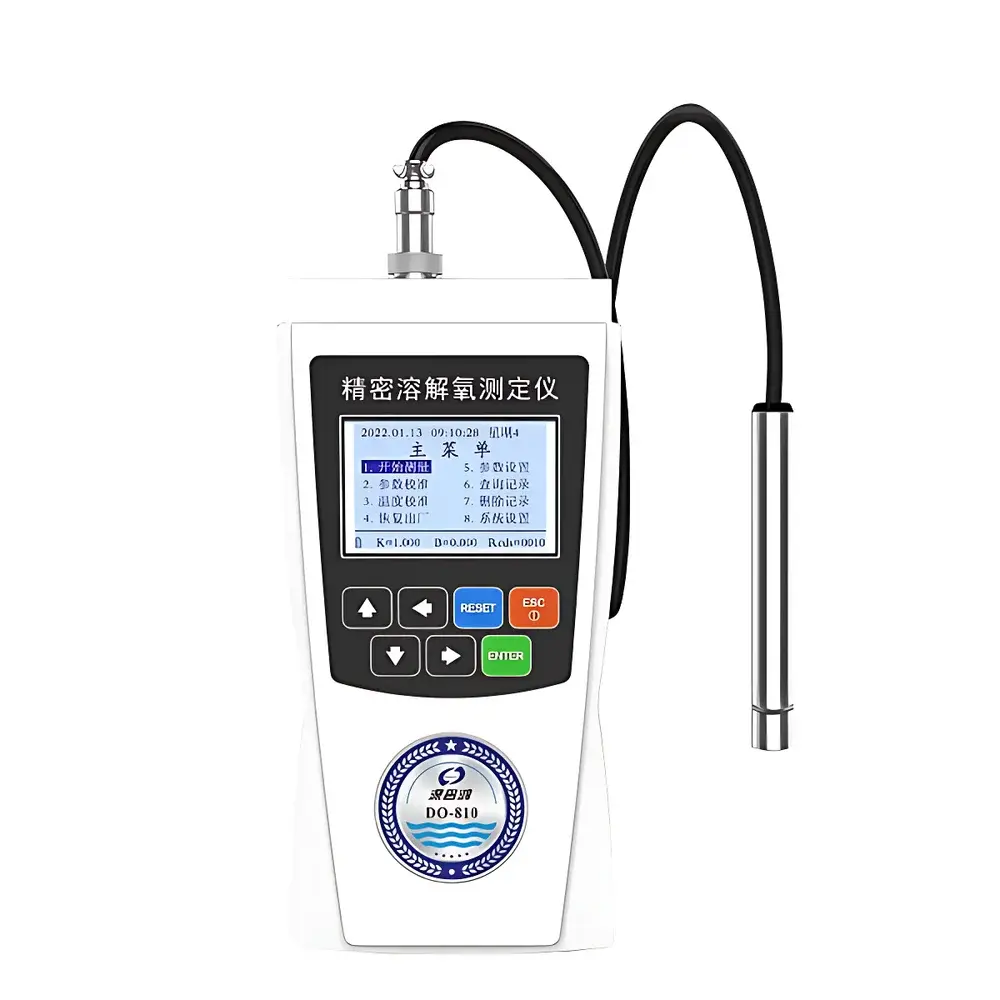
Shenchanghong DO-810 Portable Dissolved Oxygen Meter
| Brand | Shenchanghong |
|---|---|
| Origin | Guangdong, China |
| Manufacturer Type | Direct Manufacturer |
| Country of Origin | China |
| Model | DO-810 |
| Instrument Type | Portable |
| Measurement Principle | Fluorescence-based Optical Sensing |
| Range | 0.0–20.0 mg/L (DO) and 0–200 % saturation |
| Accuracy | ±0.2 mg/L (isothermal calibration condition) |
| Repeatability | ≤ ±3% |
| Detection Limit | 0.01 mg/L |
| Temperature Range | 0–50 °C |
| Temp. Accuracy | ±1 °C |
| Temp. Compensation Range | 0–50 °C |
| Calibration | 1- or 2-point |
| Salinity Compensation | Adjustable 0–35 g/L (ppt) |
| Atmospheric Pressure Adjustment | 0.5–1.5 atm |
| Sensor Cable Length | 2 m |
| Probe Storage Temp. | −40 to +85 °C |
| Sensor Drift | <1% per year |
| Fluorescent Cap Lifetime | 12 months (normal use) |
| Data Storage Capacity | 300 sets |
| Power | Rechargeable Li-ion battery (7.4 V, 1500 mAh) |
| Dimensions | 185 × 92 × 50 mm (L×W×H) |
| Weight | ~370 g |
| IP Rating | IP67-rated housing (dust-tight and immersion-resistant up to 1 m for 30 min) |
Overview
The Shenchanghong DO-810 Portable Dissolved Oxygen Meter is an optical fluorescence-based analyzer engineered for field-deployable, high-reliability measurement of dissolved oxygen (DO) in aqueous environments. Unlike electrochemical Clark-type sensors, the DO-810 employs a solid-state, non-consumptive fluorescent sensing mechanism: a blue LED excites a ruthenium-based luminophore immobilized on the sensor cap; molecular oxygen quenches the resulting red fluorescence proportionally, enabling precise, drift-resistant quantification without membrane replacement or electrolyte refilling. This principle delivers inherently stable baseline performance, eliminates polarization time, and ensures long-term calibration integrity—critical for unattended monitoring, regulatory sampling, and multi-site comparative studies. The instrument simultaneously reports DO concentration in mg/L and percent saturation (%), alongside real-time temperature (°C), all corrected automatically for temperature, salinity, and barometric pressure—parameters essential for compliance with ISO 5814, ASTM D888, and EPA Method 360.5.
Key Features
- Fluorescence-based optical detection with no oxygen consumption, zero polarization delay, and no electrolyte maintenance.
- Integrated 16-bit ultra-low-power microcontroller architecture supporting extended field operation on a single charge (up to 100 hours typical).
- Large backlit LCD with Chinese/English bilingual menu interface—designed for intuitive navigation under variable ambient lighting.
- Ruggedized IP67-rated enclosure with corrosion-resistant probe housing and reinforced cable strain relief (minimum bend radius: 15 mm).
- Full environmental compensation: automatic temperature compensation (0–50 °C), user-configurable salinity (0–35 ppt), and adjustable atmospheric pressure (0.5–1.5 atm) for accurate altitude correction.
- Dual-unit display: simultaneous readout of DO in mg/L and % saturation—aligned with both regulatory reporting formats and process control conventions.
- Non-volatile memory storing 300 measurement records with timestamp, DO value, temperature, and calibration metadata; data retained during power loss.
- Type-C USB interface compliant with USB 2.0 standards for secure, bidirectional data transfer and firmware updates via PC software.
Sample Compatibility & Compliance
The DO-810 is validated for direct immersion in freshwater, seawater, wastewater, aquaculture systems, and laboratory-prepared standard solutions. Its optical probe design eliminates interference from hydrogen sulfide, chlorine, or heavy metals—common limitations of amperometric sensors. The instrument meets IEC 61000-4 electromagnetic compatibility requirements and conforms to RoHS Directive 2011/65/EU. While not certified for Class I Div 1 hazardous locations, its sealed construction supports GLP-compliant field use in municipal water utilities, environmental consulting firms, and academic research programs. Calibration traceability aligns with NIST-traceable saturated air/water standards, and the % saturation mode enables validation against published oxygen solubility tables (e.g., APHA Standard Methods 4500-O G) across temperature (0–35 °C) and salinity ranges.
Software & Data Management
Data export is facilitated through proprietary Windows-compatible desktop software (v2.1+), supporting CSV and Excel (.xlsx) output with embedded audit trail metadata—including operator ID, calibration history, sensor serial number, and timestamped measurement logs. The software enforces user-defined data validation rules and supports batch export for LIMS integration. All stored measurements include calibration flags (e.g., “post-1pt-cal”, “saturation-mode”), ensuring full traceability required under FDA 21 CFR Part 11 for regulated environmental testing. Firmware updates are delivered via signed binary packages with SHA-256 checksum verification to maintain system integrity.
Applications
- Field monitoring of surface water quality (rivers, lakes, reservoirs) per national water quality standards (e.g., China’s GB 3838-2002, US EPA Clean Water Act assessments).
- Aquaculture pond management—real-time DO optimization to prevent hypoxia stress in finfish and shellfish operations.
- Wastewater treatment plant (WWTP) process control: aeration basin monitoring, activated sludge respiration rate estimation, and effluent compliance verification.
- Environmental impact assessments (EIAs) requiring portable, metrologically sound DO data across elevation gradients (validated up to 2200 m ASL using built-in pressure compensation).
- Academic and teaching laboratories conducting limnology, biogeochemistry, or sensor technology experiments.
FAQ
How does fluorescence-based DO measurement differ from electrochemical methods?
Fluorescence sensing avoids oxygen consumption, electrode poisoning, and membrane fouling—delivering higher long-term stability and lower maintenance than Clark-type sensors.
Can the DO-810 be used at high altitudes?
Yes—the instrument allows manual atmospheric pressure input (0.5–1.5 atm) and includes a reference table mapping elevation (0–2200 m) to pressure for field calibration.
What is the expected lifetime of the optical sensor cap?
Under normal use (≤8 hrs/day exposure to ambient water), the fluorescent cap maintains specification accuracy for ≥12 months before replacement is recommended.
Does the device support GLP-compliant data handling?
Yes—onboard storage includes timestamps, calibration status, and environmental parameters; exported data includes full audit trail metadata compatible with GLP/GMP documentation workflows.
Is temperature measurement independent of DO sensing?
No—the integrated Pt1000 thermistor is co-located with the optical sensor, ensuring synchronized, spatially matched thermal compensation for each DO reading.
Related Products







