
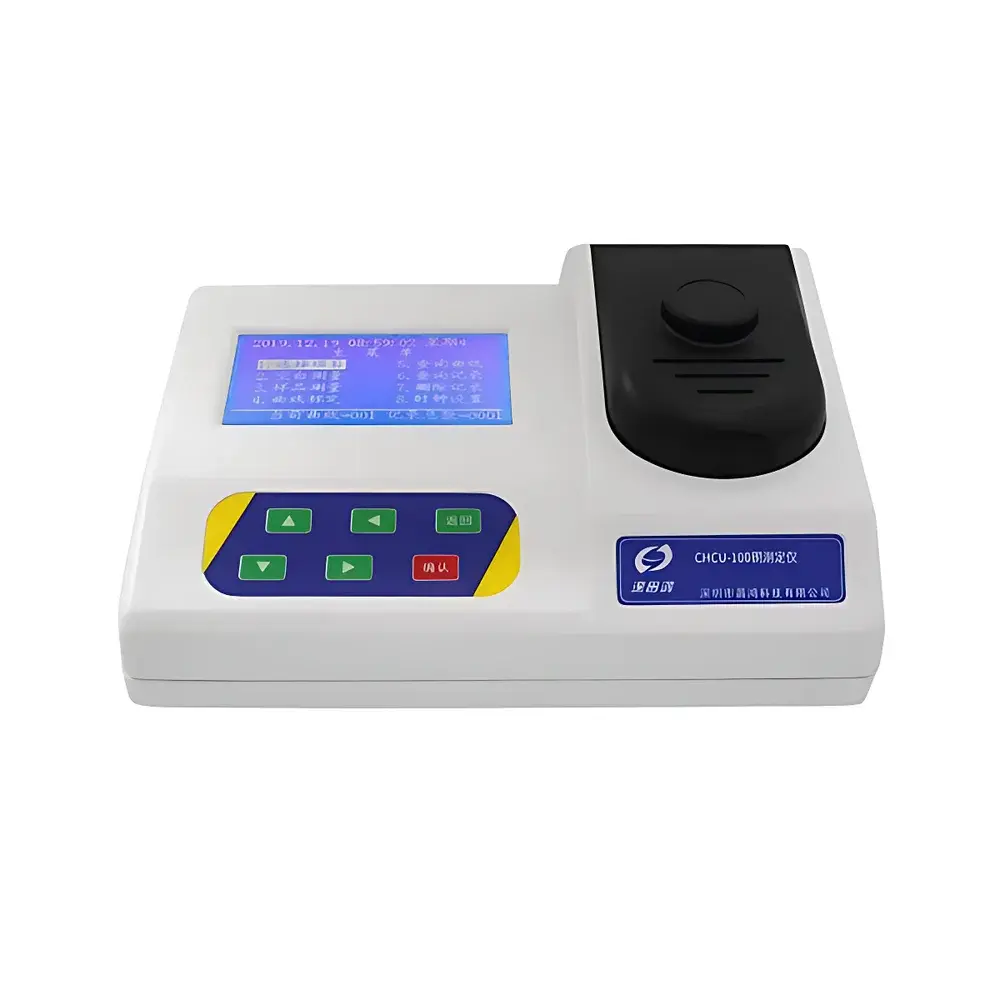
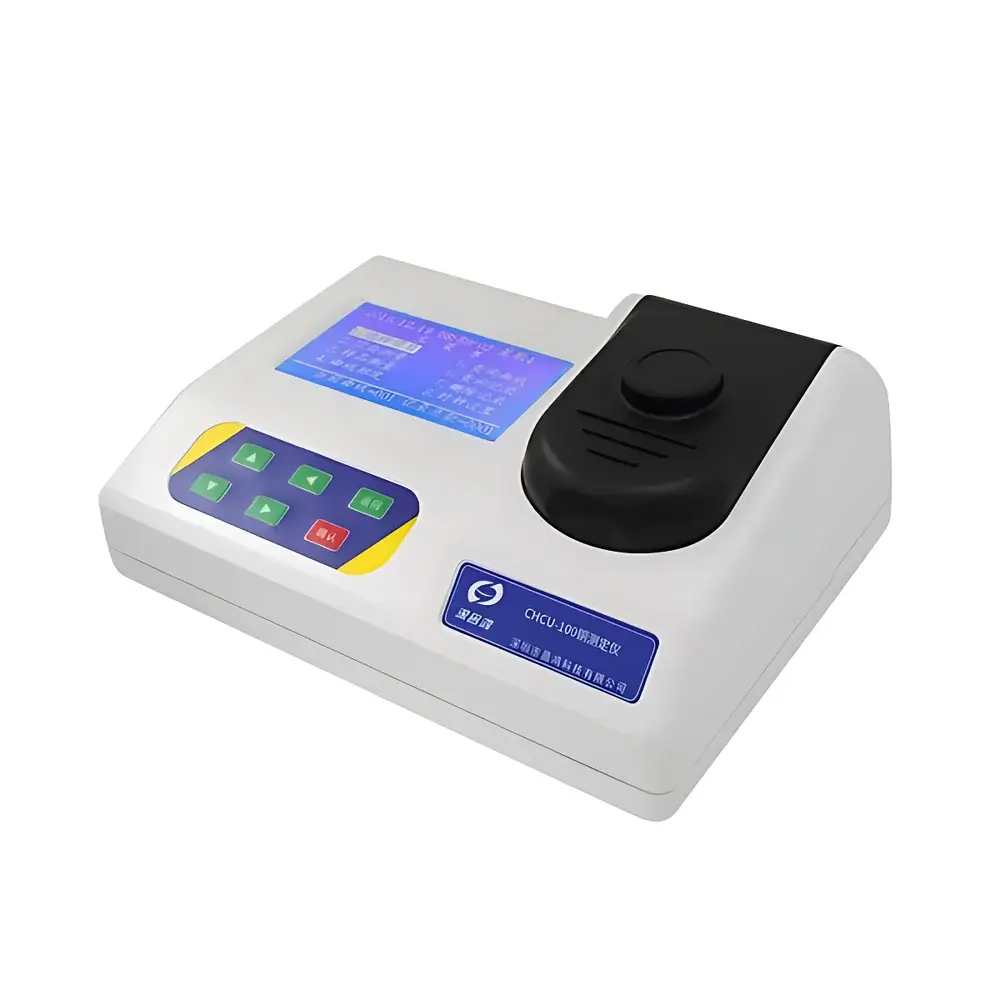
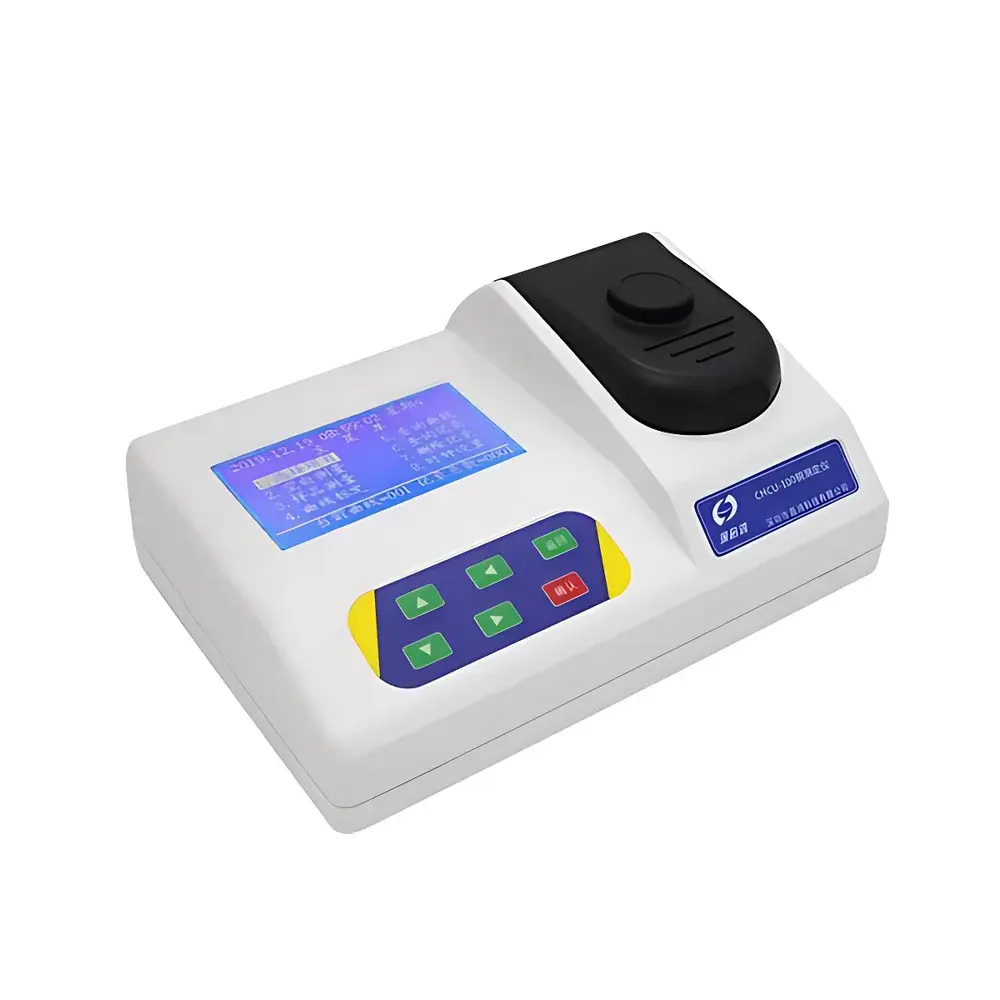
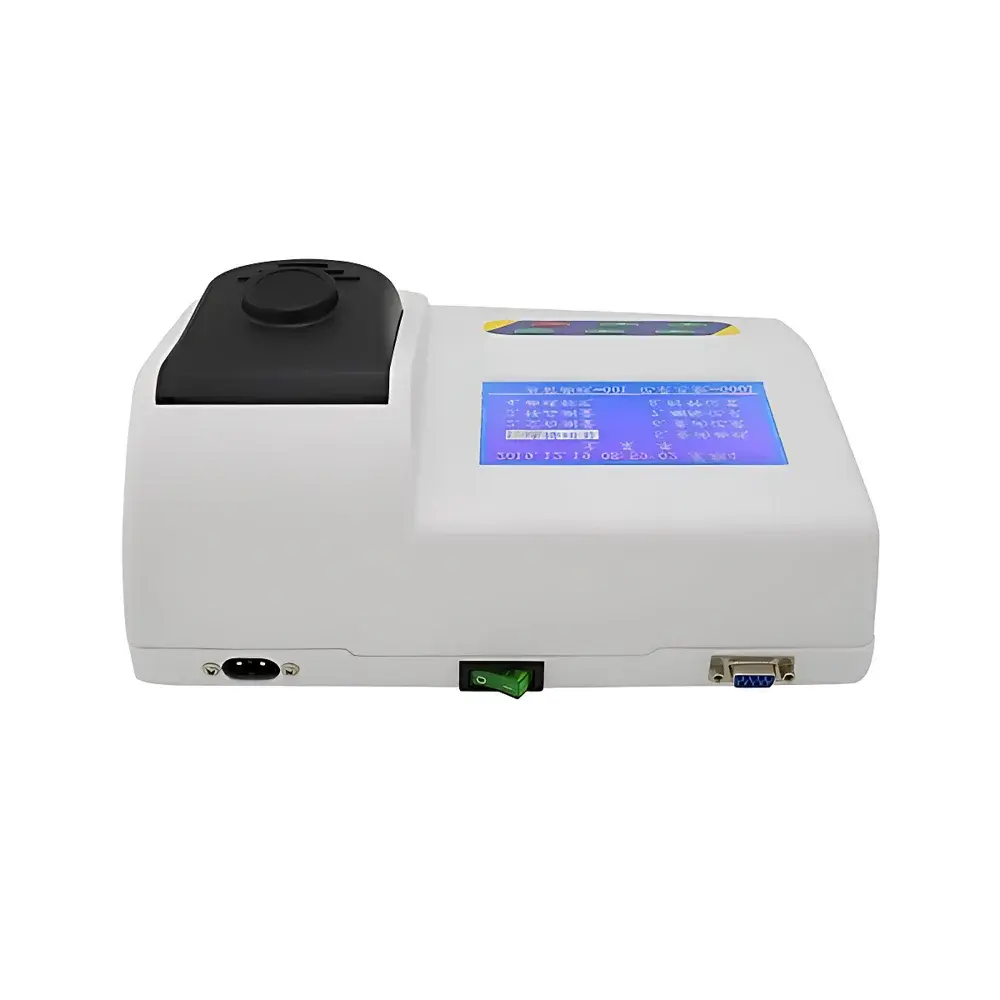
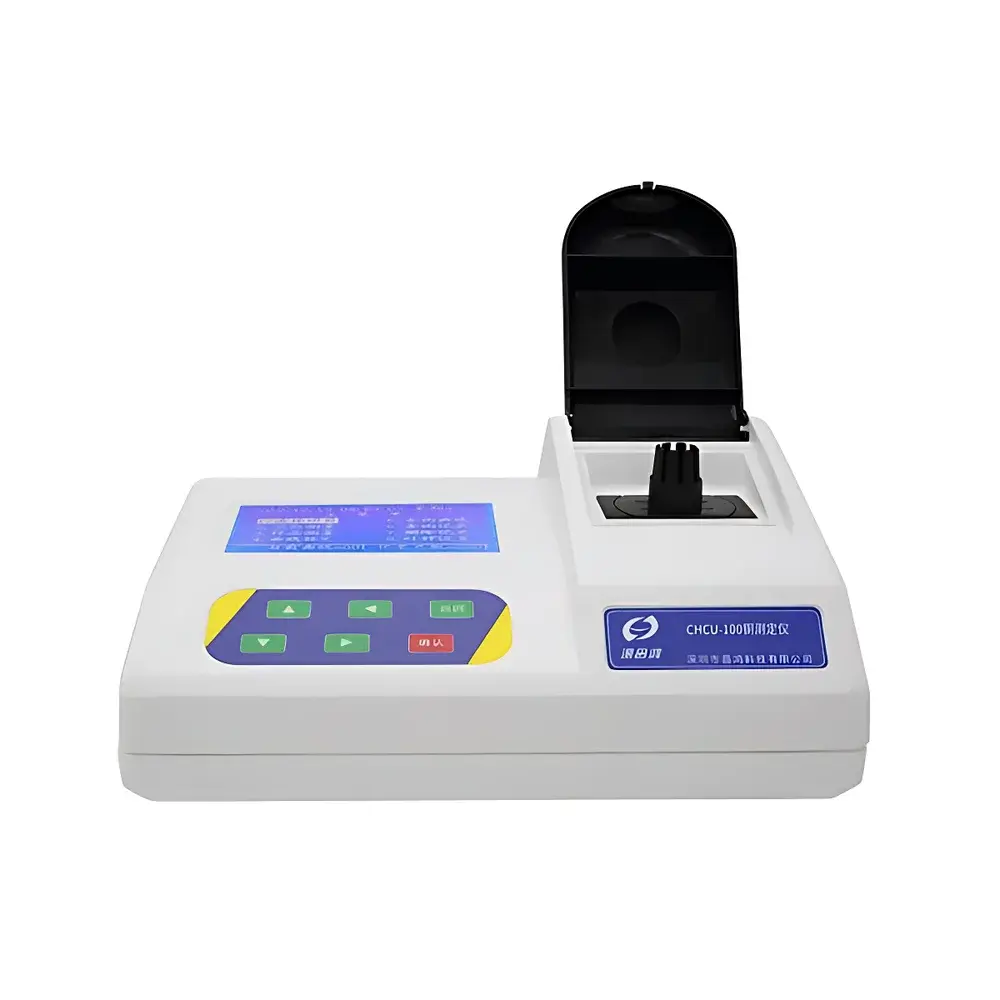
Shenchanghong CHCU-100 Desktop Copper Analyzer
| Brand | Shenchanghong |
|---|---|
| Origin | Guangdong, China |
| Manufacturer Type | Direct Manufacturer |
| Origin Category | Domestic (China) |
| Model | CHCU-100 |
| Instrument Type | Benchtop Laboratory Analyzer |
| Detection Principle | Photometric Method (Visible Spectrophotometry at Fixed Wavelength) |
| Target Analyte | Copper (Cu²⁺) |
| Measurement Range | 0.02–10.00 mg/L |
| Accuracy (Max. Error) | ≤ ±5% FS |
| Repeatability | ≤ 3% RSD |
| Optical Stability | Absorbance Drift < 0.002 A within 20 min |
| Dimensions (H×W×D) | 266 mm × 200 mm × 130 mm |
| Weight | < 1 kg |
| Operating Temperature | 5–40 °C |
| Relative Humidity | ≤ 85% RH |
| Power Supply | AC 220 V ± 10%, 50 Hz ± 0.5 Hz |
| Light Source | High-intensity, Long-life (100,000 h) LED Cold Light Source with Narrow-band Interference Filter |
| Display | Backlit LCD with Chinese Menu Interface |
| Data Storage | Internal Non-volatile Memory for Calibration Curves & Measurement Records |
| Housing Material | Corrosion-resistant ABS Polymer |
| Microcontroller | Low-power 16-bit MCU Architecture |
Overview
The Shenchanghong CHCU-100 Desktop Copper Analyzer is a dedicated benchtop photometric instrument engineered for rapid, reliable quantification of dissolved copper (Cu²⁺) in aqueous environmental samples. It operates on the principle of visible-spectrum spectrophotometry—specifically, the colorimetric reaction between Cu²⁺ ions and a proprietary chromogenic reagent (typically neocuproine or bathocuproine derivative), forming a stable, orange-red complex with maximum absorbance near 450 nm. The analyzer employs a high-stability, narrow-band LED cold light source (center wavelength ±2 nm tolerance) coupled with precision optical filtering to minimize stray light and spectral interference. This architecture ensures robust performance under variable ambient lighting conditions and eliminates the drift commonly associated with tungsten-halogen lamps or unfiltered broadband sources. Designed for routine compliance monitoring rather than research-grade trace analysis, the CHCU-100 delivers consistent results across drinking water, surface water, wastewater, and industrial effluent matrices—fully aligned with standard methods such as EPA Method 200.7 (ICP-OES reference) and ISO 8692:2012 (water quality — determination of copper by spectrophotometry).
Key Features
- Stable optical system featuring a 100,000-hour lifetime LED light source with integrated narrow-band interference filter—ensuring <0.002 A absorbance drift over 20 minutes and minimizing recalibration frequency.
- Integrated 16-bit low-power microcontroller enabling precise analog-to-digital conversion, automatic zeroing, and real-time linearization of Beer-Lambert response curves.
- Backlit monochrome LCD display with intuitive Chinese-language menu navigation—designed for field technicians and laboratory personnel without advanced spectroscopy training.
- Dual calibration capability: pre-programmed factory calibration curve plus user-definable multi-point calibration (up to 8 points) stored in non-volatile memory for matrix-specific compensation.
- Corrosion-resistant ABS polymer housing rated IP20, compliant with IEC 61010-1 for electrical safety in laboratory environments.
- Compact footprint (266 × 200 × 130 mm) and sub-1 kg mass—optimized for shared lab benches, mobile testing units, or satellite QC labs with space constraints.
Sample Compatibility & Compliance
The CHCU-100 is validated for use with clarified, filtered (0.45 µm membrane), and pH-adjusted (pH 4–8) aqueous samples. It accommodates standard 10 mm pathlength glass or quartz cuvettes (not included) and supports direct measurement of reaction mixtures in supplied 16 mm OD reaction tubes. Interference mitigation includes built-in masking agents for common ions: Fe³⁺ (up to 2 mg/L), Zn²⁺ (up to 5 mg/L), and Ni²⁺ (up to 1 mg/L) are suppressed without sample pretreatment. While not certified to ISO/IEC 17025 for accredited testing, the instrument meets functional requirements of GB/T 5750.6–2023 (Chinese Standard Methods for Examination of Drinking Water – Metals) and supports GLP documentation workflows via manual data transcription. Its measurement uncertainty profile (≤±5% FS) satisfies Class II accuracy criteria per ISO 7027-1:2016 for photometric water analyzers.
Software & Data Management
The CHCU-100 operates as a standalone embedded system with no PC dependency. All calibration parameters, measurement logs (date/time-stamped), and user-defined curves are retained in EEPROM with battery-backed retention (>10 years). Data export is manual: users record values directly from the LCD or log results into external LIMS-compatible spreadsheets. Though lacking USB/Bluetooth connectivity or FDA 21 CFR Part 11-compliant electronic signatures, its audit trail—comprising printed calibration certificates, reagent lot tracking, and operator ID annotation—is fully compatible with ISO 17025 internal audit protocols when documented per organizational SOPs. Firmware updates (if released) require physical connection to a dedicated programming interface—not accessible in-field.
Applications
- Regulatory compliance testing for copper in municipal drinking water per WHO Guideline Value (2 mg/L) and EU Directive 98/83/EC (2 mg/L).
- Routine QC of electroplating rinse waters and PCB manufacturing effluents where Cu concentrations exceed 0.5 mg/L.
- Field-deployable verification of copper removal efficiency in ion exchange or chelating resin treatment systems.
- Educational laboratories demonstrating redox-based colorimetric analysis principles and Beer-Lambert law applications.
- Pre-screening prior to ICP-MS or AAS confirmation—reducing instrument time for high-throughput environmental labs.
FAQ
What sample preparation is required before analysis?
Samples must be filtered through a 0.45 µm membrane syringe filter and adjusted to pH 4–8 using dilute HNO₃ or NaOH. Turbid or highly colored samples require centrifugation or digestion per GB/T 5750.6–2023 Annex B.
Can the CHCU-100 measure other metals besides copper?
No—it is a single-analyte instrument optimized exclusively for Cu²⁺ detection. Separate models (e.g., CHCR-100 for chromium, CHCD-100 for cadmium) are available in the same platform family.
Is reagent consumption tracked or monitored by the instrument?
No. Reagent volume is manually controlled during dispensing; users must maintain lot-specific calibration records and expiration tracking per GMP Annex 11 guidance.
Does the analyzer support automatic dilution for out-of-range samples?
No. Samples exceeding 10.00 mg/L must be diluted manually using certified volumetric glassware prior to analysis.
What maintenance is required beyond regular cleaning?
Annual verification of LED output intensity and filter transmission using NIST-traceable neutral density filters is recommended. No optical alignment or lamp replacement is needed within the 100,000-hour service life.
Related Products







