
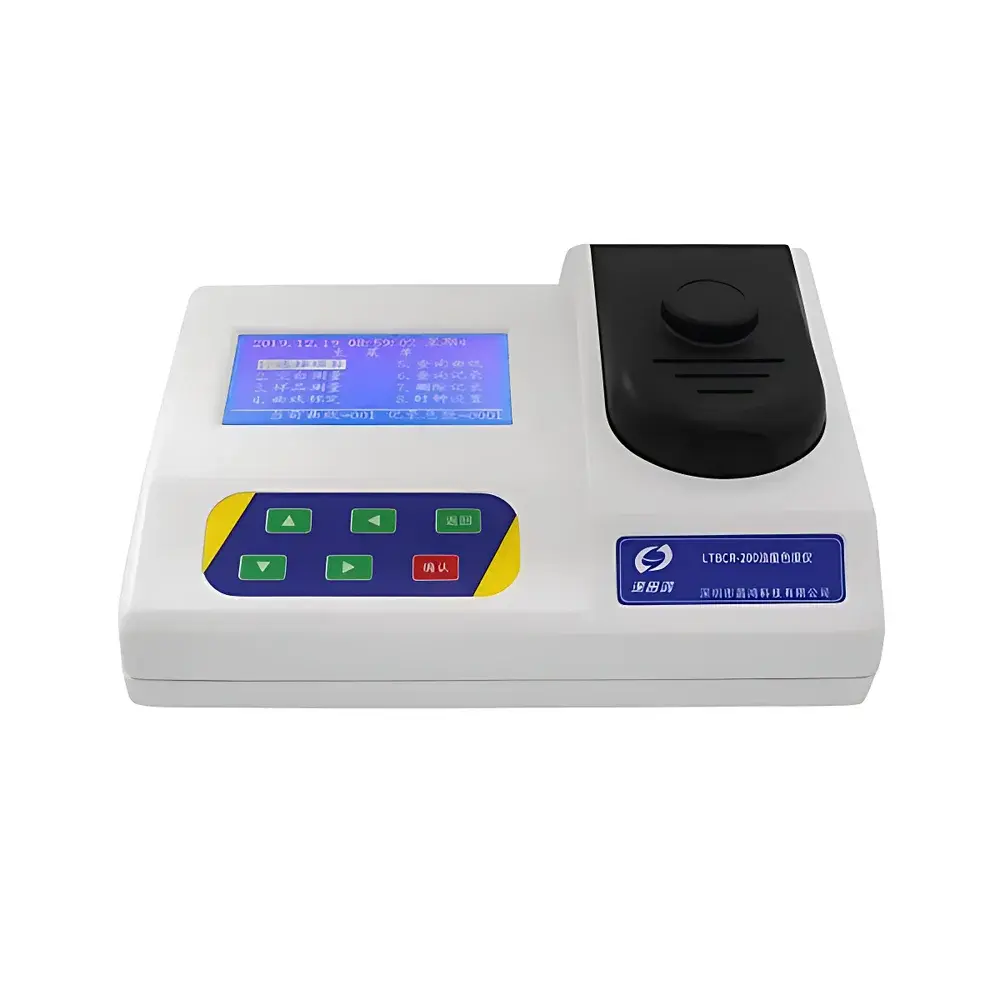
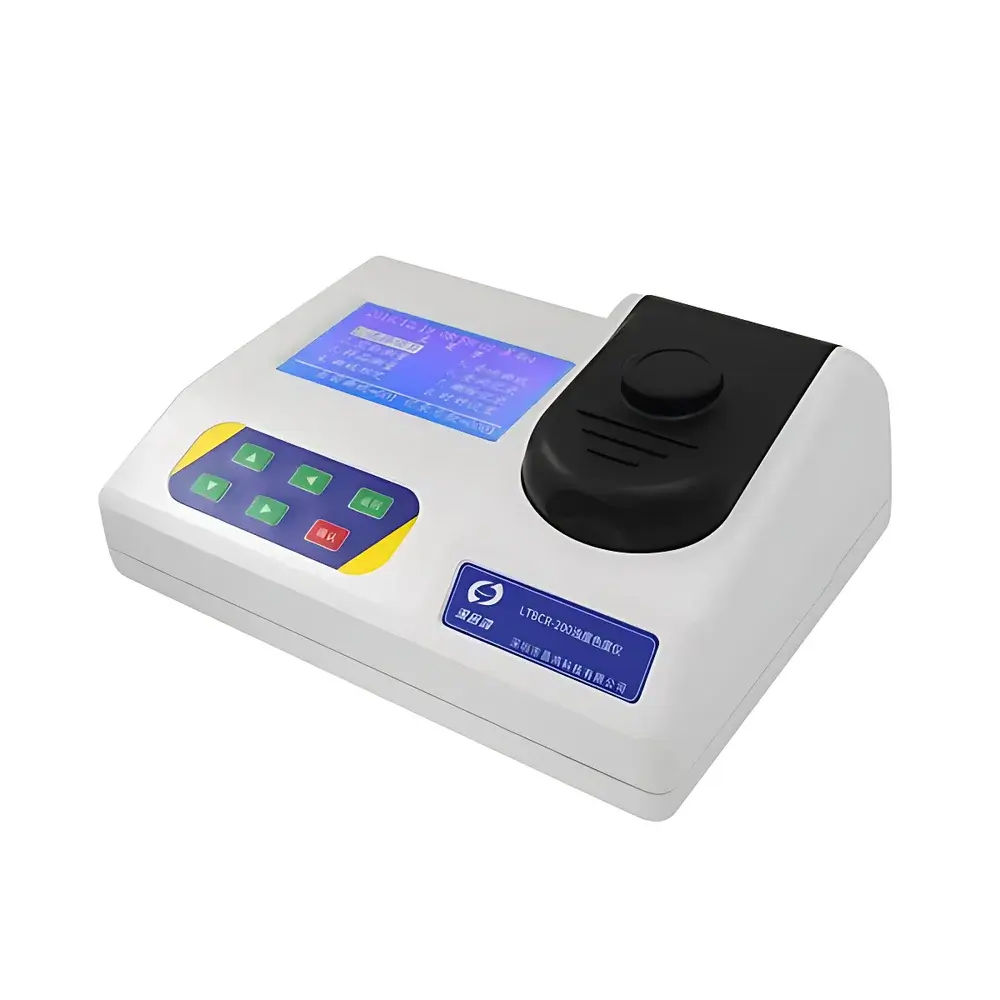
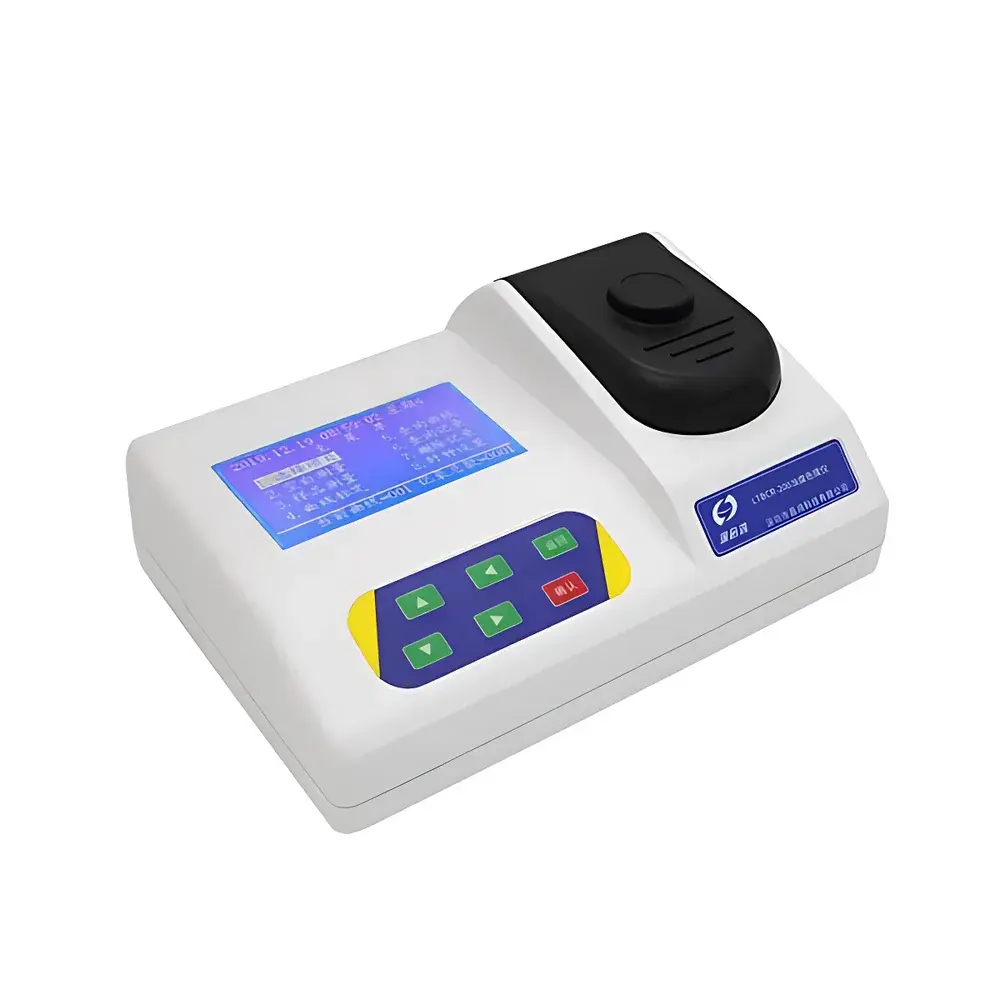
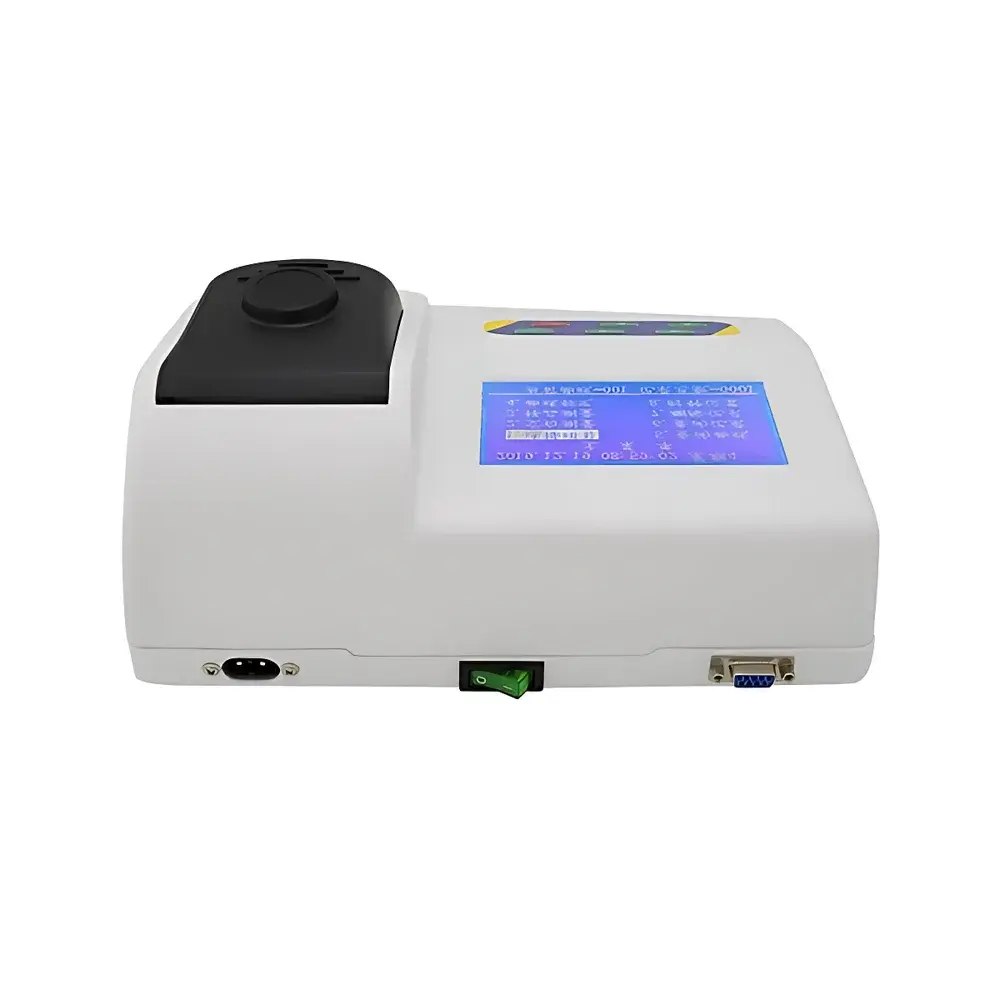
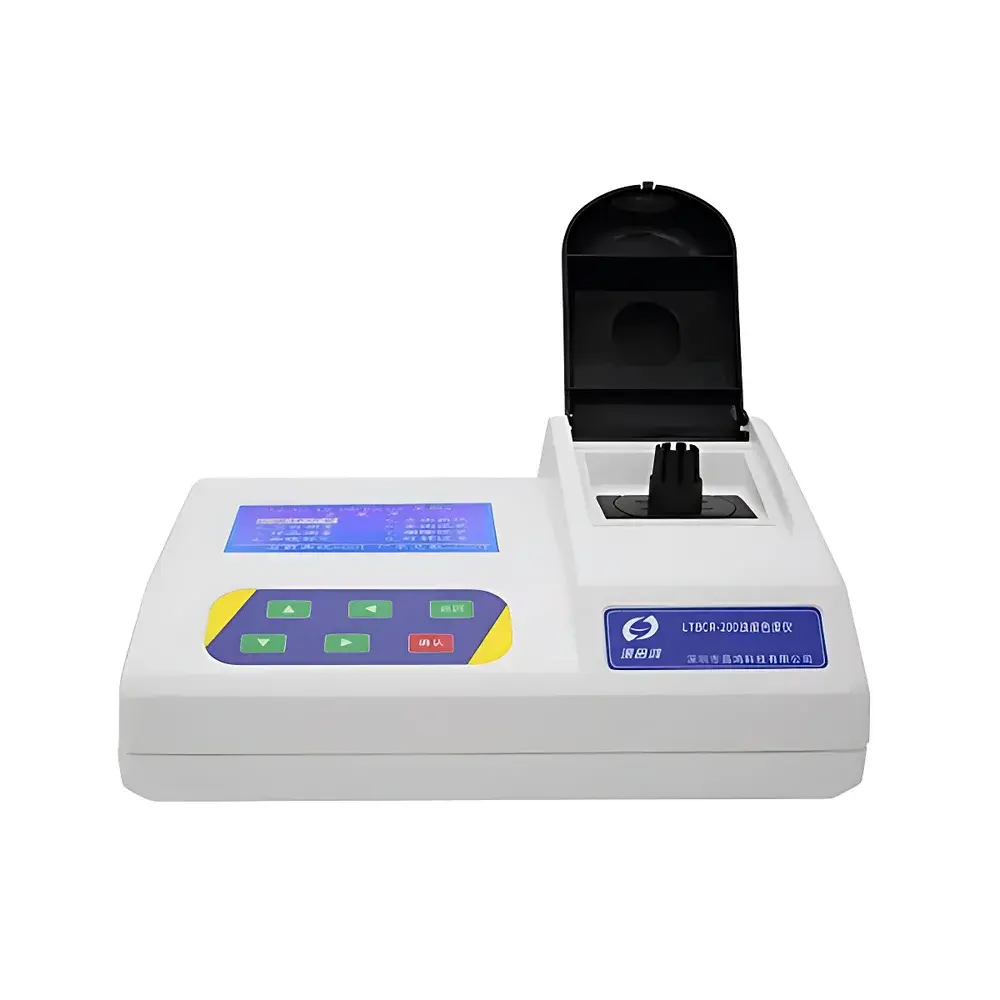
Shenchanghong LTBCR-200 Benchtop Turbidimeter and Colorimeter
| Brand | Shenchanghong |
|---|---|
| Origin | Guangdong, China |
| Manufacturer Type | Direct Manufacturer |
| Origin Category | Domestic (China) |
| Model | LTBCR-200 |
| Form Factor | Benchtop / Laboratory |
| Measurement Range | Turbidity: 0–1000 NTU (standard range 0–400 NTU, extendable) |
| Color | 0–500 CPU |
| Resolution | 0.01 NTU |
| Operating Temperature | 5–40 °C |
| Accuracy | Turbidity ≤ ±2% of full scale |
| Repeatability | ≤ ±2% of full scale |
| Drift | < 0.1 NTU/hour |
| Dimensions | 266 × 200 × 130 mm |
| Weight | 1 kg |
| Power Supply | AC (220 ± 10%) V, 50 Hz |
| Relative Humidity Limit | ≤70% RH |
| Optical System | Narrow-band interference filters with high-stability imported LED source (rated lifetime: 100,000 hours) |
| Display | Backlit LCD with Chinese interface |
| Data Storage | 20 calibration curves + 400 measurement records (non-volatile memory) |
| Housing Material | Molded ABS with corrosion resistance |
| Microcontroller | Low-power 16-bit MCU |
Overview
The Shenchanghong LTBCR-200 is a dual-parameter benchtop optical analyzer engineered for simultaneous quantitative measurement of turbidity (NTU) and true color (CPU) in liquid samples. It operates on the principle of nephelometric detection for turbidity—measuring scattered light intensity at 90° relative to the incident beam—and spectrophotometric absorption analysis for color, using narrow-band interference filters centered at standardized wavelengths per APHA/Hazen (platinum-cobalt) methodology. Designed for routine quality control and environmental monitoring in municipal water treatment labs, food & beverage production facilities, pharmaceutical QC units, and academic research settings, the LTBCR-200 delivers traceable, reproducible results without requiring external calibration verification tools. Its optical architecture integrates a long-life, high-luminance imported LED source (100,000-hour rated lifetime), precision collimated optics, and thermally stabilized photodetector electronics—minimizing drift and ambient light interference under standard laboratory conditions.
Key Features
- Dual-mode optical detection: Independent turbidity (nephelometry) and color (absorbance-based CPU) measurement pathways within a single instrument platform
- High-resolution readout: 0.01 NTU minimum resolution across the full 0–1000 NTU extended range, supporting low-turbidity applications such as purified water and process rinse validation
- Stable optical core: Narrow-band interference filters and temperature-compensated LED illumination ensure <0.1 NTU/hour baseline drift after 30-minute warm-up
- Robust data integrity: Non-volatile memory retains up to 20 user-defined calibration curves and 400 timestamped measurement records—even during power interruption
- Compliance-ready design: Meets mechanical and electrical safety requirements per IEC 61010-1; optical performance aligns with ISO 7027-1 (turbidity) and ASTM D1209 / ISO 6271 (color)
- Lab-grade ergonomics: Compact footprint (266 × 200 × 130 mm), ABS polymer housing resistant to common reagents and cleaning agents, and intuitive Chinese-language LCD menu navigation
Sample Compatibility & Compliance
The LTBCR-200 accepts standard 10-mm pathlength square glass or quartz cuvettes (included). It supports aqueous matrices including drinking water, wastewater effluents, boiler feedwater, beverage filtrates, and pharmaceutical rinse solutions. Samples must be free of suspended particulates that settle rapidly (>5 min settling time) and exhibit no significant fluorescence or UV-absorbing interferents outside the defined spectral bands. The instrument’s turbidity measurement conforms to ISO 7027-1:2016 (infrared 860 nm detection), ensuring compatibility with regulatory reporting frameworks used by national drinking water authorities. Color measurement follows APHA Standard Method 2120B and ISO 6271:2018, enabling direct comparison with reference platinum-cobalt standards. While not FDA 21 CFR Part 11–certified out-of-the-box, its audit-trail-capable memory structure supports GLP/GMP-aligned documentation when paired with controlled SOPs and manual record-keeping protocols.
Software & Data Management
The LTBCR-200 operates autonomously via embedded firmware—no PC connection required for routine operation. All calibration procedures (zero, span, multi-point) are performed directly on-device using built-in prompts and real-time feedback. Calibration curve coefficients and measurement metadata (date/time, operator ID placeholder, cuvette ID) are stored in EEPROM. Export functionality is not integrated; however, recorded values may be manually transcribed or captured via optional RS-232 serial output (available on request with adapter cable). For laboratories implementing electronic lab notebooks (ELN) or LIMS integration, the device’s stable analog output signal (0–5 V proportional to NTU) can be interfaced with third-party DAQ systems for automated logging. Firmware updates are performed via USB service port under technical support supervision.
Applications
- Drinking water quality assurance: Monitoring turbidity compliance per WHO Guidelines and national standards (e.g., China GB 5749-2022, US EPA 180.1)
- Wastewater treatment plant effluent verification: Pre-discharge turbidity screening and color abatement validation
- Pharmaceutical water systems: Purified Water (PW) and Water for Injection (WFI) clarity checks per USP and EP 2.2.1
- Food & beverage processing: Syrup color grading, juice clarification endpoint detection, and dairy whey clarity assessment
- Academic teaching labs: Hands-on instruction in optical metrology principles, calibration theory, and environmental parameter interdependence
- Industrial coolant and lubricant monitoring: Early-stage contamination detection via subtle increases in turbidity or yellowing index
FAQ
What is the recommended warm-up time before initiating measurements?
The instrument requires a minimum 30-minute stabilization period after power-on to achieve thermal equilibrium in the optical path and ensure specified accuracy and drift performance.
Can the LTBCR-200 measure samples with bubbles or foam?
No. Bubbles and surface foam introduce non-representative light scattering and must be eliminated prior to analysis—either by gentle centrifugation, vacuum degassing, or static settling per Standard Method 2130B.
Is NIST-traceable calibration standard included?
A primary turbidity standard solution (formazin or equivalent polymer suspension) is supplied with each unit; however, users are responsible for periodic verification against independently certified reference materials compliant with ISO 8772.
Does the device support automatic range switching?
No. Range selection (0–400 NTU standard or 0–1000 NTU extended) is manually configured during setup and remains fixed until changed by the operator.
How often should zero calibration be performed?
Zero calibration using deionized water or certified blank is recommended before each analytical session and whenever ambient temperature shifts exceed ±5 °C from the last calibration event.





