
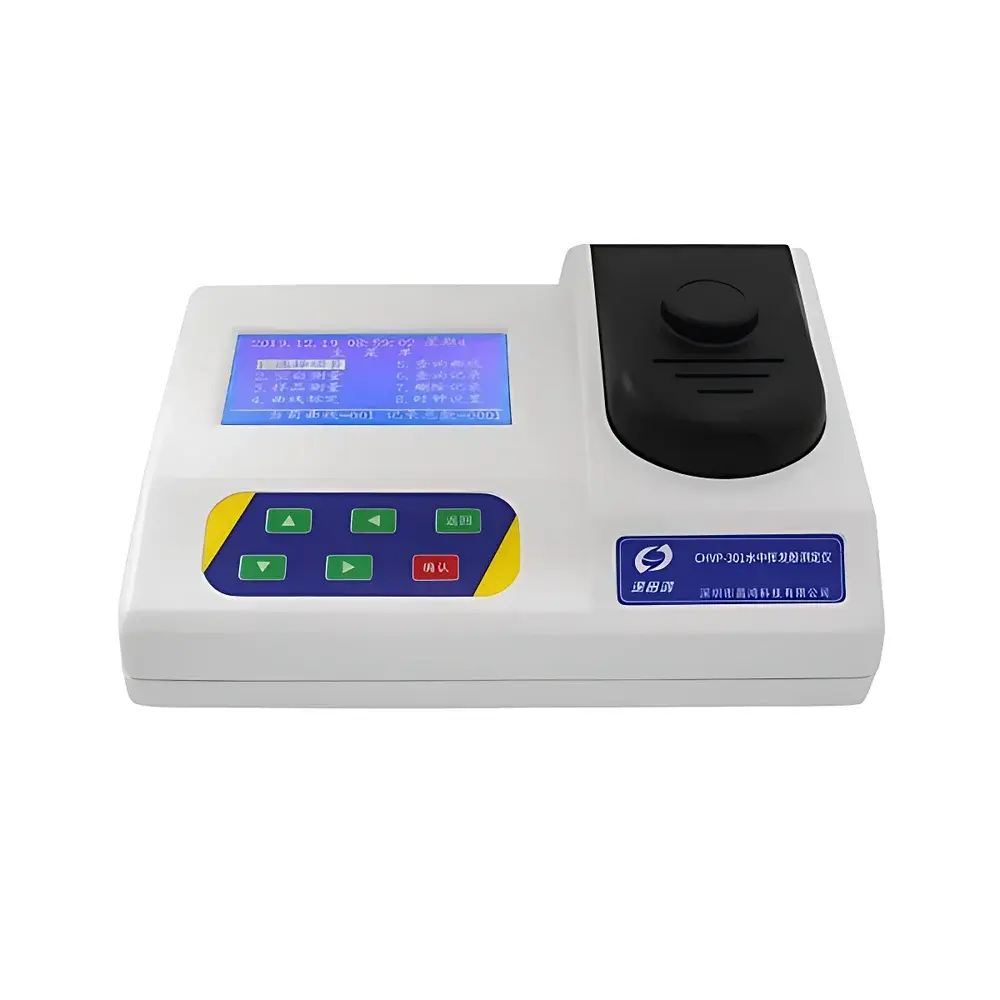
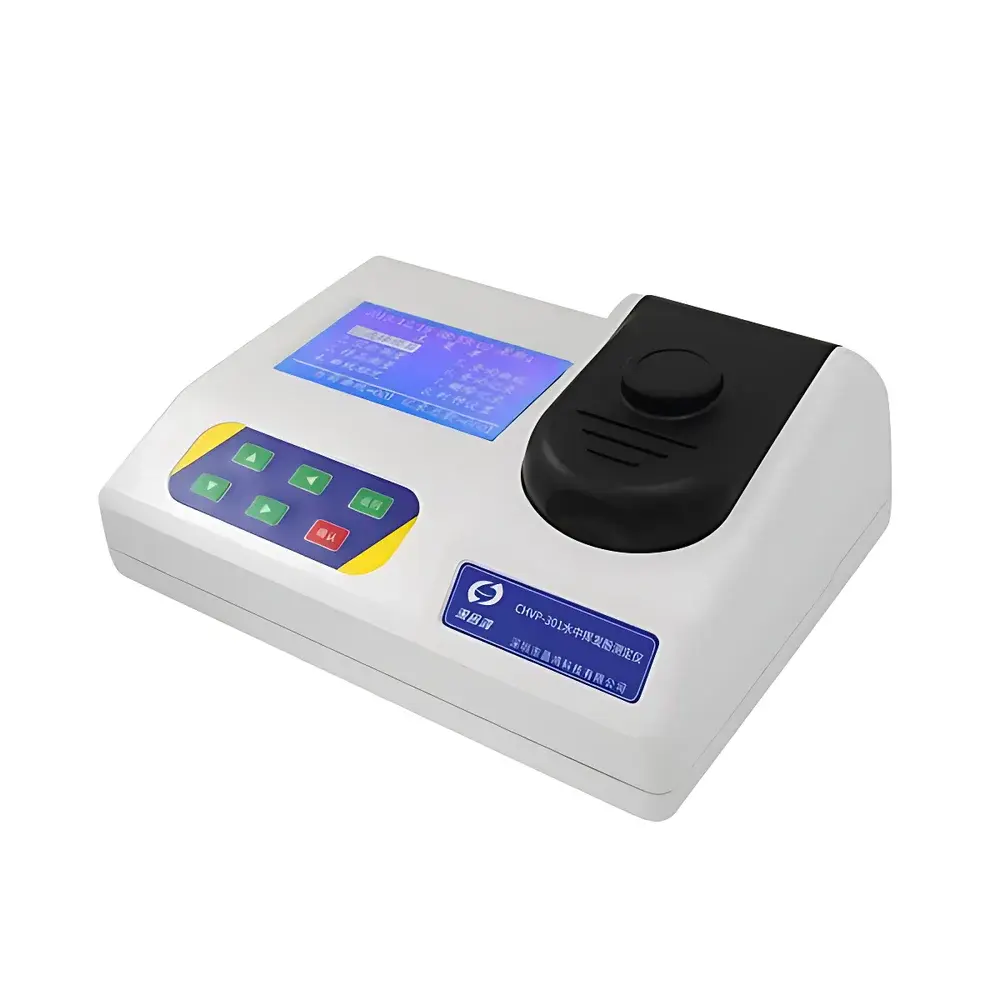
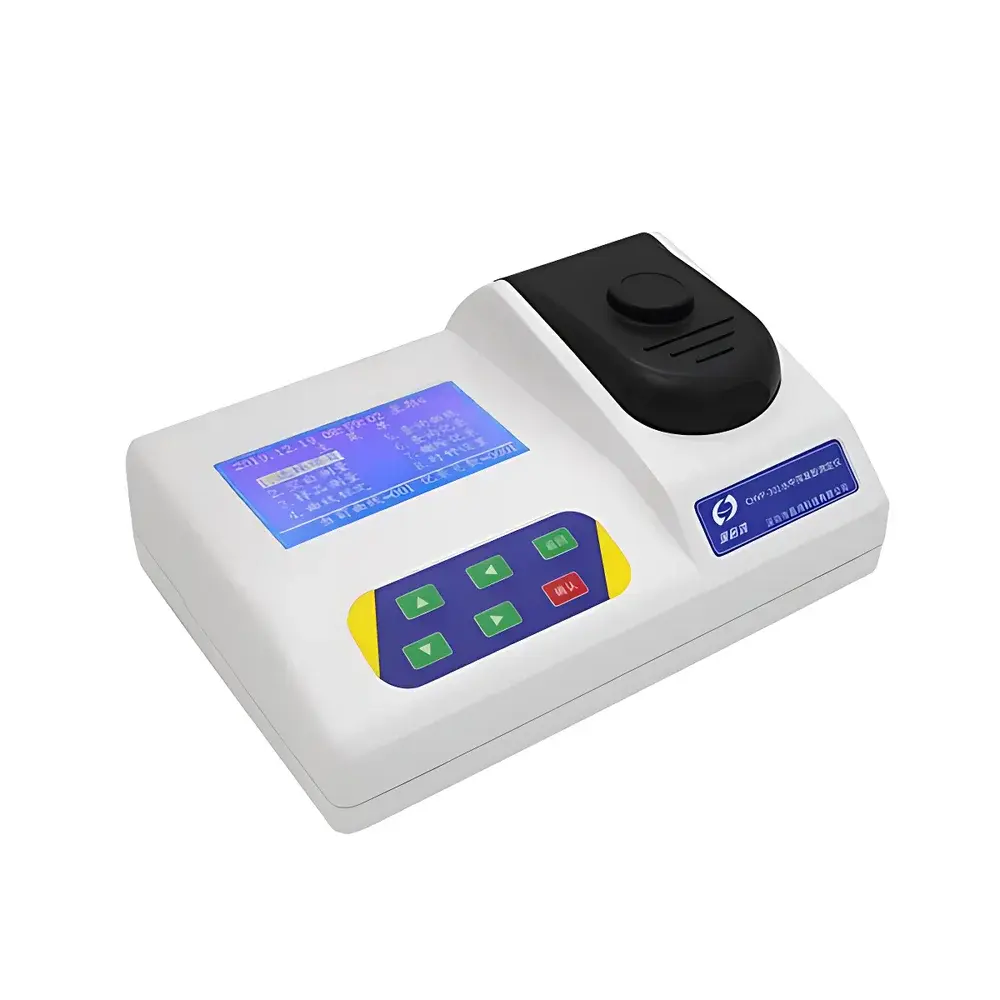
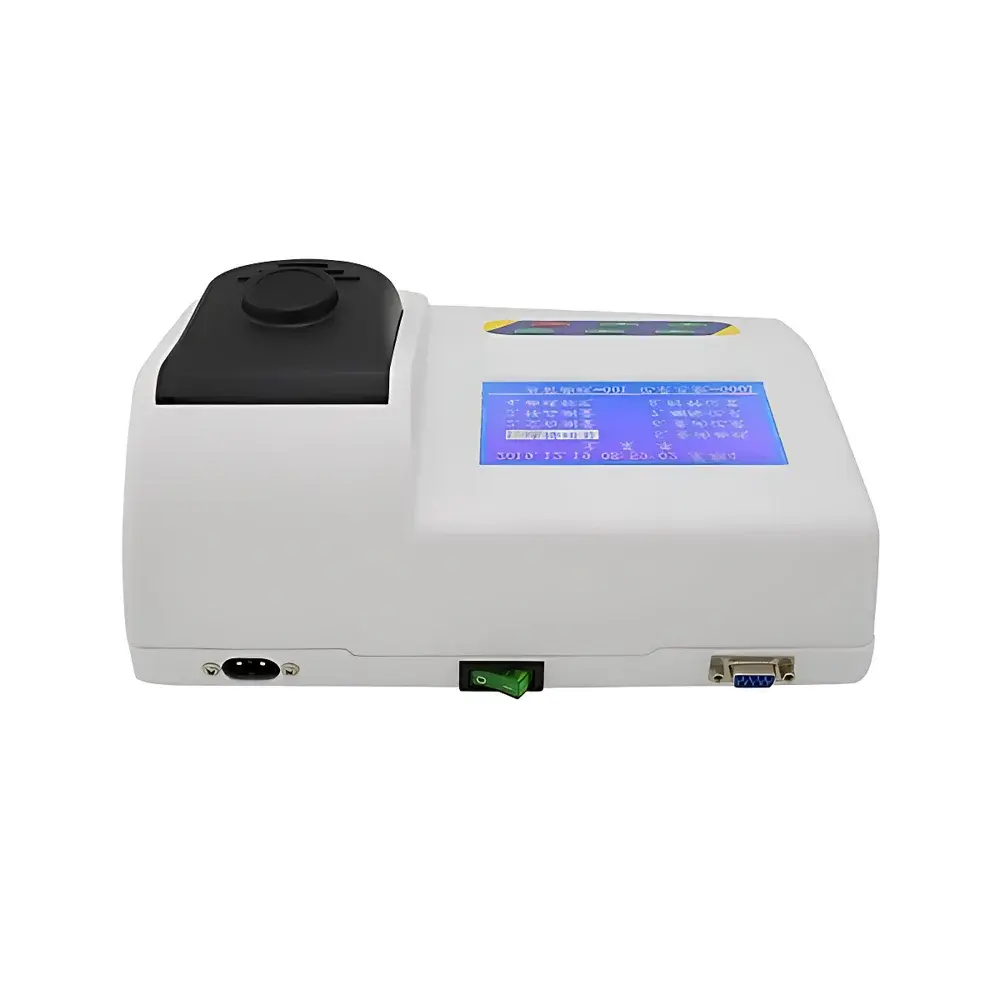
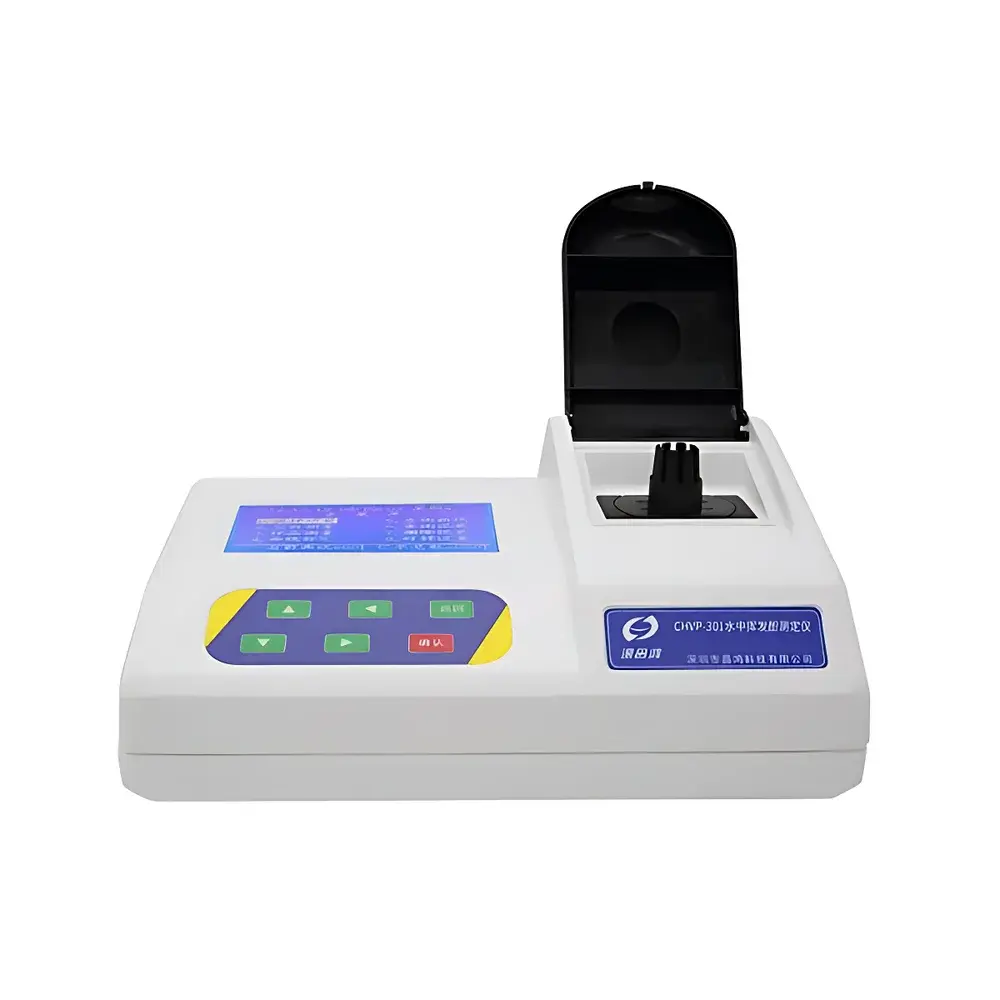
Shenchanghong CHVP-301 Volatile Phenol Analyzer
| Brand | Shenchanghong |
|---|---|
| Origin | Guangdong, China |
| Manufacturer Type | Direct Manufacturer |
| Product Category | Domestic |
| Model | CHVP-301 |
| Instrument Type | Benchtop Volatile Phenol Analyzer |
| Measurement Range | 0.1–10 mg/L |
| Accuracy | ≤ ±5% FS |
| Repeatability | ≤ 3% RSD |
| Optical Drift | < 0.002 A over 20 min |
| Dimensions (W×D×H) | 266 × 200 × 130 mm |
| Weight | < 1 kg |
| Operating Temperature | 5–40 °C |
| Relative Humidity | ≤ 85% RH |
| Power Supply | AC 220 V ± 10%, 50 Hz ± 0.5 Hz |
| Housing Material | ABS with corrosion resistance |
Overview
The Shenchanghong CHVP-301 Volatile Phenol Analyzer is a benchtop spectrophotometric instrument engineered for quantitative determination of volatile phenols—primarily phenol, cresols, and xylenols—in environmental water samples. It operates on the 4-aminoantipyrine (4-AAP) colorimetric method standardized in ISO 6439:1984 and GB/T 5750.5–2006, where phenolic compounds react with 4-AAP and potassium ferricyanide under buffered alkaline conditions to form a pink-colored quinone imine dye. Absorbance is measured at 500 nm using a stable cold-light LED source and narrow-band optical filtering, ensuring high specificity and minimal spectral interference from turbidity or background chromophores. Designed for routine compliance monitoring in municipal water utilities, environmental testing laboratories, and third-party certification facilities, the CHVP-301 delivers trace-level quantification with full adherence to regulatory reporting requirements for surface water, groundwater, wastewater effluent, and drinking water sources.
Key Features
- Stable cold-light LED source with monochromatic output at 500 nm—eliminates thermal drift and external ambient light interference
- Integrated microprocessor-controlled photometric engine with V/F (voltage-to-frequency) analog signal conversion for enhanced noise immunity
- Large backlit LCD display with Chinese-language interface—supports full operational workflow including calibration, measurement, curve storage, and data review in one unified environment
- Non-volatile memory architecture retaining up to 10 user-defined calibration curves and 99 measurement records—even after power loss
- Rugged injection-molded ABS housing with chemical-resistant surface finish—designed for long-term durability in humid or reagent-exposed lab environments
- Software-level redundancy and trap routines implemented in firmware to prevent runtime errors during extended operation or voltage fluctuation
Sample Compatibility & Compliance
The CHVP-301 is validated for use with clarified, filtered, or distilled aqueous matrices meeting standard pretreatment protocols per ISO 6439 and EPA Method 420.1. Samples requiring distillation prior to analysis (e.g., wastewater with high organic load or suspended solids) must be processed using an approved steam-distillation apparatus before introduction to the analyzer. The instrument complies with GLP documentation requirements through timestamped record retention and supports audit-ready workflows when paired with laboratory information management systems (LIMS). While not certified to FDA 21 CFR Part 11 out-of-the-box, its data logging architecture permits integration with compliant electronic signature and audit trail modules deployed at the institutional level. All performance specifications—including accuracy, repeatability, and photometric stability—are verified against NIST-traceable reference standards and documented in the factory calibration certificate supplied with each unit.
Software & Data Management
The embedded firmware provides intuitive navigation via soft-key menu structure, enabling users to perform zero-point calibration, multi-point standardization, and sample quantification without external software. Calibration curves may be generated manually using certified phenol standard solutions (e.g., 0.1, 0.5, 1.0, 2.5, 5.0, and 10.0 mg/L), stored permanently in non-volatile memory, and recalled instantly for subsequent analyses. Each measurement record includes sample ID, date/time stamp, absorbance value, concentration result, and associated calibration curve identifier. Export functionality is available via optional RS-232 serial interface (standard) or USB-to-serial adapter (accessory), facilitating batch transfer to Excel or LIMS-compatible CSV formats. Firmware updates are delivered via secure download and installed through terminal command-line protocol, ensuring version control and traceability across instrument fleets.
Applications
- Regulatory monitoring of volatile phenols in municipal drinking water supplies per WHO Guidelines and China’s GB 5749–2022
- Effluent compliance testing for industrial dischargers subject to local environmental protection bureau (EPB) permits
- Field-deployable lab verification of on-site distillation units used in emergency response scenarios
- Quality assurance for wastewater treatment plant process control—especially post-chlorination or activated carbon filtration stages
- Educational use in university environmental chemistry labs for teaching spectrophotometric assay development and validation principles
FAQ
Does the CHVP-301 require distillation prior to analysis?
Yes—distillation is mandatory for samples containing interfering substances (e.g., oxidants, sulfides, or high turbidity) as specified in ISO 6439. Direct analysis without distillation is only valid for clean surface water or treated effluents confirmed free of interferences.
Can the instrument store custom calibration curves beyond the default set?
Yes—up to 10 independent calibration curves can be saved and managed independently, each supporting linear or polynomial regression models.
Is the 500 nm optical path length fixed or adjustable?
The optical path length is fixed at 10 mm using precision-machined cuvette holders; no manual adjustment is required or supported.
What maintenance is recommended for long-term photometric stability?
Monthly cleaning of the cuvette chamber and LED window with lint-free optical tissue and isopropyl alcohol is advised. Annual verification of photometric linearity using neutral density filters is recommended for GLP-aligned operations.
Is technical support available in English for international customers?
Yes—Shenchanghong provides English-language user manuals, application notes, and remote troubleshooting assistance via email and web portal for globally distributed instruments.
Related Products







