
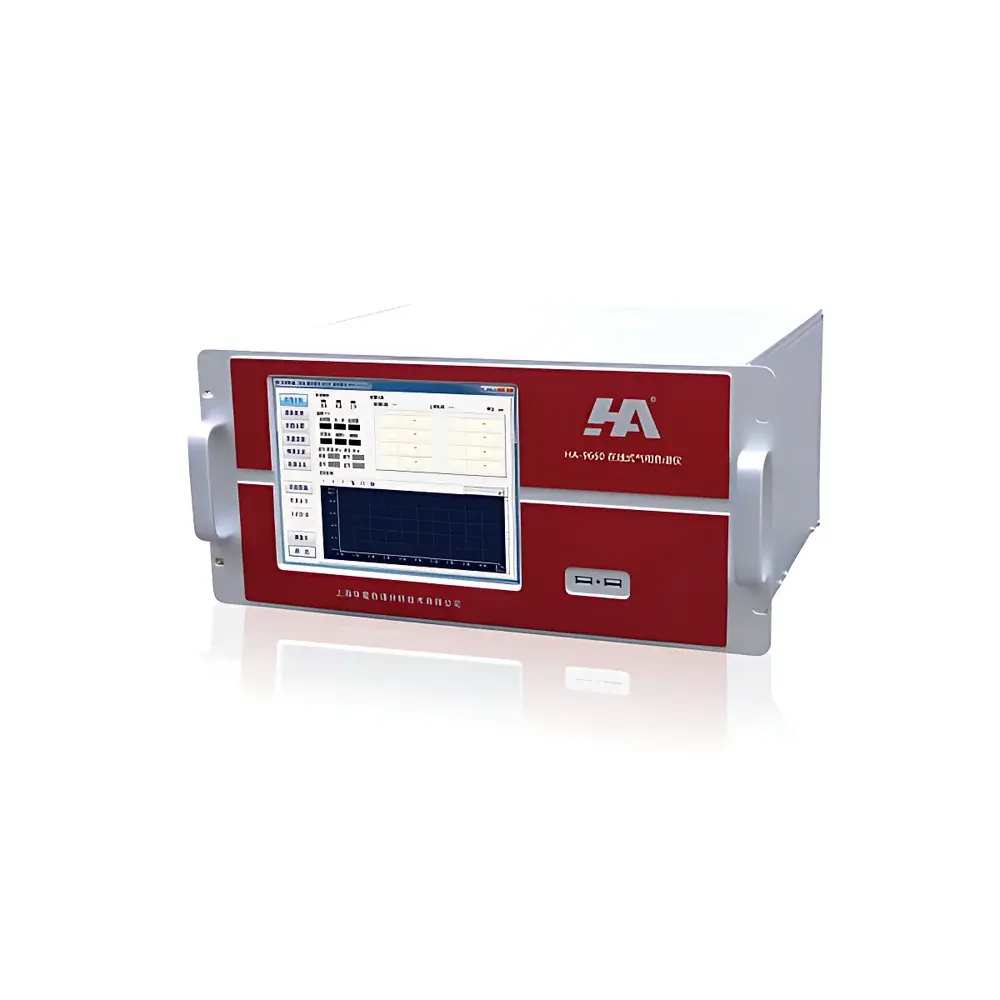
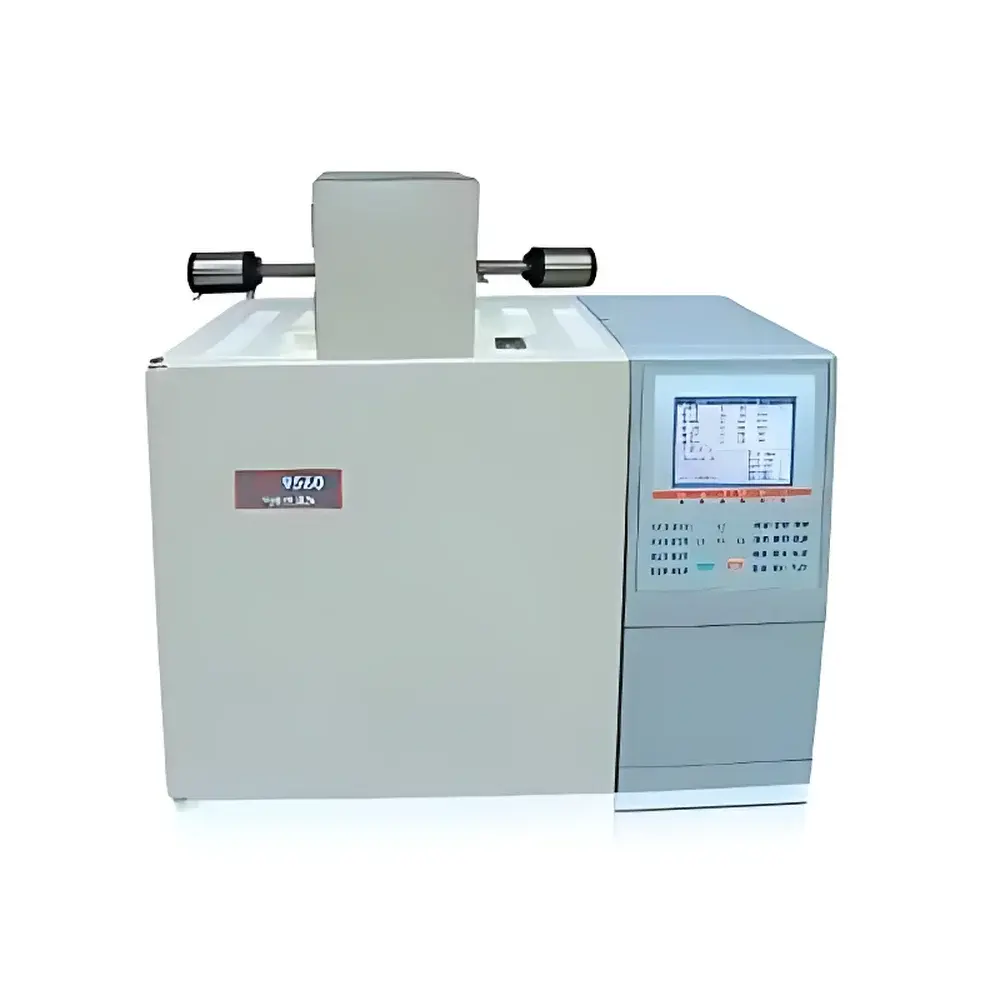
HuaiAi GC-9560-HTP High-Temperature/High-Pressure Online Catalytic Evaluation Gas Chromatograph
| Brand | HuaiAi |
|---|---|
| Origin | Shanghai, China |
| Manufacturer Type | Direct Manufacturer |
| Country of Origin | China |
| Model | GC-9560-HTP |
| Price Range | USD 14,000 – 21,000 (FOB Shanghai) |
| Application Scope | General-Purpose Catalytic Reaction Monitoring |
Overview
The HuaiAi GC-9560-HTP is an engineered online gas chromatograph specifically designed for real-time, automated analysis of catalytic reaction effluents under elevated temperature and pressure conditions. It operates on the principle of capillary gas chromatography with flame ionization detection (FID) or thermal conductivity detection (TCD), enabling quantitative separation and identification of gaseous and volatile liquid species directly from reactor outlets. Unlike conventional offline GC systems requiring manual sampling and sample conditioning, the GC-9560-HTP integrates high-integrity heated valving, thermally stabilized transfer lines, and column oven programming to maintain analyte integrity across phase boundaries—critical for accurate kinetic modeling and catalyst deactivation studies. Its architecture supports continuous unattended operation for up to 72 hours per sequence, making it suitable for long-duration stability testing, transient response analysis, and dynamic reaction profiling in heterogeneous and homogeneous catalysis research.
Key Features
- Patented high-temperature/high-pressure sampling interface (Chinese Utility Model ZL200520044846.1), validated for sustained operation at ≤300 °C and ≤400 psi (2.77 MPa)
- VACLO-sourced electrically heated 10-port (or 6-port) rotary valve with integrated PID-controlled heating zone (±1 °C stability)
- Full-system thermal management: heated transfer lines (up to 300 °C), insulated valve manifold, and column oven (ambient to 400 °C, ramp rate 0.1–40 °C/min)
- Automated sequence control via embedded microprocessor; supports programmable injection intervals, multi-method switching, and event-triggered analysis
- Modular detector configuration: dual FID (detection limit ≤1 pg C/s) and/or TCD (sensitivity ≥8,000 mV·mL/mg) with optional methanizer for CO/CO₂ quantification
- Robust mechanical design compliant with IEC 61000-6-2 (EMC immunity) and IEC 61010-1 (electrical safety for laboratory equipment)
Sample Compatibility & Compliance
The GC-9560-HTP accommodates complex effluent streams containing permanent gases (H₂, O₂, N₂, CO, CO₂, CH₄), light hydrocarbons (C₁–C₆), oxygenates (methanol, formaldehyde, acetaldehyde), and selected sulfur compounds (H₂S, COS). It maintains phase stability for vapor–liquid equilibrium (VLE) samples by eliminating condensation in transport paths—a key requirement for accurate quantification of low-boiling-point intermediates in Fischer–Tropsch, ammonia synthesis, or selective hydrogenation reactions. The system meets ISO/IEC 17025 technical requirements for calibration traceability and supports GLP-compliant data acquisition when paired with optional audit-trail-enabled software. While not pre-certified to FDA 21 CFR Part 11, its hardware architecture permits full validation for regulated environments upon customer-specific IQ/OQ/PQ execution.
Software & Data Management
Instrument control and data processing are executed via HuaiAi ChromoSoft v4.2, a Windows-based application supporting method development, peak integration (with baseline correction, retention time locking, and spectral deconvolution), and customizable reporting templates. Raw chromatograms and processed results are stored in vendor-neutral .CDF format (compatible with OpenChrom and Chromeleon). The software includes built-in tools for kinetic parameter extraction (e.g., turnover frequency, selectivity vs. conversion plots) and supports OPC UA connectivity for integration into DCS or SCADA platforms used in pilot-scale catalytic test rigs. All data modifications are logged with user ID, timestamp, and reason code—enabling full traceability per ALCOA+ principles.
Applications
- Time-resolved monitoring of catalyst activation, sintering, and coking during fixed-bed or fluidized-bed reactor trials
- Quantitative analysis of syngas composition shifts in CO₂ hydrogenation and methane reforming experiments
- Real-time detection of reaction intermediates in photocatalytic water splitting or electrocatalytic CO₂ reduction
- Supporting ASTM D7214 (standard test method for hydrocarbon analysis in reformulated gasoline) and ISO 6974-2 (natural gas analysis by GC) workflows with appropriate column selection
- Method development for in situ/operando studies requiring coupling with mass spectrometry or IR spectroscopy
FAQ
Can the GC-9560-HTP analyze liquid-phase products without prior vaporization?
No. It is configured for gas-phase or vaporized effluents only. For true liquid-phase analysis, a headspace sampler or thermal desorption unit must be added upstream.
Is remote diagnostics supported?
Yes—via secure SSH tunneling and VNC-enabled maintenance mode, subject to local network firewall configuration.
What column types are recommended for oxygenate analysis?
Polar capillary columns such as DB-WAXetr or HP-INNOWAX (30 m × 0.32 mm × 0.25 µm) are validated for alcohols, aldehydes, and carboxylic acids under programmed temperature conditions.
Does the system include calibration gas certification?
Certified gas mixtures (NIST-traceable) are available as optional accessories but are not bundled with base configuration.
How is detector drift compensated during extended runs?
Automatic baseline recalibration is triggered every 2 hours using internal reference peaks; optional electronic pressure control (EPC) ensures carrier gas flow stability within ±0.02 mL/min.





