
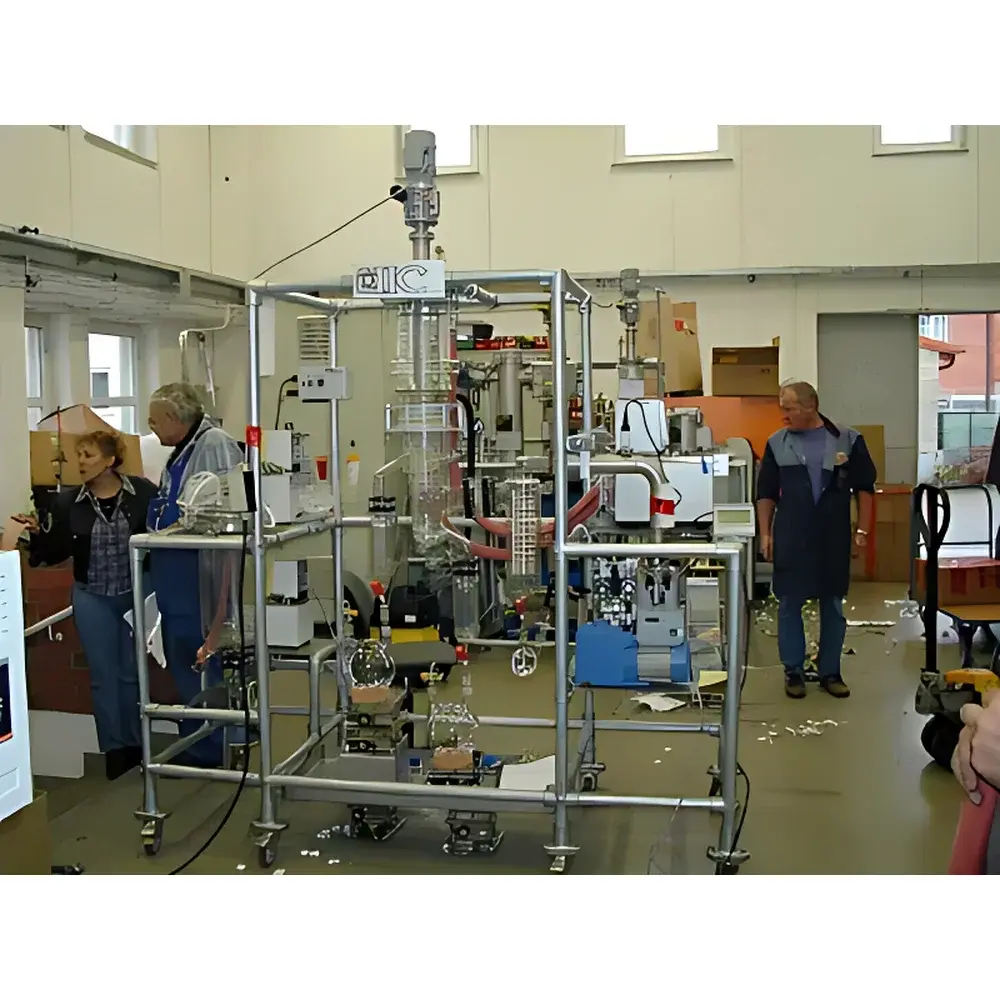
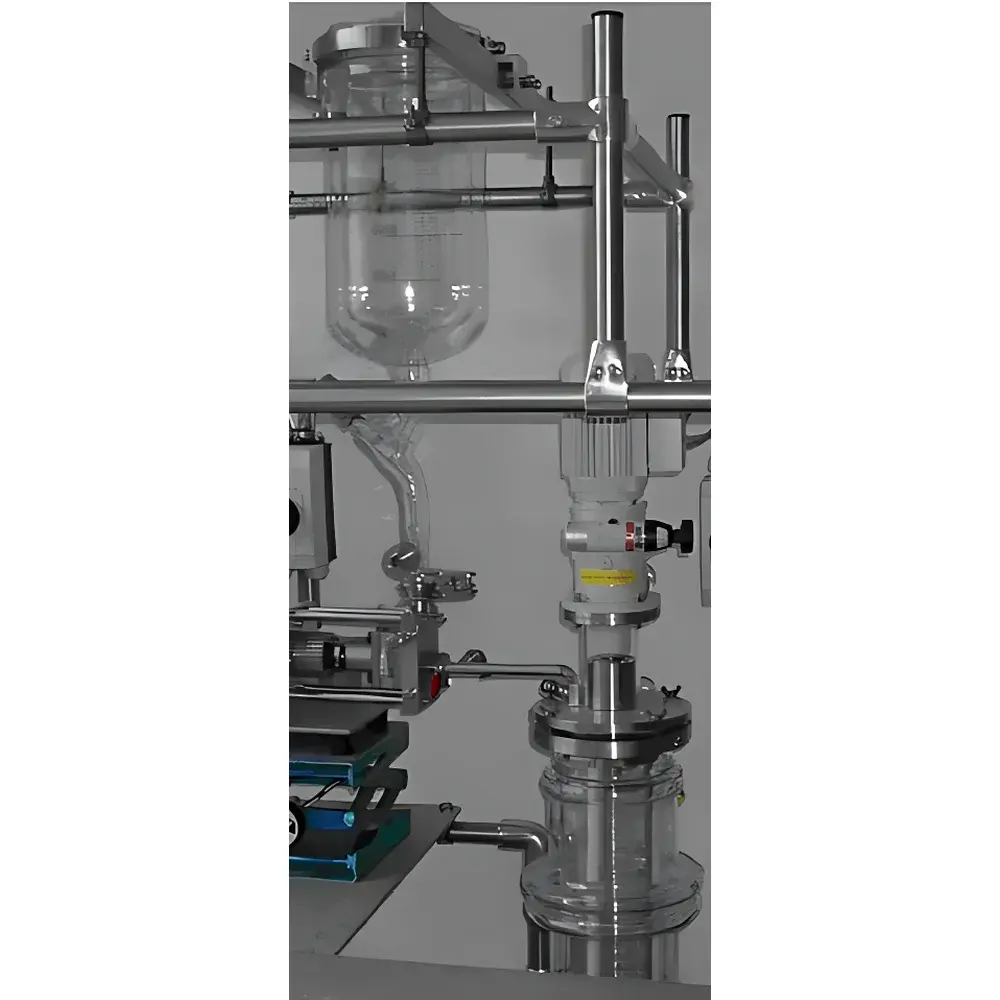
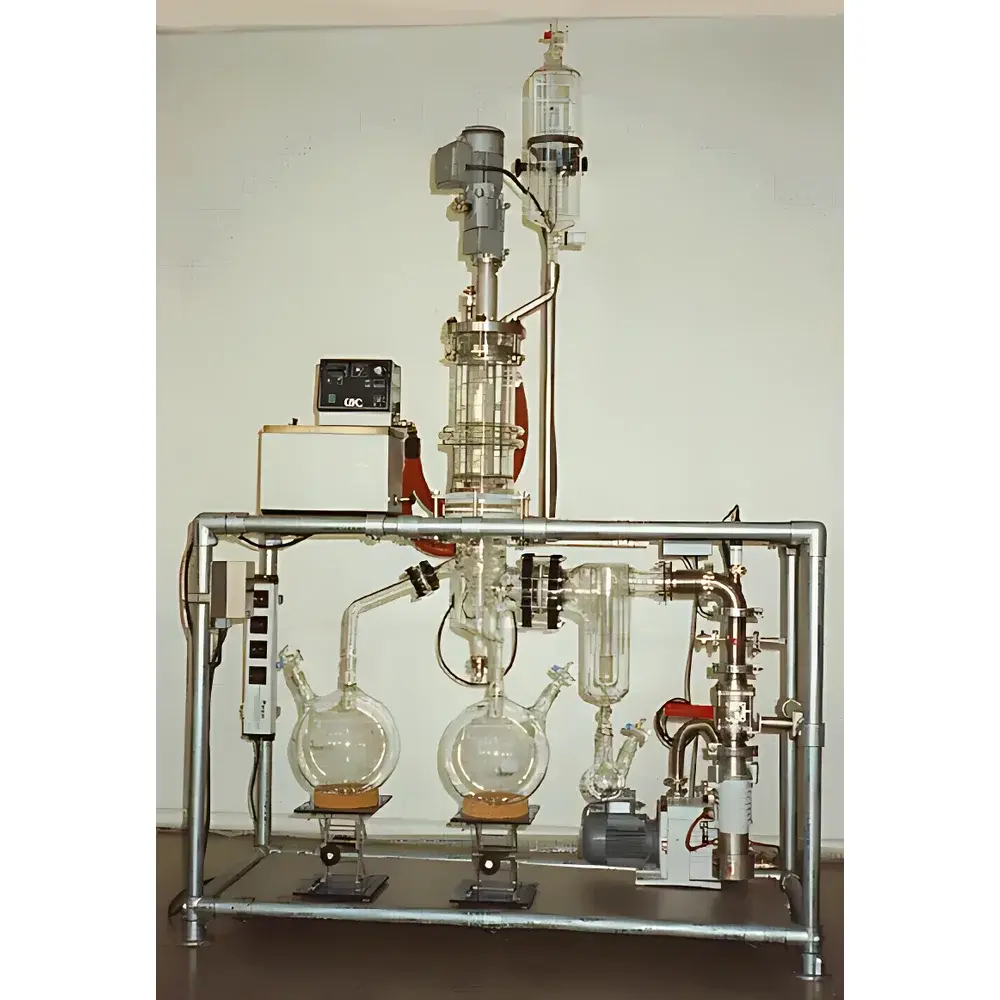
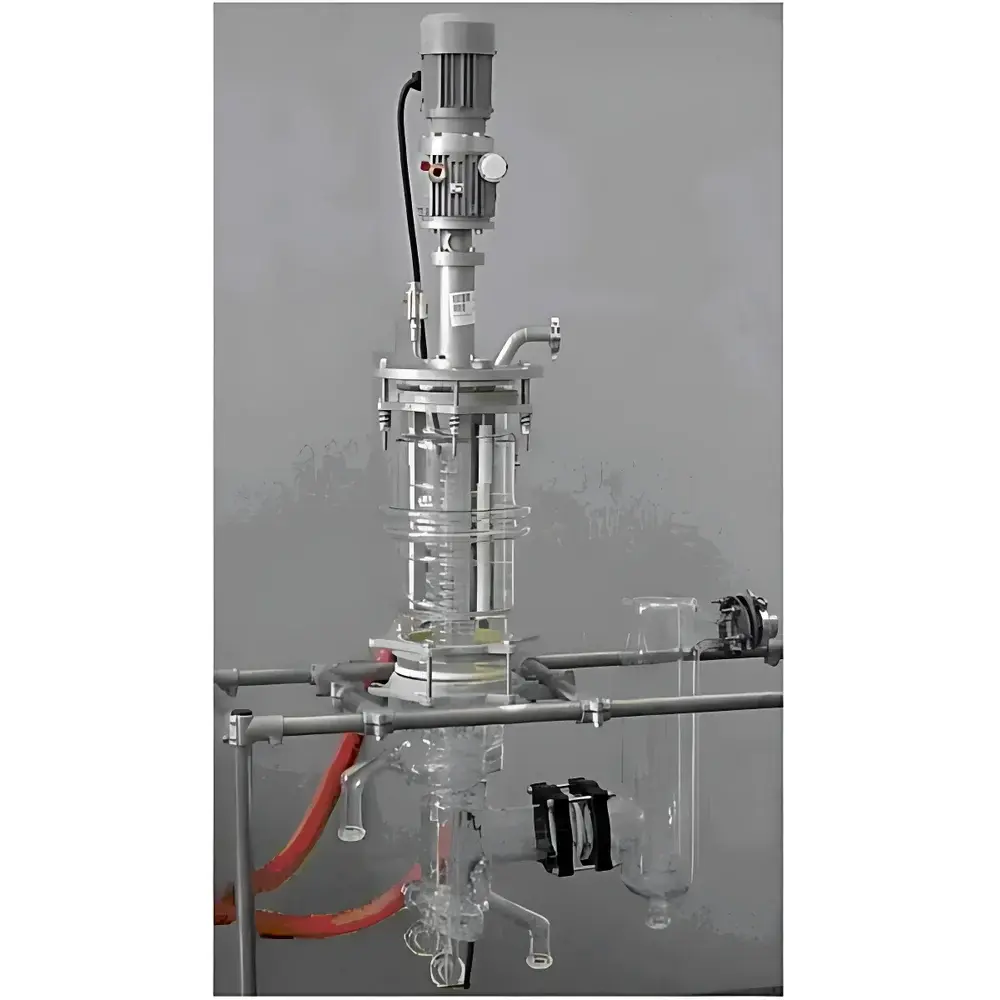
UIC KDL10 Pilot-Scale Glass Short-Path (Molecular) Distillation System
| Brand | UIC GmbH |
|---|---|
| Origin | Germany |
| Model | KDL10 |
| Feed Rate | 3–9 kg/h |
| Effective Evaporation Area | 0.1 m² |
| Evaporator Internal Diameter | 180 mm |
| Condenser Area | 0.18 m² |
| Collecting Flasks | 3 units |
| Construction Material | Borosilicate Glass 3.3, Nickel-Based Alloys, Tantalum Alloys |
| Max Evaporation Temperature | 300 °C |
| Min Operating Pressure | 0.001 mbar |
| Heating Method | Thermostatic Oil Bath |
| Film Formation | Self-Cleaning Roller-Type Wiper System |
| Evaporator Design | Modular Three-Zone Heated Assembly (Evaporation Zone, Residue Outlet Zone, Distillate Outlet Zone + Integrated Condenser) |
Overview
The UIC KDL10 Pilot-Scale Glass Short-Path (Molecular) Distillation System is an engineered solution for high-vacuum, low-thermal-load separation of thermally sensitive, high-boiling, or highly viscous compounds. Based on the fundamental principles of molecular distillation—where separation occurs under ultra-high vacuum (down to 0.001 mbar) and short vapor path lengths (< 50 mm)—the KDL10 enables efficient volatiles recovery with minimal residence time and negligible thermal degradation. Unlike conventional fractional distillation, molecular distillation operates in the free-molecule flow regime, where mean free path exceeds the distance between evaporator and condenser surfaces. This physical regime ensures high selectivity for compounds differing in vapor pressure by as little as 10–100 Pa at elevated temperatures. The KDL10 is explicitly designed for pilot-scale process development, bridging laboratory feasibility studies (e.g., using UIC KDL5) and early-stage production validation. Its fully transparent borosilicate glass 3.3 construction provides real-time visual monitoring of film formation, wiper dynamics, and phase behavior—critical for troubleshooting feedstock variability and optimizing operational parameters.
Key Features
- Modular three-zone heating architecture: independent temperature control for evaporation surface, residue discharge channel, and distillate collection zone—ensuring uniform thermal management and preventing localized overheating or solidification.
- Self-cleaning roller-type wiper system: dynamically maintains a uniform, thin, and continuously renewed liquid film across the 0.1 m² evaporation surface, minimizing thermal lag and maximizing mass transfer efficiency.
- Integrated internal condenser with 0.18 m² active cooling area: positioned coaxially within the evaporator housing to minimize vapor travel distance and maximize condensation yield under sub-millitorr conditions.
- Corrosion-resistant wetted-path materials: all metallic components contacting process media are fabricated from nickel-based alloys (e.g., Hastelloy C-276) or tantalum—validated for compatibility with halogenated organics, strong acids (e.g., HCl, HNO₃), and reactive acyl chlorides.
- Full borosilicate glass 3.3 construction (DIN ISO 3585): offers exceptional chemical inertness, thermal shock resistance (ΔT up to 150 K), and optical clarity for in situ observation of boiling behavior, foaming, and film stability.
- Triple-flask collection manifold: enables sequential or parallel fractionation under programmable timed intervals or pressure-triggered switching—supporting multi-component isolation protocols without system venting.
Sample Compatibility & Compliance
The KDL10 accommodates feedstocks ranging from 3 to 9 kg/h, making it suitable for continuous or semi-batch operation in applications involving natural extracts (e.g., tocopherols, astaxanthin, fish oil concentrates), pharmaceutical intermediates (e.g., vitamin A palmitate, prostaglandins), specialty polymers (e.g., silicone oligomers, polyglycerol esters), and high-purity monomers (e.g., caprolactam derivatives). Its non-catalytic glass-and-tantalum pathway eliminates metal-induced decomposition pathways common in stainless-steel systems—particularly critical for peroxide-forming compounds or oxygen-sensitive actives. The system conforms to material traceability requirements per ISO 1042 and ASTM E287 for volumetric glassware calibration. While not intrinsically certified for GMP manufacturing, its design supports GLP-compliant documentation practices—including audit-ready temperature/pressure logging, sealed calibration records, and user-accessible maintenance logs.
Software & Data Management
The KDL10 integrates with UIC’s optional DCS-2000 digital control station, providing PID-regulated setpoint management for oil bath temperature, vacuum level (via capacitance manometer), and feed pump rate (if coupled with a peristaltic or gear pump). All operational parameters are timestamped and exportable in CSV format for integration into LIMS or electronic lab notebooks (ELN). The control interface complies with FDA 21 CFR Part 11 requirements when deployed with role-based user authentication, electronic signatures, and immutable audit trails—enabling use in regulated development environments. Real-time vacuum and temperature trending allows correlation of distillate purity (verified offline via GC-FID or HPLC-UV) with process variables, facilitating DOE-driven optimization.
Applications
- Purification of heat-labile nutraceuticals: removal of heavy metals and PCBs from omega-3 concentrates while preserving EPA/DHA integrity.
- Deodorization and decolorization of vegetable-based surfactants without alkaline hydrolysis.
- Isolation of monoacylglycerides from glycerolysis reaction mixtures with >92% selectivity.
- Recovery of unreacted monomers from polycondensation effluents (e.g., bisphenol-A diglycidyl ether purification).
- Stabilization of fragrance compounds via selective removal of aldehyde impurities responsible for oxidative off-notes.
- Preparative-scale isolation of chiral intermediates where racemization must be avoided below 120 °C.
FAQ
What distinguishes short-path distillation from conventional vacuum distillation?
Short-path distillation operates under significantly lower pressures (≤0.01 mbar) and shorter condenser distances (typically <50 mm), enabling separation based on molecular mean free path rather than boiling point differentials alone—ideal for compounds with similar volatility but differing thermal stability.
Can the KDL10 be integrated into an automated process line?
Yes—when equipped with UIC’s DCS-2000 controller and optional feed/residue pumps, the system supports RS-485 Modbus RTU communication for PLC-level coordination and recipe-based batch execution.
Is borosilicate glass 3.3 compatible with hydrofluoric acid-containing feeds?
No—HF etches borosilicate glass. For such applications, UIC offers custom quartz-lined or fully tantalum-wetted variants upon engineering review.
What maintenance intervals are recommended for the roller wiper assembly?
Inspection every 200 operating hours; replacement of PTFE-coated rollers every 1,000 hours or after processing abrasive suspensions—documented in the included maintenance logbook.
Does the KDL10 meet CE machinery directive requirements?
Yes—the system carries CE marking per 2006/42/EC and includes full risk assessment documentation, emergency stop circuitry, and pressure relief certification per PED 2014/68/EU.



