
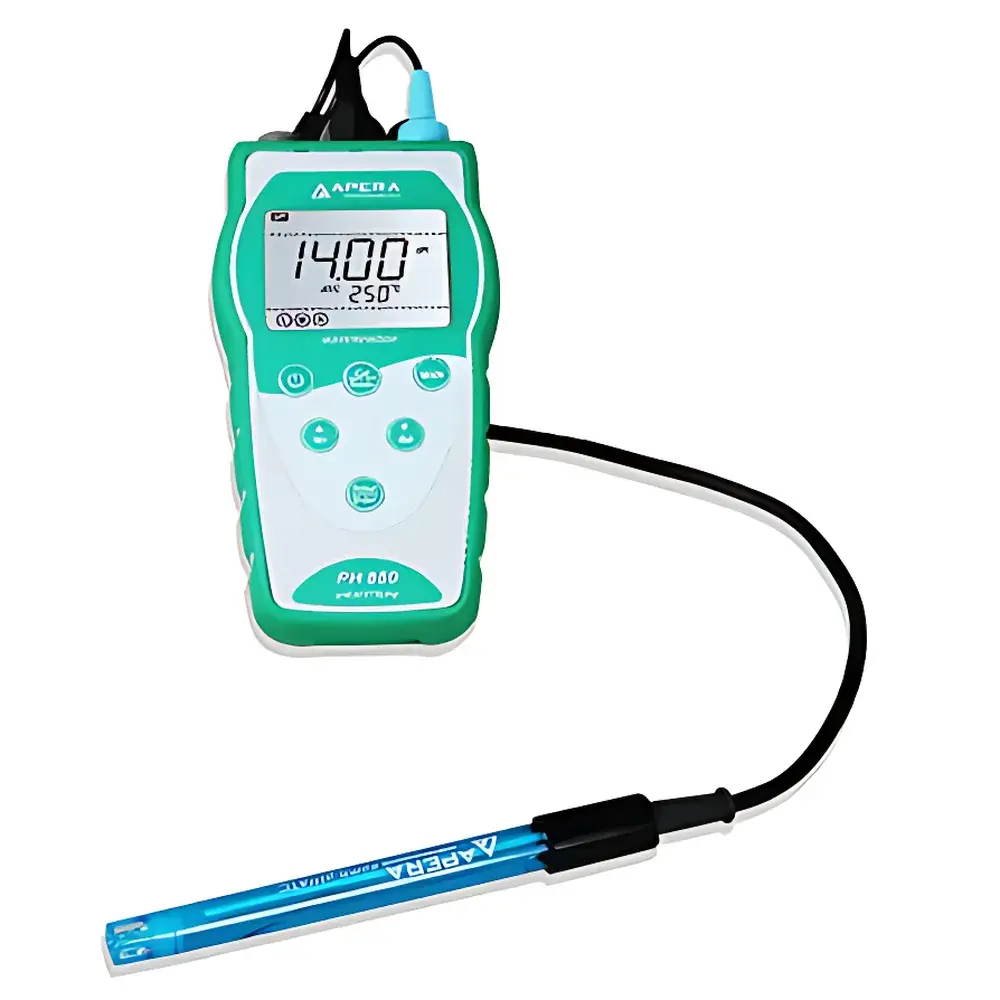
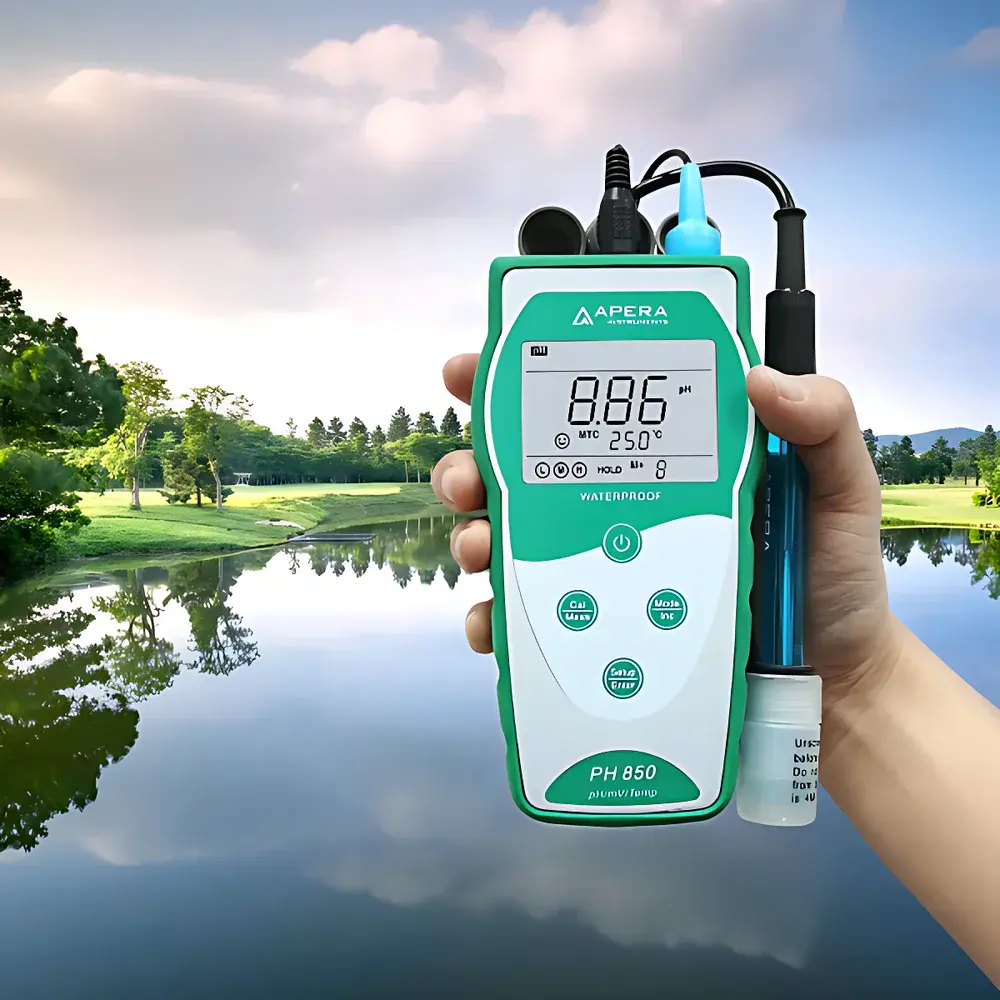
Apera Instruments PH850 Portable pH Meter
| Brand | Apera |
|---|---|
| Origin | Shanghai, China |
| Model | PH850 |
| Instrument Type | Portable |
| Parameter Type | Single-parameter (pH) |
| Measurement Range | 0.00–14.00 pH |
| Resolution | 0.1 / 0.01 pH |
| Accuracy | ±0.01 pH ±1 digit |
| Temperature Compensation Range | 0–100 °C (auto/manual) |
| mV Range | ±1000 mV |
| mV Resolution | 1 mV |
| mV Accuracy | ±0.2% FS ±1 digit |
| Temperature Measurement | 0–100 °C, ±0.5 °C ±1 digit, 0.1 °C resolution |
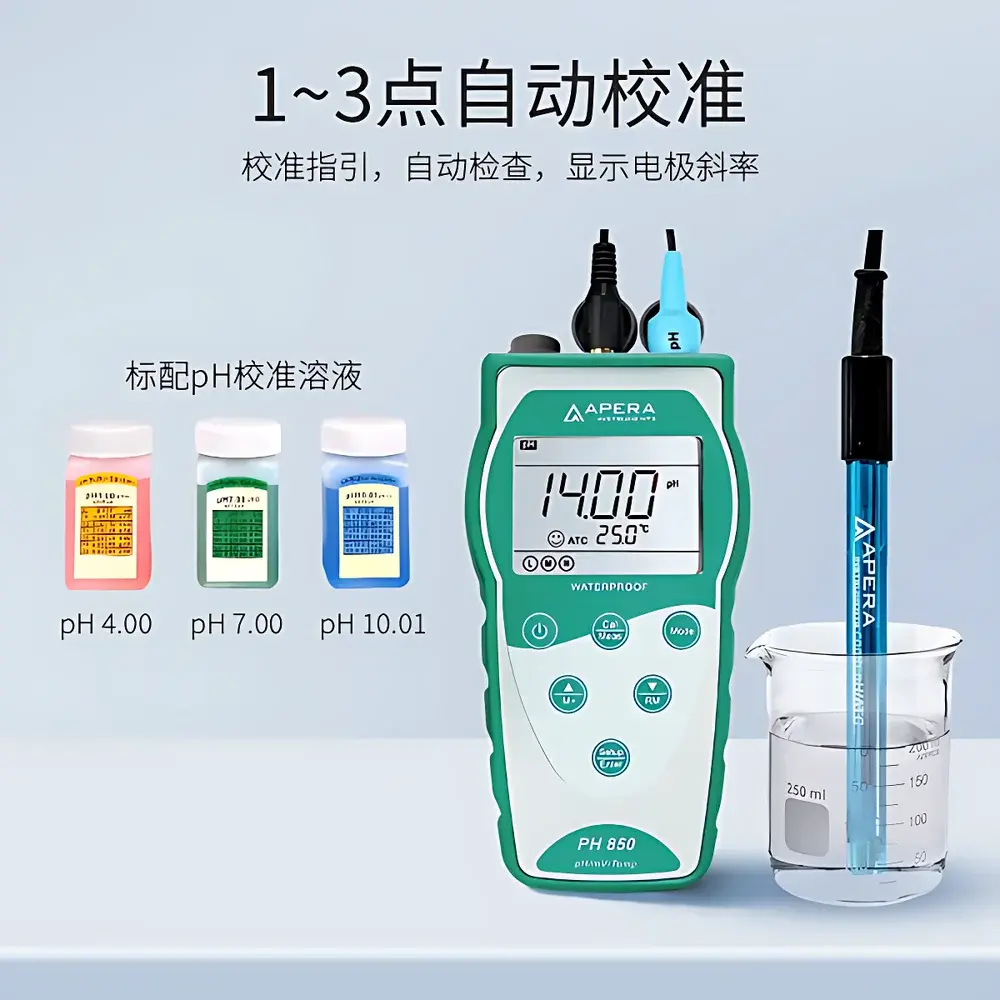
| Calibration | 1–3 point auto-calibration with slope display |
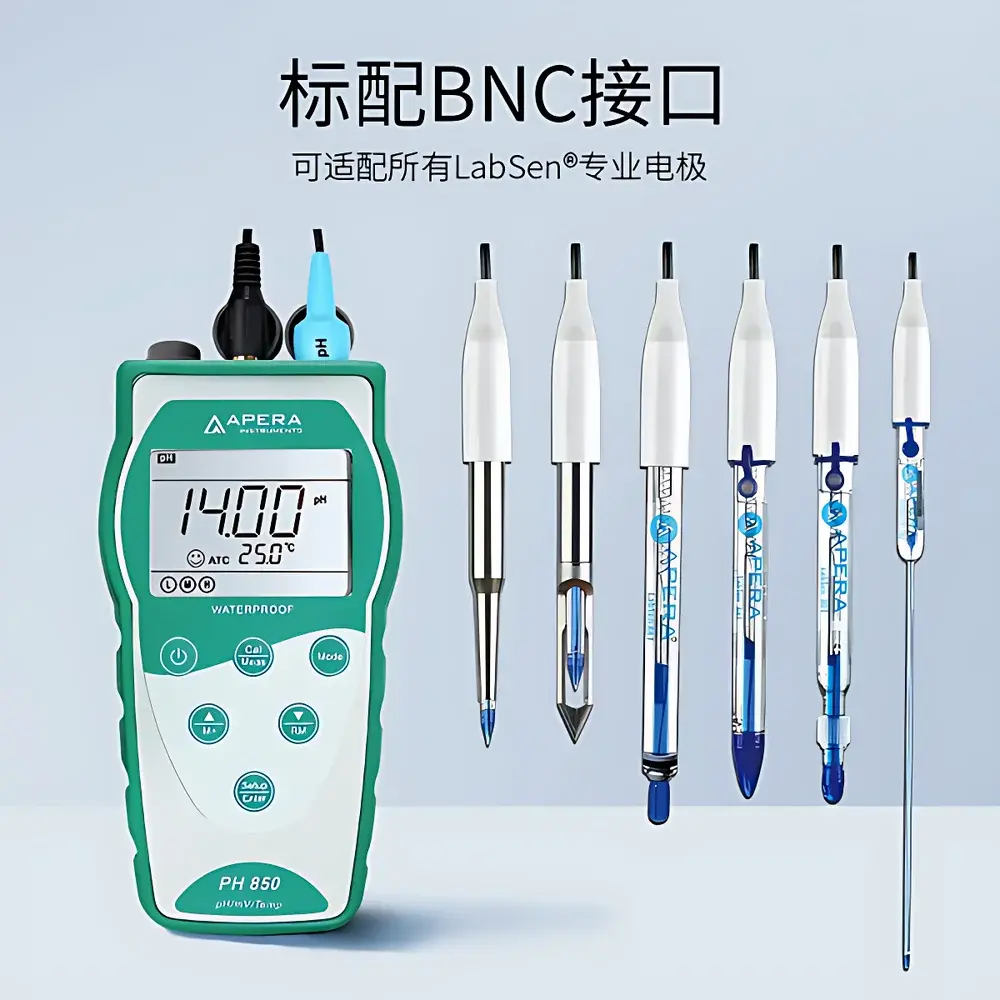
| Electrode Interface | Standard waterproof BNC |
| Data Storage | 50 sets (ID, value, unit, temperature, temp-comp status) |
| Power | 3 × AAA alkaline batteries (1.5 V each) |
| IP Rating | IP57 |
| Dimensions (Carrying Case) | 330 × 270 × 82 mm |
| Weight (Case) | 1.3 kg |
| Calibration Standards | USA/NIST traceable buffers |
| Warranty | 2 years instrument, 6 months electrode |
Overview
The Apera Instruments PH850 Portable pH Meter is a precision-engineered electrochemical measurement system designed for field-deployable and educational laboratory use. Built upon a robust digital signal processing architecture, it delivers high reproducibility in pH quantification across the full aqueous scale (0.00–14.00 pH) using potentiometric principles compliant with ISO 3696 and ASTM D1293. Its core measurement engine employs high-impedance input circuitry (>1012 Ω) to minimize electrode loading errors and ensure stable millivolt-to-pH conversion per the Nernst equation. The instrument integrates automatic temperature compensation (ATC) via a built-in thermistor or external probe, enabling accurate pH readings across dynamic thermal environments without manual correction. Designed for operational resilience, the PH850 meets IP57 ingress protection standards—fully dust-resistant and capable of withstanding immersion in 1 m of water for up to 30 minutes—making it suitable for outdoor water quality surveys, wastewater treatment plant monitoring, aquaculture fieldwork, and undergraduate chemistry labs where environmental exposure is routine.
Key Features
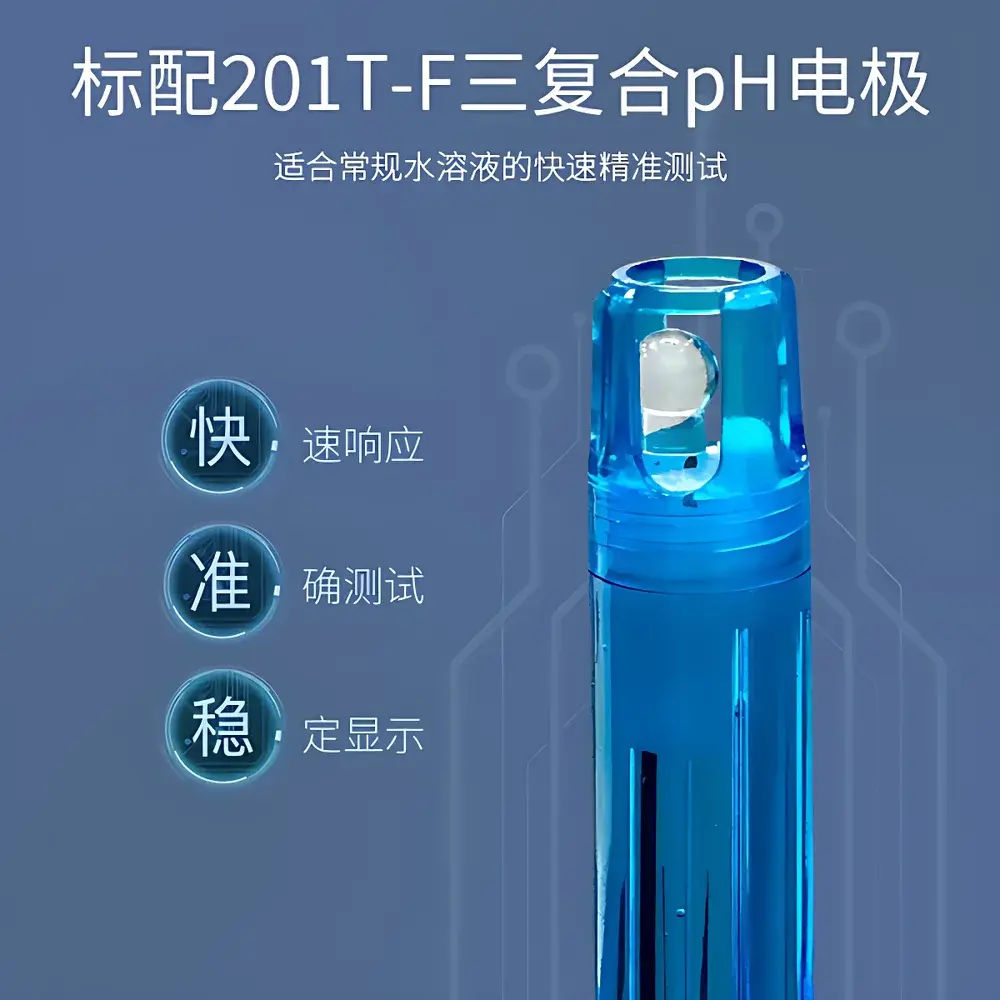
- Triple-junction combination pH electrode (LabSen 201T-F) with integrated temperature sensor and low-drift glass membrane for rapid response (<30 s) and long-term stability in routine aqueous samples.
- Intelligent auto-calibration algorithm supporting 1-, 2-, or 3-point calibration using NIST-traceable buffer solutions (pH 4.00, 7.00, and optional 10.01); real-time electrode slope calculation (ideally 95–105%) and offset diagnostics displayed during calibration.
- Self-diagnostic system continuously monitors electrode impedance, asymmetry potential, and reference junction integrity—flagging degraded performance before measurement error exceeds ±0.02 pH.
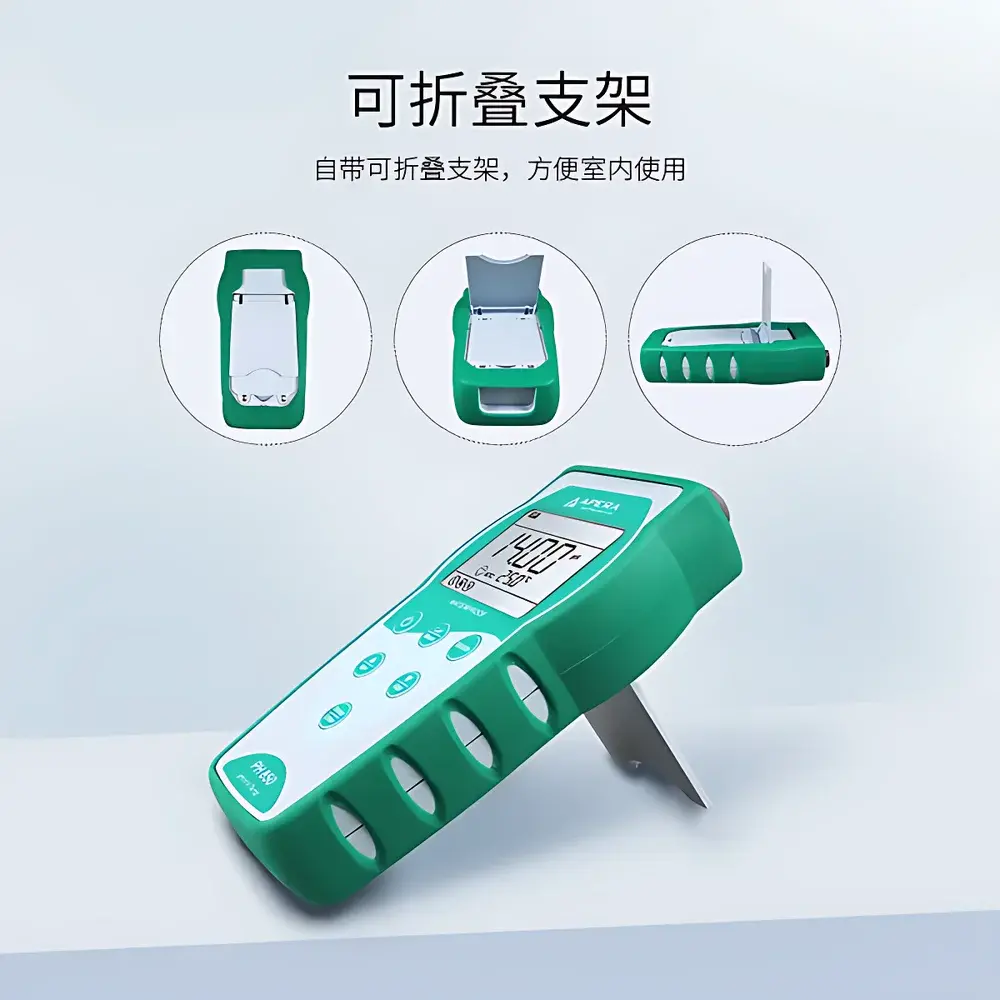
- Ergonomic rubberized housing with fold-out rear stand enables seamless transition between handheld and benchtop operation without additional accessories.
- Waterproof BNC connector compatible with all LabSen-series pH electrodes—including refillable, gel-filled, and double-junction variants—for method flexibility and extended service life.
- Onboard memory stores 50 complete measurement records, each containing timestamp (if enabled via external sync), pH value, temperature reading, compensation mode (auto/manual), and unit designation—structured for traceability in GLP-aligned workflows.
Sample Compatibility & Compliance
The PH850 is validated for direct measurement of aqueous solutions including drinking water, surface water, wastewater effluents, nutrient solutions, buffer preparations, and biological media. It is not intended for non-aqueous solvents, highly viscous suspensions, or samples containing sulfides, proteins, or heavy metals that may poison standard Ag/AgCl reference systems without appropriate electrode selection. All calibration protocols adhere to ISO 7888 and USP , requiring verification with at least two certified reference buffers bracketing the expected sample pH. The instrument’s firmware implements data integrity safeguards aligned with FDA 21 CFR Part 11 principles—though full electronic signature compliance requires integration with validated LIMS platforms. CE marking confirms conformity with EU Electromagnetic Compatibility (2014/30/EU) and Low Voltage (2014/35/EU) directives.
Software & Data Management
No proprietary software is required for basic operation; however, optional PC connectivity via USB-to-serial adapter (sold separately) enables export of stored datasets in CSV format for post-acquisition analysis in Excel, MATLAB, or statistical packages. Each record includes unique session ID, measured pH, temperature-corrected value, ATC status flag, and ambient temperature—supporting audit-ready documentation per ISO/IEC 17025 Clause 7.7. The device supports manual time/date entry (non-battery-backed) for lab notebook correlation. Firmware updates are distributed through Apera’s technical support portal and applied via serial interface, maintaining backward compatibility with existing calibration profiles and stored data structures.
Applications
- Environmental field testing: Stream, lake, and groundwater pH profiling under variable ambient conditions.
- Education: Undergraduate analytical chemistry labs performing acid-base titrations, buffer preparation verification, and electrode characterization experiments.
- Food & beverage QA: Monitoring rinse water pH in sanitation validation protocols (e.g., ATP swabbing pre-rinse checks).
- Aquaculture & hydroponics: Daily tracking of nutrient solution acidity to prevent metal precipitation and optimize ion uptake.
- Pharmaceutical water systems: Routine checks of purified water (PW) and water-for-injection (WFI) distribution loop points per USP .
- Wastewater treatment: Influent/effluent pH logging during nitrification/denitrification process control.
FAQ
What calibration standards are supported?
The PH850 accepts USA/NIST-traceable pH 4.00, 7.00, and 10.01 buffer solutions. Calibration must be performed at ambient temperature; temperature deviation >2 °C from buffer certification temp requires re-equilibration prior to use.
Can the instrument measure ORP (redox potential)?
Yes—the PH850 includes a dedicated mV mode (±1000 mV range) with 1 mV resolution, suitable for qualitative redox assessment when paired with a platinum or reversible hydrogen electrode (RHE).
Is the electrode replaceable and what is its typical service life?
The included LabSen 201T-F electrode is field-replaceable and rated for ≥12 months under normal usage (≤4 hrs/day in tap water or buffer); lifespan decreases significantly in high-ionic-strength or abrasive samples.
Does the device support GLP-compliant data export?
Raw CSV exports contain sufficient metadata (value, temp, timestamp, unit) for GLP documentation; however, full audit trail functionality (user login, change history, electronic signatures) requires integration with third-party LIMS or ELN systems.
How is battery life affected by backlight and temperature compensation usage?
With backlight disabled and ATC active, three AAA alkaline cells provide ≥200 hours of continuous operation; enabling backlight reduces this to ~120 hours. Cold temperatures (<5 °C) may reduce runtime by up to 30% due to reduced battery efficiency.
Related Products





