
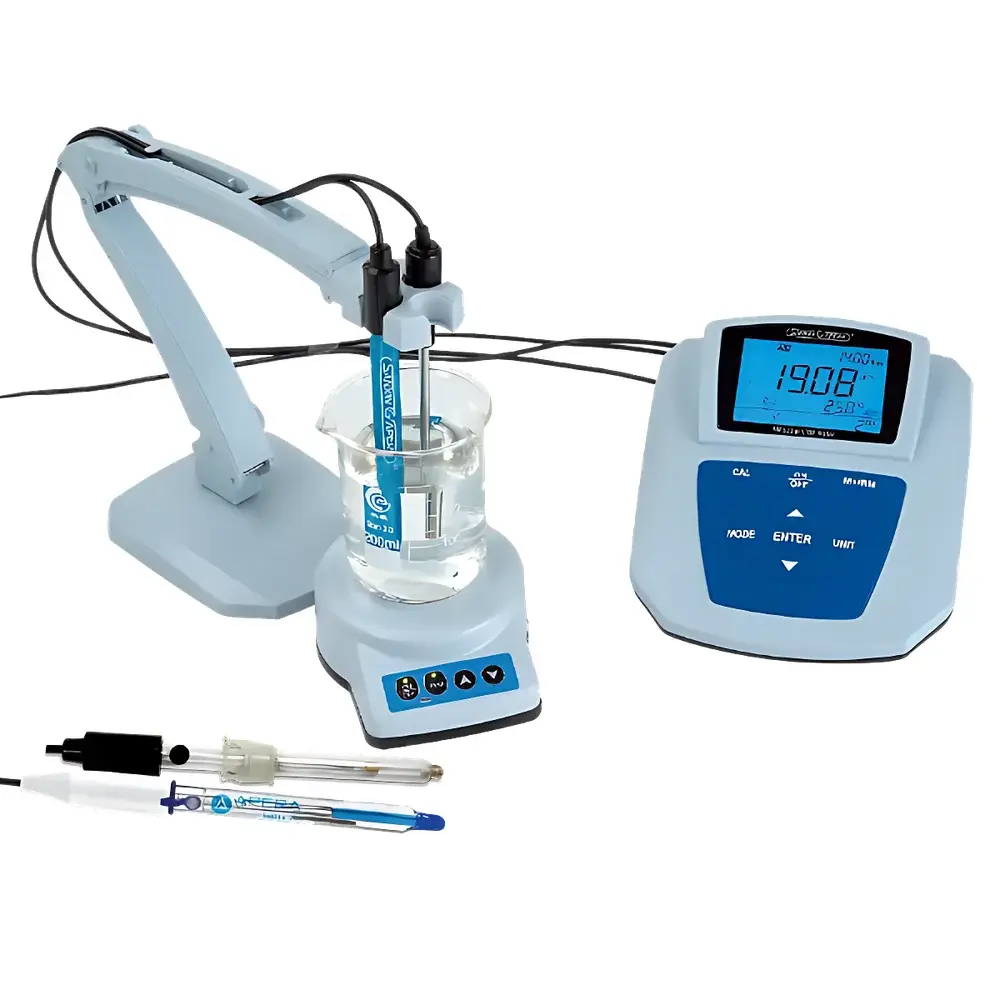
Sanxin MP523-01 pH and Ion Concentration Analyzer
| Brand | Sanxin |
|---|---|
| Origin | Shanghai, China |
| Manufacturer Type | Direct Manufacturer |
| Instrument Type | Laboratory Water Quality Analyzer |
| Detection Principle | Electrochemical Potentiometry |
| Measurable Parameters | pH and Ion Activity/Concentration |
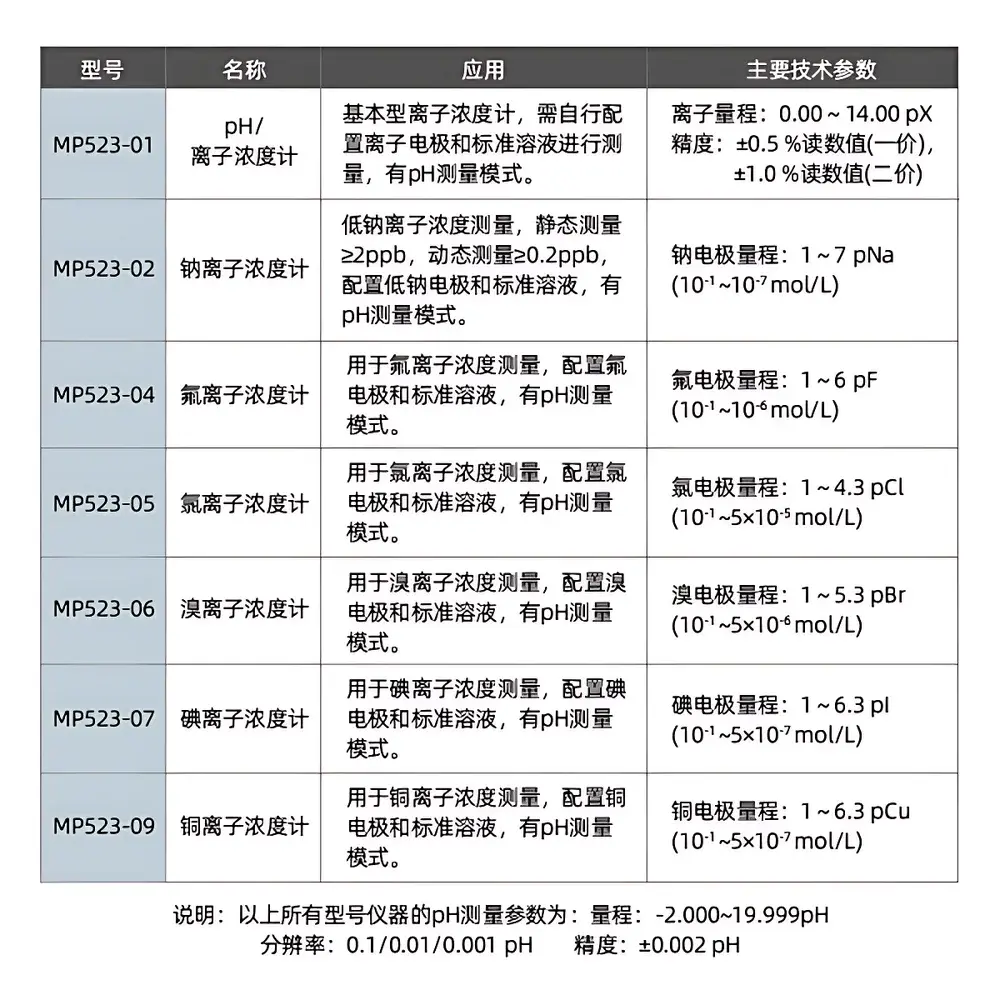
| pH Range | −2.000 to 19.999 pH |
| pH Accuracy | ±0.002 pH |
| Temperature Compensation (pH) | 0–100 °C |
| mV Range | ±1999.9 mV |
| mV Accuracy | ±0.03 % FS |
| Ion Range | 0.00–14.00 pX (with unit options: pX, mol/L, mg/L, ppm) |
| Ion Accuracy | ±0.5 % reading (monovalent), ±1.0 % reading (divalent) |
| Temp. Compensation (Ion) | 0–60 °C |
| Temperature Range | −10 to 110 °C |
| Temp. Accuracy | ±0.4 °C |
| Data Storage | 900 sets |
| Interface | RS232 |
| Power Supply | DC 9 V / 300 mA |
| Dimensions | 160 × 190 × 70 mm |
| Weight | 880 g |
| IP Rating | IP54 |
| GLP Compliance | Yes |
Overview
The Sanxin MP523-01 pH and Ion Concentration Analyzer is a dual-parameter laboratory-grade electrochemical instrument engineered for high-precision measurement of hydrogen ion activity (pH) and selective ion concentration in aqueous solutions. Based on potentiometric principles—where the measured potential difference between a sensing electrode and a reference electrode correlates logarithmically with analyte activity—the MP523-01 delivers traceable, reproducible results across demanding environmental, pharmaceutical, and industrial water quality applications. Its architecture supports both conventional pH metrology and quantitative ion analysis via standardized calibration protocols, including single- and two-point calibration with user-defined standards. Designed for compliance with Good Laboratory Practice (GLP) frameworks, the analyzer incorporates full audit-trail functionality—including timestamped calibration records, electrode ID logging, and operator identification fields—enabling seamless integration into regulated workflows aligned with ISO/IEC 17025, USP , and EPA Method 150.1 requirements.
Key Features
- Dual-parameter operation with independent, simultaneous pH and ion concentration measurement modes
- Configurable ion units: pX, mol/L, mg/L, and ppm—switchable per measurement without recalibration
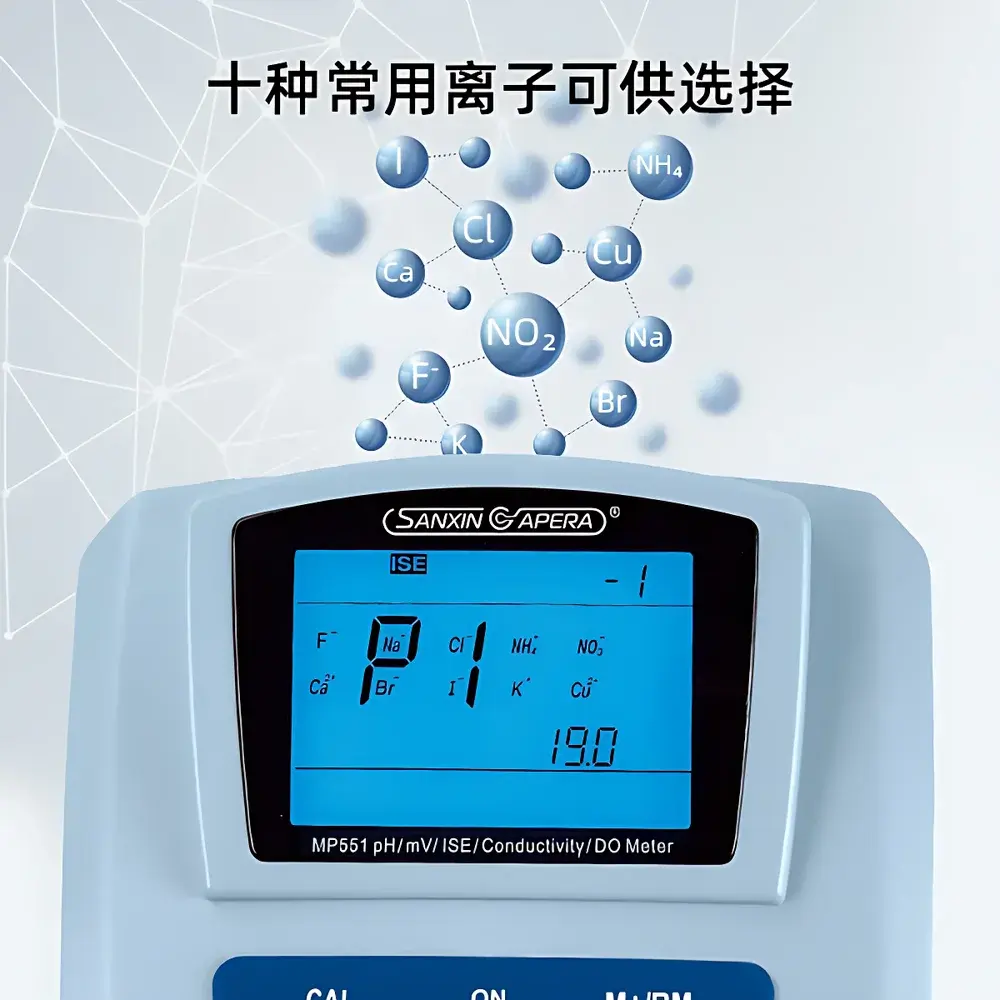
- Preloaded library of 10 common ions (e.g., F⁻, Cl⁻, NO₃⁻, Ca²⁺, Na⁺) with customizable ion definition for non-standard analytes
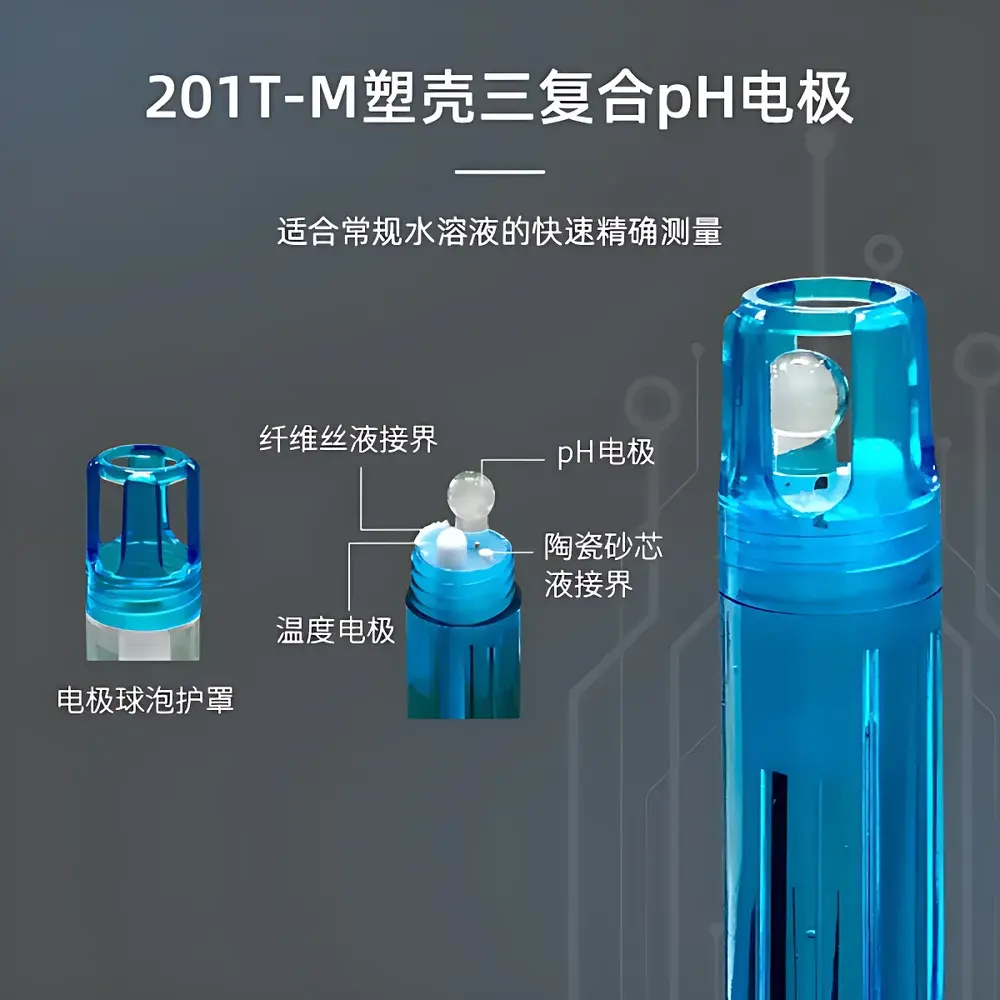
- Dedicated high-purity water pH mode and ammonia-added pure water mode—optimized for low-conductivity samples using specialized 2503D-C glass electrodes
- Auto-recognition of 13 standard pH buffer solutions across four international series: NIST, DIN/ISO, Chinese GB, and user-defined formulations
- Integrated ORP (oxidation-reduction potential) measurement with direct display referenced to the Standard Hydrogen Electrode (SHE)
- IP54-rated enclosure with silicone-sealed ports for dust resistance and splash protection during routine lab handling
- Comprehensive temperature compensation algorithms for both pH (0–100 °C) and ion measurements (0–60 °C)
Sample Compatibility & Compliance
The MP523-01 accommodates a broad spectrum of aqueous matrices, including drinking water, wastewater effluents, boiler feedwater, pharmaceutical rinse solutions, and process streams with low ionic strength or suspended colloids. Its included 2503-C glass pH composite electrode enables stable measurements in turbid, viscous, or low-conductivity media, while the optional 2503D-C variant addresses the polarization challenges inherent in ultrapure water (resistivity >10 MΩ·cm). All electrode interfaces conform to DIN 19263 and ASTM D1293 specifications for pH instrumentation. The analyzer’s firmware and data handling routines support full GLP documentation requirements—including electronic signature readiness, calibration history retention, and secure data export—making it suitable for laboratories operating under FDA 21 CFR Part 11, ISO 9001, and EU Annex 11 environments.
Software & Data Management
Data acquisition and reporting are facilitated through an RS232 serial interface compatible with Sanxin’s proprietary PC software (supplied). The software enables real-time graphing, batch calibration validation, and structured export of measurement logs—including raw mV values, temperature readings, electrode slope/mV/pH, and drift diagnostics—to CSV or PDF formats. Each stored record (up to 900 entries) retains full contextual metadata: date/time stamp, operator ID, electrode serial number, calibration solution IDs, and measurement mode. Audit logs are write-protected and tamper-evident, satisfying traceability mandates in accredited testing facilities. Firmware updates are delivered via ASCII-based command protocol, ensuring long-term maintainability without dependency on proprietary drivers.
Applications
- Regulatory compliance testing for municipal and industrial wastewater discharge (EPA NPDES, ISO 5667-3)
- Pharmaceutical water system monitoring per USP and EU GMP Annex 1
- Boiler and cooling tower chemistry control in power generation and HVAC systems
- Environmental field lab analysis of surface and groundwater ion profiles (e.g., nitrate, fluoride, ammonium)
- Research-scale studies of ion exchange kinetics, membrane fouling, and corrosion inhibition efficacy
- Educational use in analytical chemistry laboratories for potentiometric titration and selectivity coefficient determination
FAQ
Does the MP523-01 support automatic electrode diagnosis or slope verification?
Yes—the instrument calculates and displays electrode slope (%/pH unit) and asymmetry potential after each calibration, flagging deviations beyond ±5 mV or <90 % theoretical slope.
Can I perform ion measurements without purchasing additional electrodes?
No—ion-selective measurements require dedicated ISEs (e.g., fluoride, calcium, nitrate). The base configuration includes only pH and temperature electrodes; ISEs are optional accessories.
Is the RS232 interface compatible with modern Windows/macOS systems?
Yes—when used with a USB-to-serial adapter and standard terminal emulation software (e.g., Tera Term, PuTTY), the interface supports bidirectional communication and firmware interrogation.
What is the recommended recalibration frequency for GLP-compliant operations?
Per ISO/IEC 17025:2017 Clause 7.7.1, recalibration is required before each analytical batch, after electrode replacement, and following any significant environmental shift (e.g., >5 °C ambient change).
How does the high-purity water pH mode improve accuracy below 1 μS/cm conductivity?
It applies a dynamic junction potential correction algorithm and disables automatic temperature compensation above 60 °C to mitigate thermal drift effects unique to low-conductivity systems.







