
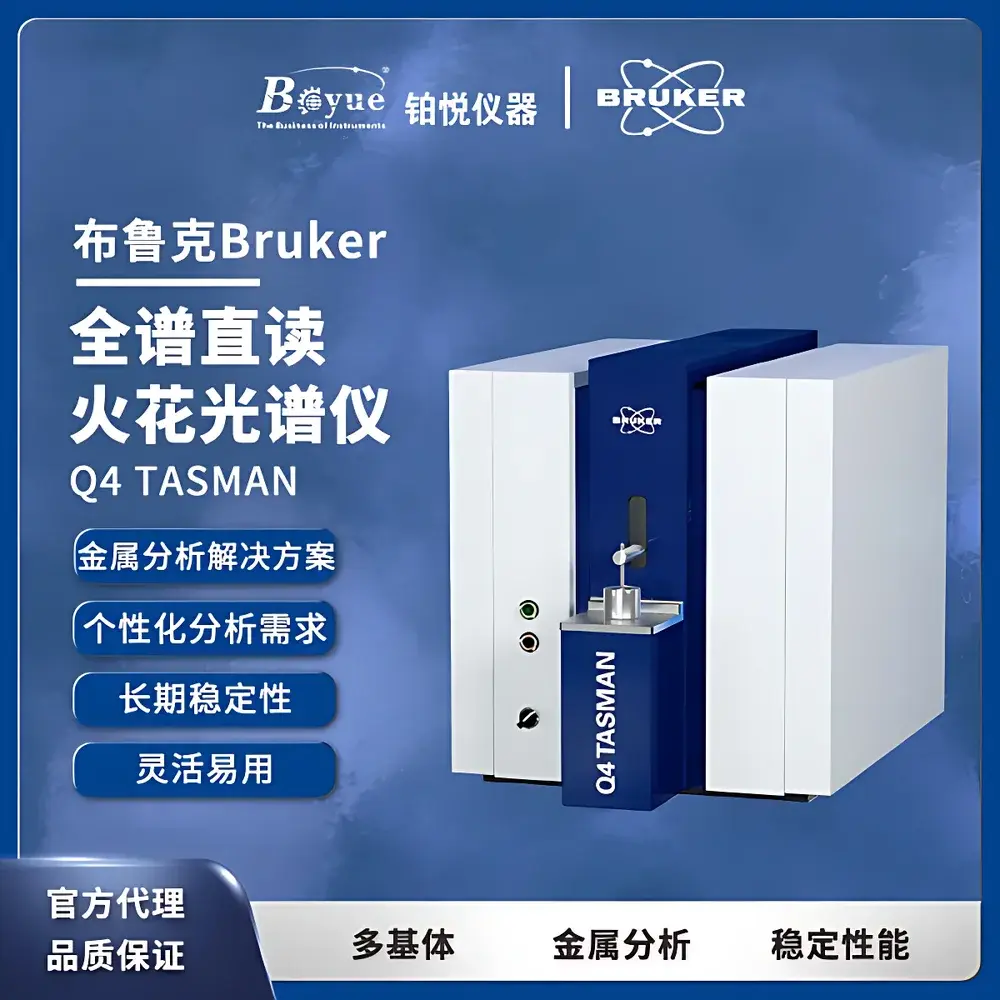
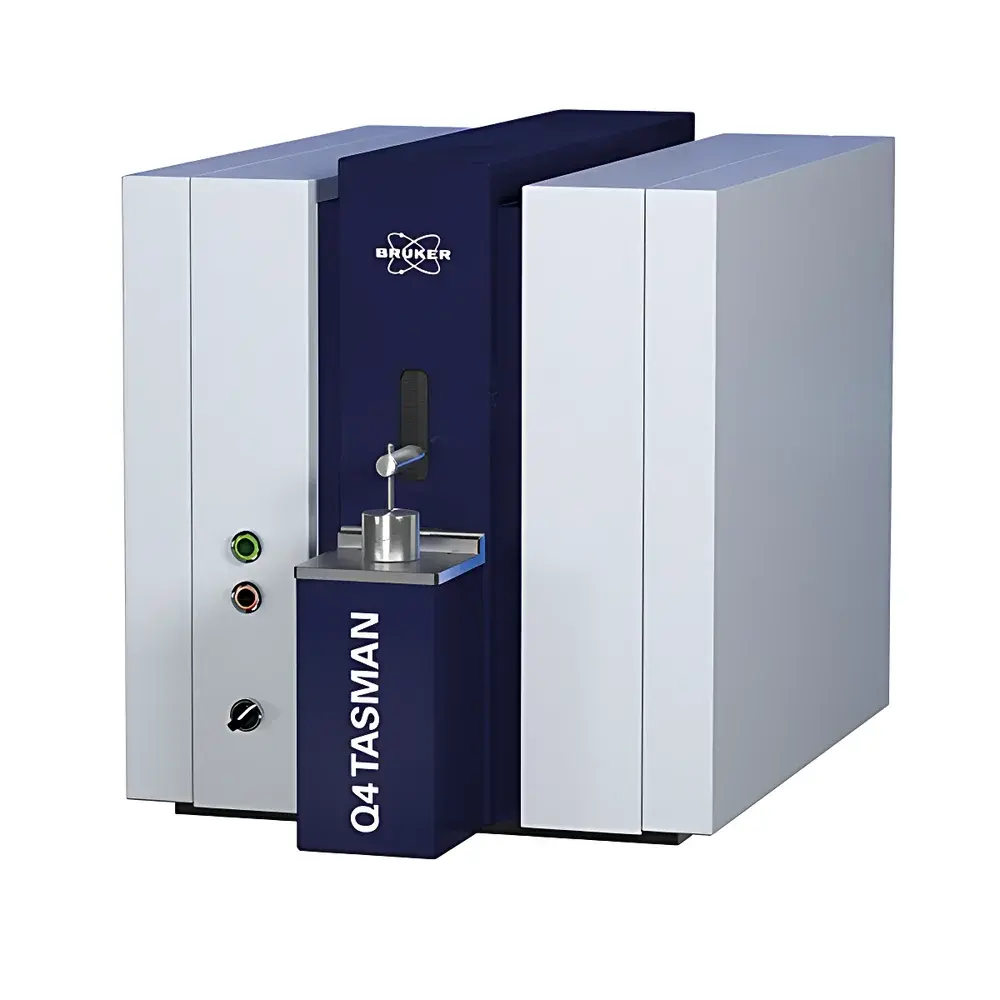
Bruker Q4 TASMAN Full-Spectrum Spark Optical Emission Spectrometer
| Brand | Bruker |
|---|---|
| Origin | Germany |
| Manufacturer Type | Authorized Distributor |
| Origin Category | Imported |
| Model | Q4 TASMAN |
| Instrument Type | Benchtop |
| Excitation Method | Spark |
| Detector Type | Dual Detector (PMT + CCD) |
| Focal Length | 800 mm |
| Grating Groove Density | 3600 lines/mm |
| Wavelength Range | 130–800 nm |
| Number of Channels | 128 |
Overview
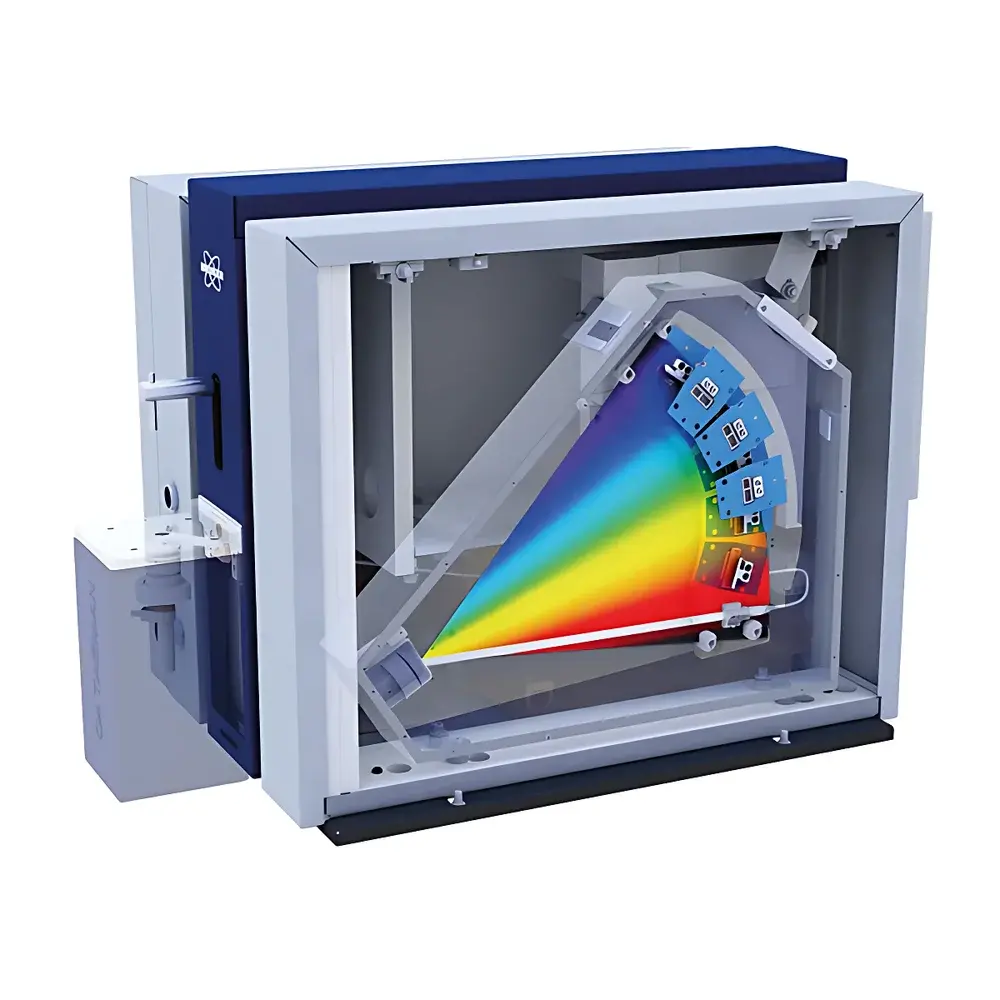
The Bruker Q4 TASMAN is a high-performance benchtop spark optical emission spectrometer (OES) engineered for precise, rapid, and trace-level elemental analysis of metallic materials. Based on the fundamental principle of atomic emission spectroscopy, the instrument excites solid metal samples using controlled high-energy spark discharges, inducing electron transitions that emit characteristic wavelengths of ultraviolet and visible light. These emissions are dispersed by a high-resolution Paschen-Runge optical system and simultaneously detected across the full spectral range (130–800 nm) using a dual-detector architecture—combining photomultiplier tubes (PMTs) for high-sensitivity quantitative analysis of key elements and a charge-coupled device (CCD) for flexible, multi-element coverage and spectral diagnostics. Designed specifically for metallurgical quality control, incoming material inspection, and R&D laboratories, the Q4 TASMAN delivers robust analytical performance with minimal operator intervention and long-term measurement stability.
Key Features
- Paschen-Runge Optical Design with ClearSpectrum Technology: A thermally stable, fixed-mount optical bench ensures consistent spectral resolution and wavelength calibration over time. Separate UV-optimized optical components—including fused silica lenses and reflective coatings—maximize photon throughput below 190 nm, enabling reliable detection of critical non-metals (e.g., C, P, S, N, B) in steel and aluminum alloys.
- SmartSpark™ Second-Generation Digital Spark Source: Delivers programmable discharge frequencies up to 1,000 Hz, adjustable pulse widths from 10 µs to 2 ms, and real-time current/voltage monitoring. This enables optimized excitation for diverse matrix types—from low-conductivity titanium to high-alloy nickel superalloys—while minimizing crater heterogeneity and improving precision (RSD < 1.5% for major elements).
- Dual-Detector Architecture (PMT + CCD): Combines the high dynamic range and low detection limits of PMTs for routine certification analysis with the flexibility of CCD-based spectral acquisition for method development, interference correction, and unknown sample screening.
- Low-Maintenance Integrated Spark Stand: Features a three-sided open access design, a large-diameter (Ø 60 mm) rigid sample stage, and coaxial argon flow geometry. The gas delivery system directs argon precisely to the spark zone while evacuating ablation debris and condensates—eliminating the need for auxiliary purge lines and reducing maintenance intervals.
- Application-Specific Packages (ASP): Pre-validated, matrix-matched calibration packages cover ten primary metallic base materials: Fe, Al, Cu, Ni, Co, Pb, Sn, Zn, Mg, and Ti. Each ASP includes certified reference materials (CRMs), standardized procedures, and alloy group-specific calibrations compliant with ASTM E415, ISO 11577, and EN 10052.
Sample Compatibility & Compliance
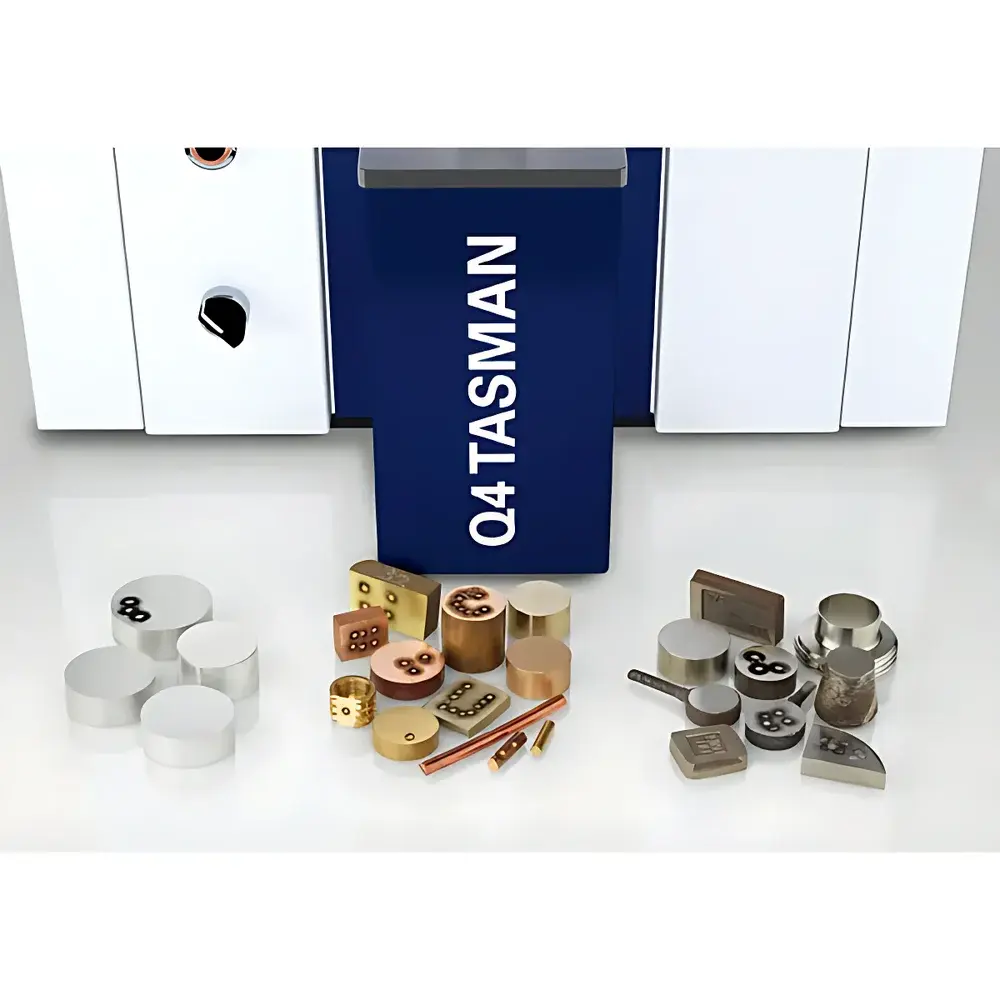
The Q4 TASMAN accommodates flat, cylindrical, and irregularly shaped conductive metal samples up to 40 mm in height and 60 mm in diameter. Surface preparation requirements follow ISO 11084 for grinding and ASTM E1184 for cleaning protocols. All ASP calibrations are traceable to NIST SRMs and certified by independent metrology institutes. The instrument supports audit-ready operation under GLP and GMP environments, with optional software modules providing electronic signatures, user access controls, and full 21 CFR Part 11-compliant data integrity features—including immutable audit trails, version-controlled methods, and secure raw spectrum archiving.
Software & Data Management
Controlled via Bruker’s Spark Analyzer Pro software, the Q4 TASMAN offers intuitive workflow management—from automated sample registration and spark parameter optimization to statistical process control (SPC) charting and LIMS integration via ASTM E1382-compliant XML export. Raw spectra are stored in vendor-neutral HDF5 format, supporting third-party chemometric tools. Calibration management includes drift correction algorithms, inter-element interference modeling (e.g., V 309.31 nm affected by Fe II 309.29 nm), and automatic re-standardization triggers based on QC sample performance. All software updates comply with IEC 62304 Class B medical device software standards where applicable.
Applications
- Quality assurance of incoming raw materials (scrap, ingots, billets) in foundries and rolling mills
- Final product certification for aerospace-grade Ti-6Al-4V, automotive Al-Si-Cu castings, and nuclear-grade stainless steels
- Research into microalloying effects (e.g., Nb, V, Ta) on grain refinement and mechanical properties
- Failure analysis via inclusion mapping and segregation profiling using sequential spark mapping mode
- Regulatory compliance testing for RoHS-restricted elements (Pb, Cd, Hg, Cr⁶⁺, Br) in metal components
FAQ
What is the typical detection limit for carbon in low-alloy steel using the Q4 TASMAN?
Typical LOD for C in Fe-based matrices is 3–5 ppm under standard spark conditions; sub-ppm performance is achievable with extended integration and optimized pre-spark cleaning.
Can the instrument analyze non-conductive samples such as ceramics or coated metals?
No—Q4 TASMAN requires electrically conductive samples. Non-conductors must be analyzed via alternative techniques (e.g., laser-induced breakdown spectroscopy or XRF) or by preparing conductive paste-mounted electrodes.
Is the optical system purged with argon or vacuum?
The optical chamber uses continuous argon purge to maintain transmission below 190 nm; no vacuum pump is required.
How often does the grating require recalibration?
The Paschen-Runge mount provides passive thermal stability; wavelength calibration is verified daily using internal Fe/Ar reference lines and typically requires full recalibration only after physical relocation or service intervention.
Does Bruker provide application support for custom alloy development?
Yes—Bruker Application Laboratories offer collaborative method development, CRM selection guidance, and validation documentation aligned with ISO/IEC 17025 requirements.





