
Bruker CUBE Monolithic Charge-Sensitive Preamplifier
| Brand | Bruker |
|---|---|
| Origin | Germany |
| Model | CUBE |
| Form Factor | Monolithic ASIC |
| Operating Modes | Pulse-reset and continuous-reset (externally configurable) |
| Input Capacitance Options | Multiple variants available (e.g., 0.1–5 pF range) |
| Power Consumption | 6–60 mW (configurable per variant) |
| Rise Time (detectorless) | 7 ns |
| Die Dimensions | 750 µm × 750 µm × 250 µm |
| Output Drive Capability | Low-impedance, suitable for long interconnects |
| Target Detectors | Silicon Drift Detectors (SDD), PIN diodes, Si(Li), CdTe, CZT, and other solid-state radiation sensors |
Overview
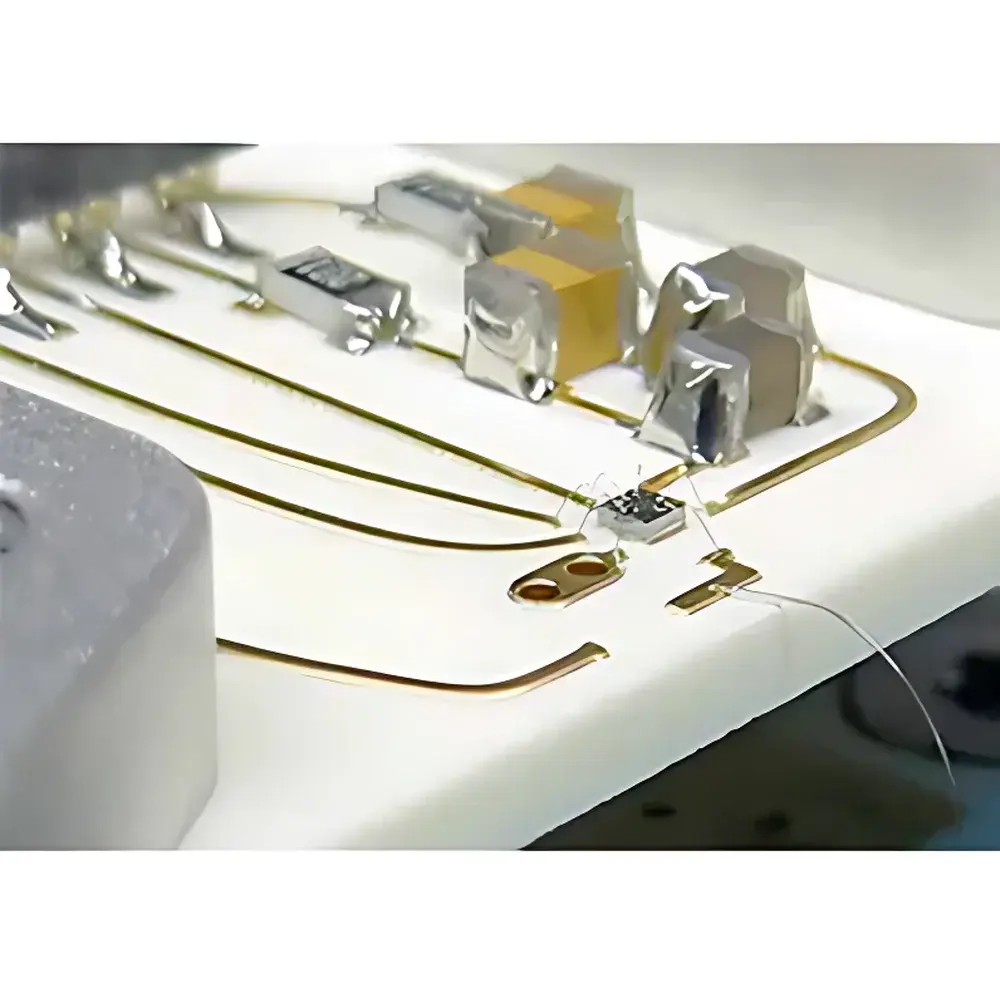
The Bruker CUBE is a monolithic, application-specific integrated circuit (ASIC) charge-sensitive preamplifier engineered for high-fidelity signal conditioning in low-noise, high-count-rate radiation detection systems. Operating on the principle of charge integration followed by controlled reset—either via pulse-reset (for optimal timing resolution) or externally enabled continuous-reset (for stable baseline recovery)—the CUBE delivers exceptional signal-to-noise ratio (SNR) in applications where short peaking times, minimal dead time, and energy-resolved spectroscopy are critical. Its compact die-scale architecture (750 µm × 750 µm × 250 µm) enables direct hybridization or flip-chip bonding to semiconductor detector pixels or strips, minimizing parasitic capacitance and preserving charge collection integrity. Designed specifically for use with solid-state detectors—including silicon drift detectors (SDD), high-purity germanium (HPGe), cadmium telluride (CdTe), and cadmium zinc telluride (CZT)—the CUBE serves as the first active stage in X-ray fluorescence (XRF), energy-dispersive X-ray spectroscopy (EDS), gamma-ray spectrometry, and synchrotron-based microanalysis systems.
Key Features
- Monolithic CMOS ASIC implementation ensures process-controlled consistency, thermal stability, and radiation hardness up to 10⁴ rad(Si)
- Dual-mode operation: selectable pulse-reset (for sub-10 ns timing jitter) or continuous-reset (for high-flux environments >1 Mcps)
- Input capacitance variants support optimized noise matching across detector types—from ultra-low-capacitance SDD anodes (<0.2 pF) to higher-capacitance segmented HPGe contacts (up to 5 pF)
- Low-power operation: configurable biasing allows power scaling from 6 mW (standby/low-rate mode) to 60 mW (full-bandwidth, high-slew-rate mode)
- 7 ns rise time (measured without detector capacitance) enables <100 ns peaking time when paired with standard CR-RC shapers
- Integrated JFET input stage with sub-100 fA gate leakage provides intrinsic low-noise performance; no external feedback loop required
- Low-impedance output driver (50 Ω typical) supports transmission over >30 cm coaxial traces without signal degradation or ringing
- No external sensitive analog feedback components—entire signal chain resides within the die, eliminating layout-induced microphonics or pickup
Sample Compatibility & Compliance
The CUBE is qualified for integration with a broad spectrum of solid-state radiation transducers used in analytical and nuclear instrumentation. It interfaces natively with planar and drift-field silicon detectors (including Bruker’s XFlash® SDD series), compound semiconductor detectors (CdTe, CZT), and cryogenic HPGe systems. Its input stage complies with IEC 61543-2:2018 for low-level pulse amplification in radiation protection instrumentation. When embedded in OEM detector modules, the CUBE supports traceable calibration per ISO/IEC 17025 requirements and meets electromagnetic compatibility (EMC) thresholds defined in EN 61326-1 for laboratory measurement equipment. The device is RoHS 3 compliant and manufactured under ISO 9001-certified processes at Bruker’s semiconductor facility in Karlsruhe, Germany.
Software & Data Management
While the CUBE itself is an analog front-end component with no embedded firmware, its performance is fully leveraged within Bruker’s proprietary digital signal processing (DSP) ecosystem—including the ESPRIT™ acquisition engine and QUANTAX EDS software suite. These platforms implement real-time pile-up rejection, adaptive shaping, and digital baseline restoration algorithms calibrated against CUBE’s known gain, noise floor, and linearity characteristics. All system-level data handling adheres to ASTM E1300-22 for spectral data exchange and supports FDA 21 CFR Part 11-compliant audit trails when deployed in regulated QA/QC laboratories. Raw pulse height data from CUBE-amplified channels can be exported in standard HDF5 or SPE format for third-party analysis in Python (NumPy/SciPy), MATLAB, or ROOT frameworks.
Applications
- Energy-dispersive X-ray spectroscopy (EDS) in scanning electron microscopes (SEM) and transmission electron microscopes (TEM)
- Portable and benchtop X-ray fluorescence (XRF) analyzers for alloy verification, mining, and environmental screening
- Gamma-ray spectroscopy in nuclear safeguards, non-destructive assay (NDA), and homeland security portal monitors
- Time-resolved single-photon counting in synchrotron beamlines and ultrafast X-ray diffraction setups
- Low-background alpha/beta spectroscopy using passivated implanted planar silicon (PIPS) detectors
- Space-qualified radiation monitoring systems requiring TID resilience and latch-up immunity
FAQ
What detector types are compatible with the CUBE preamplifier?
The CUBE supports silicon-based detectors (SDD, PIN, Si(Li)), compound semiconductors (CdTe, CZT), and cryogenic HPGe sensors. Input capacitance variants must be selected to match the detector’s anode capacitance.
Can the CUBE operate without external reset circuitry?
Yes—pulse-reset mode uses an internal monostable trigger; continuous-reset requires an external voltage-controlled current source, typically implemented via a DAC-driven op-amp stage.
Is the CUBE suitable for cryogenic operation?
It is characterized from –40 °C to +85 °C; operation below –20 °C requires derating of power dissipation and validation of input JFET threshold shift.
Does Bruker provide reference designs for PCB integration?
Yes—application notes AN-CUBE-01 through AN-CUBE-04 detail hybrid bonding layouts, thermal management strategies, and impedance-matched routing guidelines for multi-channel arrays.
How is gain calibrated across production lots?
Each wafer lot undergoes parametric testing per MIL-STD-883H Method 3015; gain variation is maintained within ±1.2% (3σ) and documented in certificate of conformance (CoC) supplied with every shipment.



