
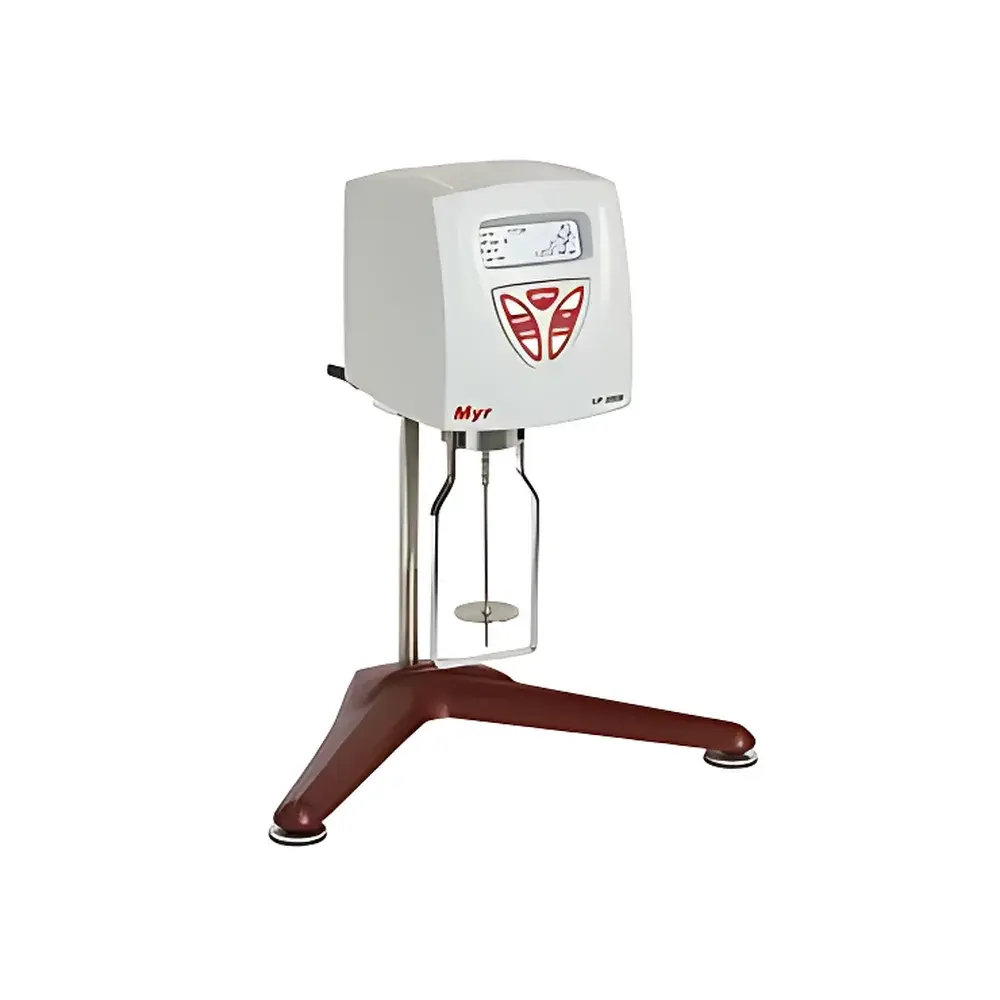
TQC VR3000 Digital Rotational Viscometer
| Brand | TQC |
|---|---|
| Origin | Netherlands |
| Instrument Type | Rotational Viscometer |
| Viscosity Range | 20 – 40,000,000 mPa·s |
| Speed Range (V2) | 0.1 – 200 rpm |
| Rotor Sets | L-type (4), R-type (6), H-type (6) |
| Accuracy | ±1% of full scale |
| Repeatability | ±0.2% |
| Compliance | ASTM D1076, D115, D1439, D1638, D1824 |
Overview
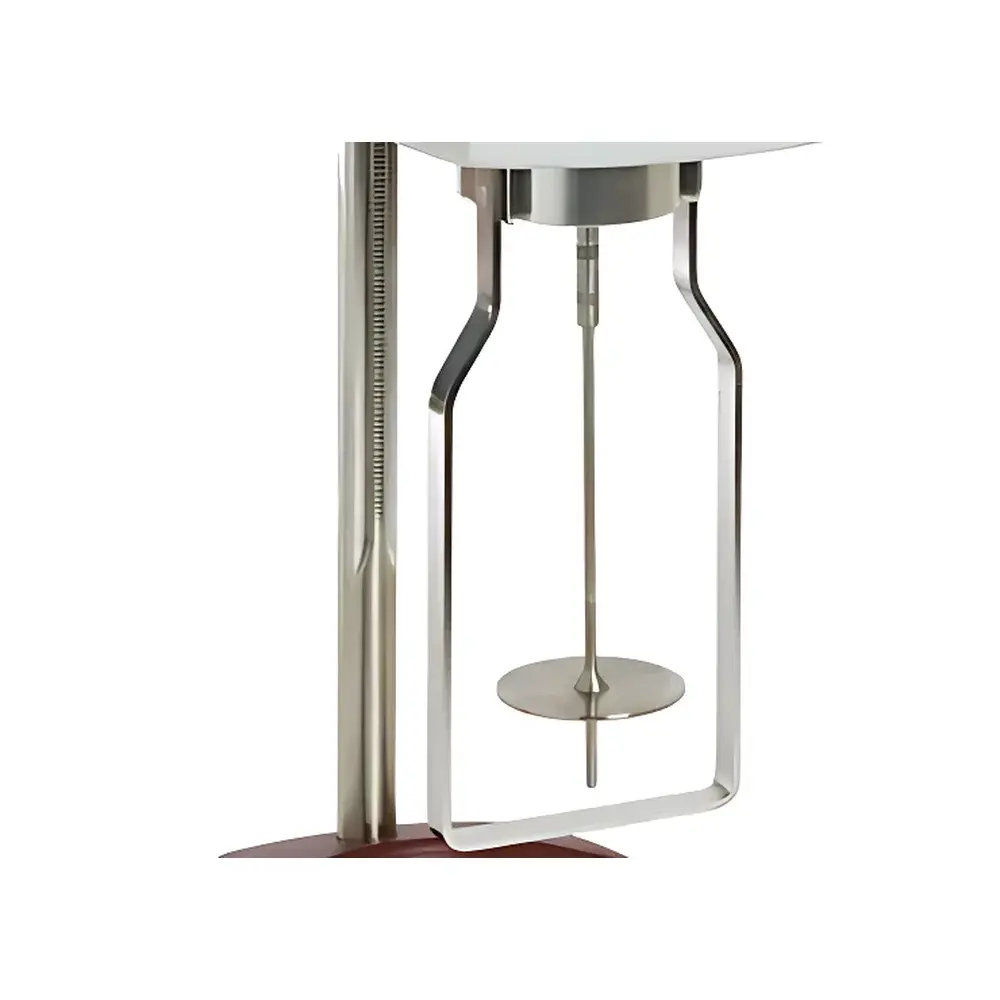
The TQC VR3000 Digital Rotational Viscometer is a precision-engineered instrument designed for reliable, repeatable viscosity measurement across an exceptionally broad dynamic range—from low-viscosity solvents to highly structured polymer melts and pastes. Based on the classical Brookfield principle of rotational viscometry—where torque exerted on a rotating spindle immersed in a sample is measured under controlled shear conditions—the VR3000 delivers quantitative rheological data aligned with internationally recognized standards. Its dual-speed architecture (V1 and V2 variants) enables optimized resolution across viscosity sub-ranges: L-rotors for low-viscosity liquids (e.g., coatings, inks, pharmaceutical suspensions), R-rotors for medium-viscosity materials (e.g., adhesives, food emulsions), and H-rotors for high-viscosity or yield-stress systems (e.g., mastics, greases, cosmetic gels). The VR3000 is not a rheometer in the oscillatory or controlled-stress sense, but rather a high-fidelity rotational viscometer engineered for routine QC environments where compliance, traceability, and inter-laboratory comparability are mandatory.
Key Features
- Three interchangeable rotor families (L, R, H) providing 26 total spindle configurations—enabling coverage from 3 mPa·s up to 40,000,000 mPa·s without hardware changeover
- V2 model supports 21 discrete rotational speeds (0.1–200 rpm), enhancing low-shear sensitivity and enabling shear-rate-dependent profiling per ASTM D2196
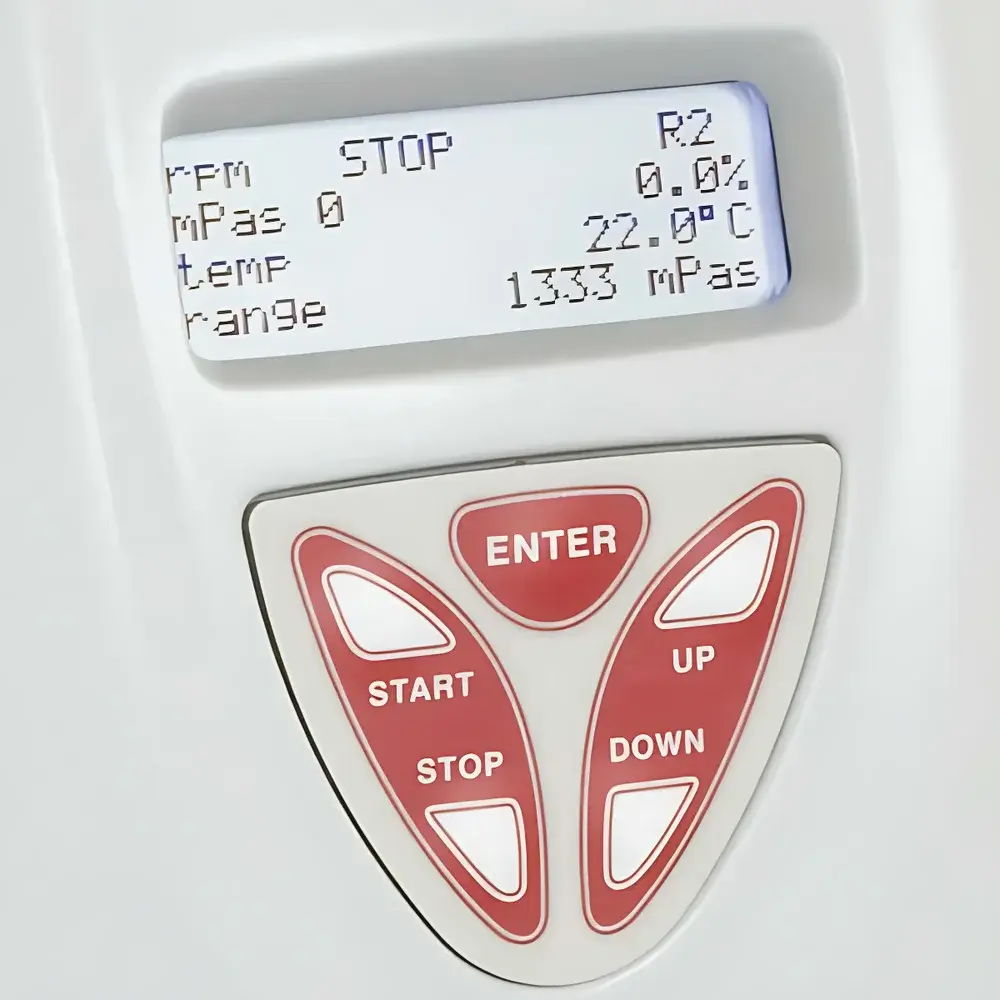
- Integrated PT100 temperature sensor with real-time compensation and dual-unit display (°C/°F), critical for temperature-sensitive formulations
- Digital torque transduction with ±1% full-scale accuracy and ±0.2% repeatability—validated against NIST-traceable calibration standards
- Onboard data logging with optional thermal printer interface for GLP-compliant hard-copy output of test parameters, timestamp, rotor ID, speed, viscosity, % torque, and temperature
- Rugged aluminum housing with IP20-rated enclosure, designed for continuous operation in regulated manufacturing labs and ISO 17025-accredited testing facilities
Sample Compatibility & Compliance
The VR3000 accommodates standard cylindrical sample containers (600 mL beaker or 500 mL Griffin beaker) and supports optional accessories—including low-volume adapters (for ≤15 mL samples), guarded spindles for non-Newtonian surface effects mitigation, and temperature-controlled jacketed vessels (when paired with external circulators). It meets the mechanical and procedural requirements of ASTM D1076 (latex), D115 (varnishes), D1439 (adhesives), D1638 (rubber latex), and D1824 (bituminous materials), as well as ISO 2555 (aqueous polymer solutions) and ISO 1652 (paints and varnishes). All factory calibrations are documented in accordance with ISO/IEC 17025 and accompanied by a UKAS-recognized certificate of calibration. The instrument’s firmware architecture supports audit trails and user access control when integrated into FDA 21 CFR Part 11–compliant software environments.
Software & Data Management
While the VR3000 operates autonomously via its front-panel interface, it supports RS-232 and USB-to-serial communication for integration with TQC’s proprietary ViscoLink™ PC software. This platform enables automated method storage (predefined rotor/speed/temperature sequences), batch reporting, statistical process control (SPC) charting (X-bar/R charts), and export to CSV, Excel, or LIMS-compatible XML formats. Raw data files include metadata tags for operator ID, instrument serial number, calibration date, and environmental conditions—facilitating full traceability in GMP/GLP workflows. Software-generated reports may be digitally signed and archived to meet ALCOA+ (Attributable, Legible, Contemporaneous, Original, Accurate, Complete, Consistent, Enduring, Available) data integrity criteria.
Applications
- Quality control of solvent-borne and water-based coatings, inks, and resins in compliance with ISO 2555 and ASTM D1076
- Batch release testing of topical pharmaceutical gels, ointments, and suspensions per USP and Ph. Eur. 2.9.35
- Routine monitoring of edible oils, dairy emulsions, and starch-thickened sauces under ISO 11357-1 and AOAC 967.15
- Process validation of adhesives, sealants, and construction mastics per ASTM D1439 and EN 13445
- Stability assessment of cosmetic creams and hair conditioners using multi-speed sweeps to detect structural breakdown or thixotropy
- Raw material qualification for polymers, cellulose derivatives, and biopolymers where viscosity correlates directly with molecular weight distribution
FAQ
Is the VR3000 compliant with 21 CFR Part 11 for electronic records?
Yes—when used with validated ViscoLink™ software and appropriate administrative controls (e.g., role-based login, electronic signatures, audit trail activation), the system satisfies predicate rule requirements for electronic records and signatures.
Can I measure yield stress with the VR3000?
No—the VR3000 is a constant-shear-rate viscometer and does not provide controlled-stress ramping or oscillatory capability required for true yield stress determination. However, apparent yield can be estimated via extrapolation from low-shear viscosity data (e.g., at 0.1 rpm) in conjunction with ASTM D2196 Annex A.
What is the minimum sample volume required for accurate measurement?
With standard spindles and a 600 mL beaker, the minimum recommended volume is 400 mL. Using the optional low-volume adapter reduces this to 15 mL while maintaining geometric similarity and minimizing wall effects.
Does the VR3000 support automatic temperature control?
The unit includes a PT100 probe for real-time temperature monitoring and compensation, but does not integrate a heating/cooling module. For active temperature control, users must pair it with an external recirculating bath and compatible jacketed vessel.
How often should the instrument be recalibrated?
TQC recommends annual recalibration against traceable reference oils (e.g., Cannon-Manning series) or certified viscosity standards. More frequent verification is advised after mechanical shock, spindle replacement, or when operating outside ambient 15–30°C conditions.



