
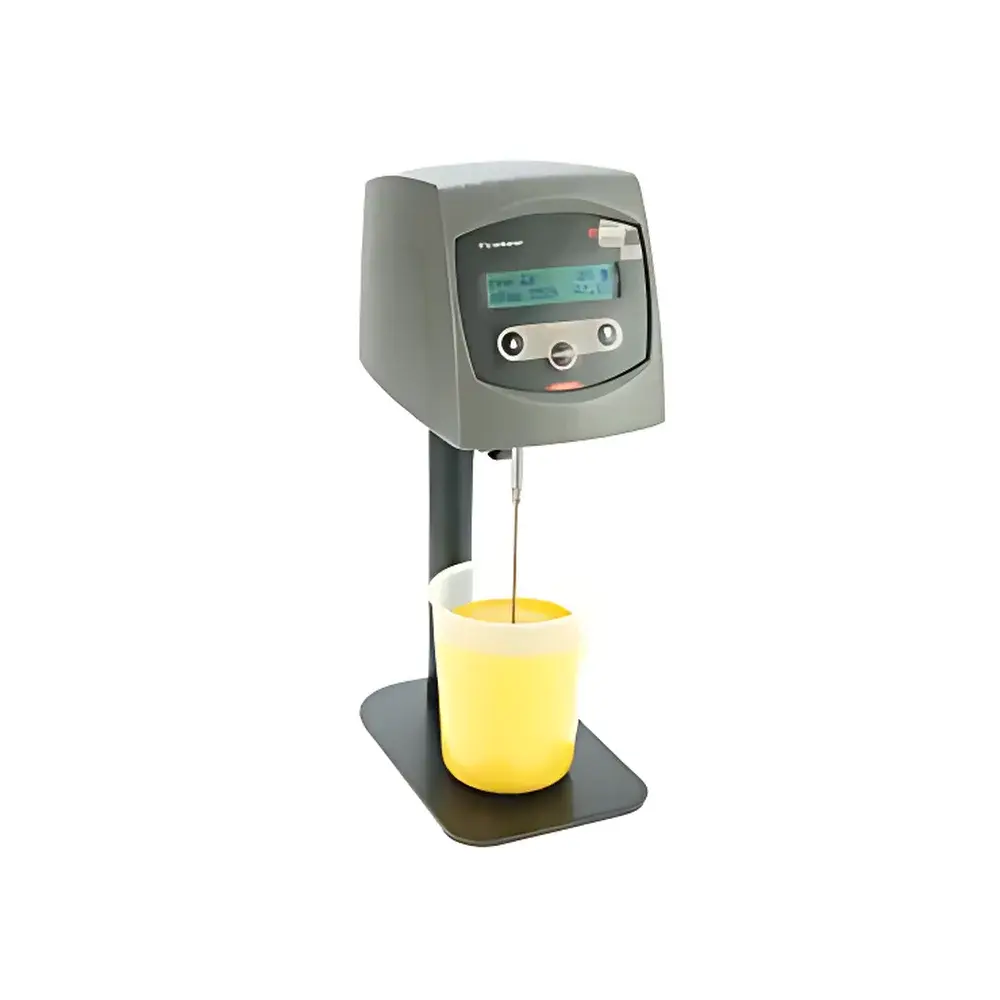
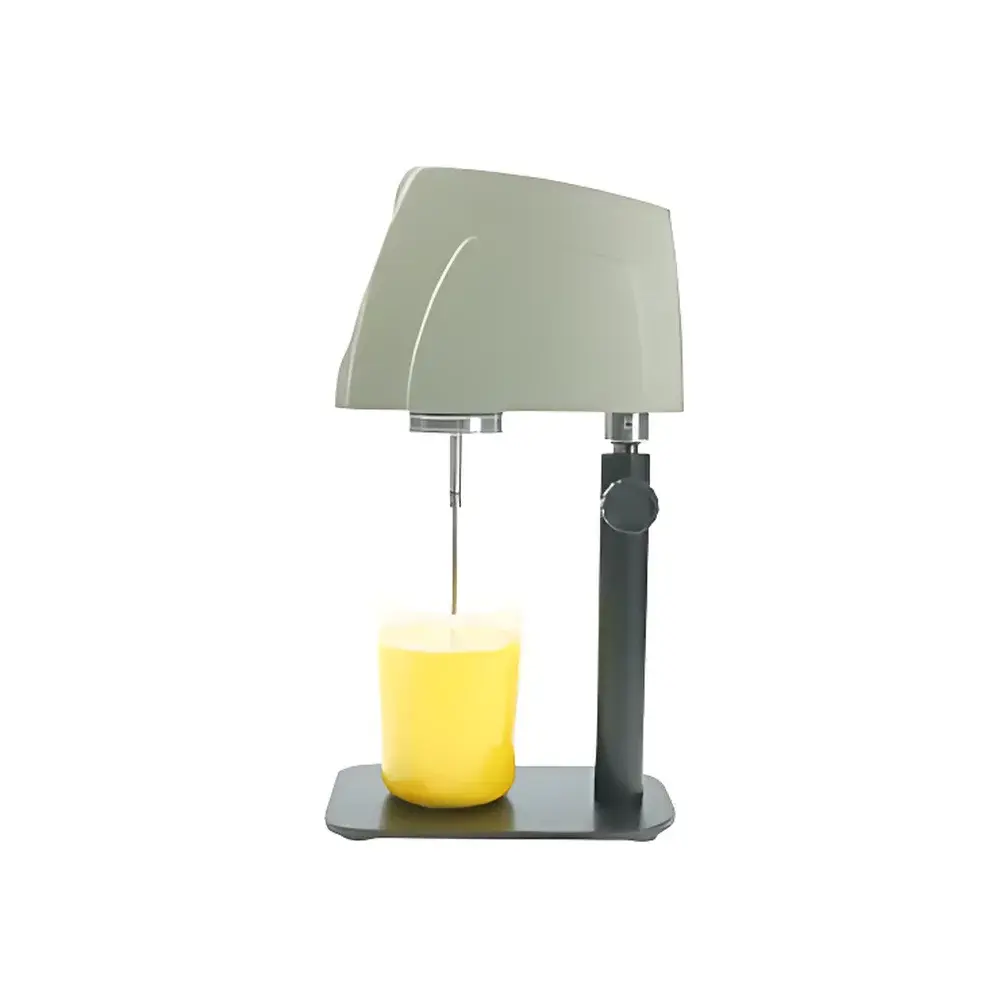
TQC DV1400 Portable Rotational Viscometer
| Brand | TQC |
|---|---|
| Origin | Netherlands |
| Model | DV1400 |
| Instrument Type | Rotational Viscometer |
| Viscosity Range | 40.2 – 141 KU (Krebs Units) |
| Operating Speeds | 20 rpm and 60 rpm (fixed) |
| Power Supply | Rechargeable battery |
| Weight | 1.8 kg |
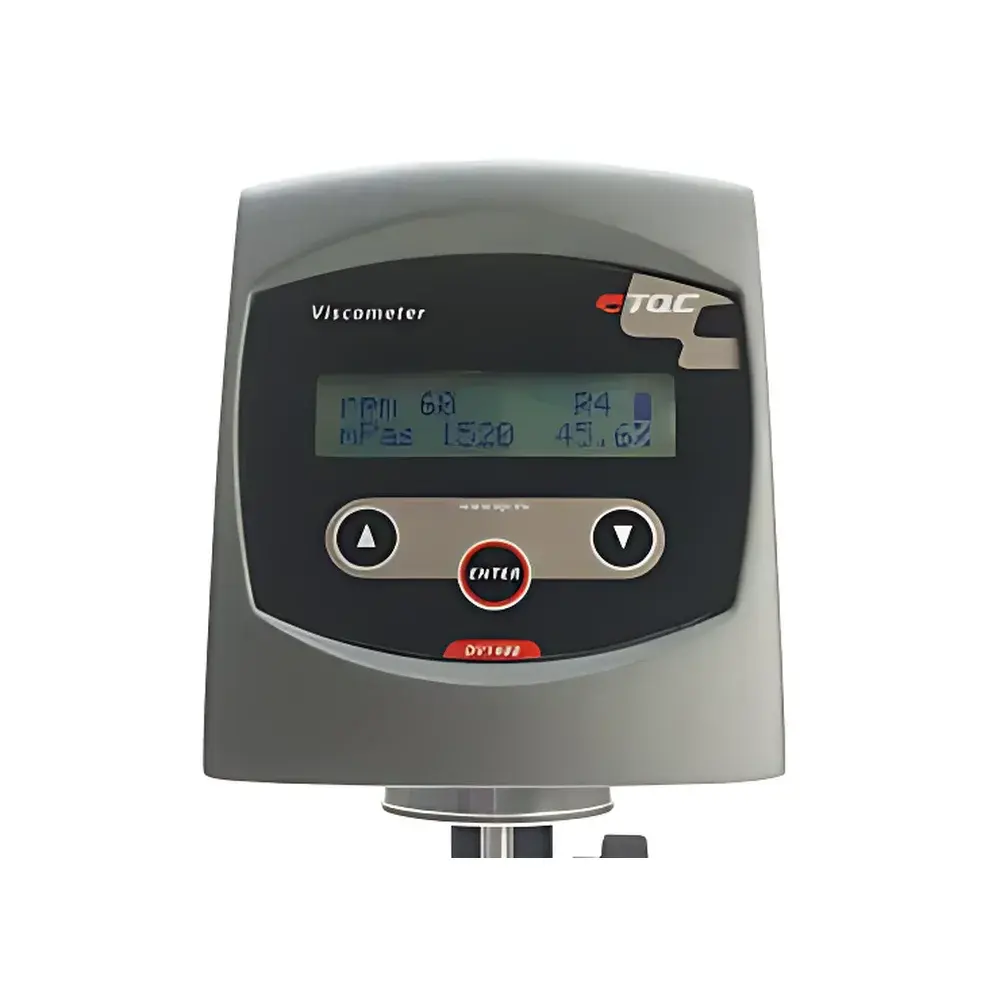
| Display | Dual-line backlit LCD |
| Compliance | ASTM D562, ISO 2555, BS 3900-A6, EN ISO 2555 |
| Includes | Rotor set and standard sample cup |
Overview
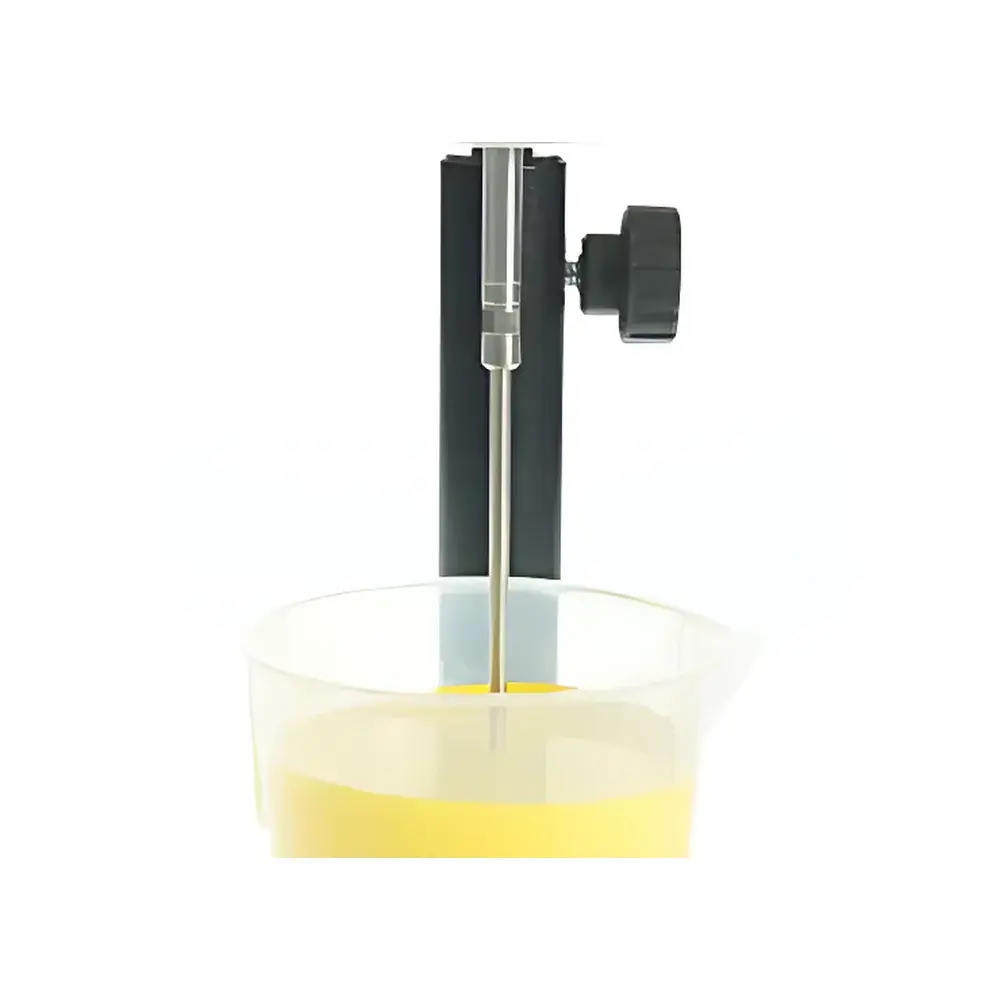
The TQC DV1400 Portable Rotational Viscometer is an engineered solution for rapid, field- and lab-based viscosity assessment of non-Newtonian fluids—particularly coatings, paints, inks, adhesives, and selected food-grade suspensions—according to the Krebs Unit (KU) method defined in ASTM D562. Unlike capillary or falling-ball viscometers, the DV1400 employs a controlled-shear rotational principle: a precision-machined paddle-type rotor rotates at fixed angular velocity (20 rpm or 60 rpm) within a standardized cylindrical cup, generating shear stress proportional to the sample’s resistance. The resulting torque is converted into Krebs Units—a logarithmic scale calibrated against reference standards traceable to NIST-equivalent materials. This design ensures direct comparability with data from benchtop Brookfield or similar spindle-based instruments when using geometrically equivalent rotors and identical test conditions, enabling seamless integration into existing QC workflows across global manufacturing sites.
Key Features
- True portability: Weighing only 1.8 kg and powered by an internal rechargeable battery, the DV1400 operates independently of AC mains—ideal for on-site audits, production line checks, and mobile quality assurance teams.
- Dual fixed-speed operation: Pre-set 20 rpm and 60 rpm modes eliminate speed calibration drift and reduce operator variability—critical for inter-laboratory reproducibility under GLP or ISO/IEC 17025 environments.
- Krebs Unit compliance: Fully aligned with ASTM D562, ISO 2555, BS 3900-A6, and EN ISO 2555, ensuring regulatory acceptability in coating formulation, batch release, and supplier qualification protocols.
- Optimized human interface: Dual-line backlit LCD provides real-time display of measured KU value, selected speed mode, battery status, and unit indication—designed for readability under variable lighting (e.g., factory floor or daylight-exposed outdoor testing).
- Integrated accessories: Supplied with a complete rotor kit (including standard paddle rotor), calibrated sample cup (600 mL capacity), and protective carrying case—eliminating setup delays and minimizing risk of cross-contamination or misalignment.
Sample Compatibility & Compliance
The DV1400 is validated for use with low-to-medium viscosity dispersions exhibiting yield stress and shear-thinning behavior typical of architectural paints, industrial primers, latex emulsions, and certain thickened food systems (e.g., salad dressings, sauces). Its paddle geometry and fixed rotational speed profile are optimized for samples with apparent viscosities between 40.2 and 141 KU—equivalent to approximately 200–10,000 mPa·s depending on composition and temperature. All measurements comply with documented standard operating procedures (SOPs) referenced in ASTM D562 Annex A1, and support audit-ready documentation when paired with manual entry into LIMS or electronic lab notebooks. While not FDA 21 CFR Part 11–validated out-of-the-box, the device’s deterministic output and immutable speed settings facilitate validation by end users under GMP or ICH Q5E frameworks.
Software & Data Management
The DV1400 operates as a standalone instrument with no embedded firmware-based data logging or Bluetooth/Wi-Fi connectivity. Measurement values are displayed and retained on-screen until manually recorded. This architecture prioritizes operational simplicity, electromagnetic immunity in industrial environments, and long-term calibration stability—avoiding software obsolescence or cybersecurity vulnerabilities associated with networked instruments. Users may integrate results into compliant data management systems via manual transcription or optional third-party barcode-scanning workflows. Traceability is maintained through physical logbooks or digital records annotated with operator ID, time/date stamp, ambient temperature, sample ID, and rotor identification—fully supporting ISO/IEC 17025 clause 7.7 (result reporting) and ALCOA+ principles (Attributable, Legible, Contemporaneous, Original, Accurate).
Applications
- Coating QC labs: Rapid pass/fail screening of incoming raw materials (e.g., resins, pigments) and finished products prior to canning or shipment.
- Production line monitoring: Real-time verification of viscosity consistency during mixing, thinning, or dispersion steps—reducing rework and batch rejection rates.
- R&D formulation support: Comparative evaluation of rheological modifiers (e.g., fumed silica, associative thickeners) under standardized shear conditions.
- Contract manufacturing audits: Portable verification of supplier-reported KU values without requiring access to fixed laboratory infrastructure.
- Food quality control: Monitoring viscosity stability of cold-process dressings and dairy-based suspensions where thermal degradation must be avoided.
FAQ
Is the DV1400 compatible with Brookfield-type spindle viscometers?
Yes—when operated at 20 rpm or 60 rpm using the supplied paddle rotor and standard cup, DV1400 KU readings correlate directly with those obtained from Brookfield LVT or RV models configured per ASTM D562 Annex A2.
What is the recommended temperature control protocol?
Viscosity in KU is temperature-sensitive; ASTM D562 specifies 23 ± 0.5°C. Users must precondition samples and cups to this temperature prior to measurement using external water baths or climate-controlled rooms.
Can the DV1400 measure beyond 141 KU?
No—the mechanical and signal-processing design is optimized for the defined 40.2–141 KU range. Samples exceeding 141 KU require dilution or alternate instrumentation (e.g., coaxial cylinder rheometers).
How often does the instrument require recalibration?
TQC recommends annual calibration against certified KU reference standards (e.g., NIST-traceable silicone oils) by an accredited metrology provider, or per internal SOP aligned with ISO/IEC 17025 Clause 6.5.
Does the battery support continuous operation during shift work?
Yes—the integrated Li-ion battery delivers ≥8 hours of continuous measurement cycles (including display backlight), sufficient for full-shift deployment without interruption.



