
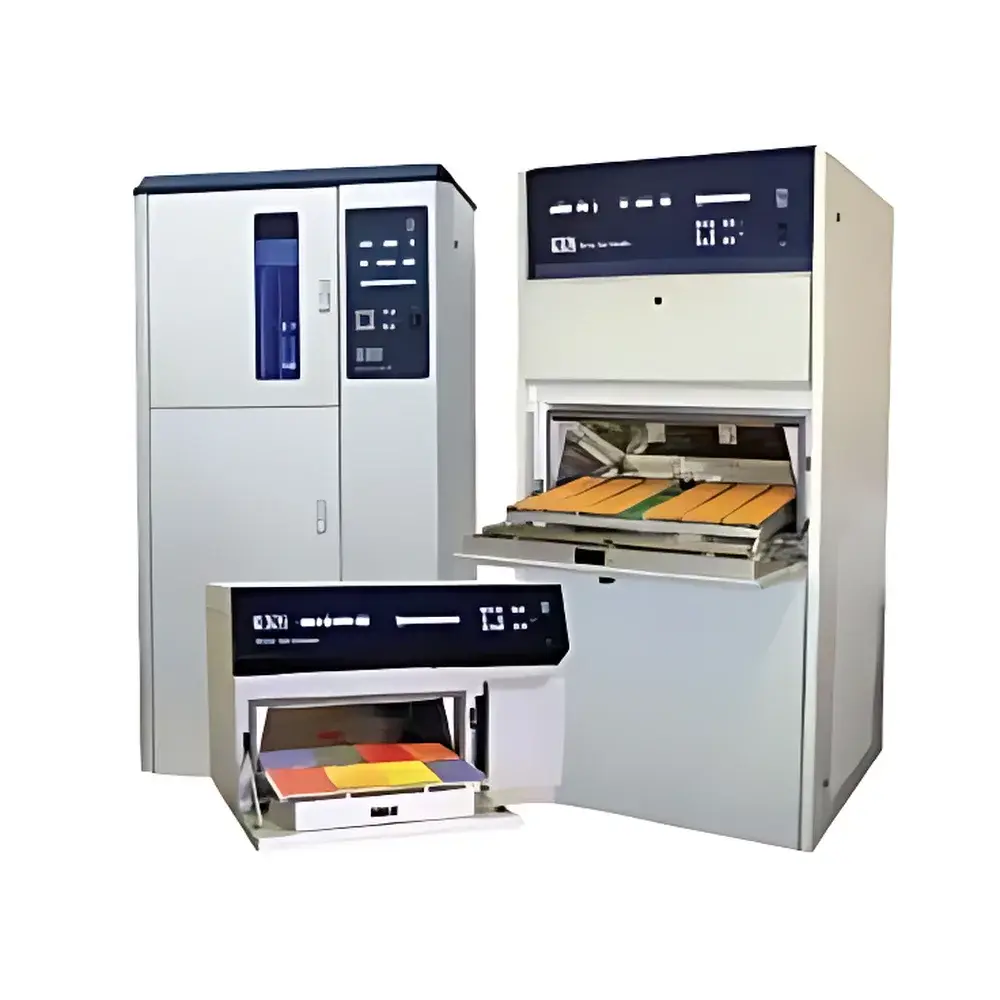
Q-Lab Q-SUN Xe-3 Xenon Arc Weathering Test Chamber
| Brand | Q-LAB |
|---|---|
| Origin | USA |
| Model | Q-SUN Xe-3 |
| Xenon Lamp Power | 1800 W |
| Light Spectrum | Full-spectrum solar simulation (290–800 nm) |
| Temperature Control | Black Standard/Black Panel Thermometer (BST/BPT) |
| Humidity Control | Precise RH control (range: 10–95% RH, typical operating range) |
| Water Spray System | Deionized water spray with programmable timing (light/dark cycles) |
| Irradiance Control | Closed-loop feedback at 340 nm, 420 nm, or TUV band |
| Filter Options | Daylight-Q/B, Window Glass-Q, Extended UV-Q |
| Lamp Life | Approx. 1500 hours |
| Compliance | ASTM G155, ISO 4892-2, AATCC TM16, SAE J2527, ISO 105-B02, ASTM D4355, ASTM D4459, ASTM D6551, and others |
Overview
The Q-Lab Q-SUN Xe-3 Xenon Arc Weathering Test Chamber is an engineered solution for accelerated weathering evaluation of materials exposed to solar radiation, temperature, and moisture. Utilizing a 1800 W air-cooled xenon arc lamp, the system reproduces the full spectral output of natural sunlight (290–800 nm), enabling high-fidelity simulation of outdoor and indoor exposure conditions. Unlike UV fluorescent or metal halide sources, xenon arc technology provides continuous spectral energy distribution closely matching terrestrial solar irradiance—critical for evaluating photodegradation mechanisms such as polymer chain scission, pigment fading, and coating delamination. The chamber integrates precise black standard/black panel temperature monitoring, programmable relative humidity control, and deionized water spray to replicate cyclic wet-dry stress. Designed for laboratory-scale durability testing, the Q-SUN Xe-3 supports standardized exposure protocols across automotive, aerospace, coatings, textiles, plastics, and packaging industries.
Key Features
- Full-spectrum xenon arc illumination: Air-cooled 1800 W lamp delivers stable, spectrally accurate irradiance across UV, visible, and near-infrared bands—enabling correlation with real-world field performance.
- Advanced irradiance control: Real-time, closed-loop optical feedback system maintains target irradiance levels at user-selectable wavelengths (340 nm for UV-driven degradation, 420 nm for broader spectral relevance, or TUV for total UV energy).
- Multi-parameter environmental control: Independent regulation of black panel temperature (typically 35–100 °C), chamber air temperature, and relative humidity (10–95% RH) ensures reproducible exposure profiles per ASTM G155 Cycle 1–10 and ISO 4892-2.
- Programmable water spray: Dual-nozzle deionized water spray system operates during light or dark phases, simulating dew, rain, or condensation—critical for evaluating hydrolytic degradation and surface erosion.
- Optical filter flexibility: Interchangeable filters (Daylight-Q/B, Window Glass-Q, Extended UV-Q) allow tailoring of spectral output to match specific exposure environments—including direct sunlight, through-glass indoor exposure, or accelerated UV-rich conditions.
- Robust, service-oriented architecture: Modular design minimizes downtime; lamp replacement requires no optical realignment; filter access is tool-free; all critical components are field-serviceable without specialized calibration tools.
Sample Compatibility & Compliance
The Q-SUN Xe-3 accommodates flat-panel specimens up to 152 mm × 152 mm (6″ × 6″) in a horizontal orientation—optimized for uniform irradiance distribution and realistic moisture retention. Sample trays are constructed from corrosion-resistant stainless steel and support both rigid and flexible substrates, including painted panels, textile swatches, plastic films, and coated composites. The system meets or exceeds requirements for multiple international test standards, including ASTM G155 (practice for operating xenon arc apparatus), ISO 4892-2 (plastics—methods of exposure to laboratory light sources), AATCC TM16 (colorfastness to light), SAE J2527 (automotive interior materials), and ISO 105-B02 (textiles—colorfastness to artificial light). All operational parameters—including irradiance setpoints, temperature ramp rates, humidity dwell times, and spray duration—are fully traceable and audit-ready for GLP-compliant laboratories. Data logs comply with FDA 21 CFR Part 11 requirements when used with Q-Lab’s optional Q-Lab Software Suite.
Software & Data Management
Control and monitoring are managed via Q-Lab’s intuitive touchscreen interface or optionally integrated Q-Lab Software Suite (Windows-based). The software enables full protocol definition—including multi-step cycles, irradiance ramping, temperature/humidity profiling, and spray sequencing—with automatic validation of parameter boundaries. All sensor readings (irradiance, BST/BPT, RH, chamber air temp) are logged at user-defined intervals (down to 1-second resolution) and stored with time-stamped metadata. Export formats include CSV, PDF reports, and XML for LIMS integration. Audit trails record operator actions, parameter changes, and alarm events—supporting regulatory compliance in GMP, ISO/IEC 17025, and automotive PPAP environments. Remote monitoring via Ethernet or optional Wi-Fi allows secure off-site oversight without compromising data integrity.
Applications
- Evaluation of color stability and gloss retention in automotive clearcoats and exterior trim under SAE J2527/J2412 protocols.
- Accelerated aging of architectural sealants, roofing membranes, and PVC window profiles per ASTM D4798 and ASTM D6551.
- Photostability assessment of pharmaceutical packaging materials (e.g., blister foils, HDPE bottles) per ICH Q1B guidelines.
- Durability screening of inkjet inks, digital printing media, and textile dyes under AATCC TM16 and ISO 105-B02.
- Correlation studies between laboratory xenon exposure and real-world Florida or Arizona field exposure data using Q-Lab’s proprietary Atlas Correlation Database.
- Development and qualification of UV-stabilized polyolefins, polycarbonates, and engineering thermoplastics per ASTM D4355 and ASTM D4459.
FAQ
What is the typical service life of the xenon lamp in the Q-SUN Xe-3?
The air-cooled 1800 W xenon lamp has a rated service life of approximately 1500 hours under standard operating conditions. Lamp output decay is continuously monitored by the irradiance control system to maintain test validity throughout its lifespan.
Does the Q-SUN Xe-3 require external cooling water or chilled water supply?
No—this model uses forced-air cooling only, eliminating dependency on facility water systems and reducing installation complexity and operating costs.
Can the Q-SUN Xe-3 perform tests compliant with ASTM G155 Cycle 7 (low-irradiance, high-humidity)?
Yes—the system supports all 10 standard cycles defined in ASTM G155, including low-intensity UV exposure combined with elevated humidity and extended dark periods.
Is calibration traceable to NIST or other national metrology institutes?
All irradiance sensors are factory-calibrated against NIST-traceable reference standards, and calibration certificates are provided with each instrument shipment. Annual recalibration services are available through Q-Lab’s global service network.
How does the Q-SUN Xe-3 differ from water-cooled xenon test chambers?
Air-cooling reduces infrastructure requirements, lowers maintenance frequency, and improves energy efficiency—making it suitable for general-purpose labs where space, utilities, and budget constraints limit adoption of water-cooled systems.



