
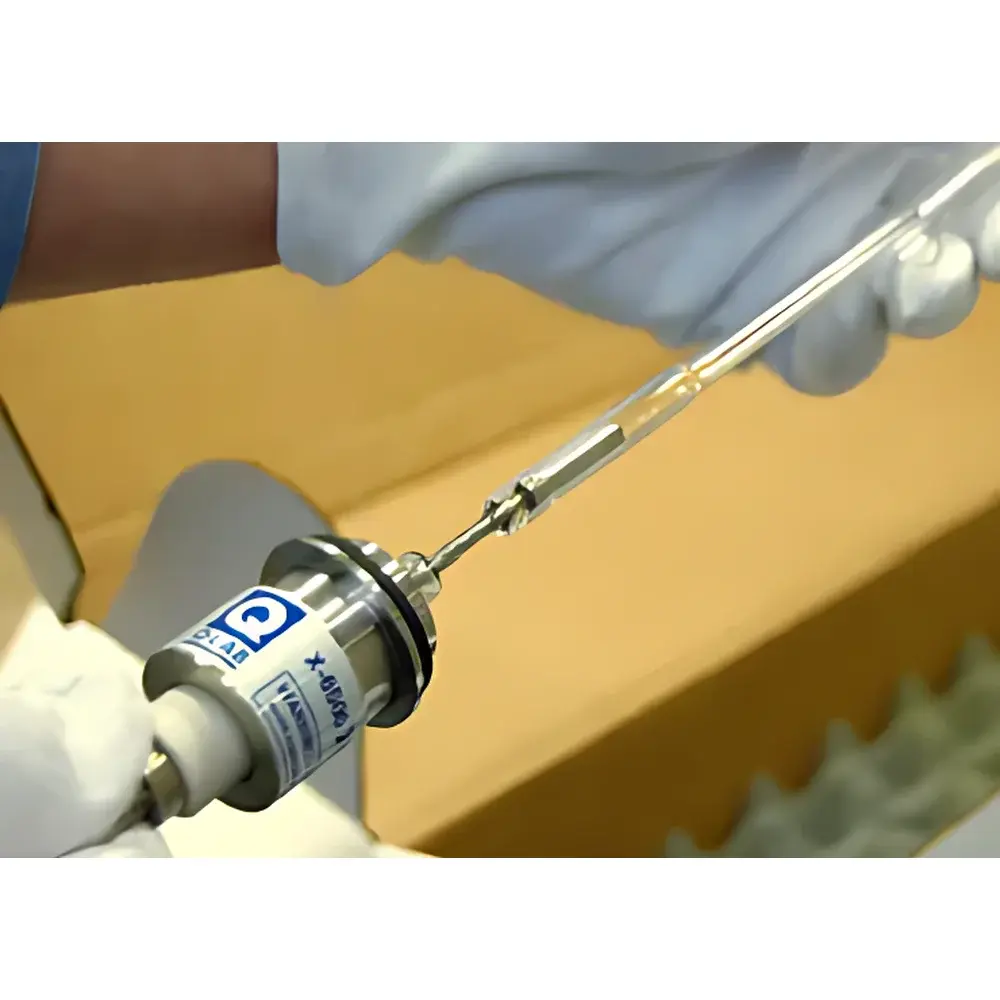
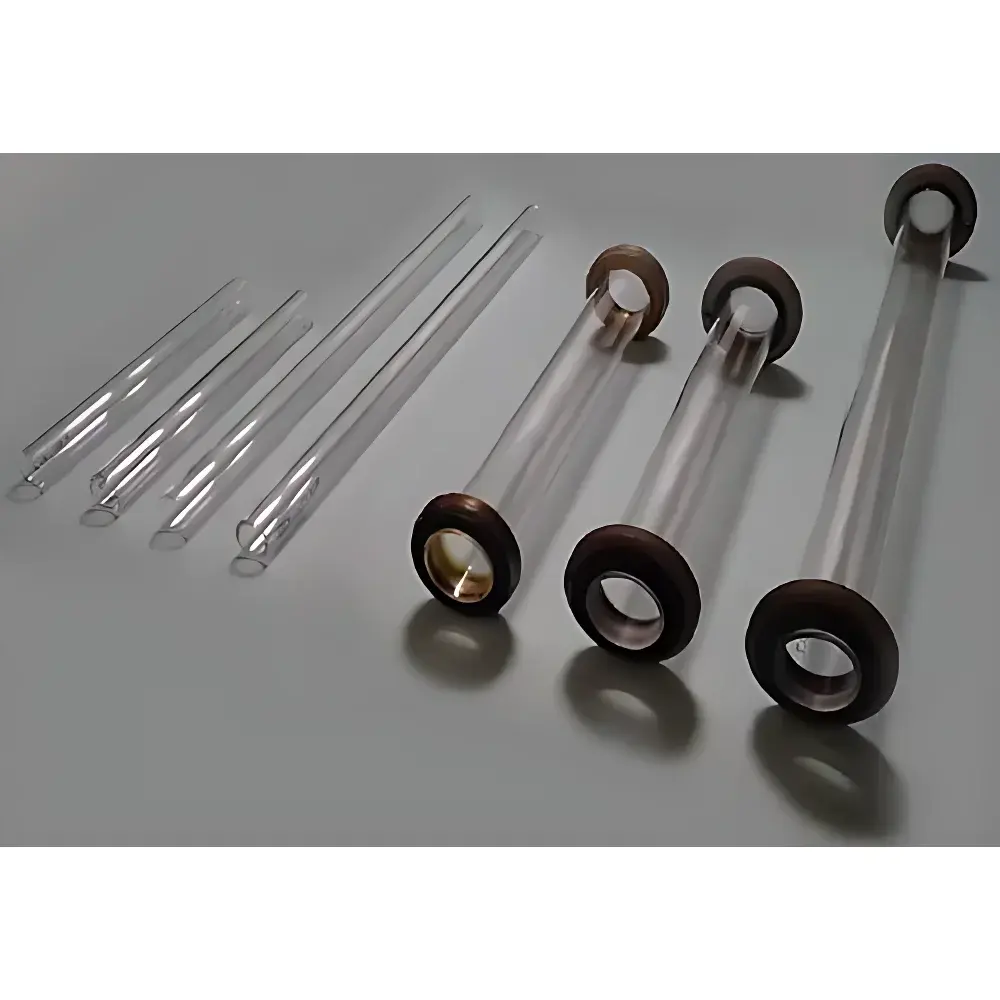
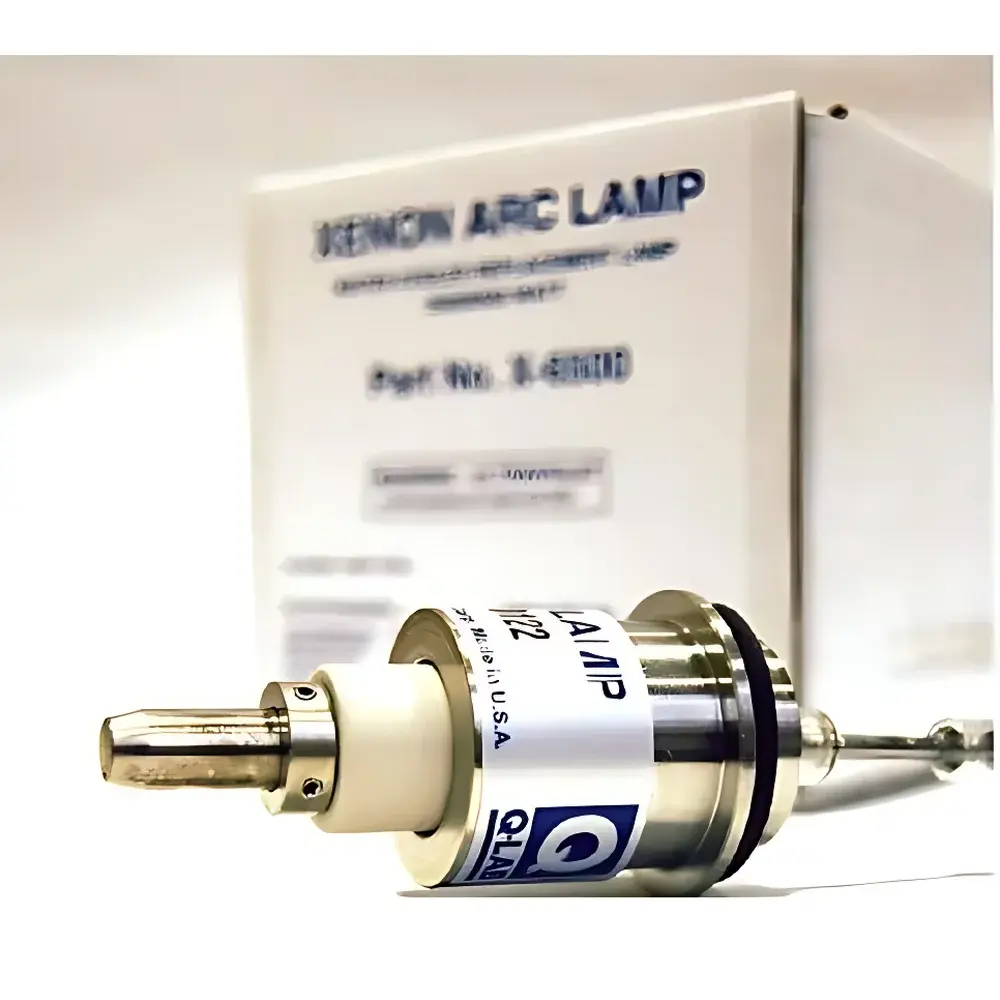
Q-LAB Q-SUN X-1800 Original Xenon Arc Lamp Tube
| Brand | Q-LAB |
|---|---|
| Origin | USA |
| Lamp Type | Xenon Arc Lamp |
| Rated Power | 1800 W |
| Cooling Method | Air-Cooled |
| Rated Lifetime | 1500 hours |
| Compatible Models | Q-SUN Xe-1, Q-SUN Xe-3 |
| Spectral Range | Full-spectrum (290–800 nm), UV-Visible-NIR |
| Mounting Configuration | External Irradiation Source |
| Filter Dependency | Requires Borosilicate Outer Sleeve + Multi-element Inner Filter Assembly (7-piece per set) |
| Compliance | ASTM G155, ISO 11341, ISO 4892-2, AATCC TM16, SAE J2527 |
Overview
The Q-LAB Q-SUN X-1800 Original Xenon Arc Lamp Tube is a precision-engineered air-cooled discharge lamp designed exclusively for use in Q-SUN xenon-arc weathering test chambers—specifically the Xe-1 and Xe-3 models. As the core radiation source, it delivers a continuous full-spectrum output spanning 290 nm to 800 nm, closely approximating terrestrial solar irradiance under standardized atmospheric conditions. Unlike narrowband UV sources or fluorescent lamps, xenon arc technology provides spectrally stable emission across ultraviolet (UV), visible (VIS), and near-infrared (NIR) regions—enabling physically realistic simulation of photodegradation mechanisms such as polymer chain scission, pigment fading, and coating delamination. The lamp operates within a precisely controlled thermal and electrical environment, with spectral fidelity maintained via integrated optical filtering systems. Its 1800 W nominal power rating ensures sufficient irradiance intensity to accelerate aging while preserving spectral balance—critical for correlating laboratory exposure results with real-world service life.
Key Features
- Air-cooled xenon arc design optimized for thermal stability and long-term radiometric consistency
- 1500-hour rated service life under standard Q-SUN operating conditions (1.10 W/m² @ 340 nm)
- Designed for external irradiation configuration—lamp positioned outside the test chamber to minimize heat load on specimens
- Compatible with Q-SUN’s proprietary multi-stage filter architecture: borosilicate outer sleeve + dual-layer, seven-element inner filter assembly
- Meets spectral power distribution (SPD) requirements defined in ASTM G155 Annex A1, ISO 4892-2 Method A, and AATCC TM16 Option 3
- Manufactured to Q-LAB’s original equipment specifications—guarantees dimensional fit, electrical characteristics, and spectral output reproducibility
- No mercury content; RoHS-compliant construction
Sample Compatibility & Compliance
The X-1800 lamp tube supports testing of diverse material classes—including automotive coatings, architectural sealants, textile dyes, plastic composites, and aerospace polymers—under internationally recognized exposure protocols. When paired with appropriate filter combinations (e.g., Daylight-Q/B02 for window-glass-filtered sunlight simulation), it enables compliance with ISO 11341 (paints and varnishes), ASTM D4329 (plastics), SAE J2527 (automotive interior), and AATCC TM16 (textile colorfastness). All filter configurations are traceable to NIST-calibrated reference spectroradiometers and validated per ISO/IEC 17025-accredited procedures. The lamp itself does not require recalibration; however, routine irradiance monitoring using Q-LAB’s calibrated UV sensors (e.g., UV-B or UV-A broadband detectors) is recommended to ensure continued conformance with test method irradiance setpoints.
Software & Data Management
While the X-1800 lamp is a hardware component, its performance integration is fully supported by Q-SUN’s embedded control firmware and Q-LAB’s optional Q-Sun Software Suite. This software enables automated irradiance control, real-time spectral monitoring (via optional spectroradiometer integration), and audit-trail generation compliant with FDA 21 CFR Part 11 and GLP/GMP documentation requirements. Test logs—including lamp runtime, cumulative joules/cm², and filter usage history—are stored with time-stamped metadata and exportable in CSV or PDF formats. Firmware updates preserve backward compatibility with legacy Xe-1/Xe-3 controllers, ensuring seamless replacement without system revalidation.
Applications
This lamp is routinely deployed in quality assurance laboratories for accelerated weathering validation of materials exposed to outdoor environments. Key application domains include: evaluation of UV stabilizer efficacy in polyolefins; assessment of chalking resistance in exterior architectural coatings; correlation studies between laboratory exposure and field performance of automotive trim components; development of fade-resistant textile dye systems; and regulatory submission testing for medical device packaging per ISO 10993-12. Its full-spectrum fidelity makes it especially critical for applications where visible-light-driven photochemical reactions (e.g., photooxidation of organic pigments) or NIR-induced thermal aging contribute significantly to failure modes.
FAQ
What is the expected operational lifetime of the X-1800 lamp under standard test conditions?
Rated lifetime is 1500 hours at 1.10 W/m² irradiance @ 340 nm, assuming proper cooling, voltage regulation, and adherence to Q-LAB’s lamp warm-up/cool-down cycle protocol.
Can the X-1800 lamp be used in Q-SUN B02 chambers?
No—the B02 model requires the X-1850 lamp, which is water-cooled and electrically distinct; cross-use may damage the chamber’s ballast or cooling system.
Do I need to replace the filters when changing the lamp?
Filters are not consumables; they remain optically stable over time unless physically damaged or contaminated. Replacement is only required if cracked, etched, or coated with residue that affects transmission.
Is this lamp compatible with Atlas Weather-Ometer® systems?
The X-1800 is not mechanically or electrically compatible with Atlas Ci-series instruments. Q-LAB offers separate water-cooled replacement lamps (e.g., X-3000 series) for Atlas platforms.
How is spectral output verified during lamp qualification?
Each production batch undergoes spectroradiometric verification against Q-LAB’s master reference lamp using a double-monochromator spectroradiometer traceable to NIST Standard Reference Material 2065.




