
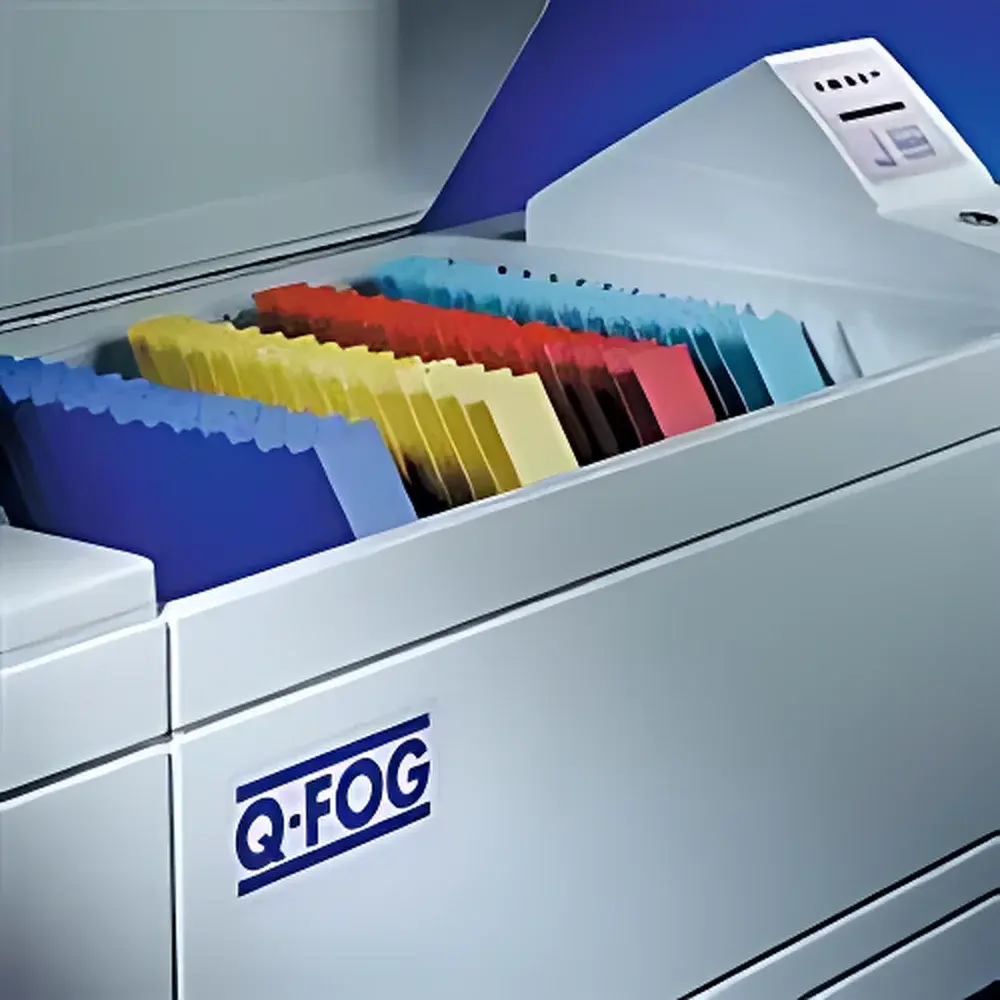
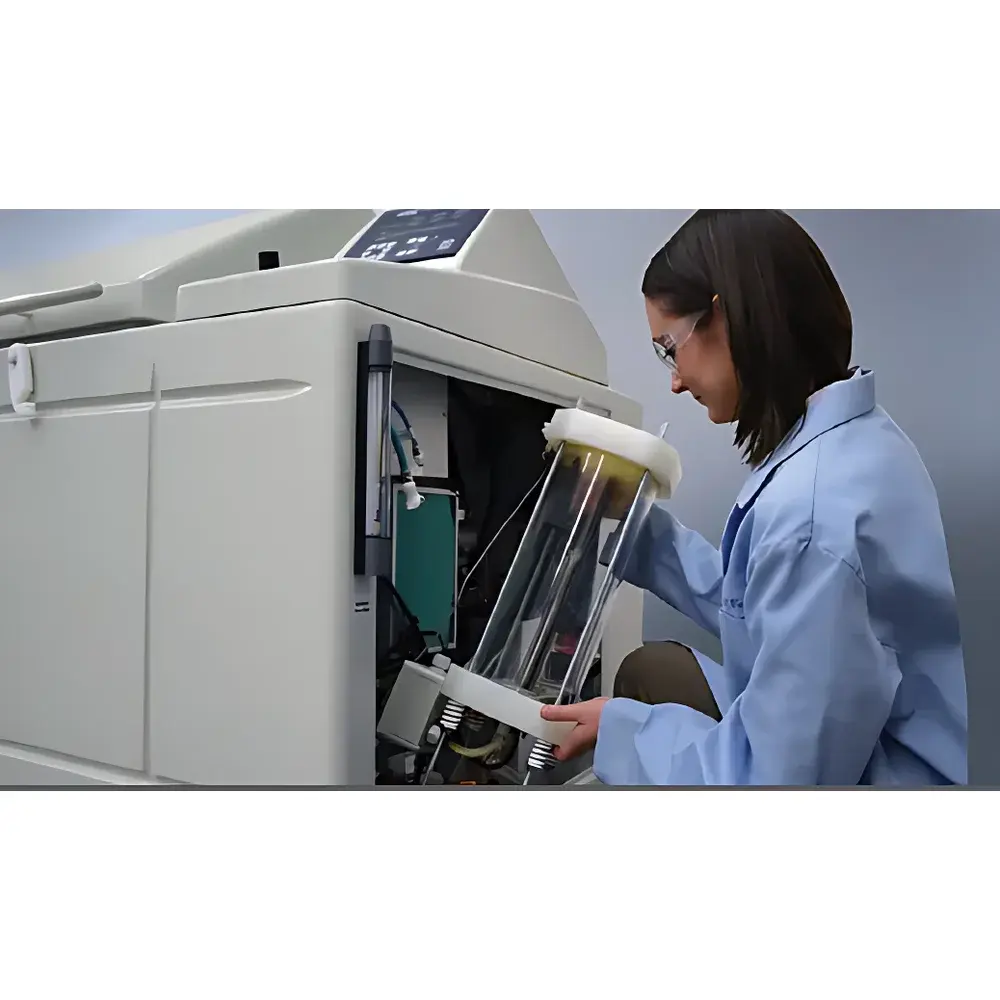
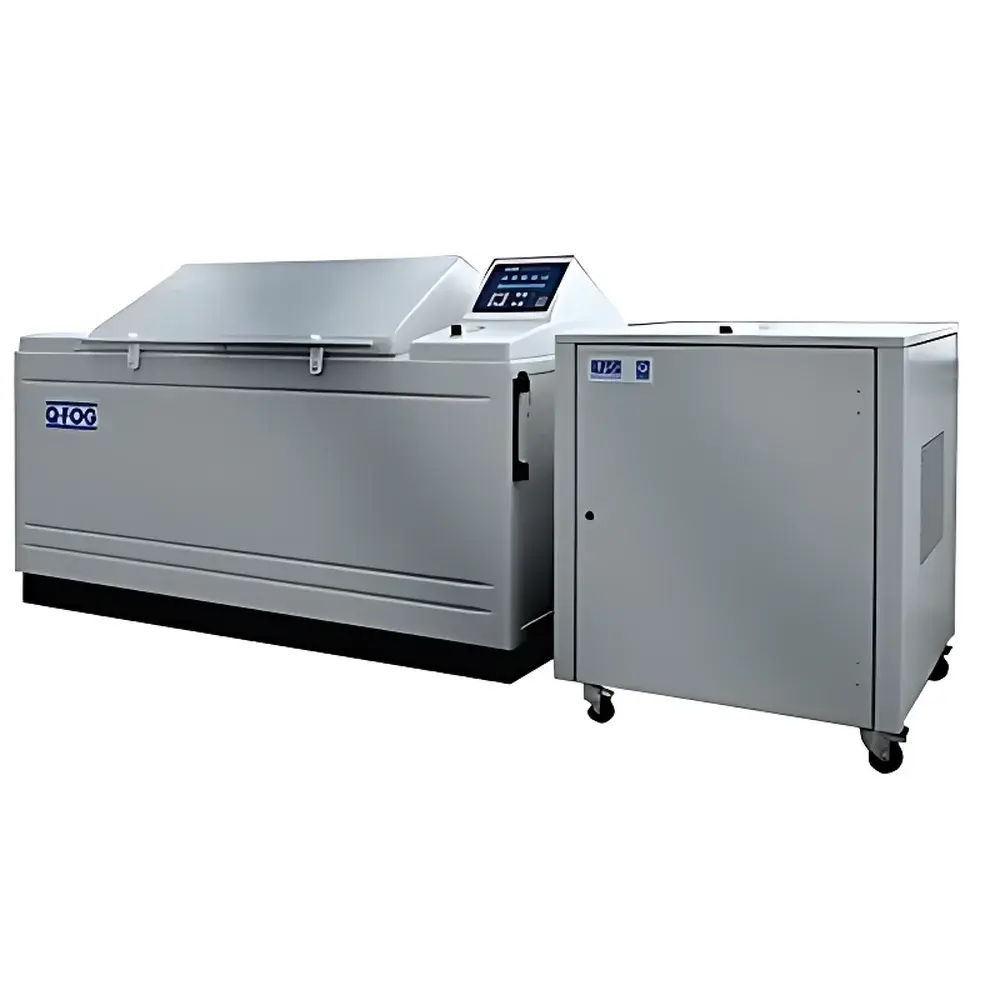
Q-Lab Q-FOG Gas Corrosion Test Chamber
| Brand | Q-LAB |
|---|---|
| Origin | USA |
| Model | Q-FOG Gas Corrosion Test Chamber |
| Temperature Range (°C) | Consult Technical Specifications |
| Corrosive Gas Compatibility | SO₂, H₂S, Cl₂, NO₂, CO₂, NH₃ (configurable per test standard) |
| Chamber Volume | Standard 60 L / 110 L / 1400 L options |
| Control System | Integrated microprocessor-based controller with real-time monitoring and programmable cycle sequencing |
| Compliance | ASTM B809, IEC 60068-2-60, ISO 21207, DIN EN ISO 16701, JIS Z 2371 (gas corrosion variants), UL/CSA certified electrical safety |
Overview
The Q-LAB Q-FOG Gas Corrosion Test Chamber is an engineered environmental simulation system designed for accelerated evaluation of material degradation under controlled gaseous corrosive atmospheres. Unlike conventional salt spray chambers, this instrument integrates precise gas dosing, humidity modulation, and temperature regulation to replicate complex atmospheric corrosion mechanisms—particularly those driven by sulfur dioxide (SO₂), hydrogen sulfide (H₂S), chlorine (Cl₂), nitrogen dioxide (NO₂), carbon dioxide (CO₂), and ammonia (NH₃). It operates on the principle of dynamic gas-phase electrochemical attack, where reactive gases dissolve into surface moisture films to form electrolytes that initiate and propagate localized corrosion (e.g., pitting, crevice corrosion, tarnishing of metals, and polymer embrittlement). The chamber is purpose-built for laboratories requiring reproducible, standards-compliant exposure protocols in automotive, electronics, aerospace, and infrastructure materials R&D and quality assurance workflows.
Key Features
- Multi-gas delivery architecture with mass flow controllers (MFCs) enabling independent, traceable concentration control of up to six corrosive gases simultaneously
- Integrated humidity generation via steam injection or ultrasonic humidification (95–100% RH range, ±2% RH accuracy)
- Precise temperature control from ambient +10°C to 60°C (±0.5°C stability over full operating range)
- Programmable multi-step test cycles combining gas exposure, dry-off, high-humidity soak, and optional condensation phases
- Corrosion-resistant stainless steel 316L interior with PTFE-coated internal plumbing and gas manifolds
- Real-time monitoring of chamber conditions—including gas concentration (ppm/v), RH, temperature, and pressure—via embedded sensors with data logging at user-defined intervals
- Compliance-ready audit trail: All parameter changes, cycle starts/stops, and alarm events are timestamped and stored with operator ID (supports 21 CFR Part 11 compliant configurations upon request)
Sample Compatibility & Compliance
The Q-FOG Gas Corrosion Test Chamber accommodates flat-panel specimens up to 300 mm × 300 mm × 50 mm (standard rack configuration), with customizable fixture options for PCBs, connectors, coated fasteners, printed circuit assemblies, and passive optical components. Its design adheres to international test method requirements including ASTM B809-15 (Standard Practice for Fogging Tests in a Humid Atmosphere Containing Sulfur Dioxide), IEC 60068-2-60 (Environmental testing – Part 2-60: Tests – Test Ke: Flowing mixed gas corrosion test), ISO 21207:2017 (Corrosion of metals and alloys — Accelerated corrosion tests for evaluating resistance to atmospheric corrosion), and DIN EN ISO 16701 (Corrosion of metals and alloys — Accelerated corrosion test involving cyclic exposure to acidified salt spray, dry and humid conditions). Optional calibration certificates traceable to NIST standards are available for all critical sensors.
Software & Data Management
The chamber is operated via Q-LAB’s proprietary Q-Suite™ Professional software (Windows-based), which provides intuitive graphical programming of multi-segment corrosion profiles, remote monitoring via Ethernet/IP, and automated report generation in PDF or CSV format. All raw sensor data—including gas concentration trends, RH hysteresis curves, and thermal ramp profiles—are stored with metadata (test ID, operator, start/end time, version-controlled method file). Data integrity safeguards include write-protected archives, encrypted backups, and configurable user access levels (administrator, technician, viewer). For regulated environments, optional 21 CFR Part 11 add-ons provide electronic signature capability, audit trail export, and system validation documentation packages aligned with GLP and GMP frameworks.
Applications
- Evaluation of corrosion resistance in automotive trim materials, battery enclosures, and EV charging interfaces exposed to urban/industrial atmospheres
- Qualification of conformal coatings and solder mask durability on high-reliability PCBs per IPC-STD-006 and JEDEC JESD22-B102
- Accelerated aging studies of silver-plated contacts, copper alloys, and aluminum alloys used in telecom infrastructure
- Validation of protective packaging efficacy for sensitive optoelectronic devices during overseas shipping and storage
- Development and verification of corrosion inhibitors for aerospace fasteners and composite-metal hybrid joints
- Supporting ISO 12944 C3–C5 corrosion category classification for industrial coating systems
FAQ
What gas concentrations can the Q-FOG Gas Corrosion Chamber deliver?
Typical operational ranges: SO₂ (1–50 ppm), H₂S (0.1–10 ppm), Cl₂ (0.5–20 ppm), NO₂ (1–30 ppm), CO₂ (100–5000 ppm), NH₃ (1–50 ppm); exact limits depend on chamber volume and selected MFC configuration.
Is deionized water required for operation?
Yes—high-purity deionized water (resistivity ≥ 1 MΩ·cm) is mandatory for steam humidification and gas dissolution processes to prevent mineral deposition and sensor drift.
Can the chamber be integrated into a centralized lab automation network?
Yes—Ethernet port supports Modbus TCP and OPC UA protocols; Q-Suite™ Professional includes API hooks for LIMS and MES integration.
Does the system meet CE and UKCA marking requirements?
All Q-FOG Gas Corrosion Chambers shipped from Q-LAB’s USA facility comply with EMC Directive 2014/30/EU and Low Voltage Directive 2014/35/EU, and carry CE marking; UKCA marking is available upon request with UK-based conformity assessment.
What maintenance intervals are recommended?
Gas filters: every 6 months or 2000 hours; MFC calibration: annually or after major gas system servicing; chamber interior cleaning: after each test series using pH-neutral, chloride-free detergent.



