
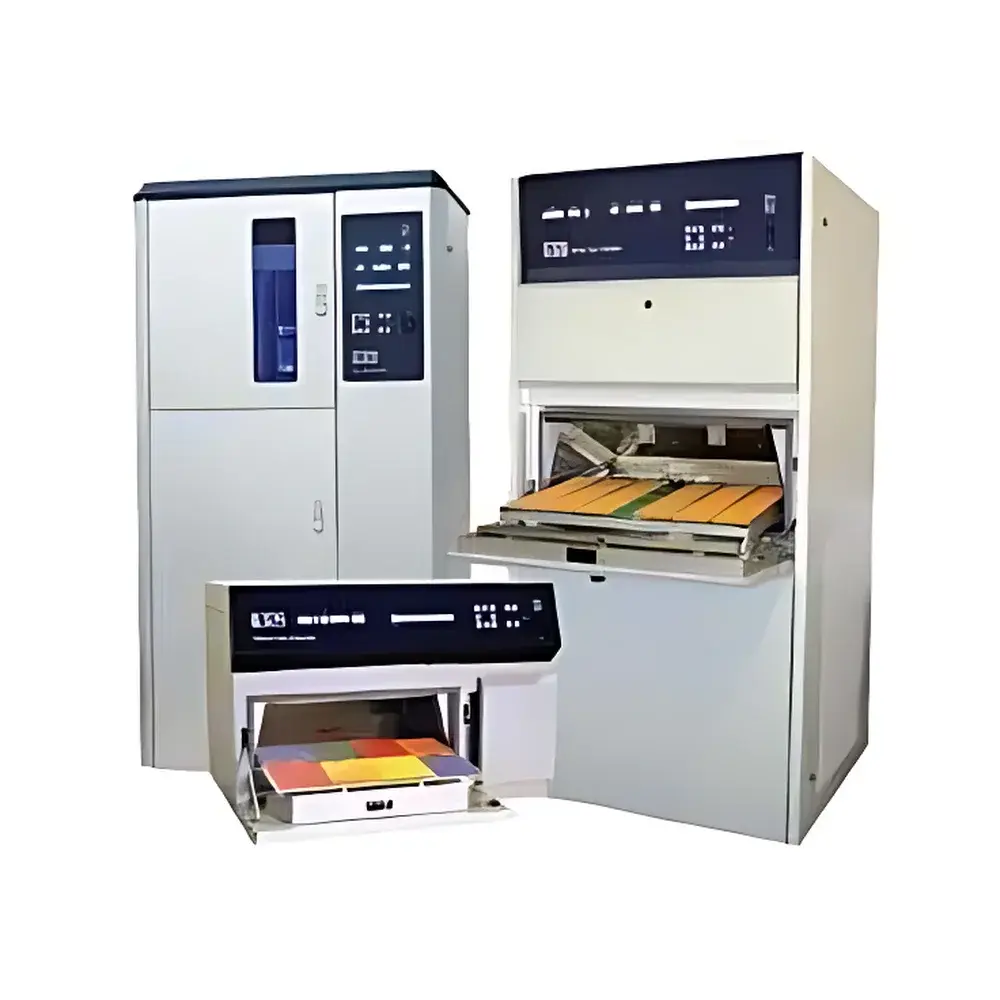
Q-LAB Xe-3 Xenon Arc Weathering Test Chamber
| Brand | Q-LAB |
|---|---|
| Origin | USA |
| Manufacturer Type | Authorized Distributor |
| Product Origin | Imported |
| Model | Q-LAB Xe-3 |
| Xenon Lamp Power | 1800 W |
| Temperature Range | Ambient to 85 °C (operational, controlled) |
| Humidity Range | 10–95% RH (non-condensing, programmable) |
| Lamp Configuration | Three air-cooled xenon arc lamps |
| Lamp Life | Approx. 1500 hours |
| Sample Tray Dimensions | 451 mm × 718 mm (slide-out design) |
| Optional Functions | Single spray, dual spray, back-spray, low-temperature operation |
Overview
The Q-LAB Xe-3 Xenon Arc Weathering Test Chamber is an engineered solution for accelerated material aging under simulated solar radiation. Utilizing three independent air-cooled 1800 W xenon arc lamps, the system delivers full-spectrum irradiance closely matching natural sunlight—spanning ultraviolet (UV), visible, and near-infrared (NIR) wavelengths. This spectral fidelity enables high-fidelity simulation of photodegradation mechanisms critical for evaluating color shift, gloss loss, chalking, cracking, and polymer chain scission in organic materials. Unlike narrowband UV-only testers, the Xe-3 replicates the integrated photochemical and thermal stress profiles encountered in real-world outdoor exposure, making it indispensable for ASTM G155, ISO 4892-2, SAE J2527, and AATCC TM16-compliant testing protocols.
Key Features
- Triple-lamp architecture with individually replaceable air-cooled xenon arc lamps—reducing operational cost versus water-cooled alternatives and enabling rapid lamp service without system disassembly.
- Slide-out sample tray (451 mm × 718 mm) accommodating bulky or three-dimensional specimens—including automotive trim, architectural panels, and coated metal substrates—without requiring sample reorientation.
- Dual-spray capability: Unique among full-size xenon chambers, the Xe-3 supports simultaneous front and secondary liquid application (e.g., acid rain simulants, detergent solutions, or saline mists) to replicate complex environmental deposition events per ISO 20340 and ASTM D4329 Annex A3.
- Programmable humidity control (10–95% RH) synchronized with irradiance and temperature cycles, ensuring precise replication of diurnal moisture absorption/desorption dynamics.
- Modular optical filtering system: Interchangeable Daylight (F/Q/B/B), Window Glass (Q/B/SL/SF-5/IR), and Extended UV (Q/B) filters—each certified to maintain spectral integrity over extended use, with no measurable degradation after >5 years of continuous operation.
Sample Compatibility & Compliance
The Xe-3 accommodates flat, curved, and irregularly shaped specimens up to 50 mm thick when mounted on the standard tray. Its open-chamber geometry permits custom fixture integration for non-standard geometries (e.g., textile swatches on frames, elastomer seals, or composite laminates). All configurations comply with GLP and GMP documentation requirements when paired with Q-LAB’s optional audit-trail-enabled software. The chamber meets essential electromagnetic compatibility (EMC) and safety standards per IEC 61000-6-3 and UL 61010-1. Filter-specific irradiance calibrations are traceable to NIST-certified reference spectroradiometers, supporting ISO/IEC 17025-accredited laboratory workflows.
Software & Data Management
Control and monitoring are managed via Q-LAB’s proprietary SolarEye™ software (v5.2+), compliant with FDA 21 CFR Part 11 for electronic records and signatures. The interface supports multi-step test profiles with ramped irradiance, temperature, humidity, and spray sequences—all logged with time-stamped metadata and checksum-verified data integrity. Real-time spectral monitoring (optional UV/VIS/NIR sensor array) provides closed-loop irradiance regulation within ±2% of setpoint. Export formats include CSV, XML, and PDF reports suitable for regulatory submissions. Audit trails record all user actions—including parameter changes, calibration events, and filter replacements—with immutable timestamps and operator IDs.
Applications
The Xe-3 serves as a primary tool for R&D and QC laboratories validating durability across industries: automotive OEMs assess dashboard materials against SAE J2412; coatings manufacturers verify exterior paint resistance per ISO 11341; textile producers quantify colorfastness to light per ISO 105-B02; and photovoltaic module suppliers perform IEC 61215-2 MQT10 qualification. Its dual-spray function supports corrosion-accelerated weathering studies for marine-grade alloys (ASTM D5894), while extended-UV filtration enables rapid screening of UV stabilizer packages in polyolefins and polycarbonates.
FAQ
What spectral ranges does the Xe-3 replicate, and how is spectral stability maintained?
The Xe-3 reproduces 295–2500 nm irradiance with spectral match tolerances defined by CIE 85:2014. Long-life borosilicate and quartz filters retain transmission characteristics over >5,000 hours; spectral validation is performed quarterly using calibrated spectroradiometry.
Can the Xe-3 meet ISO 4892-2 Cycle 1 and Cycle 3 simultaneously?
Yes—the controller executes sequential or overlapping irradiance, temperature, and humidity profiles per ISO 4892-2 Annex B. Dual-spray functionality enables concurrent wet/dry cycling required for Cycle 3’s alternating rain and dark periods.
Is lamp alignment or recalibration required after lamp replacement?
No—lamps mount in precision-machined sockets with factory-set optical centering. System self-verifies lamp position and output during startup via internal photodiode array.
How is humidity controlled without condensation on samples?
A dedicated humidification system with PID-controlled steam injection and chilled mirror hygrometry maintains RH setpoints within ±3% tolerance while preventing dew-point exceedance through dynamic chamber-wall temperature modulation.
Does the Xe-3 support remote diagnostics and preventive maintenance alerts?
Yes—SolarEye™ integrates with Q-LAB’s cloud-based Q-Cloud platform for secure remote access, predictive lamp life estimation, and automated calibration reminder notifications based on cumulative irradiance dose.
Related Products



