
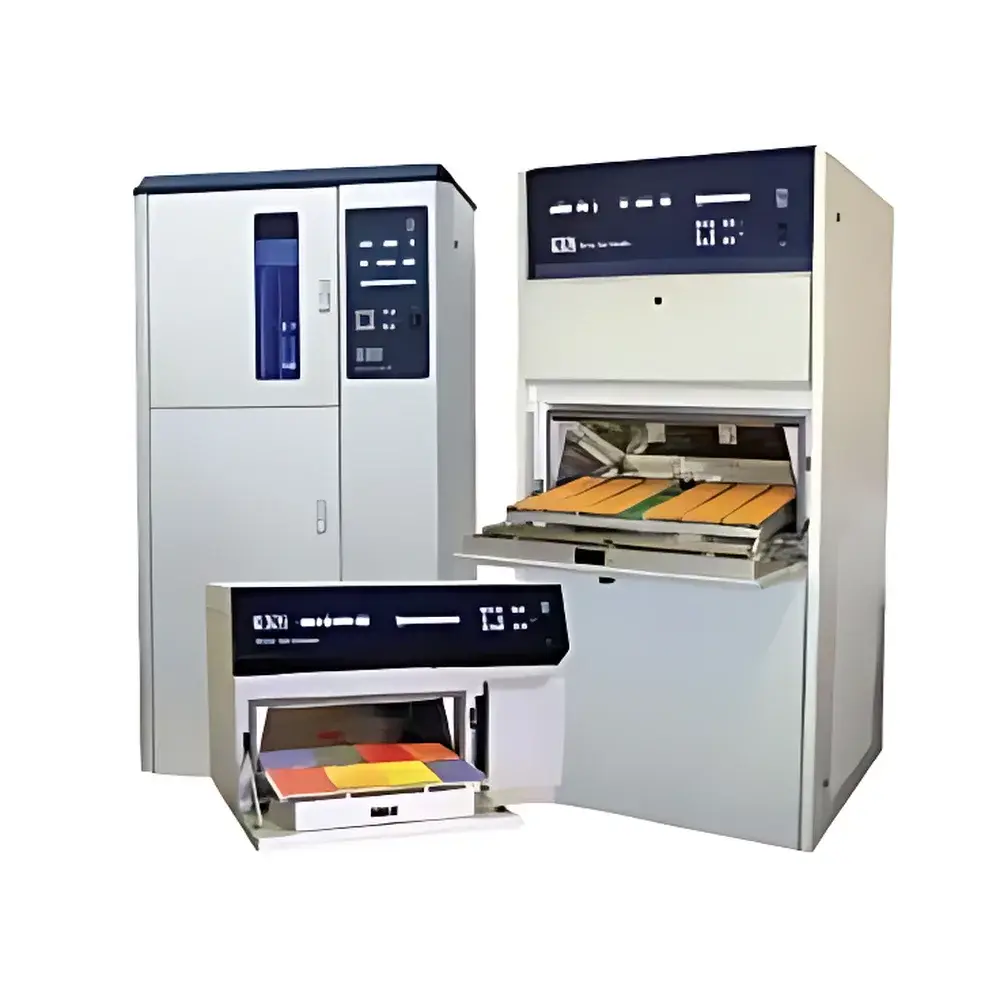
Q-LAB PWC Xenon Arc Weathering Test Chamber
| Brand | Q-LAB |
|---|---|
| Origin | China (Hubei) |
| Manufacturer Type | Authorized Distributor |
| Product Category | Domestic |
| Model | PWC |
| Quotation | Available Upon Request |
| Xenon Lamp Power | Configurable per IEC 60068-2-5 & ASTM G155 |
| Temperature Range | –10°C to +80°C (operational, ±0.5°C uniformity) |
| Humidity Range | 10% to 95% RH (±3% RH accuracy) |
Overview
The Q-LAB PWC Xenon Arc Weathering Test Chamber is an engineered environmental simulation system designed for accelerated material degradation testing under controlled solar radiation, thermal, and hygrothermal stress conditions. Based on the internationally recognized xenon arc exposure methodology per ASTM G155, ISO 4892-2, and IEC 60068-2-5, the chamber replicates full-spectrum sunlight—including UV-A, UV-B, visible, and near-infrared wavelengths—using air-cooled xenon lamps with spectral output closely matching terrestrial solar irradiance (AM1.5). Its modular architecture supports configurable test configurations: base irradiation-only (Xe-1-B), irradiation with water spray (Xe-1-S), irradiation with refrigerated cooling (Xe-1-BC), or fully integrated irradiation, spray, and refrigeration (Xe-1-SC). This flexibility enables precise emulation of diverse real-world climatic exposures—from desert solar loading to coastal humidity cycling—while maintaining traceable, repeatable, and compliant test conditions essential for R&D validation, quality assurance, and regulatory submissions.
Key Features
- Full-spectrum xenon lamp system with calibrated spectral power distribution (SPD) matching CIE No. 85 reference solar spectrum
- Solar Eye irradiance control system with real-time feedback at user-selectable monitoring wavelengths: 340 nm (UV-A critical for polymer degradation), 420 nm (broadband UV/visible), or TUV (total ultraviolet)
- Interchangeable optical filter sets enabling standardized exposure profiles: Daylight-Q (direct outdoor), Window-Q (indoor through glass), UV-Q/B (extended UV for automotive/aerospace qualification)
- Integrated water spray subsystem with dual top-mounted nozzles delivering deionized water in programmable dark/light cycles per ASTM D4329 and ISO 20340
- Optional refrigerated cooling unit enabling sub-ambient temperature operation down to –10°C, supporting low-temperature stability testing of thermally sensitive polymers and coatings
- Intuitive touchscreen controller with multilingual interface (English, Chinese, Spanish, French, German), built-in self-diagnostic routines, and automated safety shutdown protocols
- Compliant with Class II electrical safety standards (IEC 61000-4 series), CE marking, and RoHS directive requirements
Sample Compatibility & Compliance
The PWC accommodates flat-panel specimens up to 150 mm × 300 mm (standard rack configuration), with optional custom fixtures for 3D parts, textiles, and automotive trim components. It meets the physical and operational requirements of key international standards including ASTM G155 (xenon-arc exposure apparatus), ISO 4892-2 (plastics—methods of exposure to laboratory light sources), ISO 11341 (paints and varnishes—artificial weathering), and SAE J2527 (automotive exterior materials). All irradiance calibration procedures follow NIST-traceable spectroradiometric methods, and chamber uniformity is validated per ASTM E2088 Annex A1. The system supports GLP-compliant audit trails when integrated with Q-LAB’s optional Q-Sun Software Suite, fulfilling documentation requirements for FDA 21 CFR Part 11–governed environments where electronic records and signatures are mandated.
Software & Data Management
While the PWC operates via its embedded controller, full data acquisition and long-term test management are enabled through Q-LAB’s Q-Sun Software Suite (sold separately). This Windows-based platform provides real-time graphing of irradiance, chamber temperature, black panel temperature, and relative humidity; stores all parameter logs with timestamped metadata; and exports CSV/Excel-compatible reports for internal QA review or third-party certification bodies. Audit trail functionality includes user login tracking, parameter change history, and electronic signature capture—fully aligned with 21 CFR Part 11 Annex 11 and ISO/IEC 17025 documentation integrity requirements. Remote monitoring via Ethernet or optional Wi-Fi module allows lab managers to oversee multiple chambers from centralized workstations without compromising data security.
Applications
The PWC serves as a core tool in material durability laboratories across industries requiring predictive aging data. In automotive OEMs and Tier-1 suppliers, it validates exterior trim, headlamp lenses, and interior upholstery against SAE J2412 and J2527. Coating manufacturers use it for ISO 11341-compliant evaluation of gloss retention, chalking, and color shift in architectural and industrial finishes. Polymer compounders rely on its reproducible UV dose delivery for ASTM D4329-compliant PVC stabilization studies. Textile labs apply it per AATCC TM16 for fade resistance assessment of outdoor fabrics. Additionally, photovoltaic encapsulant developers employ the chamber for IEC 61215-2 MQT10-compliant UV preconditioning prior to thermal cycling and damp heat tests.
FAQ
What standards does the Q-LAB PWC comply with?
It conforms to ASTM G155, ISO 4892-2, IEC 60068-2-5, ISO 11341, SAE J2527, and AATCC TM16—subject to correct filter selection and calibration protocol.
Is the xenon lamp air-cooled or water-cooled?
The PWC uses air-cooled xenon lamps, offering lower infrastructure requirements, reduced maintenance frequency, and extended lamp life (~1500 hours typical).
Can irradiance be controlled at multiple wavelengths simultaneously?
No—Solar Eye control operates at one selected wavelength (340 nm, 420 nm, or TUV) per test cycle to ensure metrological traceability and compliance with standard methods.
Does the system support automated calibration verification?
Yes—the controller performs periodic self-checks of sensor drift and prompts scheduled recalibration using NIST-traceable reference sensors (calibration kit sold separately).
What water purity is required for the spray function?
Deionized water with conductivity ≤1 µS/cm is mandatory to prevent nozzle clogging and mineral deposition on test specimens.



