
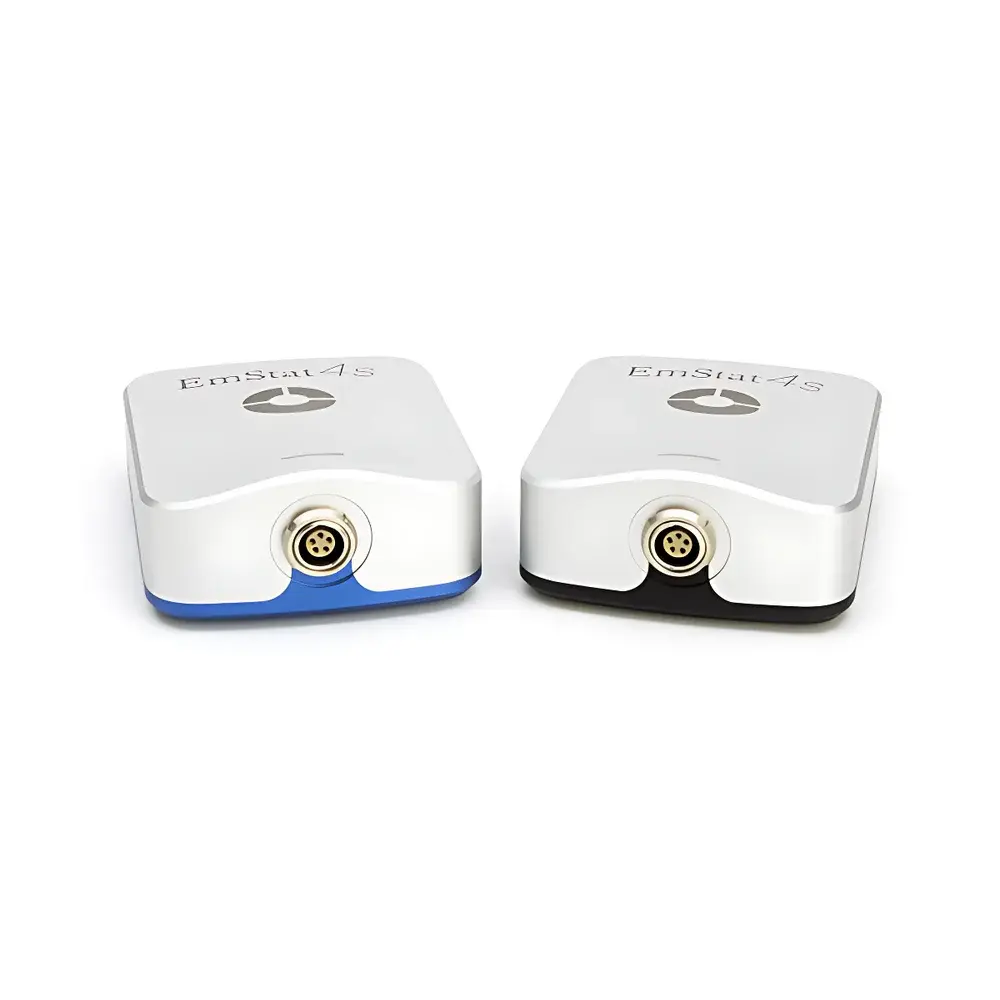
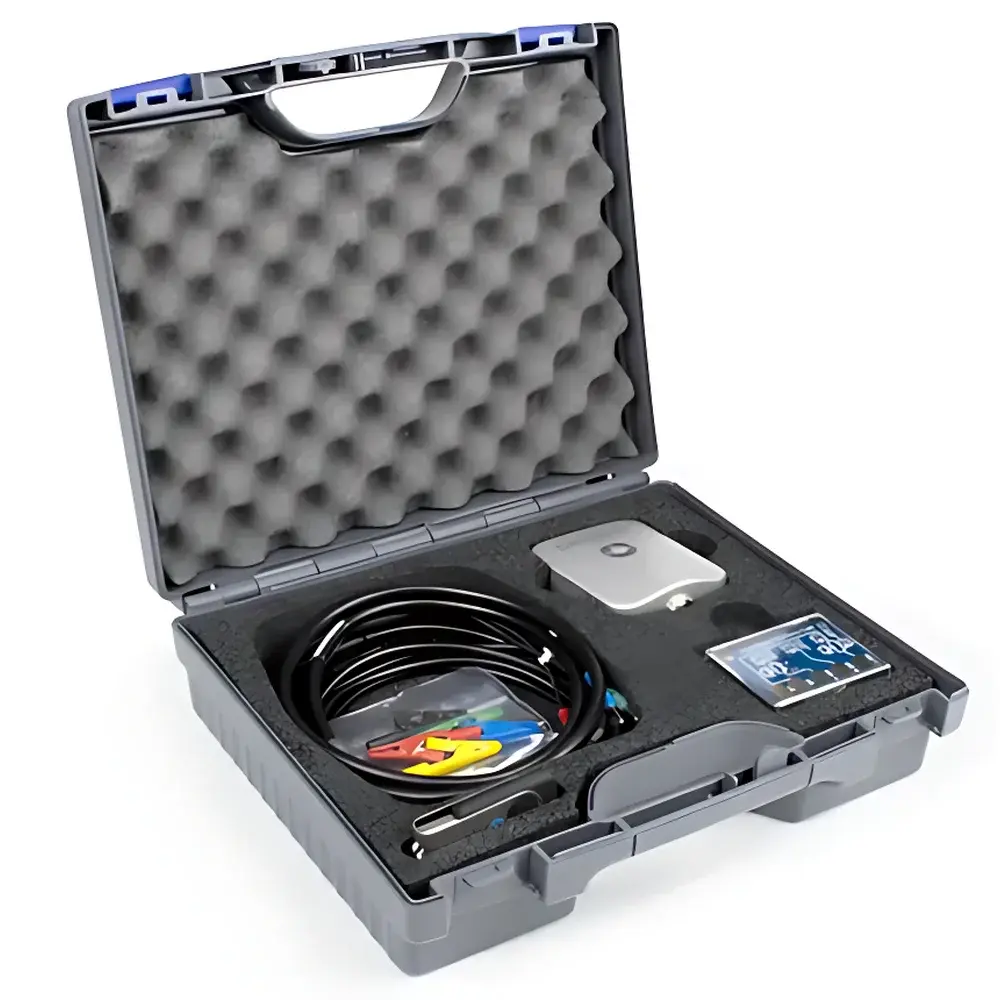
PalmSens EmStat4S Portable Miniature Electrochemical Workstation with EIS (10 µHz to 200 kHz)
| Brand | PalmSens |
|---|---|
| Origin | Netherlands |
| Model | EmStat4S |
| Instrument Type | Portable Electrochemical Workstation |
| Channel Count | Single-Channel |
| Current Range | ±30 mA |
| Current Accuracy | ≤ 0.2% |
| Potential Accuracy | ≤ 0.2% |
| Potentiostatic Range | ±3 V |
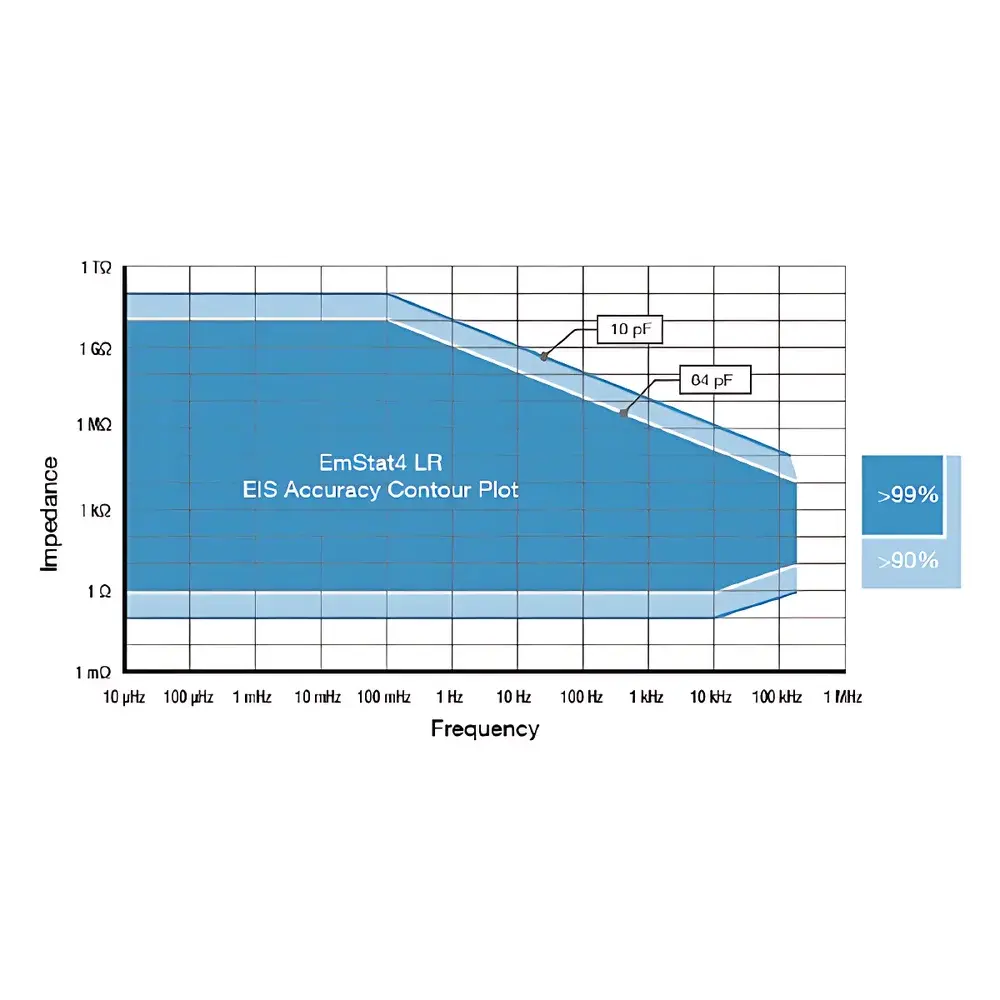
| EIS Frequency Range | 10 µHz to 200 kHz |
Overview
The PalmSens EmStat4S is a compact, USB-powered portable electrochemical workstation engineered for high-fidelity potentiostatic, galvanostatic, and electrochemical impedance spectroscopy (EIS) measurements in field-deployable and resource-constrained laboratory environments. Built on a low-noise, high-stability analog front-end architecture, the EmStat4S implements true four-electrode (WE, RE, CE, and ground) control with integrated analog signal conditioning optimized for both low-current (nA-level) and medium-current (mA-level) applications. Its core measurement principle relies on digital feedback-controlled voltage/current sourcing combined with synchronous demodulation for EIS, enabling precise determination of interfacial charge transfer resistance, double-layer capacitance, diffusion-controlled processes, and surface film properties across six decades of frequency—from ultra-slow kinetic studies at 10 µHz up to fast electrode kinetics and solution-phase characterization at 200 kHz. Designed for compliance with ISO/IEC 17025–aligned electrochemical testing workflows, the EmStat4S supports traceable calibration protocols and operates within defined uncertainty budgets per IUPAC-recommended practices for electroanalytical instrumentation.
Key Features
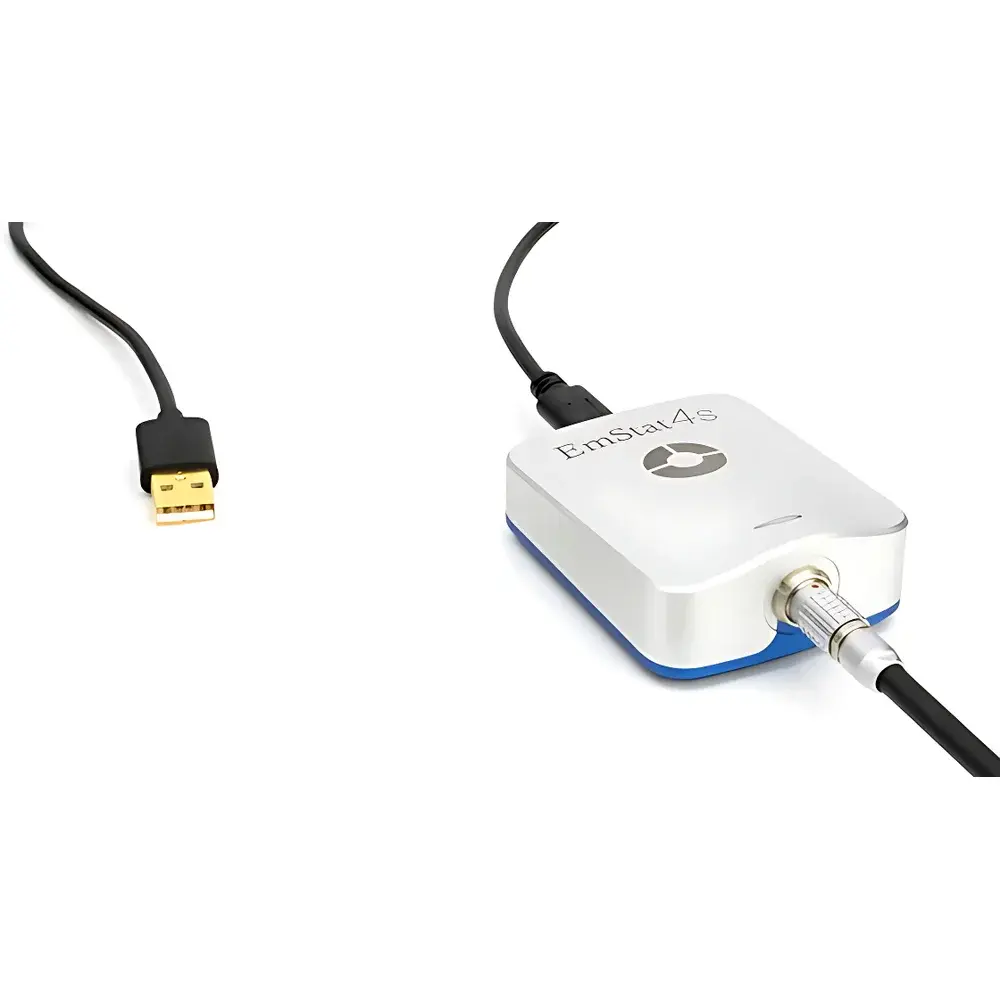
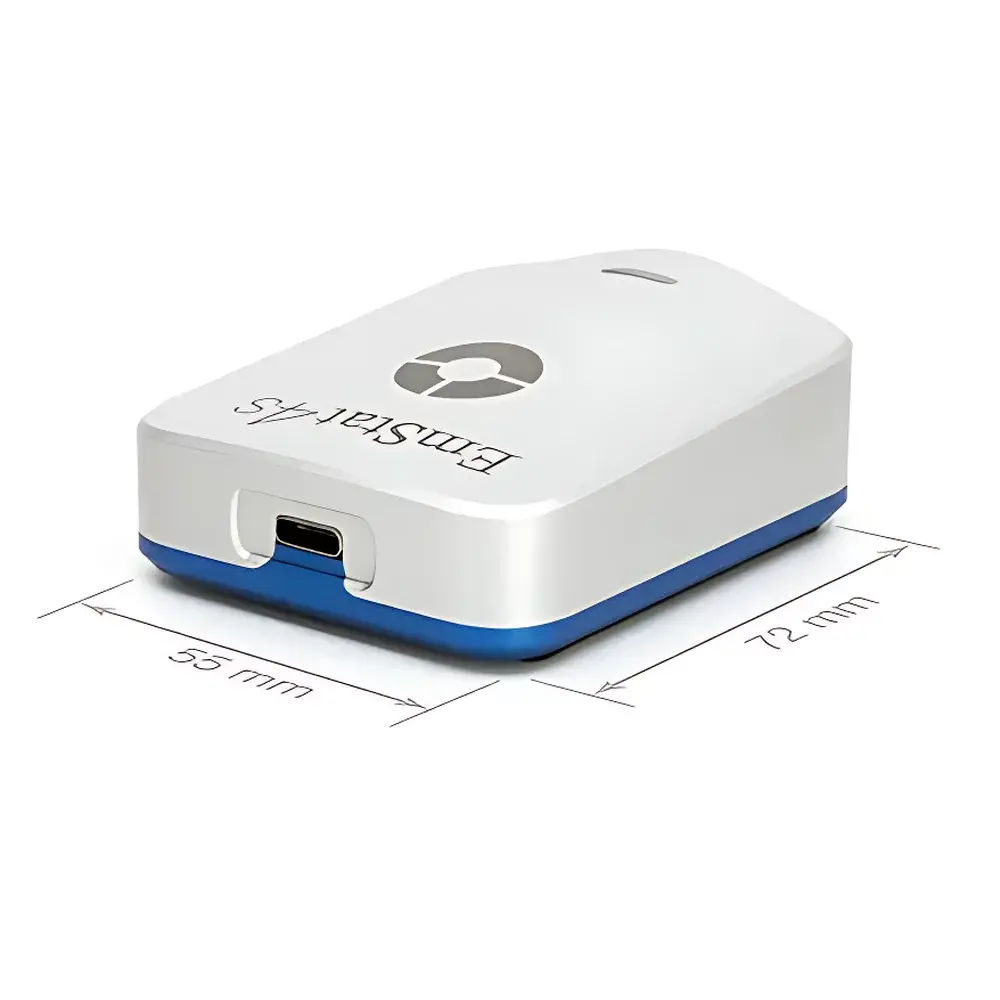
- True portable form factor: palm-sized housing, powered and controlled exclusively via standard USB 2.0 interface—no external power supply or dedicated controller required.
- Dual-range configuration: EmStat4S LR (Low-Range) variant supports current resolution down to 92 fA on the 1 nA range; EmStat4S HR (High-Range) variant extends maximum current output to ±200 mA for corrosion or battery cycling applications.
- High-precision analog subsystem: ≤ 0.2% full-scale accuracy for both potential and current control; <1 mV offset error in potentiostatic mode; 100 μV potential step resolution (LR) / 183 μV (HR).
- Built-in microSD card slot: All raw measurement data—including time-stamped EIS spectra, voltammograms, and transient waveforms—are stored directly onboard for offline analysis and audit trail integrity.
- Real-time synchronization capability: Supports hardware-triggered multi-instrument coordination (e.g., with pH meters, temperature loggers, or optical sensors) via TTL-compatible trigger I/O.
- Robust mechanical design: IP52-rated enclosure with gold-plated 2 mm banana jacks for WE, RE, CE, and ground connections—optimized for reproducible electrode contact in repeated field deployments.
Sample Compatibility & Compliance
The EmStat4S is compatible with standard three-electrode electrochemical cells (working, reference, counter), as well as two-electrode configurations for simplified sensor evaluation. It supports classical solid electrodes (glassy carbon, platinum, gold), screen-printed electrodes (SPEs), enzymatic biosensors, and conductive polymer-modified surfaces. All electrochemical methods comply with ASTM E2349–22 (Standard Guide for Electrochemical Impedance Spectroscopy) and ISO 16773–1:2017 (Electrochemical sensors — Part 1: General requirements). Data acquisition and storage meet GLP/GMP documentation requirements through PSTrace 5’s embedded audit trail functionality, including user login tracking, method versioning, and immutable timestamped metadata. The device is CE-marked and conforms to EN 61326–1:2013 (EMC) and EN 61010–1:2010 (safety).
Software & Data Management
PSTrace 5 software provides full instrument control, real-time visualization, and post-experiment analysis on Windows platforms. It enables advanced EIS equivalent circuit fitting using non-linear least-squares regression (Levenberg–Marquardt algorithm) with built-in libraries of Randles, Voigt, and transmission-line models. Batch scripting supports unattended multi-method sequences (e.g., OCP → CV → EIS → DPV) with conditional logic based on real-time parameter thresholds. Raw data exports are natively compatible with OriginLab (.opj), MATLAB (.mat), and Excel (.xlsx) formats—including full metadata headers (method parameters, timestamps, calibration IDs). Internal storage browsing, method validation checks, and firmware update management are fully integrated into the GUI without requiring command-line tools.
Applications
- Field-deployable corrosion monitoring of pipelines, reinforcement steel, and marine coatings using low-frequency EIS and polarization resistance techniques.
- Point-of-care electrochemical biosensing for clinical analytes (glucose, lactate, cortisol) and environmental contaminants (heavy metals, pesticides) via stripping voltammetry and enzyme-coupled assays.
- Academic research in battery materials science: SEI formation kinetics, Li-ion intercalation dynamics, and solid-electrolyte interface evolution under variable temperature and SoC conditions.
- Quality control of electrodeposition baths and plating solutions through rapid EIS-based electrolyte conductivity and additive concentration profiling.
- Education and training: Modular experiment design for undergraduate electrochemistry labs—covering fundamentals of electron transfer kinetics, mass transport limitations, and impedance modeling.
FAQ
Is the EmStat4S compatible with non-PalmSens electrodes or custom cell designs?
Yes—the EmStat4S uses standard 2 mm banana jack connectors and supports any three-electrode configuration meeting its voltage and current compliance limits. Custom cells must maintain proper electrical shielding and grounding to preserve signal integrity.
Does PSTrace 5 support FDA 21 CFR Part 11-compliant electronic signatures and audit trails?
While PSTrace 5 includes full audit trail logging (user actions, method changes, data exports), formal 21 CFR Part 11 compliance requires site-specific validation documentation and administrative controls (e.g., role-based access, electronic signature workflows), which are implemented during customer-specific qualification.
Can the EmStat4S perform simultaneous multi-frequency EIS measurements?
No—it performs single-sine EIS using sequential frequency stepping. However, its 10 µHz–200 kHz range and programmable settling times enable high-resolution characterization of slow relaxation processes (e.g., biofilm growth, polymer swelling) and fast interfacial phenomena (e.g., electron tunneling, capacitive charging).
What is the maximum continuous runtime on USB bus power?
Under typical EIS operation (100 points/decade, 10 mV amplitude), the EmStat4S draws <250 mA from USB 2.0. Continuous operation exceeds 12 hours when paired with a high-current USB hub or powered docking station.
How is calibration traceability maintained across instrument lifetimes?
Each EmStat4S ships with a NIST-traceable calibration certificate. Field recalibration is supported via PSTrace 5’s built-in calibration wizard using certified reference resistors and voltage standards (e.g., Fluke 732B), with all calibration events logged to the internal SD card.






