
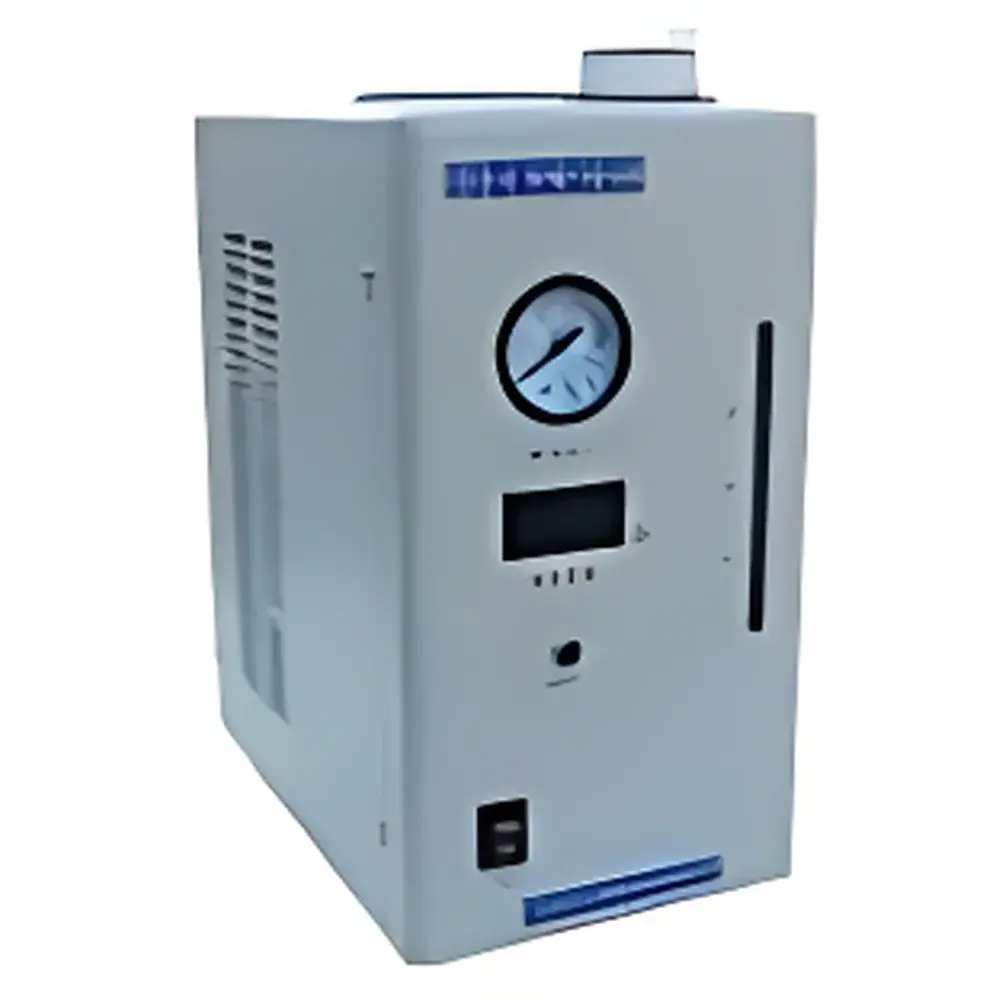
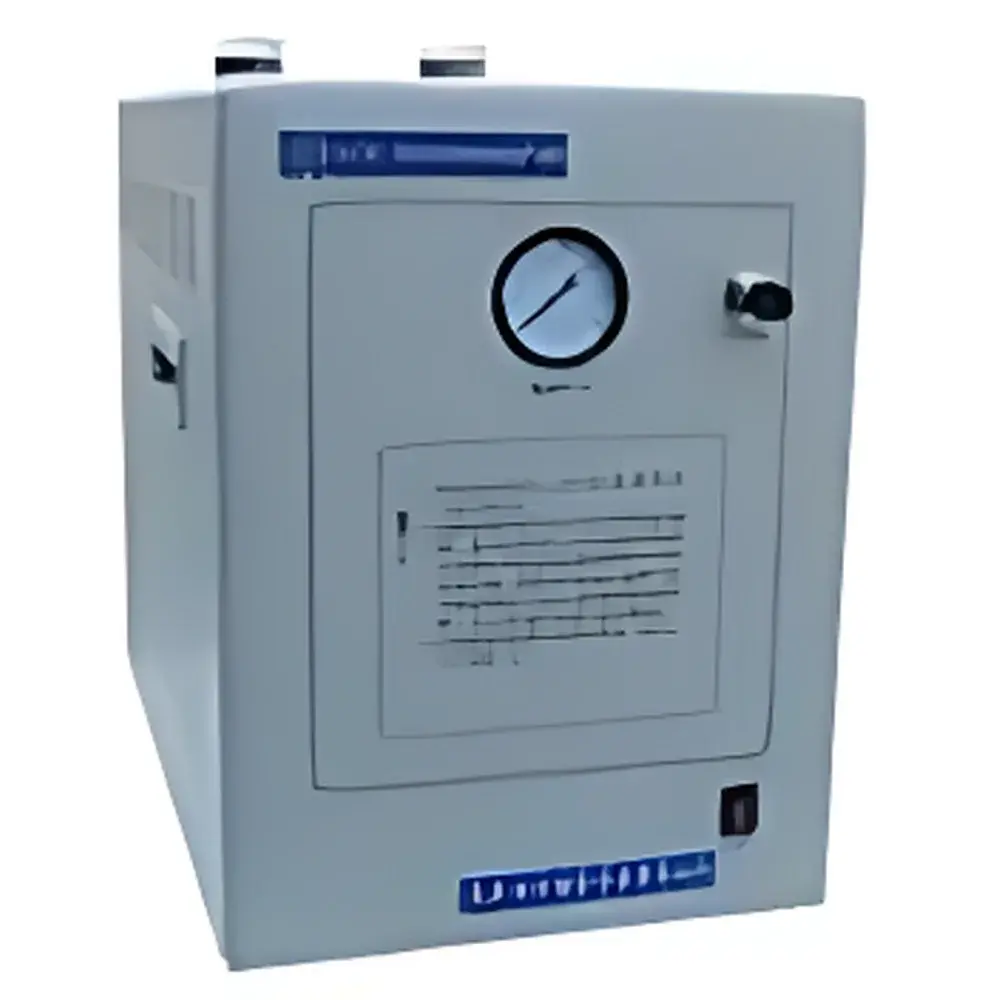
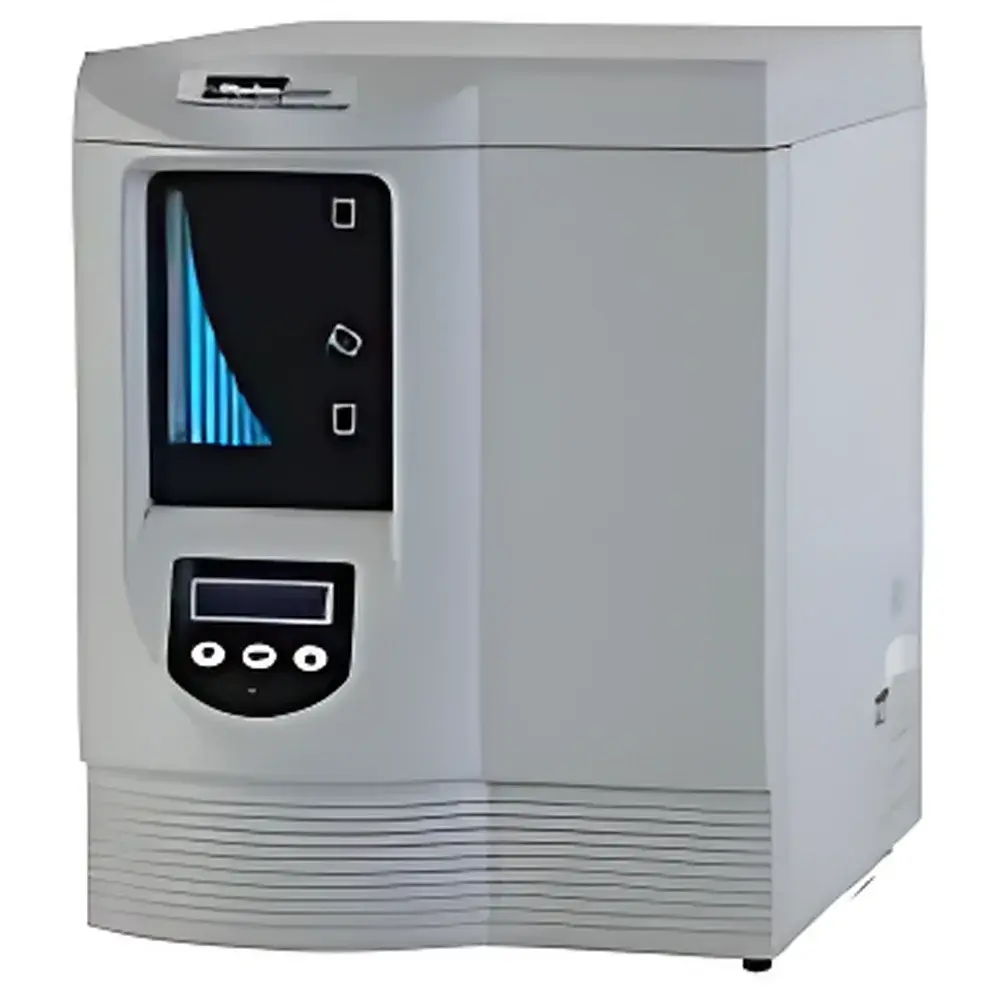
MNK MGCH-300 Hydrogen Generator
| Brand | MNK |
|---|---|
| Origin | Beijing, China |
| Model | MGCH-300 |
| Hydrogen Purity | 99.999% |
| Flow Rate | 0–300 mL/min |
| Operating Pressure | 0.4 MPa / 0.6 MPa (dual-range adjustable) |
| Power Consumption | 150 W |
| Input Voltage | 220 V ±10% |
| Dimensions (W×D×H) | 270 × 180 × 340 mm |
| Net Weight | 10 kg |
| Type | Electrolytic Hydrogen Generator (Alkaline KOH-based) |
Overview
The MNK MGCH-300 Hydrogen Generator is a compact, benchtop electrolytic hydrogen generator engineered for continuous, on-demand production of high-purity hydrogen gas in analytical laboratories. It utilizes alkaline water electrolysis—specifically potassium hydroxide (KOH) solution as the electrolyte—to dissociate deionized water into hydrogen and oxygen gases at the cathode and anode, respectively. The generated hydrogen passes through integrated catalytic recombination and palladium-silver alloy membrane purification stages to remove residual oxygen, moisture, and trace contaminants. This results in consistent delivery of hydrogen at ≥99.999% purity (5.0 grade), meeting stringent requirements for gas chromatography (GC) carrier gas, fuel cell testing, and hydrogenation reactor feed applications. Designed for stable operation under ambient laboratory conditions (0–45 °C, ≤85% RH), the MGCH-300 features dual-pressure output capability (0.4 MPa and 0.6 MPa), enabling compatibility with both standard GC inlets and higher-backpressure pneumatic systems.
Key Features
- Electrolytic hydrogen generation via KOH-based alkaline membrane cell—no compressed gas cylinders required
- Dual selectable operating pressures (0.4 MPa and 0.6 MPa) for flexible integration with diverse instrumentation
- Stable flow control across full range (0–300 mL/min) with <±2% linearity deviation
- Integrated palladium-silver diffusion membrane purifier delivering ≤0.1 ppm O₂ and ≤1.0 ppm H₂O
- Low power draw (150 W nominal) and silent operation (<40 dB[A] at 1 m)
- Compact footprint (270 × 180 × 340 mm) and lightweight design (10 kg) optimized for fume hood or benchtop deployment
- Real-time LED status indicators for power, pressure, flow, and system fault diagnostics
- Over-pressure, over-temperature, and low-water-level safety interlocks compliant with IEC 61010-1
Sample Compatibility & Compliance
The MGCH-300 is compatible with all major GC manufacturers’ instruments requiring ultra-high-purity hydrogen carrier or detector fuel gas—including Agilent, Thermo Fisher Scientific, Shimadzu, and PerkinElmer platforms. It meets ISO 8573-1:2010 Class 1 compressed air quality equivalency for gaseous impurities when used with appropriate inlet filtration (recommended: 0.01 µm particulate + coalescing + desiccant pre-filters). While not certified to FDA 21 CFR Part 11, its operational logs (via optional RS-232/USB interface) support GLP/GMP-aligned recordkeeping when paired with validated LIMS or ELN software. The unit conforms to CE marking requirements per EMC Directive 2014/30/EU and Low Voltage Directive 2014/35/EU.
Software & Data Management
The MGCH-300 operates as a standalone hardware system without embedded firmware or proprietary software. All operational parameters—including real-time flow, pressure, temperature, and runtime hours—are displayed locally via a 4-digit LED panel. For integration into automated lab environments, an optional RS-232 or USB-to-serial interface enables analog voltage output (0–5 V DC) proportional to flow rate and digital status reporting (e.g., “Ready”, “Standby”, “Fault”). Raw data can be logged using third-party SCADA or LabVIEW-compatible DAQ systems. No cloud connectivity, remote access, or audit trail functionality is included; users seeking 21 CFR Part 11 compliance must implement external validation and electronic signature controls.
Applications
- Carrier gas supply for capillary GC and GC-MS systems requiring high-purity hydrogen
- Fuel gas source for flame ionization detectors (FID), nitrogen-phosphorus detectors (NPD), and helium ionization detectors (HID)
- Reducing atmosphere generation in thermal analysis (TGA, DSC) and catalyst evaluation reactors
- Hydrogen feed for PEM electrolyzer performance testing and fuel cell stack characterization
- On-site calibration gas preparation for hydrogen sensors and leak detection equipment
- Replacement for high-pressure hydrogen cylinders in regulated or space-constrained labs
FAQ
What type of water input does the MGCH-300 require?
Deionized water with resistivity ≥15 MΩ·cm and total organic carbon (TOC) <50 ppb is mandatory. Tap water or distilled water will cause rapid electrode fouling and membrane degradation.
Does the MGCH-300 require periodic electrolyte replacement?
Yes—the KOH electrolyte solution must be replaced every 6 months or after 1,000 hours of cumulative operation, whichever occurs first. Replacement kits (including calibrated pH indicator and refill solution) are available from MNK authorized distributors.
Can the MGCH-300 be used with GC systems requiring >0.6 MPa inlet pressure?
No. The maximum rated output pressure is 0.6 MPa. For higher-pressure applications (e.g., some GC×GC modulators), a downstream booster pump meeting ATEX/IECEx certification is required.
Is the hydrogen output suitable for use in hydrogenation synthesis reactors?
The 99.999% purity level meets ASTM D7165 specifications for laboratory-scale catalytic hydrogenation, provided downstream particulate filtration (0.1 µm) and additional cold trap drying are implemented per reaction protocol.
How often does the palladium purification membrane require servicing?
Under normal operating conditions with compliant water input and ambient environment, the Pd–Ag membrane requires no scheduled maintenance and is rated for ≥10,000 hours of continuous service life.



