
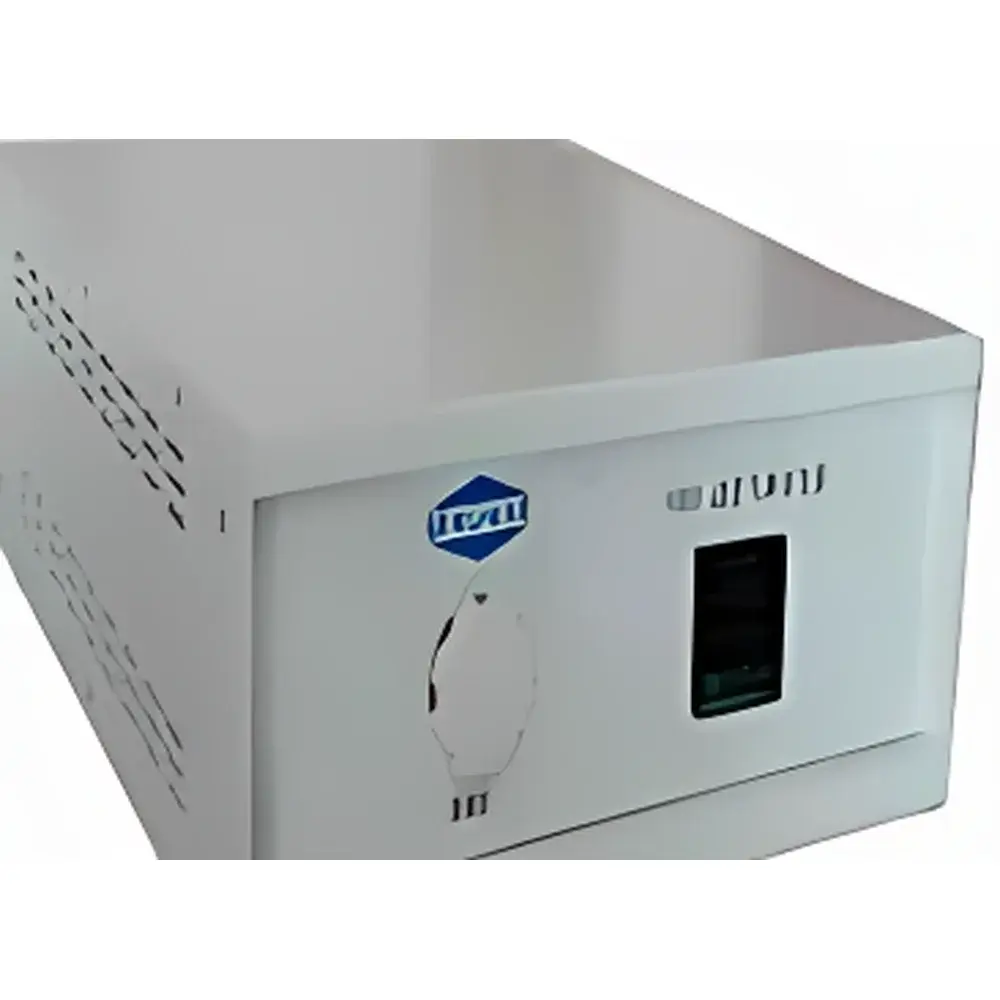
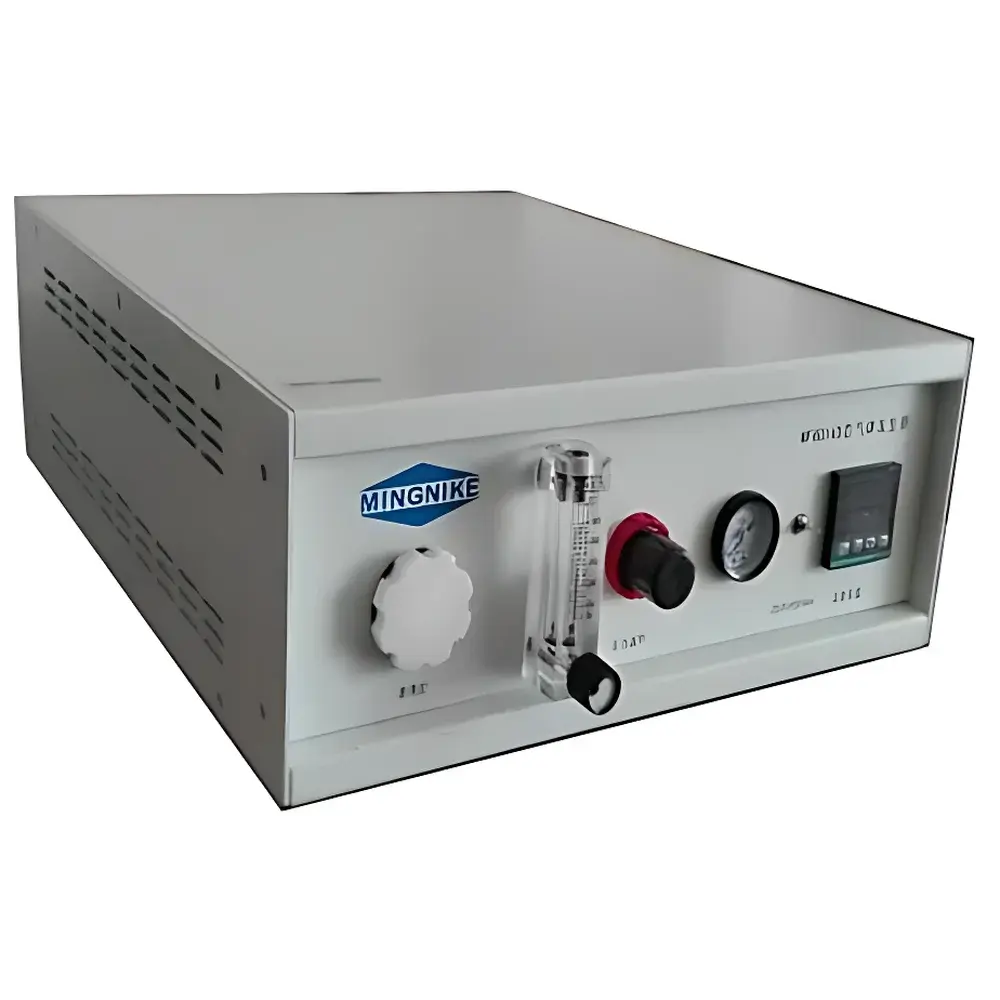
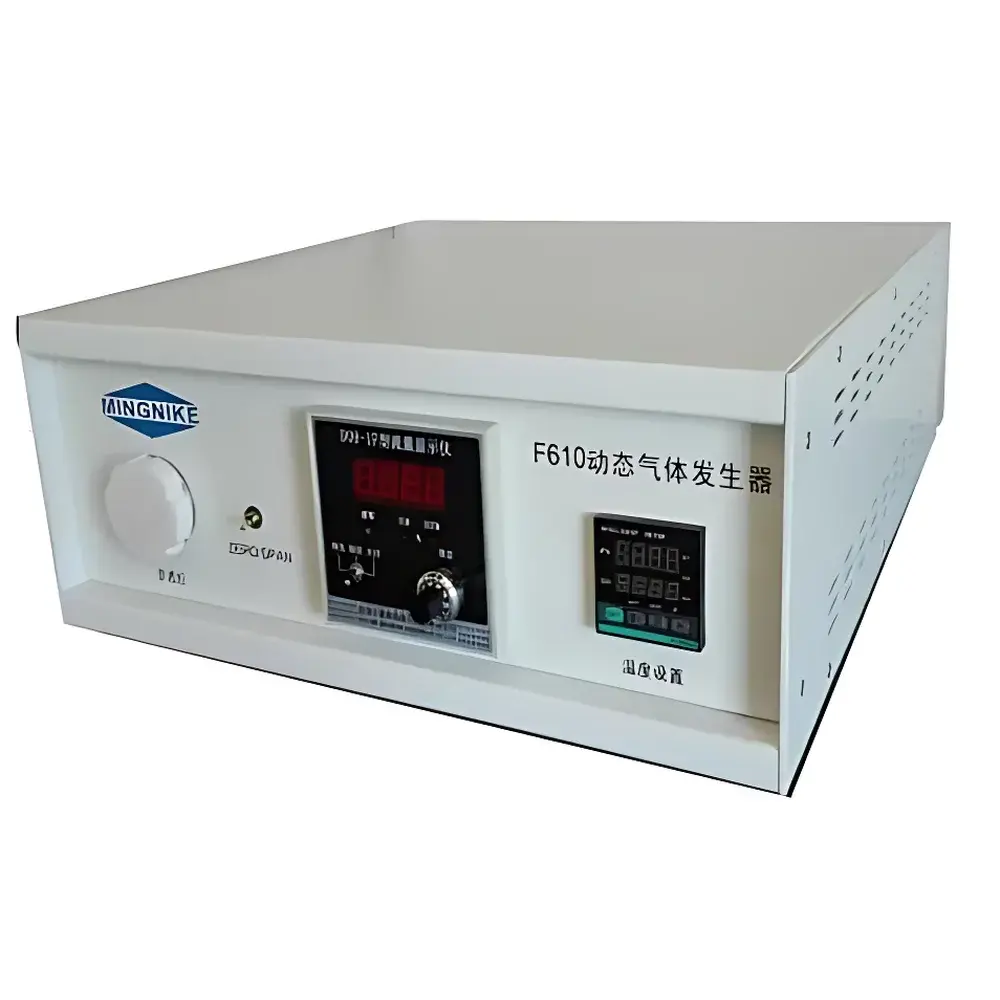
MNK MF600 / MF601 / MF610 / MF640 Dynamic Standard Gas Generator
| Brand | MNK |
|---|---|
| Model | MF600, MF601, MF610, MF640 |
| Origin | Beijing, China |
| Permeation Chamber | Φ24 mm × 130 mm (MF600/MF601/MF640), Φ25 mm × 170 mm (MF610) |
| Temperature Range | +5 °C to +100 °C above ambient (MF610/MF640), +10 °C to +100 °C above ambient (MF600/MF601) |
| Temp. Control Accuracy | ±0.1 °C |
| Gas Flow Rate | 0–1000 mL/min (MF600), 0–500 mL/min (MF601/MF640), 100 mL/min (MF610) |
| Flow Meter Accuracy | ±1% SP (0–10 L/min, MF610) |
| Dilution Ratio | 6:1 to 96:1 (MF610) |
| Carrier Gas Inlet | 1/4″ Swagelok (MF601/MF640) |
| Inlet Pressure | 0.3–0.4 MPa (MF601/MF640) |
| Chamber Material | PTFE-coated aluminum (MF600/MF601/MF640), stainless steel (MF610) |
Overview
The MNK MF600, MF601, MF610, and MF640 series are precision-engineered dynamic standard gas generators designed for trace-level calibration and verification of gas analyzers in environmental monitoring, industrial hygiene, emissions testing, and laboratory QA/QC workflows. These instruments operate on the principle of controlled permeation—where volatile organic compounds (VOCs) or inorganic gases diffuse at a stable, temperature-dependent rate through polymer membranes (permeation tubes) housed within thermostatically regulated chambers. By precisely controlling chamber temperature and carrier gas flow, each model delivers highly reproducible, gravimetrically traceable gas concentrations ranging from parts-per-trillion (ppt) to parts-per-million (ppm) levels. Unlike static diffusion sources or cylinder-based standards, dynamic generation enables real-time, on-demand calibration without reliance on certified reference materials with limited shelf life—making it essential for compliance with ISO 17025, EPA Method TO-17, and ASTM D6196.
Key Features
- High-stability temperature control module with dual digital display (setpoint and actual chamber temperature), maintaining ±0.1 °C accuracy across the full operating range (+5 °C to +100 °C above ambient).
- Large-capacity permeation chambers engineered for mechanical durability and chemical inertness: PTFE-coated aluminum (MF600, MF601, MF640) or electropolished stainless steel (MF610) to minimize adsorption and memory effects.
- Modular permeation tube compatibility—accepts multiple tube types (e.g., Teflon®, Viton®, silicone-based) and diameters simultaneously, enabling multi-analyte generation or method development flexibility.
- Integrated carrier gas pre-heating to prevent condensation and ensure thermal equilibrium between permeate and diluent streams.
- Independent dual-zone temperature control (MF640) supports differential permeation experiments or cross-calibration of two analytes under distinct thermal conditions.
- Pressure-regulated inlet (MF601/MF640) with 0.3–0.4 MPa operating range and calibrated Swagelok® 1/4″ fittings ensures consistent delivery to downstream analyzers or sampling systems.
- Quick-access threaded chamber nut design allows tool-free insertion and extraction of permeation tubes—reducing downtime during routine maintenance or method switching.
Sample Compatibility & Compliance
All models support a broad spectrum of permeable analytes including benzene, toluene, formaldehyde, sulfur dioxide, nitrogen dioxide, ozone precursors, and halogenated hydrocarbons—provided appropriate NIST-traceable permeation tubes are selected. The MF610’s zero-air / standard-gas toggle function facilitates seamless transition between background subtraction and calibration mode, critical for low-concentration measurements per US EPA 40 CFR Part 60 Appendix A–Method 205. Chamber dimensions (Φ24 mm × 130 mm or Φ25 mm × 170 mm) accommodate industry-standard 1/4″ and 3/8″ permeation tubes while minimizing axial temperature gradients. Each unit is supplied with factory calibration documentation aligned to ISO/IEC 17025 requirements, and optional third-party certification is available for GLP/GMP-regulated environments.
Software & Data Management
While the MF-series operates as a standalone hardware platform, its analog outputs (0–5 V or 4–20 mA) and RS232/RS485 interfaces enable integration into LIMS or SCADA systems for automated logging of temperature, flow, and pressure parameters. All models support audit-trail-ready operation when paired with compliant data acquisition software meeting FDA 21 CFR Part 11 requirements—including electronic signatures, user access controls, and immutable record retention. The MF610’s built-in flow meter (0–10 L/min, ±1% span accuracy) provides real-time dilution ratio validation—essential for documenting uncertainty budgets in ISO/IEC 17025 accreditation submissions.
Applications
- Calibration and verification of photoionization detectors (PID), flame ionization detectors (FID), electrochemical sensors, and FTIR gas analyzers.
- Generation of challenge gases for indoor air quality (IAQ) monitors and workplace exposure assessment instruments.
- Method validation and linearity testing per ISO 16000-6, EN 16755, and ASTM D5197.
- Dynamic dilution studies for developing custom calibration curves in stack emission monitoring (CEMS) applications.
- Research-grade VOC flux quantification in environmental chamber studies and sensor response characterization.
FAQ
What permeation tube types are compatible with the MF600 series?
Standard 1/4″ and 3/8″ diameter permeation tubes made from fluorinated ethylene propylene (FEP), polytetrafluoroethylene (PTFE), or silicone elastomer are fully supported. Tube selection must align with target analyte volatility and required output concentration.
Can the MF601 be used with compressed air as carrier gas?
Yes—provided the air is oil-free, particle-filtered (<0.01 µm), and dew-point controlled to ≤−40 °C to prevent condensation in the heated permeation path.
Is the MF610 suitable for zero-air generation?
The MF610 includes a dedicated zero-air pathway with catalytic scrubbing capability (optional add-on); however, baseline purity depends on inlet gas quality and must be verified using a reference analyzer prior to use.
How often does the temperature sensor require recalibration?
Annual verification against a NIST-traceable reference thermometer is recommended; field checks using a calibrated thermistor probe can be performed quarterly per ISO/IEC 17025 internal quality control protocols.
Does the MF640 support synchronized dual-analyte generation?
Yes—the independently controlled dual permeation chambers allow simultaneous, non-interfering generation of two distinct gases at different concentrations and temperatures, enabling co-elution studies or cross-sensitivity analysis.



