
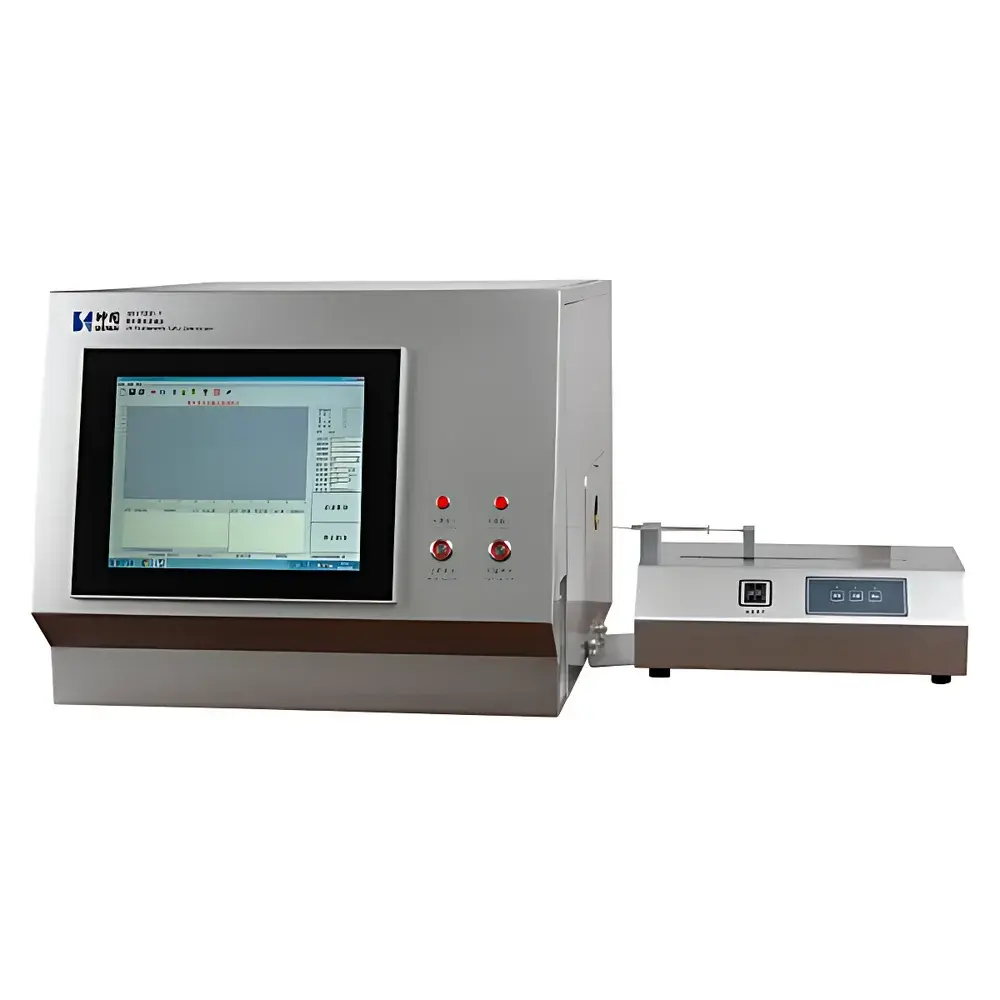
SKY7200-II UV Fluorescence Total Sulfur Analyzer
| Brand | Shengkai |
|---|---|
| Origin | Shanghai, China |
| Model | SKY7200-II |
| Detection Method | High-Temperature Combustion UV Fluorescence |
| Detection Range | 0.5–10,000 mg/kg |
| LOD | 0.5 mg/kg |
| Repeatability | ≤ ±0.2 mg/kg (0.5–1.0 mg/kg), ≤ 10% RSD (1.0–10 mg/kg), ≤ 5% RSD (≥10 mg/kg) |
| Sample Type | Liquid (standard) |
| Sample Volume | 5–50 µL |
| Furnace Temp | RT–1075 °C ±25 °C |
| Gas Control | Mass Flow Controllers (Ar: 50–300 mL/min |
| O₂ | 250–500 mL/min |
| Pressure | 0.2 MPa) |
| Analysis Time | 1–3 min |
| Display | 17″ Color Touchscreen IPC |
| Data Storage | >5,000 test records |
| Power | ≥3 kW, AC220V±5%, 50 Hz |
| Dimensions | 595×510×410 mm (W×D×H) |
| Net Weight | 30 kg |
| Compliance | ASTM D5453, SH/T 0689, GB/T 34100 |
Overview
The SKY7200-II UV Fluorescence Total Sulfur Analyzer is a high-precision laboratory instrument engineered for quantitative determination of total sulfur in liquid petroleum products using the high-temperature combustion ultraviolet fluorescence detection principle. In this method, samples are introduced into a high-temperature quartz combustion furnace (up to 1075 °C) under controlled oxygen-rich conditions, where sulfur compounds are quantitatively oxidized to sulfur dioxide (SO₂). The resulting SO₂ gas is carried by ultra-pure argon into a reaction chamber, where it is excited by ultraviolet light (190–230 nm) emitted from a stabilized zinc lamp. The subsequent fluorescence emission at ~340 nm is detected by a high-gain photomultiplier tube (PMT), enabling linear, highly selective, and interference-resistant quantification of sulfur across a broad dynamic range. Designed specifically for compliance-driven petroleum quality control laboratories, the SKY7200-II meets the rigorous analytical requirements of ASTM D5453, SH/T 0689, and GB/T 34100—standards widely adopted for regulatory reporting, refinery process monitoring, and fuel certification.
Key Features
- Ultra-low detection limit of 0.5 mg/kg, validated per ASTM D5453 protocol, ensuring reliable measurement of ultra-low-sulfur diesel (ULSD) and renewable fuels such as FAME and hydrotreated esters.
- Dual quartz pyrolysis tube configuration—light-oil and heavy-oil variants—enables optimized combustion efficiency and minimized carbon deposition across diverse sample matrices including naphtha, lubricating oils, jet fuel, and biodiesel blends.
- Integrated mass flow controllers (MFCs) for argon carrier gas and dual oxygen streams (inlet + combustion), delivering stable, programmable, and traceable gas delivery with ±0.5% full-scale accuracy—critical for method reproducibility and audit readiness.
- Membrane dryer system with imported hydrophobic permeation membranes ensures effective removal of water vapor and acidic combustion byproducts (e.g., NOₓ, CO₂), minimizing quenching effects on SO₂ fluorescence and enhancing signal-to-noise ratio.
- Patented pressure-stabilized gas manifold eliminates flow pulsation and baseline drift, contributing to long-term signal stability (<0.5% peak-to-peak noise over 24 h) and reduced operator intervention.
- Industrial-grade 17-inch color touchscreen IPC with embedded real-time OS provides intuitive workflow navigation, password-protected user levels (operator, supervisor, administrator), and built-in GLP-compliant audit trail logging for all method edits, calibration events, and result exports.
- Zinc-based UV lamp with extended service life (>2,000 h) and spectral stability ensures consistent excitation intensity and minimizes recalibration frequency—reducing cost of ownership and downtime.
Sample Compatibility & Compliance
The SKY7200-II accepts liquid samples via standard micro-syringe injection (5–50 µL), with optional solid-sample introduction modules (e.g., boat-type auto-sampler for catalysts or asphaltene residues) and gas-phase sampling kits (for refinery off-gas or natural gas condensates). All configurations maintain full alignment with ISO/IEC 17025 method validation requirements. Instrument design incorporates electrical grounding, thermal shielding, and fail-safe furnace cooling protocols—meeting IEC 61010-1 safety standards. Data integrity safeguards include electronic signatures, time-stamped calibration logs, and immutable result archives compatible with FDA 21 CFR Part 11–compliant LIMS integration. Routine performance verification is supported through certified reference materials (CRMs) traceable to NIST SRM 2723c (diesel) and NIST SRM 1634c (lubricating oil).
Software & Data Management
The embedded analytical software supports both single-point and multi-point calibration workflows, automatically generating and validating 3rd-order polynomial or linear calibration curves with correlation coefficients (r²) ≥0.9995. Each curve is assigned metadata (date, analyst ID, CRM lot, instrument status) and stored with version control—including revision history and manual correction flags. Raw fluorescence intensity traces, integrated peak areas, and baseline-corrected values are archived in ASCII-compatible .csv format. Up to 20 independent calibration curves may be stored and recalled per method template. Data export interfaces include USB 2.0 (for flash drives), Ethernet (RJ-45) for TCP/IP-based LIMS synchronization, and parallel/serial printer drivers. Audit trail records capture all user actions—including login/logout timestamps, parameter modifications, result deletions, and firmware updates—with SHA-256 hashing for tamper evidence.
Applications
- Regulatory compliance testing for sulfur content in transportation fuels (gasoline, diesel, jet fuel) per EPA Tier 3, Euro 6, and China VI specifications.
- Quality assurance of biofuels (FAME, HVO, renewable diesel) during blending and certification processes.
- Refinery process stream monitoring—from crude assay to hydrotreater effluent—to optimize HDS catalyst performance and hydrogen consumption.
- Research and development of low-sulfur additives, lubricant formulations, and alternative feedstocks.
- Contract laboratory analysis supporting ISO 8217 (marine fuels), ASTM D975 (diesel), and ASTM D4294 (XRF cross-validation).
FAQ
What is the minimum detectable sulfur concentration, and how is it verified?
The instrument achieves a method detection limit (MDL) of 0.5 mg/kg, determined per ASTM D5453 Annex A1 using seven replicate analyses of a near-zero matrix blank and calculating 3.14 × standard deviation. Verification is performed quarterly using NIST-traceable CRMs.
Can the SKY7200-II analyze solid samples such as catalysts or bitumen?
Yes—when equipped with the optional solid-sample introduction module, which includes a ceramic boat, programmable temperature ramp, and inert purge sequence to prevent incomplete combustion or sulfur loss.
Is the software compliant with FDA 21 CFR Part 11 requirements?
The system supports electronic signatures, role-based access control, and audit-trail generation; however, full Part 11 compliance requires site-specific validation documentation and IT infrastructure controls (e.g., network authentication, backup policies), which are implemented during on-site IQ/OQ/PQ.
How does the instrument handle high-sulfur samples exceeding 10,000 mg/kg?
Samples above the upper detection limit must be diluted with sulfur-free solvent (e.g., xylene or iso-octane) prior to analysis; the software applies automatic dilution factor correction and flags results requiring manual review.
What maintenance intervals are recommended for critical components?
The UV lamp should be replaced every 2,000 operating hours; the quartz combustion tube every 500–1,000 injections depending on sample matrix; and the membrane dryer cartridge every 6 months or after 2,000 tests—maintenance logs are auto-recorded in the system database.





