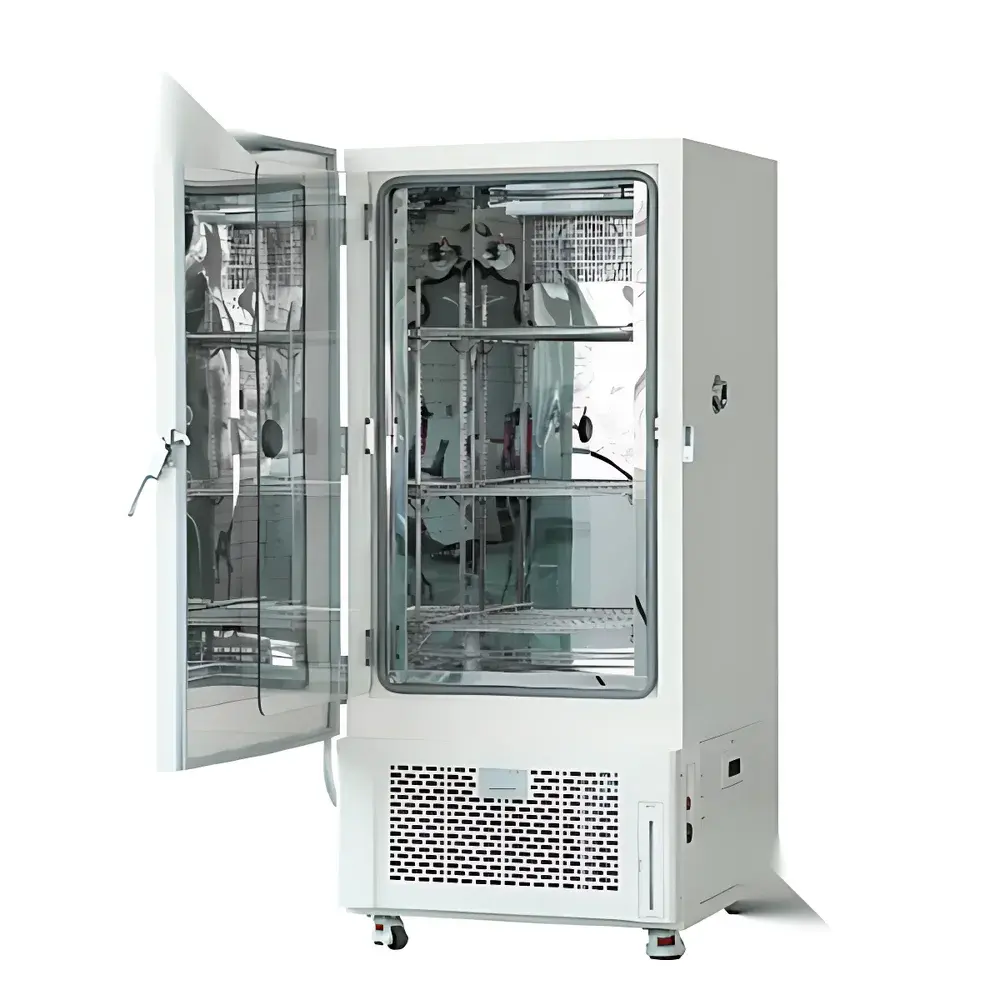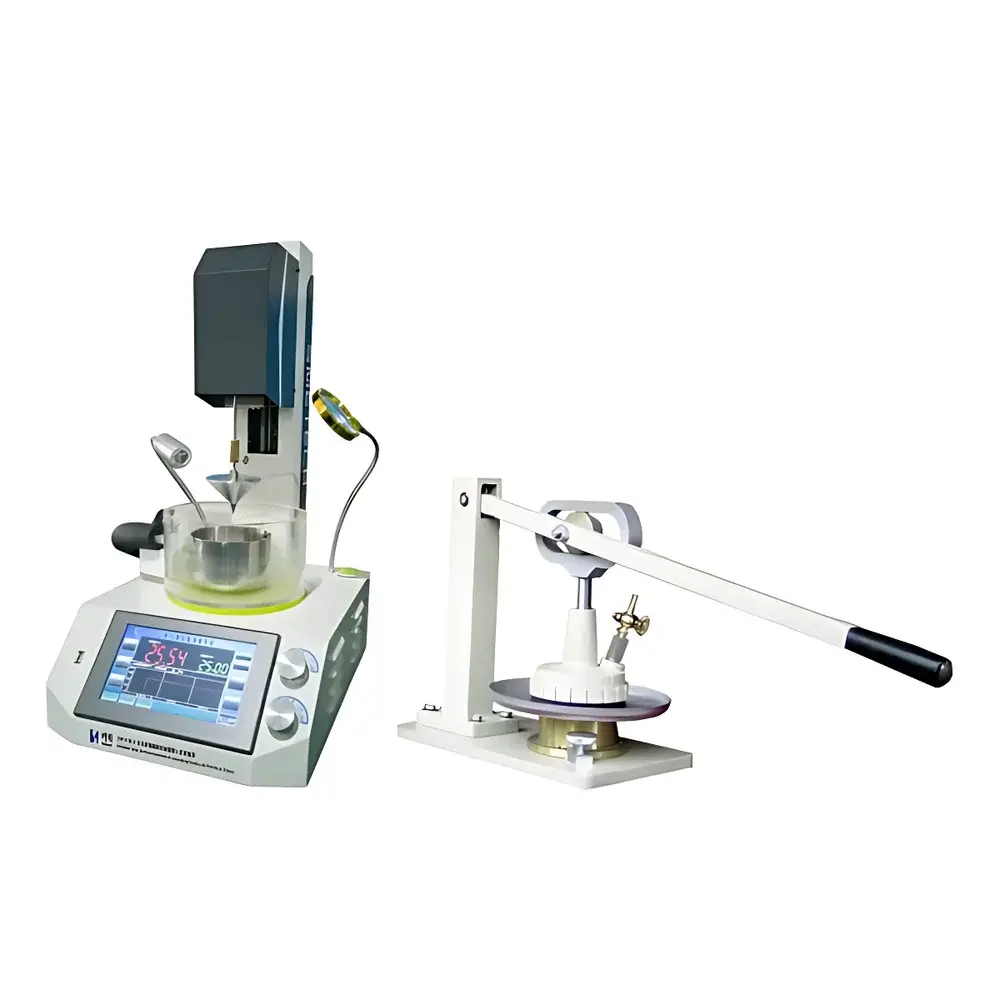
Shenkai SYP4100-II Automatic Grease and Petroleum Jelly Penetrometer
| Brand | Shenkai |
|---|---|
| Origin | Shanghai, China |
| Model | SYP4100-II |
| Penetration Measurement Range | ≤620 dmm |
| Standard Cone Mass | 102.5 g (conforms to GB/T 269 & ASTM D217) |
| Standard Plunger Mass | 47.5 g |
| Temperature Control Range (Bath) | 0.00–50.00 °C (with cooling down to 20 °C below ambient) |
| Bath Temperature Stability | ≤ ±0.1 °C |
| Timing Range | 0–9 min 59 s |
| Timing Accuracy | ±0.1 s |
| Data Storage Capacity | 200 test records |
| Interface | USB port for data export |
Overview
The Shenkai SYP4100-II Automatic Grease and Petroleum Jelly Penetrometer is a precision-engineered instrument designed for standardized cone penetration testing of semi-solid petroleum products—including lubricating greases, petroleum jellies, and related viscous or structured materials—under controlled thermal and temporal conditions. It operates on the fundamental principle defined in GB/T 269 and ASTM D217: the depth of penetration (in tenths of a millimeter, dmm) of a standardized cone assembly under specified mass, temperature, and dwell time reflects the consistency and structural rigidity of the sample. This measurement serves as a critical quality control parameter across refining, formulation, and end-use validation stages in lubricant manufacturing, petrochemical R&D, and regulatory compliance workflows. The SYP4100-II integrates a fully self-contained thermostatic water bath with active cooling (down to 20 °C below ambient) and precise resistive heating, enabling stable operation across the full 0.00–50.00 °C range required by international standards. Its closed-loop temperature control maintains stability within ±0.1 °C, ensuring reproducibility essential for inter-laboratory comparability and audit-ready documentation.
Key Features
- Integrated constant-temperature water bath with dual-mode thermal regulation: Peltier-based cooling and PID-controlled resistive heating deliver rapid equilibration and long-term stability without external chillers or recirculators.
- Motorized dual-speed positioning system: Rapid coarse approach followed by fine micro-adjustment ensures repeatable, non-destructive cone tip alignment with the sample surface—minimizing operator-induced variability.
- High-resolution optical displacement sensing with real-time depth feedback: Measures penetration depth to 0.1 dmm resolution, compliant with ASTM D217 repeatability requirements (≤3 dmm for duplicate tests).
- Full-color graphical touchscreen interface: Provides intuitive navigation, real-time bath temperature monitoring, timer status, and on-screen calibration prompts—all accessible without external PC dependency.
- Dedicated visual assistance: Integrated LED spotlight and 5× magnifier facilitate precise observation during cone placement and surface verification—critical for heterogeneous or opaque samples.
- Comprehensive mechanical leveling: Adjustable three-point platform leveling mechanism ensures vertical alignment of the cone axis relative to the sample surface, eliminating angular error sources per ISO 2137 guidance.
Sample Compatibility & Compliance
The SYP4100-II supports standardized testing of lubricating greases (NLGI classes 000–6), petroleum jellies, and other semi-solid matrices including pharmaceutical ointments, food-grade gels (e.g., butter, cheese curds, confectionery gels), and industrial colloids. Its cone and plunger masses—102.5 g and 47.5 g respectively—strictly comply with GB/T 269, ASTM D217, ISO 2137, and IP 50 specifications. The instrument’s timing controller (0–9 min 59 s, ±0.1 s accuracy) and thermal performance meet the procedural rigor required for GLP-compliant laboratories. Data integrity is reinforced via timestamped internal storage (200 test records), USB-exportable CSV files with full metadata (date/time, bath temp, penetration value, operator ID), and optional integration into LIMS environments through standard serial or USB CDC protocols.
Software & Data Management
All measurements are logged with embedded timestamps, bath temperature at initiation, and user-defined sample IDs. The onboard memory retains up to 200 complete test records, each containing penetration depth (dmm), elapsed time, thermal setpoint, and actual bath temperature. Export occurs via USB flash drive in plain-text CSV format—compatible with Excel, statistical analysis packages (e.g., Minitab, JMP), and validated laboratory informatics systems. No proprietary software installation is required. Audit trails adhere to principles aligned with FDA 21 CFR Part 11 when used with institutional electronic signature policies; raw data files include immutable headers confirming instrument model, firmware version, and calibration status flags.
Applications
- Quality assurance of finished lubricating greases against NLGI grade specifications.
- Batch-to-batch consistency monitoring during grease thickener development (e.g., lithium, calcium sulfonate, polyurea systems).
- Stability assessment of petroleum jellies under accelerated aging or thermal cycling protocols.
- Comparative rheological screening of food-grade gelling agents (e.g., gelatin, pectin, agar blends) where penetration correlates with texture profile analysis.
- Regulatory submission support for ASTM D217-compliant test reports in API licensing, OEM technical approvals, and customs clearance documentation.
- Teaching and method validation in university petroleum engineering and materials science laboratories.
FAQ
Does the SYP4100-II require external water circulation or chiller units?
No—the integrated water bath includes thermoelectric cooling and resistive heating modules, eliminating dependence on external chillers or tap-water cooling.
Can the instrument perform tests at sub-ambient temperatures?
Yes—it cools to at least 20 °C below ambient temperature, supporting low-temperature penetration assessments per ASTM D1321 or specialized cold-flow specifications.
Is calibration traceable to national standards?
The cone and plunger masses are certified per ISO/IEC 17025-accredited metrology; users receive a certificate of conformity with NIST-traceable mass calibration documentation.
How is data security and traceability ensured?
Each test record contains immutable timestamps, temperature logs, and operator identifiers; exported CSV files retain all metadata without modification, supporting 21 CFR Part 11-aligned review workflows.
What maintenance is required for long-term reliability?
Annual verification of bath temperature uniformity (per ASTM D1557), periodic cone tip inspection for wear, and biannual firmware updates—documented in the included GLP-compliant maintenance log template.