
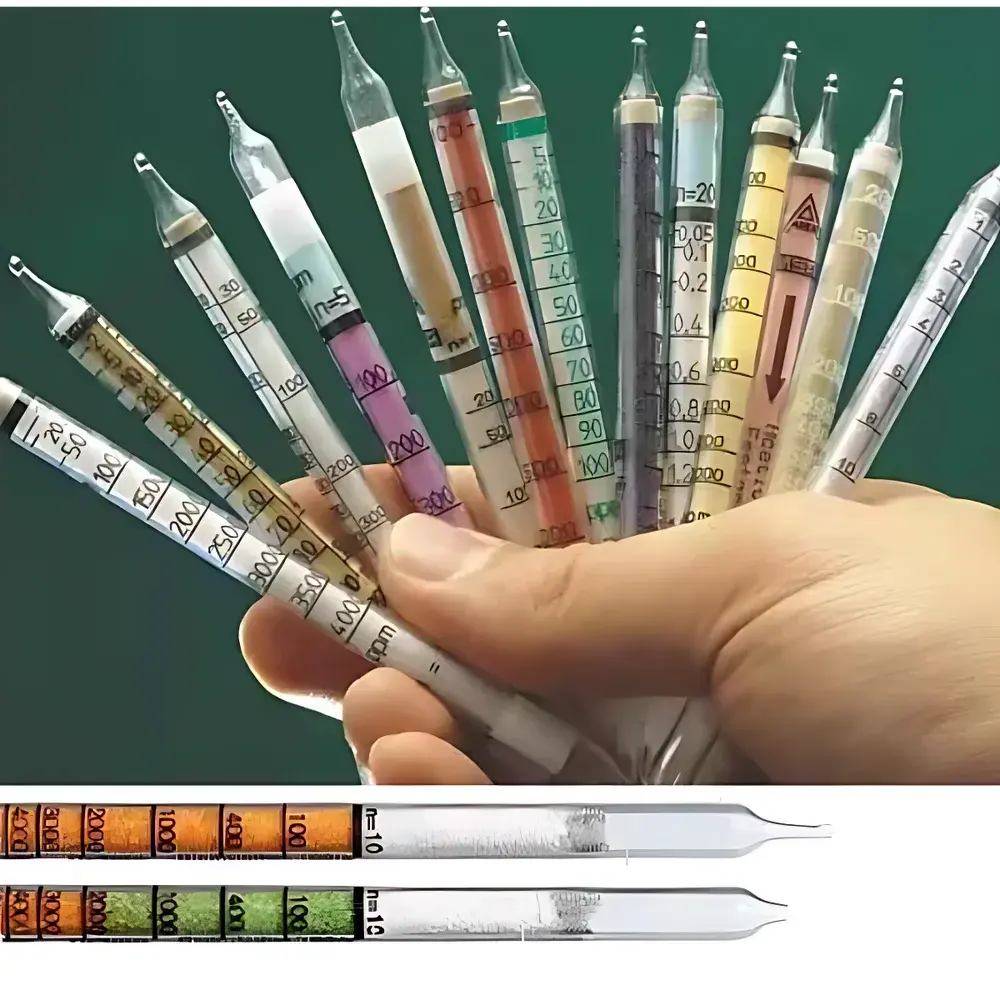
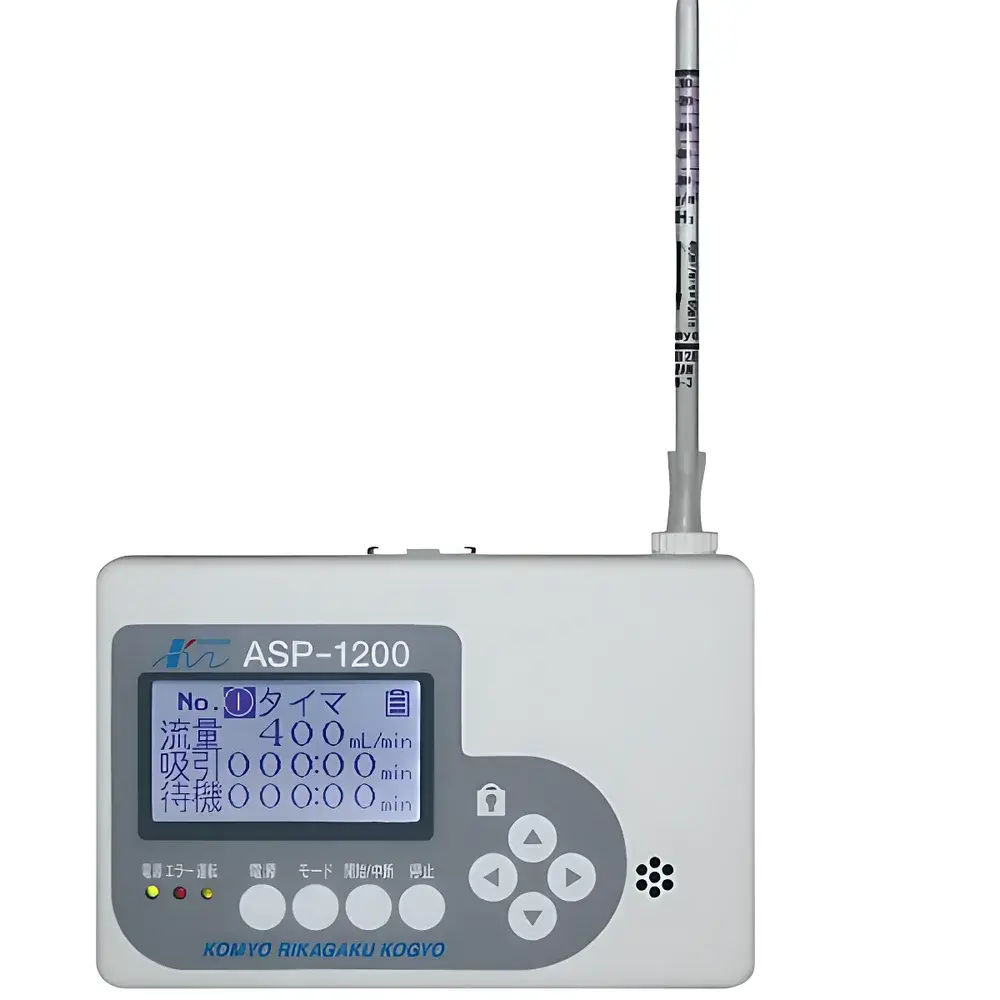
Kikuchi Indoor Formaldehyde Detection Tubes Series 710/710A/713
| Brand | Meiko Rikka |
|---|---|
| Origin | Japan |
| Model | 710 / 710A / 713 |
| Detection Range (710) | 0.01–0.48 ppm |
| Detection Range (710A) | 0.05–2.0 ppm |
| Detection Range (713) | 0.01–0.50 ppm |
| Detection Range (171SA) | 20–1500 ppm |
| Detection Range (171SB) | 1–35 ppm |
| Detection Range (171SC) | 0.05–4.0 ppm |
| Format | Colorimetric Glass Tube |
| Required Sampling Device | ASP-1200 Electric Pump (for 710/710A/713) or AP-20 Manual Pump (for 171-series) |
| Pack Size | 710/710A/713: 20 tubes/box |
| 171SA/SB | 10 tubes/box (5×2) |
| 171SC | 10 tubes/box |
Overview
The Kikuchi Indoor Formaldehyde Detection Tubes Series 710, 710A, and 713 are precision-engineered colorimetric glass tubes designed for rapid, on-site quantification of airborne formaldehyde in indoor environments. Based on the well-established Kikuchi reaction—where formaldehyde reacts with a proprietary chromogenic reagent (typically a modified chromotropic acid or phenylhydrazine derivative) to yield a stable, intensity-proportional color band—the tubes provide direct visual concentration readout via calibrated scale markings along the tube bore. This diffusion-controlled, single-use passive sampling method eliminates the need for laboratory instrumentation or complex calibration protocols. The system operates on the principle of known air volume draw-through under controlled flow and time, enabling stoichiometric conversion of color development length into formaldehyde concentration (ppm). Designed specifically for low-concentration indoor monitoring (e.g., residential dwellings, museums, cleanrooms), the 710 series meets the analytical sensitivity requirements of ISO 16000-23 (Indoor air — Determination of formaldehyde — Active sampling method using sorbent tubes followed by liquid chromatography) as a screening-level field tool, and is routinely deployed where rapid decision-making is critical—such as post-renovation verification, HVAC commissioning, or preventive conservation in heritage institutions.
Key Features
- Three-tiered sensitivity options: Model 710 (0.01–0.48 ppm), 710A (0.05–2.0 ppm), and 713 (0.01–0.50 ppm) enable selection based on expected exposure levels and regulatory thresholds (e.g., WHO guideline: 0.08 ppm; China GB/T 18883–2022: 0.08 ppm; US EPA IRIS reference concentration: 0.009 ppm).
- High reproducibility across batches: Manufactured in Japan under strict JIS Z 8807-compliant production controls, with lot-specific calibration certificates traceable to NMIJ (National Metrology Institute of Japan) reference standards.
- Integrated compatibility with ASP-1200 programmable electric pump: Enables precise, operator-independent sampling at user-defined flow rates (50–500 mL/min) and durations (1–30 min), minimizing human error and ensuring adherence to ISO 16000-23 sampling volume specifications.
- Robust architecture: Borosilicate glass construction resists thermal shock and chemical leaching; sealed aluminum foil packaging preserves reagent stability for ≥24 months at ambient storage conditions (15–30°C, <60% RH).
- No power or software dependency: Fully manual interpretation via calibrated color scale—ideal for emergency response, field audits, or locations with limited infrastructure.
Sample Compatibility & Compliance
The 710-series tubes are validated for use in non-condensing, particle-free air matrices typical of conditioned indoor spaces—including climate-controlled museum galleries, semiconductor fabrication cleanrooms (ISO Class 5–7), archival storage vaults, and residential interiors. Interference testing confirms minimal cross-sensitivity to common co-pollutants including acetaldehyde (<5% signal contribution at 5 ppm), benzene (<2%), and NO₂ (<3%) under standard sampling conditions. While not intended for regulatory compliance reporting per se, data generated using this system aligns with GLP-aligned field screening workflows and supports triage decisions prior to confirmatory analysis by HPLC-DNPH or FTIR. The tubes comply with JIS K 0311 (Chemical analysis—General rules for sampling) and are referenced in Japanese Ministry of Health, Labour and Welfare (MHLW) Technical Guidance No. 0301001 for indoor air quality surveys.
Software & Data Management
As a hardware-only analog detection system, the Kikuchi 710 series does not incorporate embedded firmware or digital connectivity. However, when used with the ASP-1200 pump, users may record sampling parameters (flow rate, duration, ambient temperature/pressure) manually or via external loggers. For auditability, laboratories integrate tube readings into LIMS or ELN platforms using standardized templates compliant with ISO/IEC 17025 documentation requirements. Optional digital image capture (via calibrated smartphone + color reference card) enables semi-quantitative archiving and inter-operator comparison—supporting 21 CFR Part 11-compliant electronic records when paired with appropriate metadata governance and reviewer sign-off protocols.
Applications
- Routine indoor air quality (IAQ) screening in cultural heritage institutions (e.g., National Museum of China, Palace Museum) where microclimate control and material off-gassing must be monitored without introducing invasive instrumentation.
- Pre-occupancy verification in newly constructed or renovated buildings—especially those utilizing urea-formaldehyde insulation, particleboard, or laminated flooring.
- Real-time process monitoring in LCD panel manufacturing cleanrooms, where sub-ppm formaldehyde ingress from adhesives or cleaning agents can compromise photomask integrity.
- First-responder triage during fire-damaged structure assessments, where rapid identification of residual formaldehyde from pyrolyzed materials informs PPE and ventilation strategies.
- Educational demonstrations in environmental science curricula, illustrating principles of gas-phase colorimetry, stoichiometric reaction kinetics, and exposure assessment methodology.
FAQ
What is the shelf life of unopened Kikuchi formaldehyde detection tubes?
Unopened tubes retain full performance for 24 months when stored at 15–30°C and relative humidity below 60%. Lot-specific expiration dates are printed on each box.
Can the 710 series be used outdoors or in high-humidity environments?
No. Condensation, particulate loading, or ambient RH >70% compromises reagent integrity and color development accuracy. These tubes are strictly intended for conditioned indoor air sampling.
Is calibration required before each use?
No. Each tube is factory-calibrated against NMIJ-traceable formaldehyde gas standards. Users must verify the lot-specific calibration chart provided with the shipment.
How does temperature affect measurement accuracy?
Sampling should occur between 15–30°C. Deviations beyond this range require correction using the temperature compensation factor (±0.3% per °C) specified in the ASP-1200 operating manual.
Are these tubes accepted for official regulatory reporting?
They serve as validated screening tools per ISO 16000-23 Annex B but are not substitutes for accredited laboratory methods (e.g., DNPH-HPLC) required for legal compliance documentation.
Related Products







