
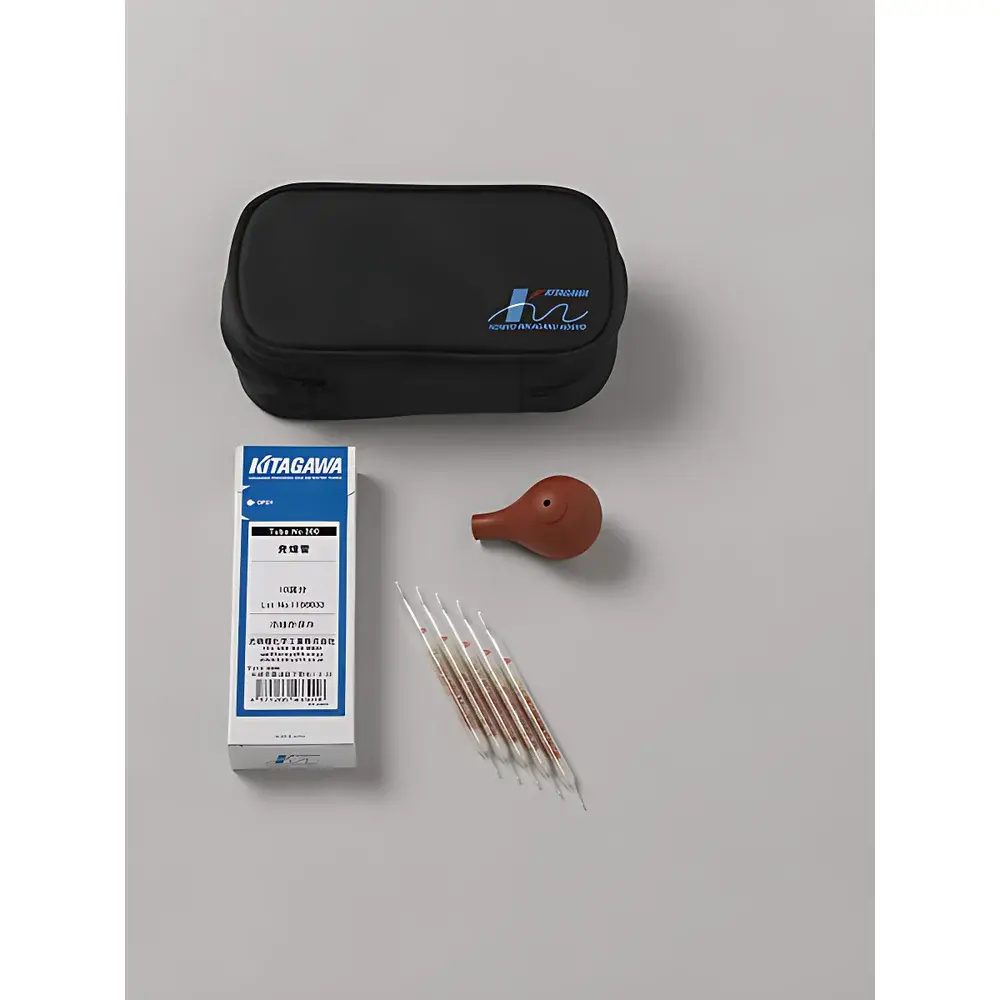
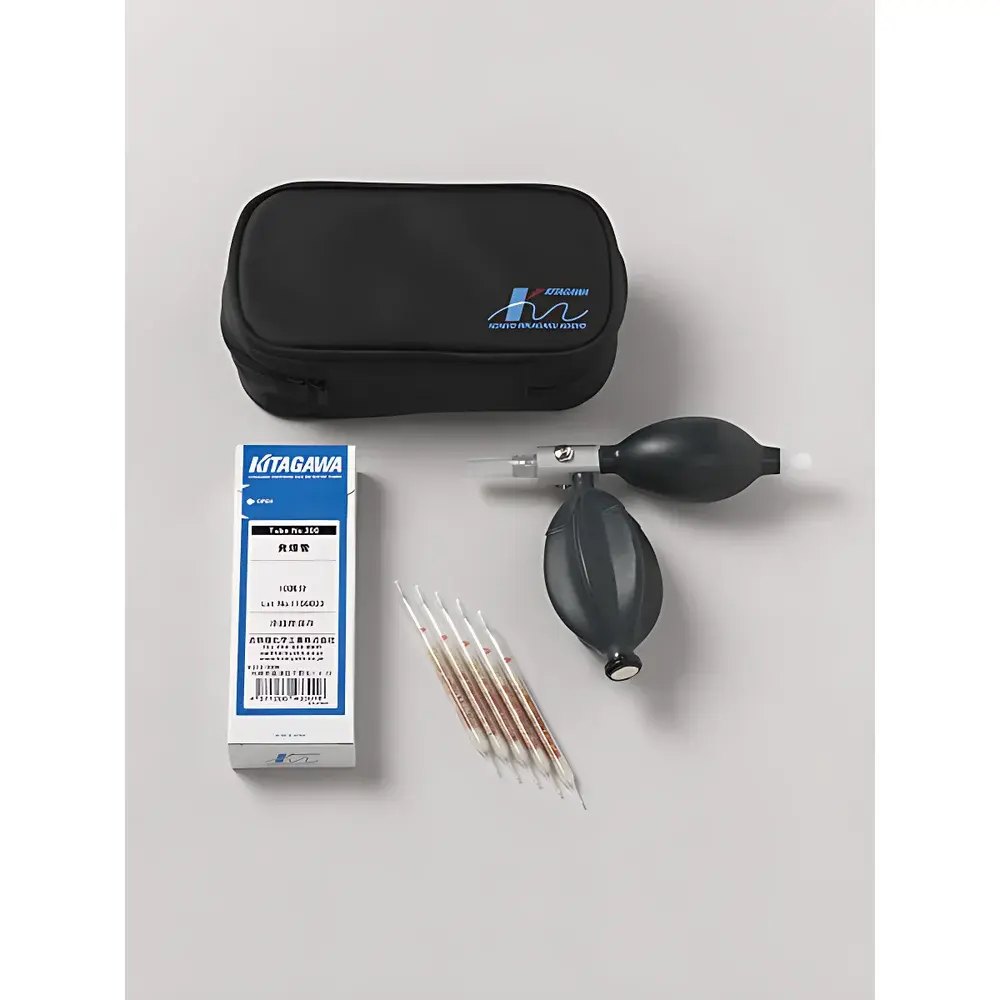
NorthKawakami Model 301 Titanium Tetrachloride (TiCl₄) Smoke Tube
| Brand | Meiko Rikka |
|---|---|
| Origin | Japan |
| Manufacturer Type | Authorized Distributor |
| Origin Category | Imported |
| Model | 301 |
| Pricing | Available Upon Request |
Overview
The NorthKawakami Model 301 Titanium Tetrachloride (TiCl₄) Smoke Tube is a precision-engineered, portable visual airflow tracer designed for qualitative and semi-quantitative assessment of air movement in controlled environments. It operates on the well-established chemical reaction between titanium tetrachloride (TiCl₄) and ambient moisture: TiCl₄ + 2H₂O → TiO₂ (colloidal white aerosol) + 4HCl. This exothermic hydrolysis generates a dense, non-toxic, transient white smoke plume—ideal for real-time visualization of laminar flow patterns, turbulence zones, dead spaces, and directional integrity in cleanrooms (ISO Class 1–8), pharmaceutical manufacturing suites, biosafety cabinets, hospital isolation rooms, and HVAC commissioning sites. Unlike electronic anemometers or particle image velocimetry systems, the Model 301 provides immediate, intuitive, operator-independent spatial feedback without requiring calibration, power supply, or data interpretation—making it indispensable during rapid validation, troubleshooting, or regulatory walkthroughs.
Key Features
- Chemically stable TiCl₄ reagent sealed in borosilicate glass tubing with calibrated dosage (±5% mass consistency per unit)
- Three integrated actuation configurations: AS-1 (single-pulse thumb-controlled squeeze), AS-2 (multi-pulse buffered discharge via integrated air reservoir), and AS-3 (remote-mountable adapter for inaccessible or high-risk zones)
- Optimized smoke density and residence time: visible plume persists 8–12 seconds under standard indoor conditions (20–25°C, 40–60% RH), enabling reliable trajectory tracking
- Reusable black polypropylene end caps included for safe post-use sealing—prevents residual vapor release and protects personnel from accidental contact
- Compact form factor (Ø12 mm × 150 mm) compatible with standard cleanroom gloves; no metal components to avoid particulate shedding
- CE-marked packaging compliant with UN 2922 (Corrosive Liquids, N.O.S.) transport regulations for laboratory-grade TiCl₄ solutions
Sample Compatibility & Compliance
The Model 301 is validated for use in ISO 14644-1/3 cleanroom certification, EU GMP Annex 1 (2022) airflow mapping requirements, and USP / environmental monitoring protocols. Its TiCl₄-based chemistry avoids interference from common cleanroom disinfectants (e.g., hydrogen peroxide vapor, quaternary ammonium compounds) and exhibits negligible residue on stainless steel, polycarbonate, or epoxy-coated surfaces after ventilation. Each batch undergoes lot-specific stability testing per JIS K 0067 (Japanese Industrial Standard for Reagent Purity) and is supplied with CoA documenting water content (<0.1 wt%), acidity (pH of aqueous extract: 1.2–1.6), and particulate count (<10 particles ≥0.5 µm per mL suspension). Not intended for use in oxygen-enriched or explosive atmospheres (per IEC 60079-0).
Software & Data Management
As a passive physical tracer, the Model 301 requires no embedded electronics, firmware, or software interface. Quantitative analysis is performed externally using standardized methodologies: airflow velocity (V, m/s) is calculated as V = L / t, where L is the measured linear displacement (in meters) of the smoke front over time t (in seconds), recorded via synchronized high-speed imaging (≥240 fps) or calibrated stopwatch + metric scale. Volumetric flow rate (Q, m³/s) is derived as Q = A × V, with cross-sectional area A determined from architectural drawings or laser distance meter measurements. Data documentation complies with ALCOA+ principles when captured in validated electronic lab notebooks (ELN) or paper-based records meeting FDA 21 CFR Part 11 audit trail requirements.
Applications
- ISO 14644-3 Annex B.4 airflow pattern verification in unidirectional flow hoods and isolators
- GMP-compliant smoke studies for Grade A/B zone qualification prior to media fill campaigns
- HVAC system balancing and duct leakage detection in pharmaceutical facilities
- Validation of fume hood face velocity uniformity and sash operation effects
- Educational demonstration of Bernoulli’s principle and boundary layer behavior in university engineering labs
- Emergency response assessment of ventilation efficacy in pandemic-containment wards
FAQ
Is the smoke generated by the Model 301 hazardous to operators?
The TiO₂ aerosol is non-carcinogenic and classified as GRAS (Generally Recognized As Safe) for short-term exposure at concentrations below 10 mg/m³ (OSHA PEL). HCl byproduct remains below 0.1 ppm in typical room volumes with ≥12 ACH ventilation.
Can the tubes be reused after capping?
No. Each tube is a single-use, pre-dosed consumable. Resealing only prevents post-test vapor emission—it does not restore reagent integrity.
What is the shelf life and storage requirement?
24 months from manufacture when stored upright at 5–25°C, protected from light and humidity. Do not refrigerate.
Does humidity affect smoke generation performance?
Yes. Below 30% RH, smoke density decreases; above 75% RH, premature hydrolysis may occur inside the tube. Optimal range: 40–60% RH.
Are there alternatives for chlorine-sensitive environments?
Yes. NorthKawakami offers glycerol-based (Model 302) and mineral oil-based (Model 303) tracer variants for applications where chloride compatibility is critical.
Related Products







