
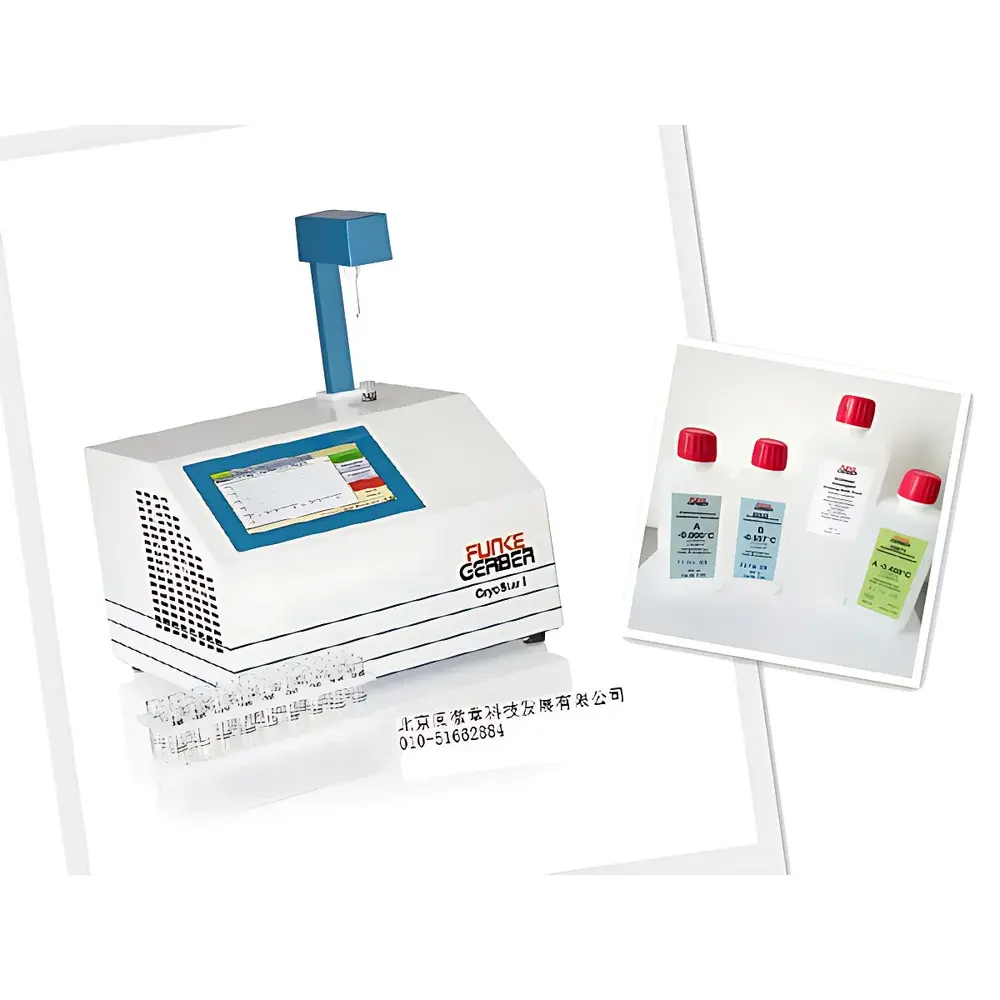
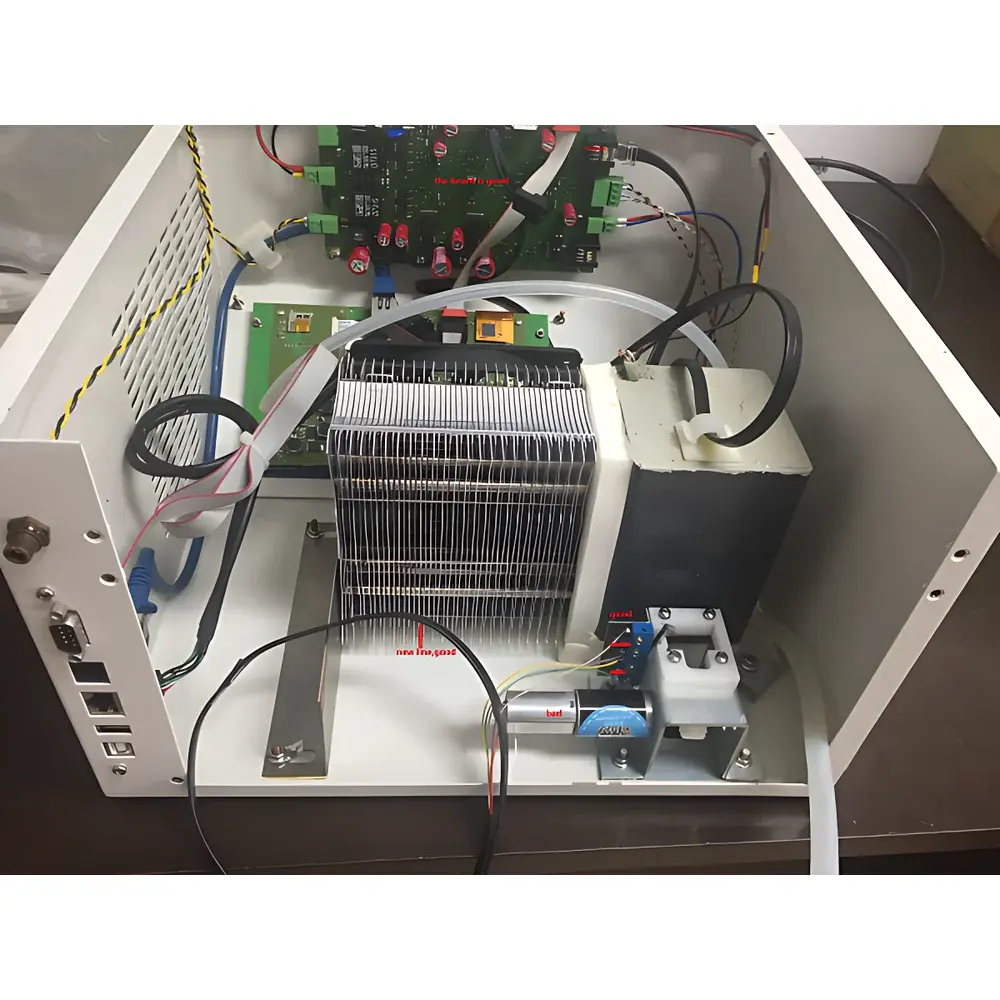
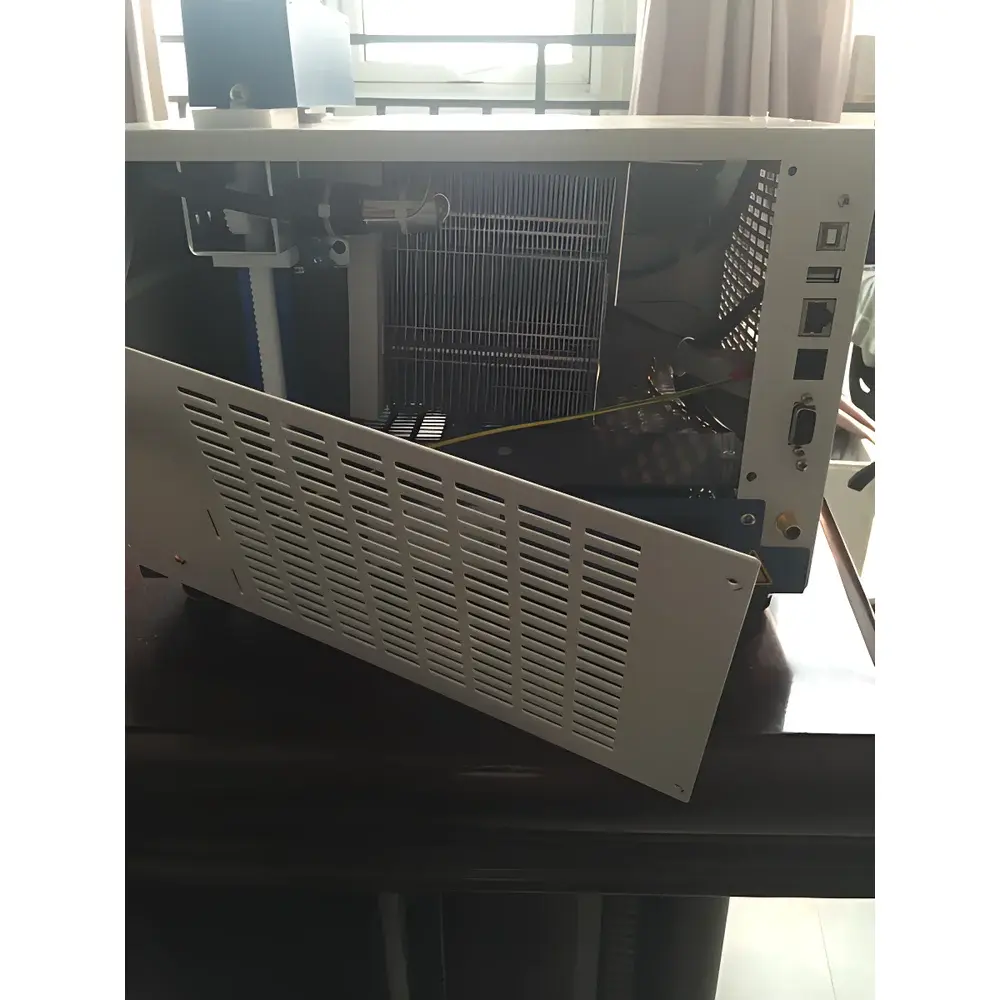
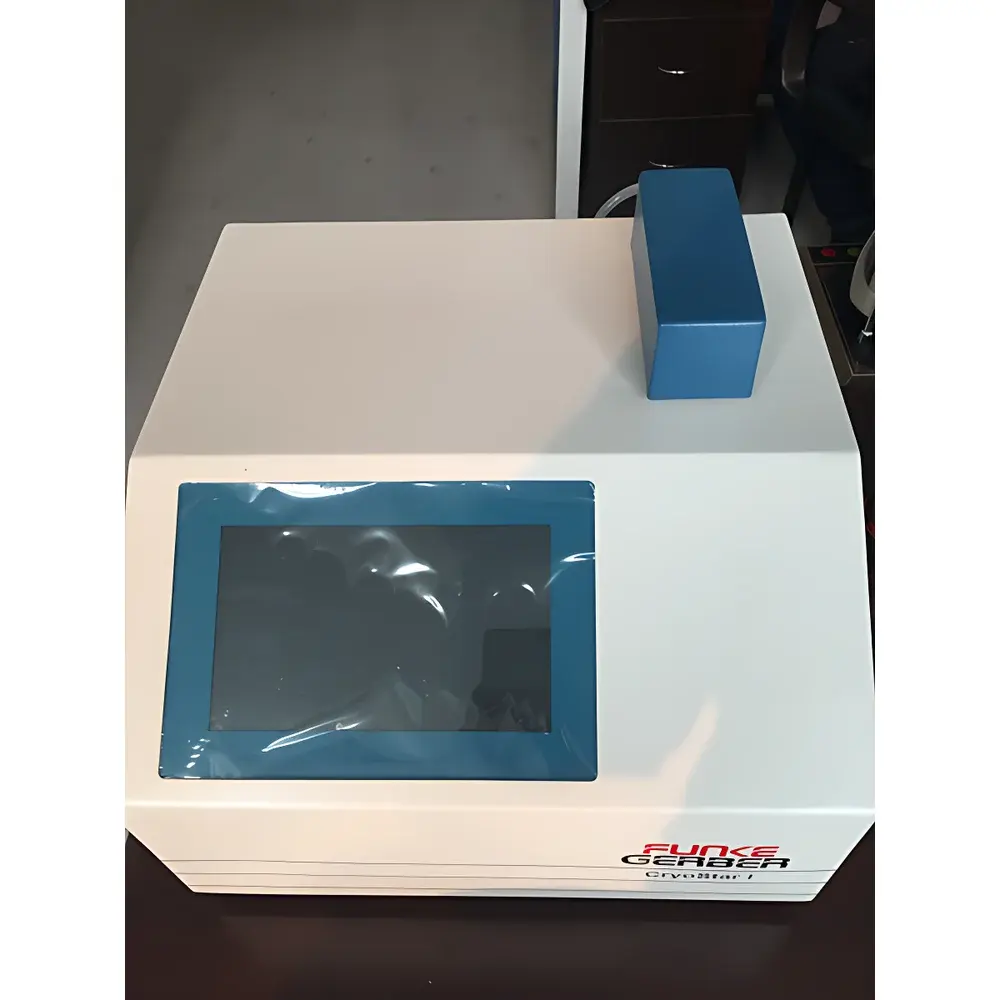
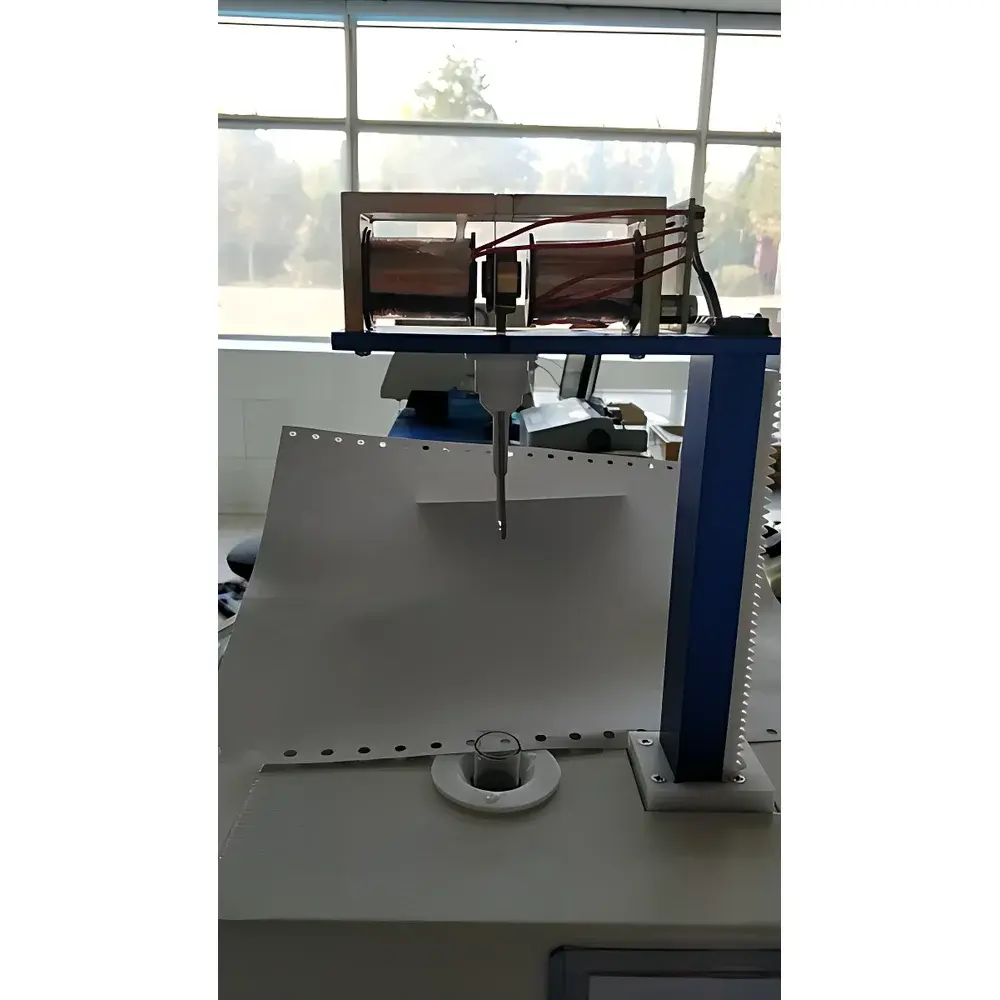
Gerber CryoStar I Milk Cryoscope
| Brand | GERBER |
|---|---|
| Origin | Germany |
| Model | CryoStar I |
| Measurement Range | 0.0000 to −1.5000 °C |
| Resolution | 0.0001 °C (0.1 m°C) |
| Accuracy | ±0.002 °C (repeatability) |
| Sample Volume | 2.0–2.5 mL |
| Throughput | up to 40 samples/hour (typical: 30 samples/hour) |
| Cooling Time | ≤15 min to operational temperature |
| Display | Full-color LCD touchscreen |
| Data Interfaces | RS232, 2× USB (U-disk data export) |
| Power Supply | 220 V / 50 Hz, 180 W |
| Dimensions | 29 × 33 × 34 cm |
| Weight | 8.7 kg |
Overview
The Gerber CryoStar I Milk Cryoscope is a precision freezing-point depression instrument engineered for rapid, traceable, and regulatory-compliant determination of water adulteration in raw and processed bovine milk. It operates on the fundamental colligative principle that dissolved solutes—primarily lactose, salts, and proteins—lower the freezing point of milk relative to pure water. While distilled water freezes at 0.0000 °C, authentic bovine milk exhibits a characteristic freezing point range of −0.5200 to −0.5300 °C. Any dilution with potable water elevates this value linearly: approximately +0.0053 °C per 1% added water (v/v). The CryoStar I employs a high-stability platinum resistance thermometer (PRT) probe with 0.1 m°C resolution to detect the thermodynamic plateau during controlled crystallization, enabling direct quantification of adulteration percentage via built-in calibration algorithms compliant with ISO 5764:2022 and IDF Standard 120.
Key Features
- High-resolution thermal sensing system delivering 0.0001 °C resolution and ±0.002 °C repeatability across the full measurement range (0.0000 to −1.5000 °C)
- Integrated thermoelectric cooling module optimized for ambient operation up to 35 °C; achieves stable sub-zero operating conditions within ≤15 minutes
- Automated freeze-point detection algorithm with real-time curve visualization—identifies nucleation onset, plateau duration, and recalescence inflection points
- Onboard calculation engine computes water adulteration % using user-selectable reference baselines (e.g., −0.5250 °C default or lab-specific mean)
- Full parameter programmability: customizable calibration intervals, operator ID assignment, pass/fail thresholds, and auto-correction protocols
- Rugged benchtop design (8.7 kg, 29 × 33 × 34 cm) with shock-absorbing chassis and sealed electronics for dairy plant floor environments
Sample Compatibility & Compliance
The CryoStar I accepts 2.0–2.5 mL of homogenized, unfiltered raw or pasteurized milk without pre-treatment. It is validated for use with bovine milk meeting ISO 707:2019 compositional specifications. Instrument performance adheres to ISO/IEC 17025:2017 requirements for testing laboratories and supports GLP/GMP audit readiness through full traceability: each report includes timestamp, operator ID, calibration status, sample ID, freeze-curve plot, detected freezing point, calculated water addition %, and system error codes. Data export via USB mass storage complies with FDA 21 CFR Part 11 when paired with validated LIMS integration—no electronic signatures required for routine QC screening.
Software & Data Management
- Embedded firmware v3.2+ supports dual-language UI (English/German), touch-optimized navigation, and context-sensitive help
- Real-time freeze-curve display with zoomable X/Y axes and overlay comparison of current vs. reference curves
- Internal memory stores ≥500 test records with full metadata; USB export generates CSV files compatible with Excel, JMP, or laboratory informatics platforms
- RS232 serial interface enables bidirectional communication with central QC servers or automated sampling systems (e.g., robotic arms or inline divert valves)
- Calibration history log retains date, technician ID, standard used (e.g., certified −0.5280 °C glycol reference), and deviation values for internal QA review
Applications
The CryoStar I serves as a primary screening tool across the dairy supply chain: at farm-gate collection centers for supplier qualification; in receiving bays of processing plants to enforce contractual solids content clauses; and within quality control labs for batch release verification. Its throughput (30–40 samples/hour) supports high-volume intake scenarios, while its portability—compatible with 12 V DC automotive power adapters—enables mobile auditing in remote collection hubs. Regulatory applications include compliance monitoring per EU Regulation (EC) No 853/2004 Annex III Section IX and national standards such as China’s GB 19301–2010 and India’s FSSAI Milk Adulteration Guidelines. It is not intended for ultra-high-precision research (e.g., isotopic fractionation studies) nor for non-bovine milks without method validation.
FAQ
What is the theoretical basis for detecting water adulteration using freezing point depression?
Freezing point depression is a colligative property dependent on total solute molality. Milk’s natural solutes—lactose (~4.8%), mineral salts (~0.8%), and whey proteins—establish a baseline depression of ~0.525 °C. Adding water reduces solute concentration, raising the freezing point predictably.
Does the CryoStar I require daily recalibration?
No. Factory calibration remains stable for ≥6 months under normal use. Daily verification using a certified reference standard (e.g., −0.5280 °C glycol solution) is recommended before first use and after environmental shifts >5 °C.
Can it analyze reconstituted powdered milk or plant-based beverages?
Not without method validation. The instrument’s algorithms assume bovine milk’s native solute profile. Non-dairy matrices require custom calibration curves and are outside ISO 5764 scope.
Is the USB data export function compatible with LIMS validation protocols?
Yes—CSV exports contain all required audit trail elements. When used with documented procedures for file integrity checks (e.g., SHA-256 hash logging), it satisfies ALCOA+ principles for raw data archiving.
How does ambient temperature affect measurement stability?
The thermoelectric cooler compensates for ambient loads up to 35 °C. However, drafts or direct sunlight on the test head may induce thermal noise; placement in stable, draft-free locations is advised.





