
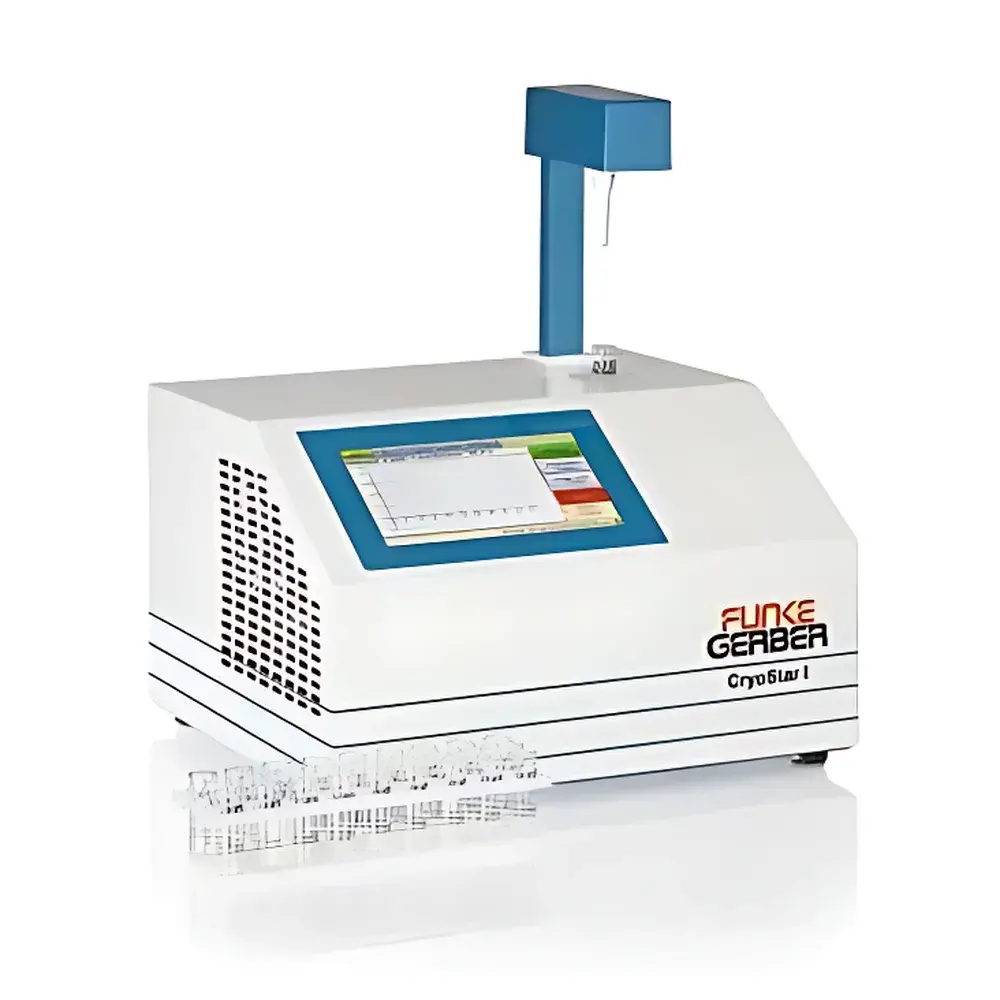
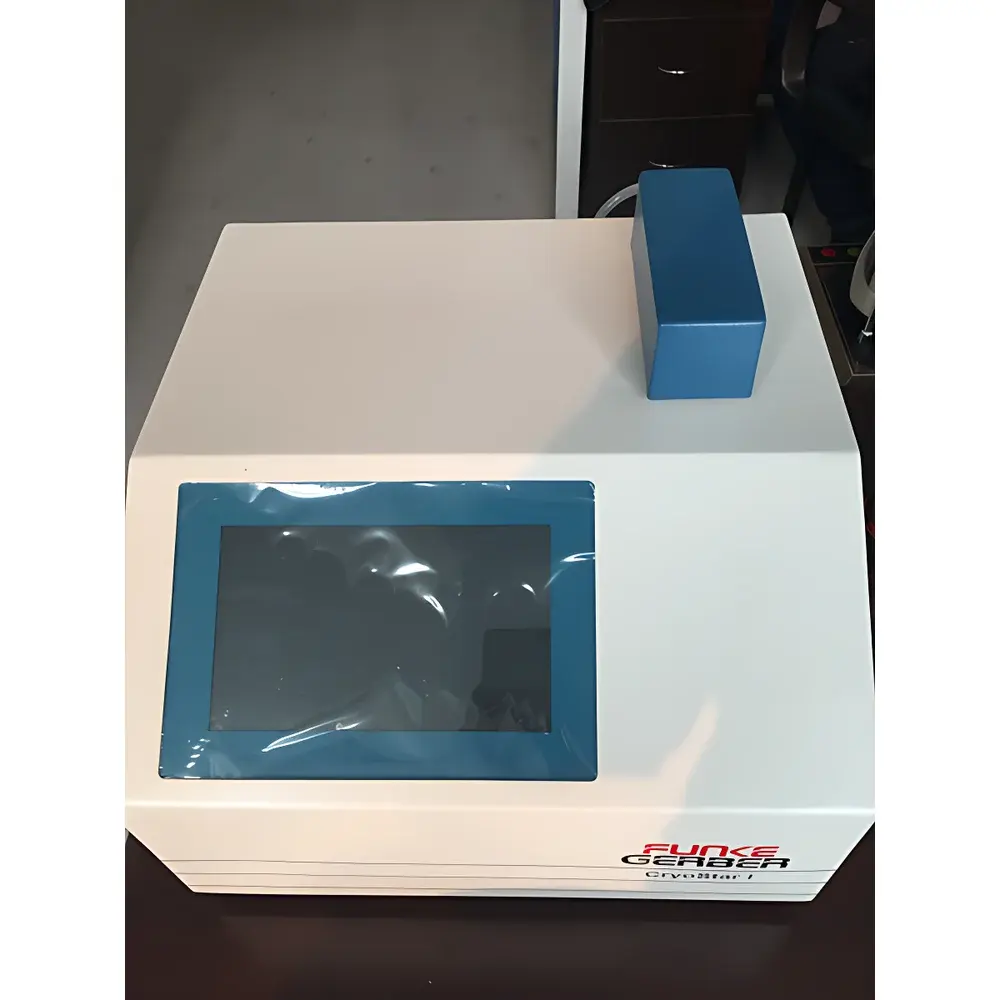
GERBER CryoStar I Touchscreen Milk Cryoscope
| Brand | GERBER |
|---|---|
| Origin | Germany |
| Model | CryoStar I |
| Measurement Range | 0.000 to −1.5000 °C |
| Resolution | 0.0001 °C (0.1 m°C) |
| Repeatability | ±0.002 °C |
| Sample Throughput | up to 40 samples/hour (typical: 30 samples/hour) |
| Sample Volume | 2.0–2.5 mL |
| Cooling Time to Operating Temperature | ≤15 min |
| Display | Full-color LCD touchscreen |
| Data Output | Ice-point curve, ice-point value, water adulteration percentage, timestamp, operator ID, calibration status, error codes |
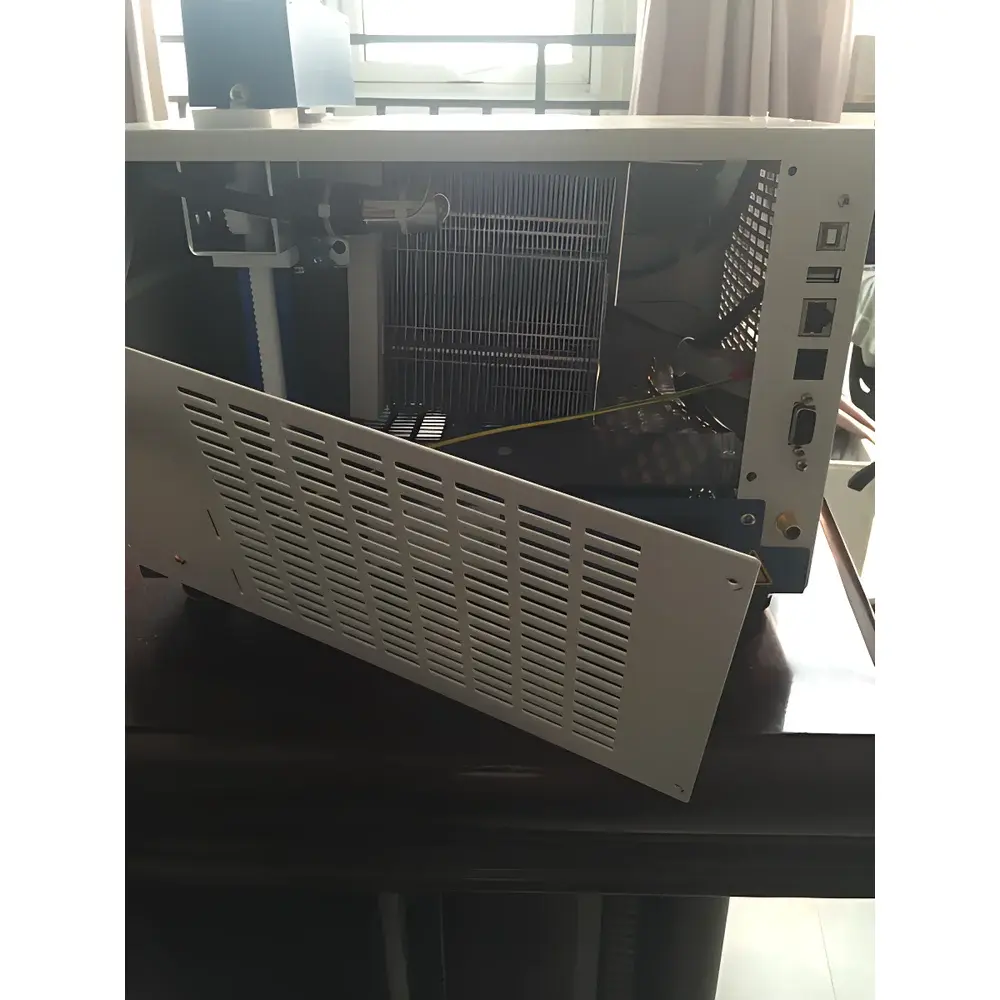
| Interfaces | RS232, two USB ports (U-disk data export supported) |
| Power Supply | 220 V / 50 Hz, 180 W |
| Dimensions (W×D×H) | 29 × 33 × 34 cm |
| Weight | 8.7 kg |
Overview
The GERBER CryoStar I Touchscreen Milk Cryoscope is a precision cryoscopic instrument engineered for the rapid and traceable determination of the freezing point depression in raw and processed bovine milk. Based on the fundamental colligative property that dissolved solutes lower the freezing point of aqueous solutions, the CryoStar I applies controlled thermal cycling and high-resolution thermometry to detect minute deviations from the reference freezing point of pure water (0.000 °C). In intact milk, the natural solute concentration—primarily lactose, minerals, and soluble proteins—yields a characteristic freezing point of approximately −0.520 °C. Adulteration with exogenous water increases the total solvent mass without proportionally increasing solutes, thereby shifting the measured freezing point toward 0.000 °C. The CryoStar I quantifies this shift with sub-millidegree resolution (0.0001 °C), enabling reliable detection of water addition at levels as low as 0.5% (v/v), in full compliance with ISO 5764:2022, IDF 101A:2022, and EU Regulation (EC) No 853/2004 Annex III.
Key Features
- High-precision thermistor-based sensing system calibrated against NIST-traceable standards, delivering ±0.002 °C repeatability across daily operational cycles.
- Integrated Peltier-based active cooling module with dynamic thermal regulation, achieving stable sub-zero operating temperature (−7 °C bath setpoint) within ≤15 minutes—even under ambient conditions up to 35 °C.
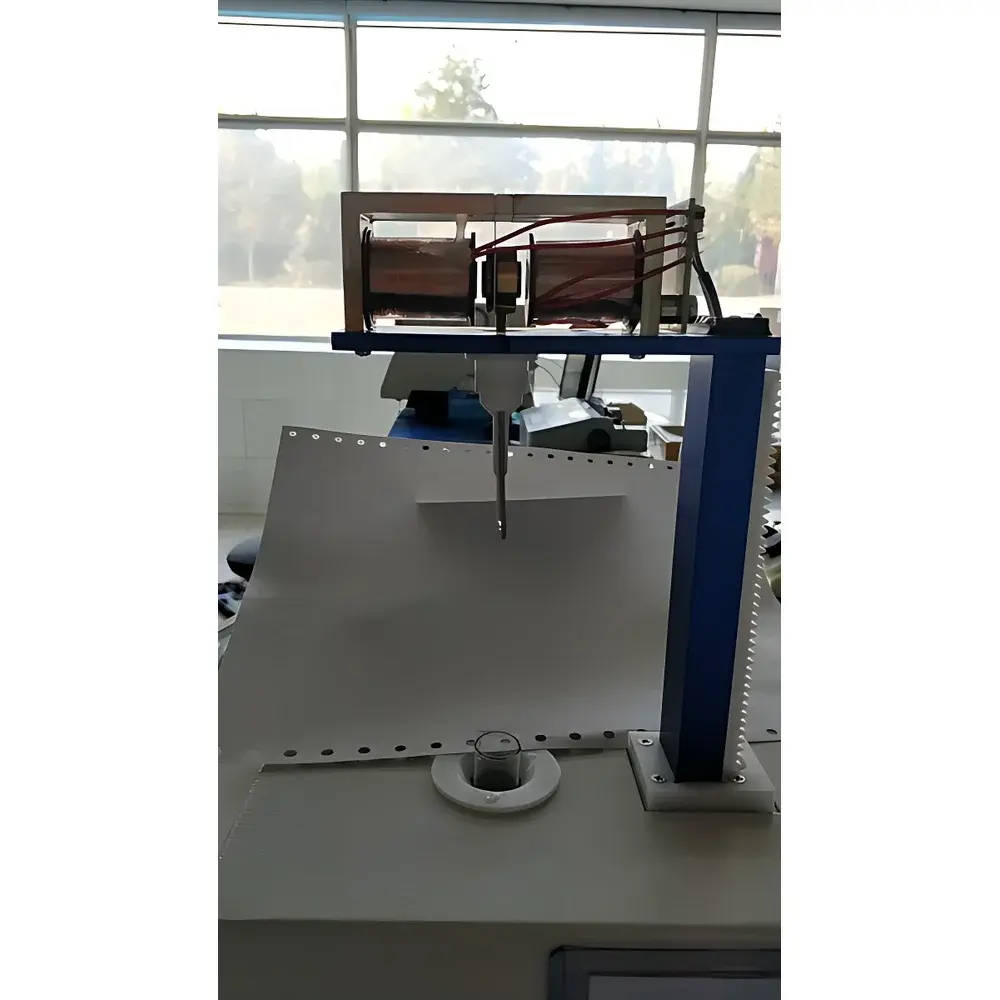
- 24-cm vertical test head design optimized for consistent sample immersion depth and minimized thermal gradient effects during nucleation and crystal growth phases.
- Intuitive 7-inch color LCD touchscreen interface supporting multilingual operation (English, German, Spanish, French), user-defined method templates, and password-protected access levels for operator, supervisor, and administrator roles.
- Automated water adulteration calculation per ISO 5764 Annex B, using built-in milk-specific colligative constants and correction factors for lactose and ash content.
- Self-diagnostic routines including sensor drift verification, refrigeration efficiency monitoring, and real-time thermal noise profiling to ensure measurement integrity prior to each analysis.
Sample Compatibility & Compliance
The CryoStar I accepts raw, pasteurized, standardized, or homogenized bovine milk without pre-filtration or dilution. It is validated for use with milk containing fat content ranging from 0.5% to 6.0% and somatic cell counts up to 1.5 × 10⁶/mL. Samples must be free of visible clots, excessive sediment, or microbial spoilage that may interfere with homogeneous nucleation. Instrument performance meets the metrological requirements of ISO/IEC 17025:2017 for testing laboratories and supports audit-ready documentation for GLP and GMP environments. All calibration and verification procedures align with GERBER’s certified service protocol and are compatible with internal quality control schemes per ISO 862:2020 (Milk — Determination of freezing point).
Software & Data Management
Data acquisition, processing, and reporting are fully embedded within the device firmware—no external PC is required for routine operation. Each result includes a time-stamped graphical freezing curve (temperature vs. time), annotated with supercooling onset, crystallization plateau, and final equilibrium point. All metadata—including operator ID, sample ID, calibration history, environmental temperature, and system error logs—are stored internally and exportable via USB flash drive in CSV or PDF format. The RS232 interface enables bidirectional communication with LIMS platforms compliant with ASTM E1578-22 (Standard Guide for Laboratory Information Management Systems). Audit trails record all parameter modifications, calibration events, and user logins, satisfying FDA 21 CFR Part 11 requirements for electronic records and signatures when deployed with appropriate IT governance controls.
Applications
- Routine incoming raw milk inspection at dairy collection centers to enforce contractual water-adulteration limits.
- Quality assurance in UHT and ESL milk production lines where freezing point stability serves as a secondary indicator of compositional consistency.
- Research applications investigating the impact of mastitis, seasonal feed variation, or breed-specific mineral profiles on milk freezing point baseline shifts.
- Regulatory laboratory testing for national food safety authorities conducting surveillance under EC Regulation 853/2004 and Codex Alimentarius Standard CXS 206-1999.
- Method validation studies supporting accreditation to ISO/IEC 17025, particularly for laboratories seeking scope extension to milk authenticity testing.
FAQ
What is the minimum detectable level of water adulteration?
The CryoStar I reliably detects water addition ≥0.5% (v/v) under standard operating conditions, assuming representative sampling and adherence to ISO 5764 sample handling protocols.
Does the instrument require daily recalibration?
No—daily verification using certified reference milk (CRM) is sufficient; full calibration is recommended every 30 days or after maintenance, following GERBER’s documented procedure.
Can the CryoStar I measure non-bovine milks (e.g., goat, sheep)?
While technically capable of measuring freezing point depression, species-specific correction algorithms and reference baselines are not preloaded; users must implement custom calibration curves validated per ISO 22119:2021.
Is the touchscreen interface compatible with glove use in cold-room environments?
Yes—the capacitive screen supports operation with standard nitrile or latex gloves; optional stylus input is also supported.
How is thermal stabilization achieved during high-throughput operation?
The dual-stage Peltier system maintains bath temperature stability within ±0.005 °C over consecutive runs, enabled by adaptive duty-cycle modulation and real-time heat-load compensation.





