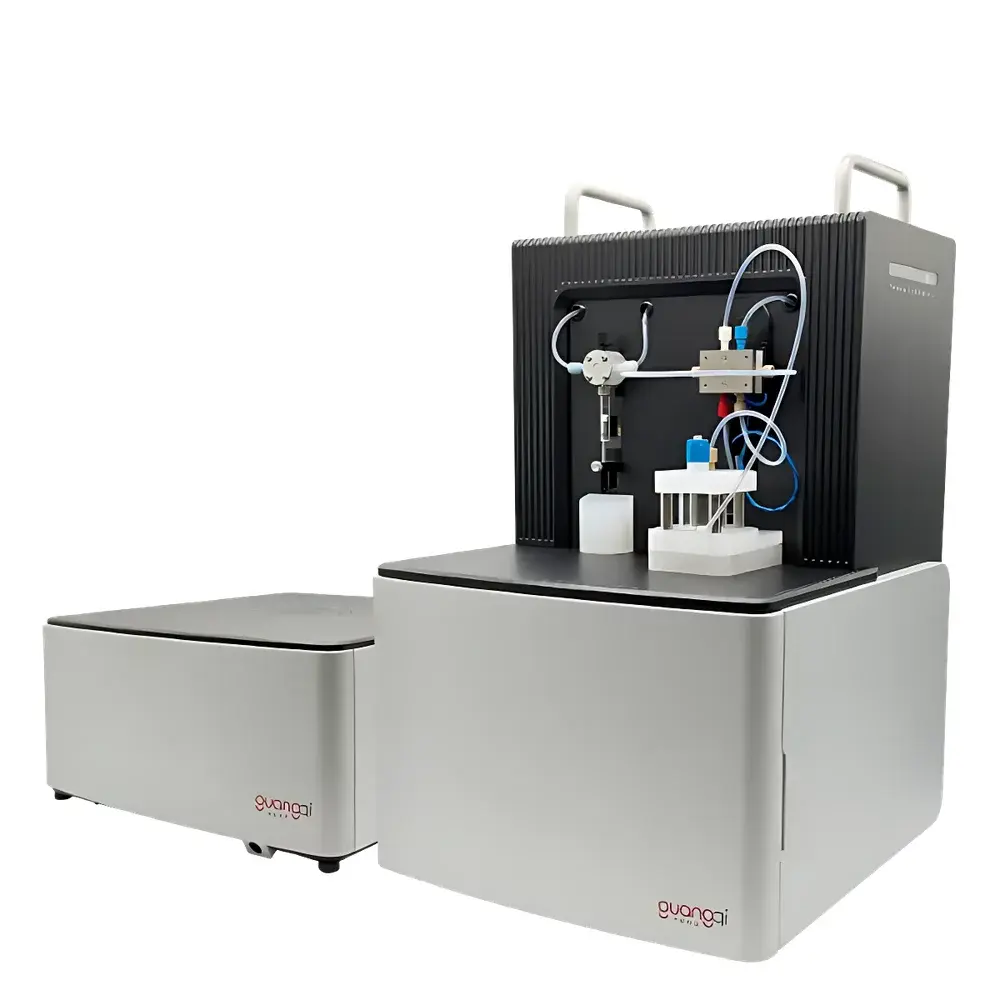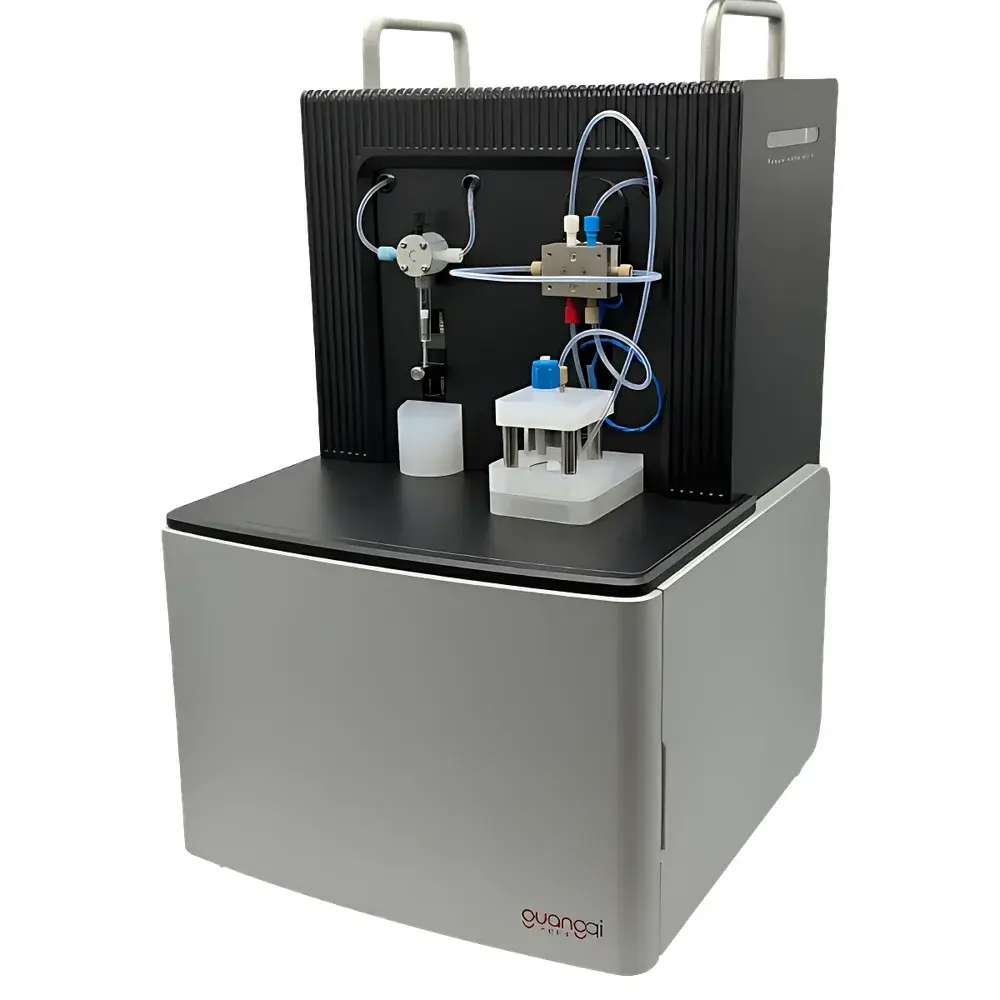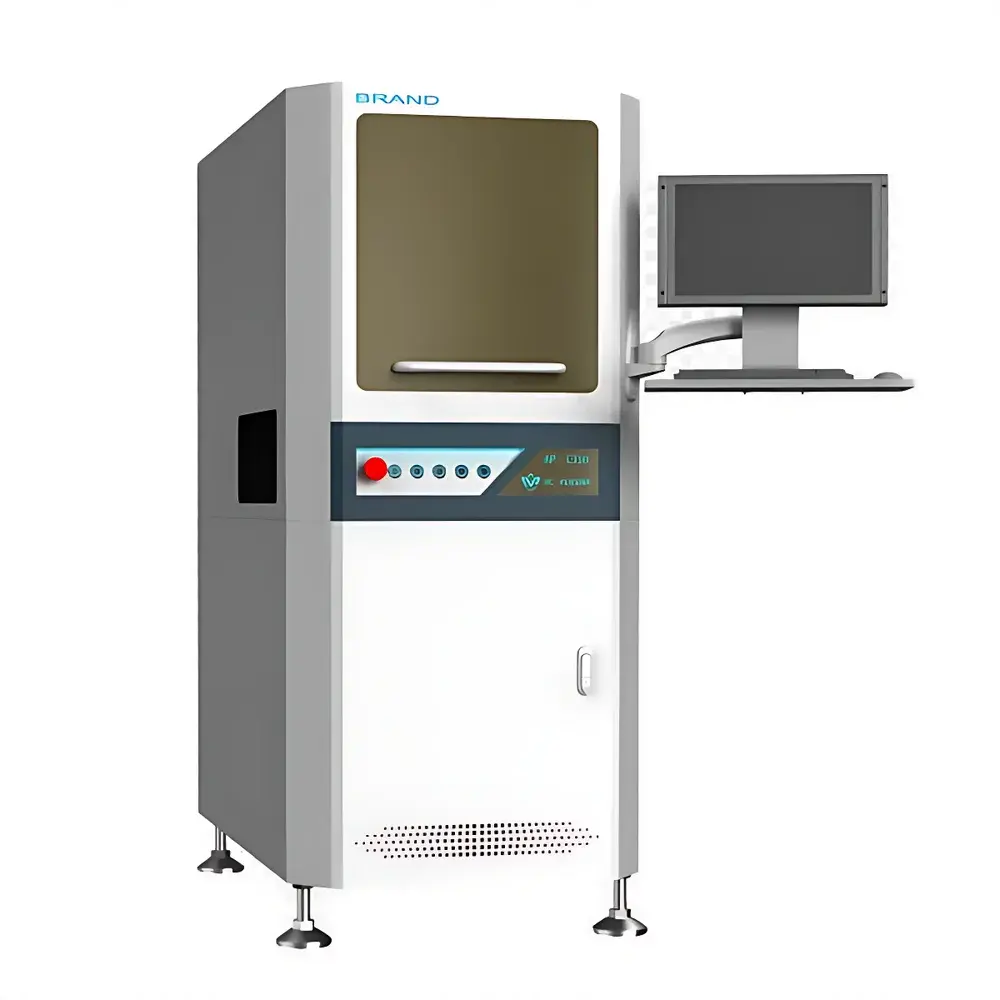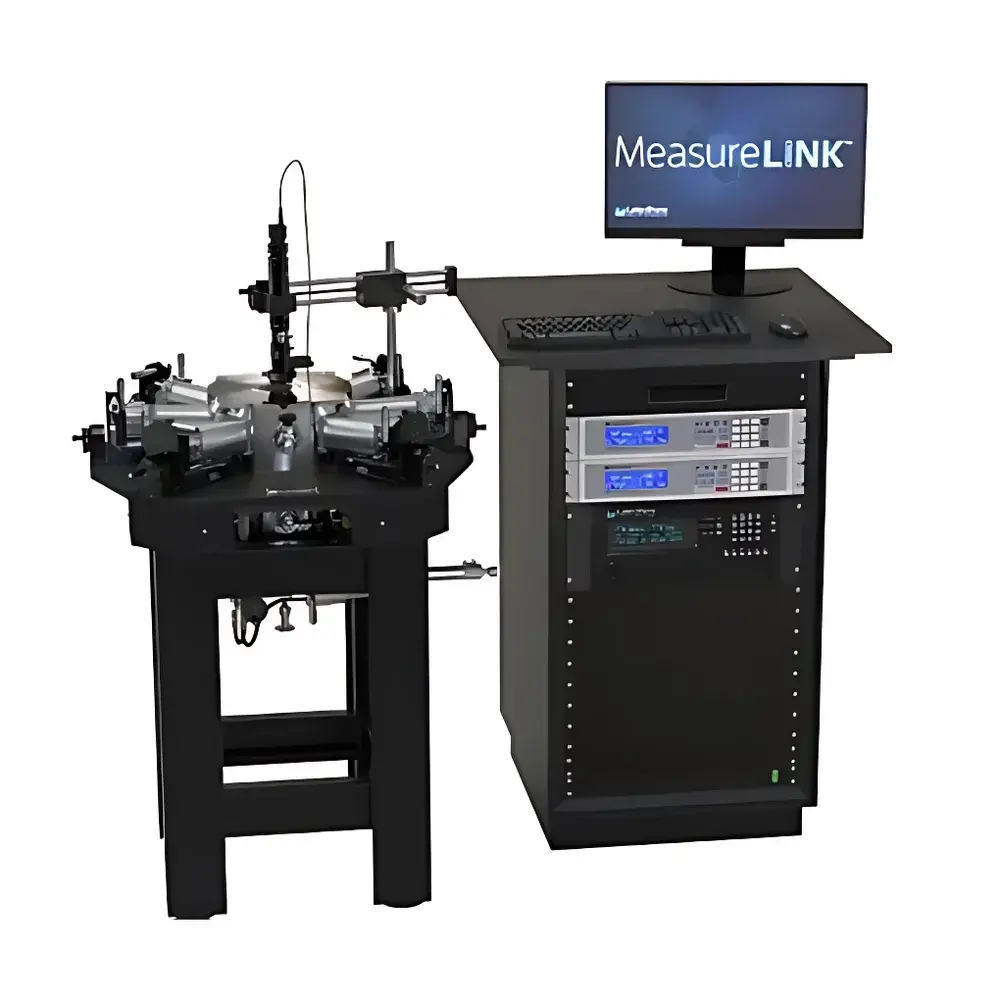
Lake Shore CPX-VF Cryogenic Superconducting Magnet Probe Station
| Brand | Lake Shore |
|---|---|
| Origin | USA |
| Model | CPX-VF |
| Temperature Range | 1.9 K to 400 K |
| Magnetic Field | ±2.5 T (vertical, superconducting solenoid) |
| Sample Diameter | Up to 51 mm (2") |
| Vacuum Base Pressure | <5×10⁻⁷ Torr (with PS-HV-CPX) |
| Probe Capacity | Up to 6 arms |
| Microwave Frequency Range | DC–67 GHz |
| Positional Stability | <30 nm (with PS-PVIS option) |
| Hall Effect Measurement Capability | Yes |
| UHV & Transfer-Compatible Vacuum Chamber Options | Available |
Overview
The Lake Shore CPX-VF Cryogenic Superconducting Magnet Probe Station is an engineered platform for low-temperature, high-field electrical, microwave, and optoelectronic characterization of semiconductor devices, quantum materials, and emerging 2D heterostructures. Built upon Lake Shore’s proven CPX series architecture, the CPX-VF integrates a persistent-mode superconducting solenoid magnet delivering a precisely controlled vertical magnetic field of ±2.5 T—orthogonal to the sample plane—to enable quantitative magnetotransport studies including Hall effect, Shubnikov–de Haas oscillations, and quantum Hall regime analysis. Its continuous-flow cryogenic design supports operation from 1.9 K (with PS-LT low-temperature option) to 400 K using liquid helium or liquid nitrogen, ensuring thermal stability across wide dynamic ranges critical for reproducible parametric sweeps. The system maintains true 90° probe-to-sample alignment over the full 51 mm (2-inch) wafer-compatible sample stage, with in-plane sample rotation (±5°) and sub-30 nm mechanical stability (with optional PS-PVIS active vibration isolation), making it suitable for sensitive measurements on organic semiconductors, topological insulators, and Josephson junction arrays where condensation and drift must be minimized.
Key Features
- Vertical superconducting magnet delivering ±2.5 T with field homogeneity of ≤0.5% over 10 mm Ø and ≤1% over 25 mm Ø
- Continuous-flow cryogenics supporting base temperatures down to 1.9 K (PS-LT option) and precise temperature control from 2 K to 400 K
- Thermal stability of ±15 mK below 10 K and ±20 mK between 101–250 K—validated under zero-heating conditions at base temperature
- Ultra-high vacuum (UHV) compatibility: base pressure <5×10⁻⁷ Torr with PS-HV-CPX turbomolecular pumping package
- 6-position probe arm configuration with integrated arm thermometry, radiation-shielded cold-stage mounting, and <5 µm field-induced probe tip displacement
- DC/RF probes with >100 GΩ insulation resistance for ultra-low leakage current measurement
- 67 GHz microwave probe capability for on-wafer S-parameter characterization under magnetic field
- Optical access via fiber-coupled ports enabling electro-optic and magneto-optic Kerr effect (MOKE) measurements
- Modular vacuum chamber design supporting in-situ transfer interfaces for glovebox-integrated sample loading and atmospheric isolation
Sample Compatibility & Compliance
The CPX-VF accommodates wafers and discrete samples up to 51 mm in diameter, with flatness tolerance maintained within ±2 µm over the central 25.4 mm region—the defined landing zone for all six probe tips. Sample cooling occurs without direct exposure to cryogen vapor, reducing frost formation on organic or hygroscopic specimens. The system complies with ASTM F1929 (vacuum integrity testing), ISO 20483 (cryogenic instrumentation calibration traceability), and supports GLP/GMP-aligned audit trails when integrated with Lake Shore’s BlueM™ software (FDA 21 CFR Part 11 compliant configuration available). All vacuum components meet ASME BPVC Section VIII standards; magnetic shielding conforms to IEC 61000-4-8 for immunity to external AC fields.
Software & Data Management
Control and synchronization are managed through Lake Shore’s BlueM™ software suite, which provides coordinated sequencing of temperature ramps, magnetic field sweeps, and multi-channel source-measure unit (SMU) triggering. The platform supports native integration with Keysight B1500A, Keithley 4200-SCS, and Anritsu Vector Network Analyzers via SCPI and IVI-C drivers. Data acquisition includes time-stamped metadata (temperature, field, vacuum pressure, probe position), encrypted storage, and export formats compatible with MATLAB, Python (HDF5), and LabVIEW. Audit logs record user actions, parameter changes, and instrument state transitions—fully configurable for regulated environments requiring electronic records per FDA 21 CFR Part 11.
Applications
- Quantum transport characterization: Hall mobility, carrier density, Landau level spectroscopy, and weak antilocalization in graphene, MoS₂, and Bi₂Se₃
- Superconductor device testing: critical current mapping, vortex dynamics, and Josephson junction IcRn product analysis under field
- RF/microwave validation of GaN HEMTs and SiGe HBTs at cryogenic bias points
- Electro-optic modulation response of LiNbO₃ or plasmonic waveguides under magnetic field
- Reliability stress testing of MEMS resonators and NEMS switches across thermal and magnetic domains
- In-situ doping and defect engineering studies using combined thermal cycling and field annealing protocols
FAQ
What cryogens are required to operate the CPX-VF with the superconducting magnet?
Liquid helium is mandatory for magnet operation due to the NbTi coil’s critical temperature (~9.2 K); liquid nitrogen may be used for pre-cooling or non-magnet configurations.
Can the CPX-VF perform automated multi-point I-V/C-V sweeps under magnetic field?
Yes—BlueM™ supports scriptable, synchronized sweeps across temperature, field, and bias parameters with hardware-triggered data capture from external SMUs and RF analyzers.
Is the system compatible with third-party vacuum interlocks or facility SCADA systems?
Standard RS-232, Ethernet/IP, and Modbus TCP interfaces are provided for integration into facility monitoring and safety interlock networks.
What is the maximum allowable sample thickness for full 90° probing clearance?
Samples up to 3.5 mm thick are supported without interference; custom stage inserts accommodate thicker substrates upon request.
Does Lake Shore provide application support for Hall effect modeling and carrier type extraction?
Yes—application engineers provide protocol templates, van der Pauw correction utilities, and TCAD-coupled fitting workflows for quantitative transport parameter extraction.