
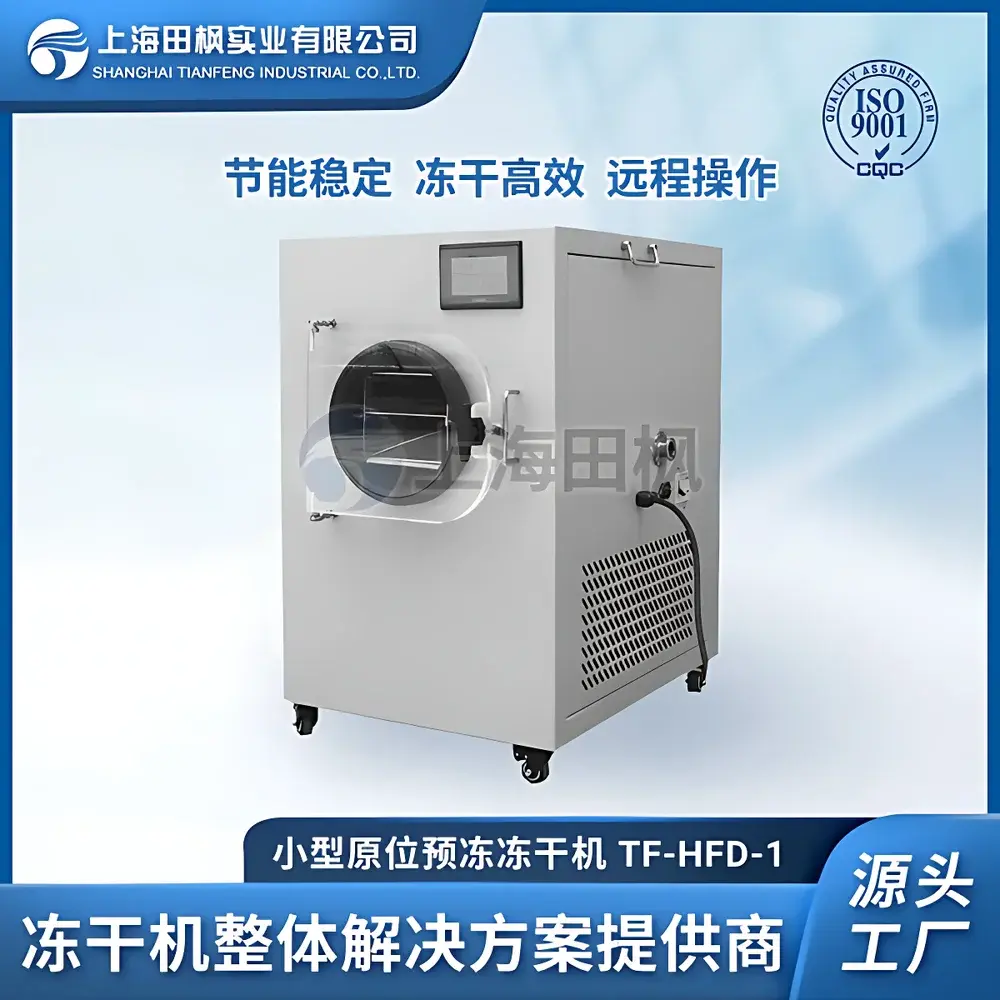
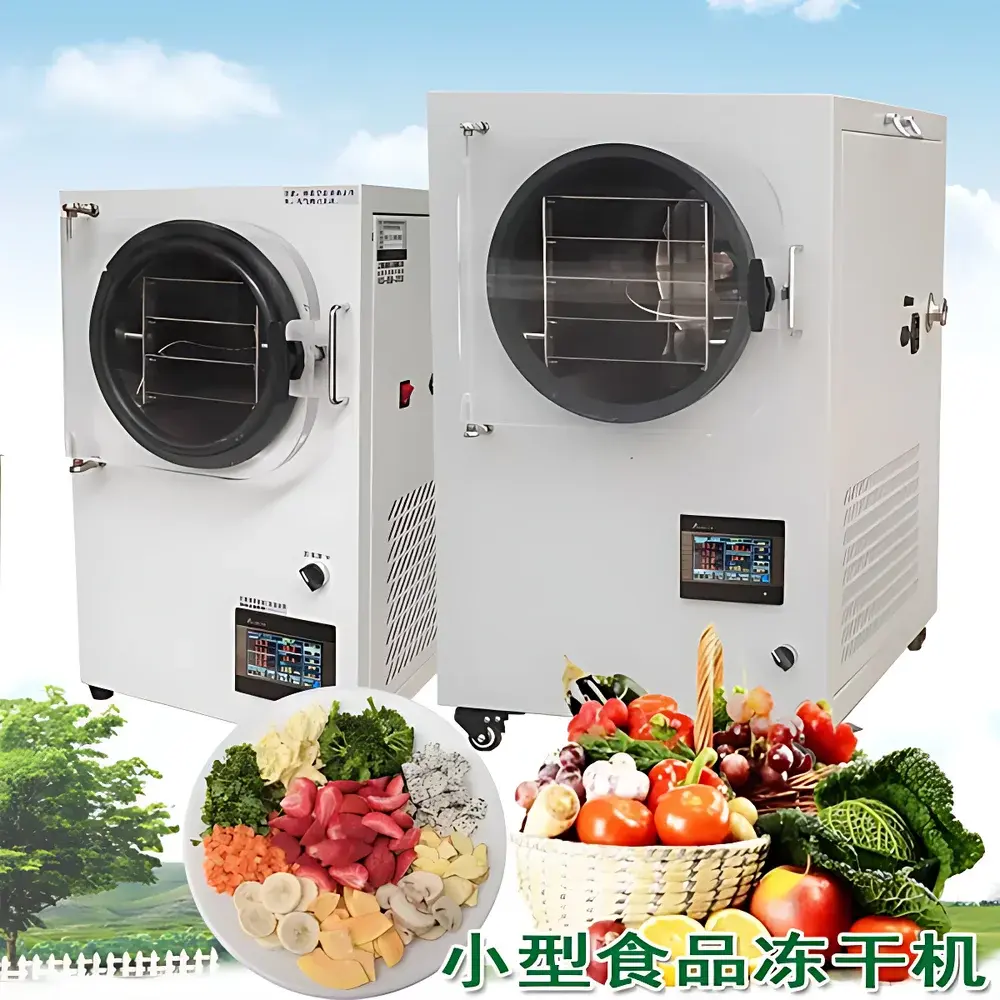
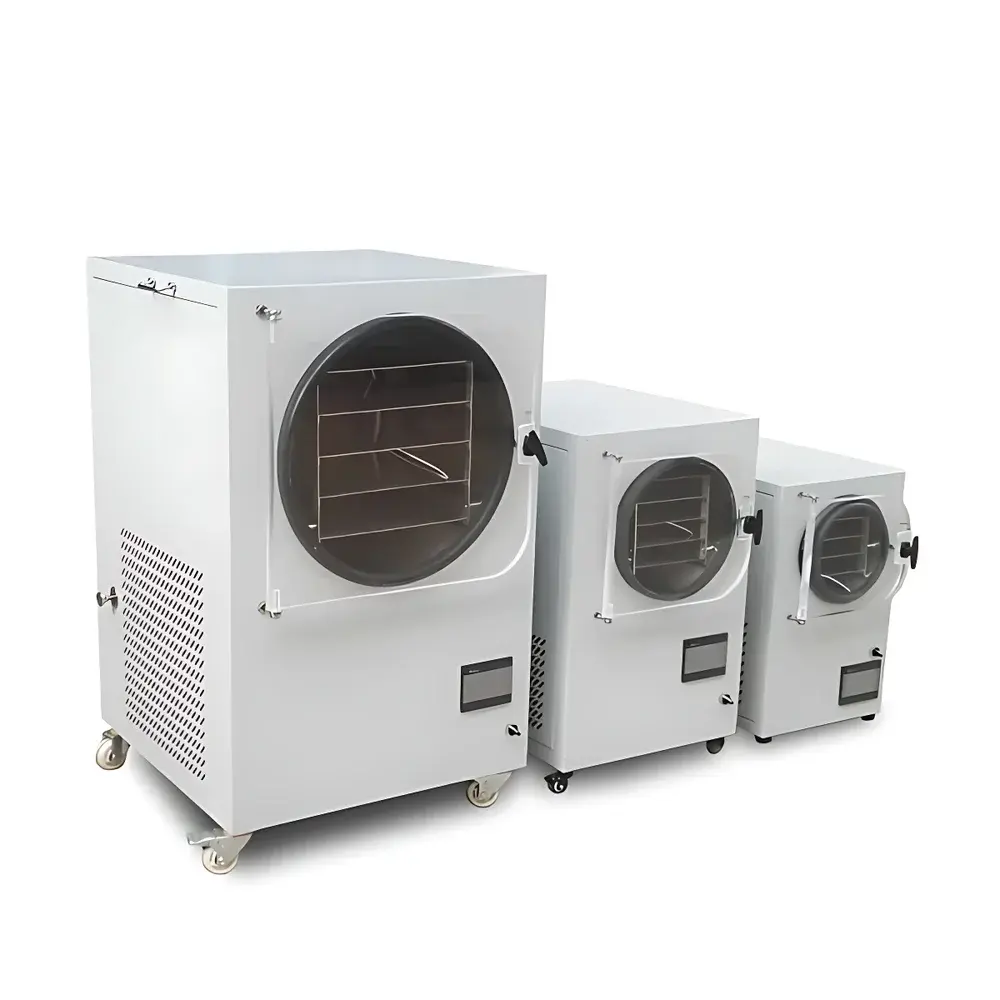
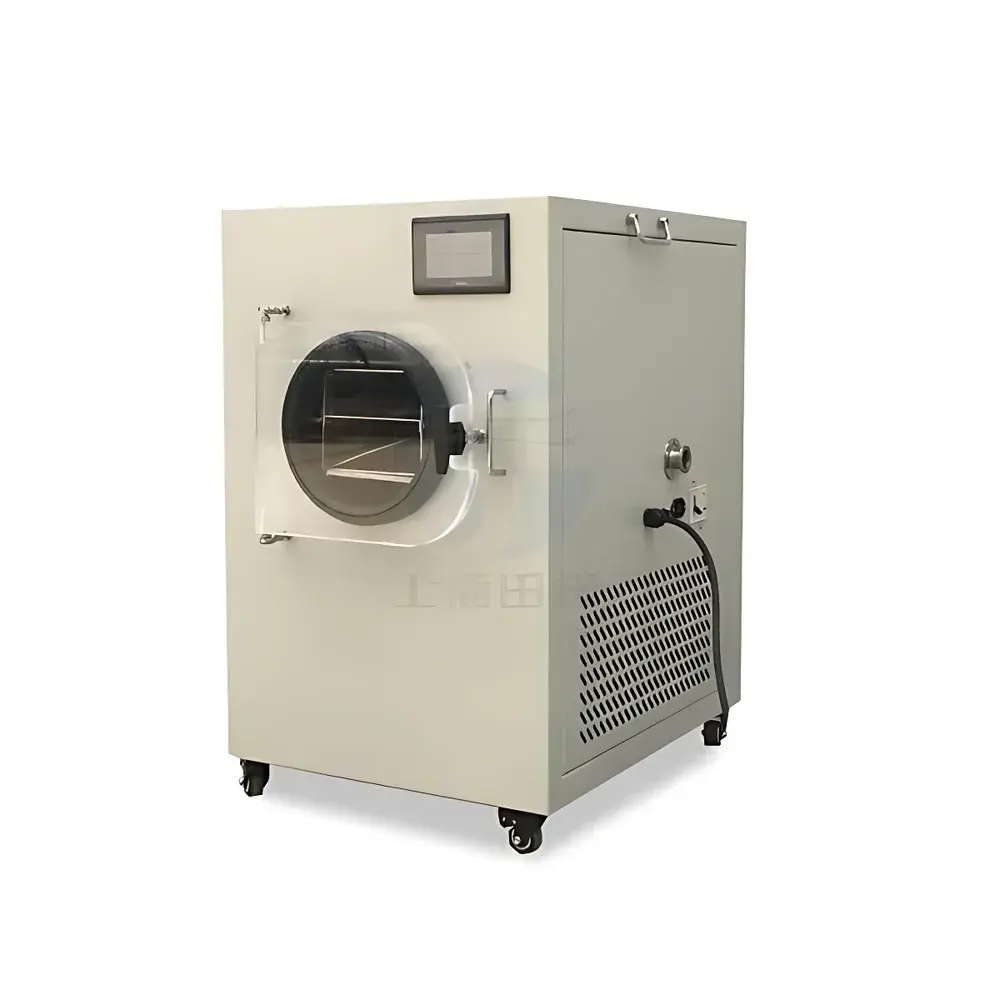
Tianfeng TF-HFD-1 Benchtop Food-Grade Freeze Dryer
| Brand | Tianfeng |
|---|---|
| Origin | Shanghai, China |
| Manufacturer Type | Direct Manufacturer |
| Product Category | Domestic |
| Model | TF-HFD-1 |
| Instrument Type | Standard Shelf-Type Freeze Dryer |
| Application Scope | Laboratory & Pilot-Scale Food Processing |
| Freeze-Drying Area | 0.1 m² |
| Ultimate Vacuum | ≤10 Pa (empty chamber) |
| Condenser Temperature | ≤−40 °C |
| Water Capture Capacity | 1–3 kg/24 h |
| Chamber Viewing Window | High-Transparency Colorless Organic Glass |
| Control System | Programmable Touchscreen with Password Protection |
| Shelf Heating | Yes, PID-Controlled |
| Programmable Stages | Multi-Stage Temperature/Vacuum Profile |
| Data Logging | Real-Time Shelf Temperature & Chamber Pressure Curves |
| Defrost Function | One-Touch Electric Defrost |
| Power Supply | 220 V, 50 Hz |
| Rated Power | 750 W |
| Dimensions (L×W×H, excl. door/handles) | 400 mm × 550 mm × 700 mm |
| Sample Tray Size | 145 mm × 275 mm |
| Compliance | Designed for GLP-aligned food R&D environments |
Overview
The Tianfeng TF-HFD-1 is a compact, benchtop shelf-type freeze dryer engineered for laboratory-scale development and pilot production of heat-sensitive food matrices—including coconut powder, pet nutrition formulations (e.g., duck meat snacks), and functional dietary ingredients. It operates on the fundamental principle of sublimation: frozen water is removed directly from the solid phase to vapor under controlled low-pressure conditions (≤10 Pa), preserving structural integrity, enzymatic activity, volatile aroma compounds, and nutritional bioavailability. Unlike spray drying or hot-air dehydration, freeze drying minimizes Maillard reactions, lipid oxidation, and protein denaturation—critical for maintaining palatability, shelf stability, and species-specific digestibility in premium pet foods. The unit integrates in-situ pre-freezing, programmable shelf heating, and real-time process monitoring—enabling full replication of industrial lyophilization cycles at a scalable, cost-effective footprint.
Key Features
- In-situ freezing and drying in a single chamber—eliminates sample transfer, reducing contamination risk and thermal shock.
- Programmable multi-stage control: users define time-temperature-vacuum profiles across freezing, primary drying, and secondary drying phases; parameters can be adjusted mid-cycle without interruption.
- Touchscreen HMI with password-protected access, graphical display of shelf temperature and chamber pressure curves, and automatic data logging (CSV export via USB).
- Stainless steel shelves with uniform heating (PID-controlled) and precise ±0.5 °C thermal stability—ensuring batch-to-batch reproducibility.
- High-transparency organic glass door enables continuous visual monitoring of ice sublimation, cake formation, and endpoint detection without vacuum break.
- Integrated electric defrost system with one-touch activation—reduces maintenance downtime and avoids manual ice chipping.
- Vacuum safety interlock prevents operation outside validated pressure thresholds, ensuring consistent drying kinetics and product quality.
Sample Compatibility & Compliance
The TF-HFD-1 accommodates standard food-grade trays (145 mm × 275 mm) and supports diverse sample formats: slurries, gels, purees, minced meats, and powdered suspensions. Its 0.1 m² drying area and ≥1 kg/24 h condensation capacity suit small-batch R&D (e.g., formulation optimization of coconut-based functional snacks) and early-stage pet food validation (e.g., freeze-dried duck strips for canine dietary trials). While not certified for GMP manufacturing, the system meets foundational requirements for GLP-compliant food research labs—supporting traceable process records, audit-ready parameter logs, and alignment with ISO 22000 hazard analysis controls. Its vacuum and thermal performance aligns with USP general chapter recommendations for lyophilization cycle development and endpoint determination.
Software & Data Management
The embedded control firmware provides real-time visualization of critical process variables: shelf surface temperature (±0.3 °C accuracy), chamber pressure (capacitance manometer, 0.1–100 Pa range), and cumulative drying time. All curves are timestamped and stored locally on internal memory (expandable via USB drive). Exported datasets include shelf temp, condenser temp, chamber pressure, and program stage markers—compatible with Excel, MATLAB, or LIMS integration for statistical process analysis. Audit trails record operator ID (via login), parameter changes, alarm events, and cycle start/stop timestamps—supporting FDA 21 CFR Part 11 readiness when deployed with supplementary electronic signature protocols.
Applications
- Development of shelf-stable, high-protein pet treats (e.g., freeze-dried duck breast, salmon flakes) without binders or preservatives.
- R&D of plant-based dairy alternatives (coconut milk powder, oat creamer powders) requiring low-thermal degradation and reconstitution fidelity.
- Stabilization of probiotic cultures and enzymatic supplements for functional pet nutrition.
- Preparation of reference standards and calibration materials for food authenticity testing (e.g., isotopic or chromatographic analysis).
- Academic research on drying kinetics, mass transfer modeling, and glass transition behavior in amorphous food systems.
FAQ
Can the TF-HFD-1 be used for sterile pharmaceutical applications?
No—it lacks ISO Class 5 cleanroom compatibility, steam-in-place (SIP) capability, and regulatory documentation required for cGMP drug manufacturing.
What is the typical drying time for 500 g of raw duck meat?
Approximately 18–24 hours, depending on slice thickness, initial moisture content (~70–75%), and selected drying profile; primary drying dominates duration and is highly vacuum- and temperature-dependent.
Is remote monitoring supported?
Not natively—the system does not feature Ethernet/WiFi connectivity, but logged data files can be retrieved manually via USB for offline analysis.
Does the unit meet CE or UL safety standards?
It complies with Chinese GB 4793.1–2018 (equivalent to IEC 61010-1) for laboratory electrical equipment; CE/UL certification is not included in base configuration.
How often must the vacuum pump oil be changed?
Every 200–300 operating hours under normal use; frequency increases with high-moisture or volatile-solvent loads—oil mist filter replacement is recommended concurrently.



