
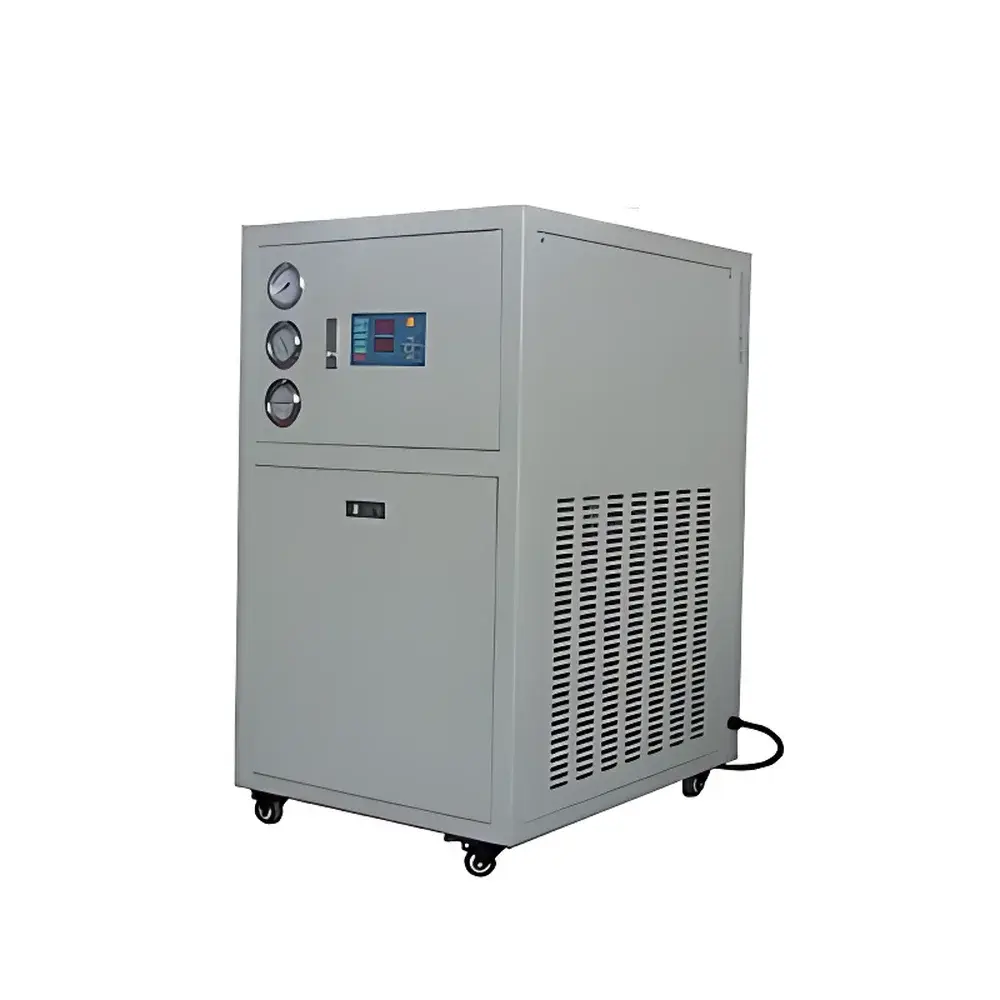
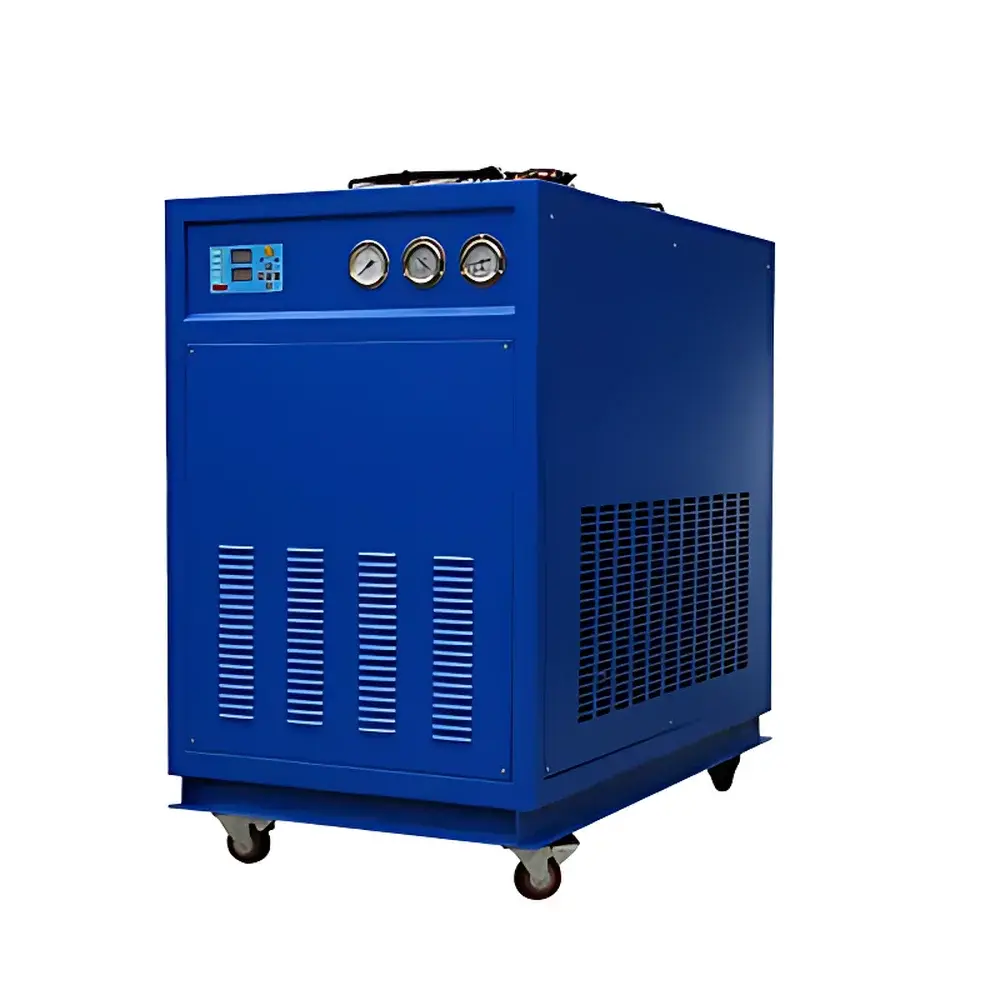
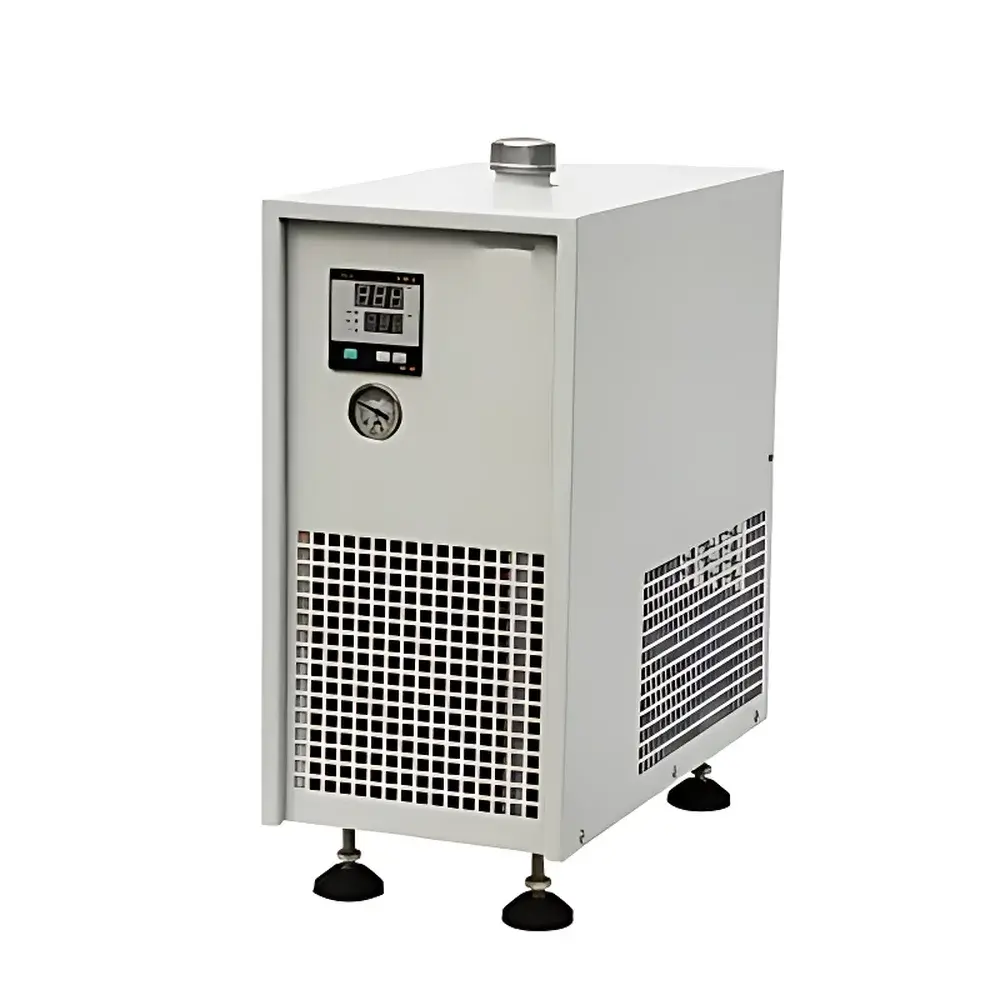
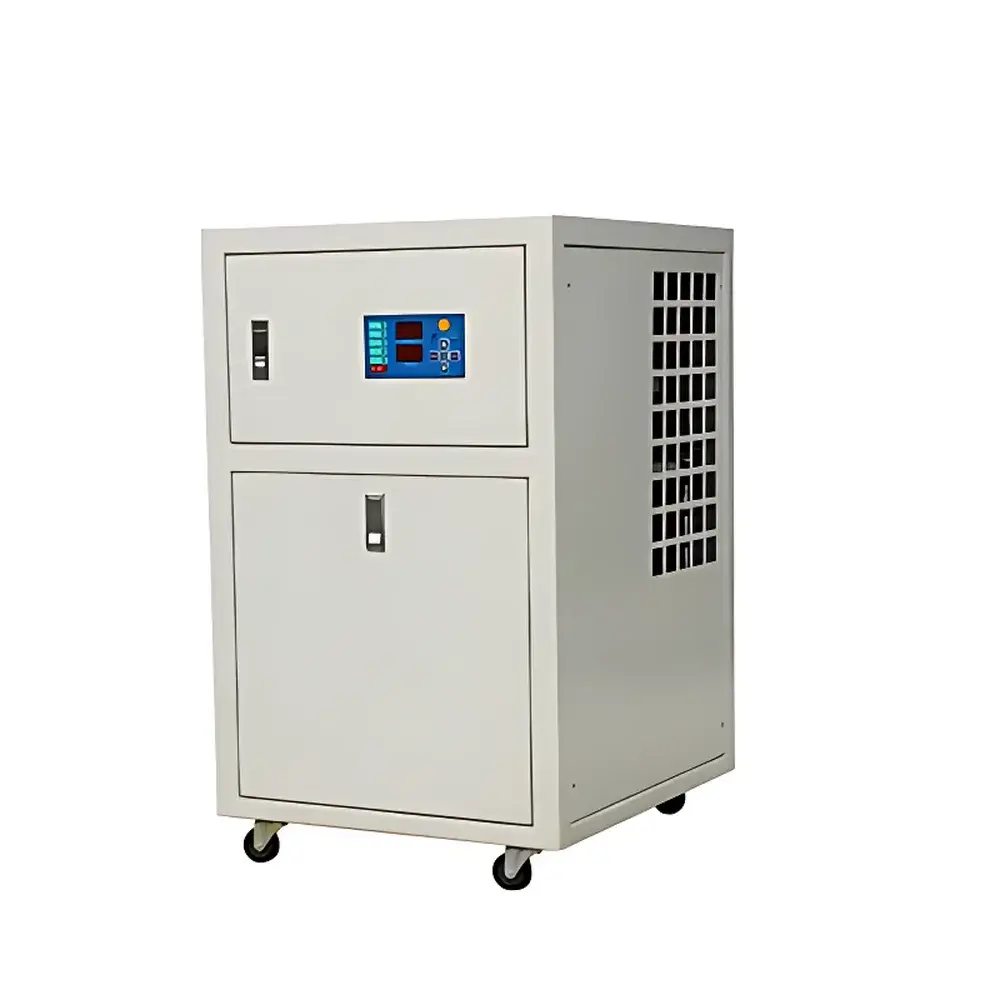
Tianfeng TF-LS-4000W Integrated Circulating Chiller
| Brand | Tianfeng |
|---|---|
| Origin | Shanghai, China |
| Manufacturer Type | Direct Manufacturer |
| Instrument Type | Integrated Unit |
| Cooling Method | Water-Cooled |
| Temperature Control Range | 0–40 °C |
| Refrigeration Capacity | 300–9000 W |
| Temperature Stability | ±0.1 °C |
| Circulation Pump Pressure | 2.0 bar |
| Circulation Flow Rate | 38 L/min |
| Reservoir Volume | 5–550 L |
| Operation Mode | Continuous Duty |
Overview
The Tianfeng TF-LS-4000W Integrated Circulating Chiller is an engineered thermal management solution designed for precision temperature control in laboratory and industrial instrumentation environments. It operates on a closed-loop refrigeration cycle utilizing a high-efficiency scroll compressor, R410A or R134a refrigerant (model-dependent), and a PID-controlled liquid circulation system. The chiller maintains stable coolant temperatures by actively removing heat from process equipment—such as analytical instruments, laser sources, vacuum systems, and electron microscopy platforms—thereby preventing thermal drift, component degradation, and measurement instability. Its water-cooled architecture enables consistent performance under continuous operation, with minimal ambient heat rejection, making it especially suitable for temperature-sensitive applications where air-cooled units may introduce airflow turbulence or insufficient heat dissipation.
Key Features
- Integrated design with compact footprint (800 × 600 × 1065 mm) for flexible placement in laboratories and equipment rooms
- PID-based digital temperature controller with real-time LED display (±0.1 °C stability over 0–40 °C operating range)
- Stainless steel reservoir and pump housing ensure corrosion resistance and long-term fluid compatibility with deionized water, glycol-water mixtures, and low-conductivity coolants
- High-flow centrifugal circulation pump delivering up to 38 L/min at 2.0 bar pressure, supporting multi-instrument daisy-chaining with minimal pressure drop
- Comprehensive safety protection: compressor overheat shutdown, high/low refrigerant pressure cutoff, motor overcurrent detection, and outlet temperature over-limit alarm
- Energy-efficient scroll compressor with low acoustic emission (<65 dB(A) at 1 m), compliant with ISO 3744 noise measurement standards
- Modular electrical architecture using CE-certified components from Siemens, Schneider Electric, and Omron for reliability and electromagnetic compatibility (EMC)
- Optional configuration with RKC (Japan) temperature controller for enhanced traceability and GLP/GMP-aligned setpoint logging
Sample Compatibility & Compliance
The TF-LS-4000W is compatible with a broad spectrum of laboratory and analytical instruments requiring active cooling, including graphite furnace atomic absorption spectrometers (GFAAS), inductively coupled plasma optical emission spectrometers (ICP-OES), ICP-mass spectrometers (ICP-MS), X-ray fluorescence (XRF) and X-ray diffraction (XRD) systems, scanning electron microscopes (SEM), and transmission electron microscopes (TEM). Its flow and pressure specifications meet the inlet requirements of most OEM instrument cooling interfaces per ASTM E2913 (Standard Guide for Thermal Management of Analytical Instruments). The unit conforms to ISO 9001:2015 quality management system requirements and incorporates safety features aligned with IEC 61000-6-2 (immunity) and IEC 61000-6-4 (emissions). Optional audit-trail-capable controllers support compliance with FDA 21 CFR Part 11 when integrated into validated laboratory workflows.
Software & Data Management
While the base model operates via front-panel controls, optional RS485/Modbus RTU or Ethernet/IP communication interfaces enable integration into centralized facility monitoring systems (e.g., LabVantage, Thermo Fisher SampleManager, or custom SCADA). Data logging functionality—when paired with external PLCs or PC-based acquisition software—supports time-stamped recording of outlet temperature, flow rate, compressor run time, and fault events. All firmware updates are performed via secure USB interface; no cloud connectivity is embedded, preserving network isolation for regulated environments. Configuration parameters—including setpoint hysteresis, pump ramp profiles, and alarm thresholds—are user-adjustable and retain settings after power cycling per IEC 60730 Class A requirements.
Applications
- Laboratory instrumentation: Stabilizing detector housings, RF generators, plasma torches, and X-ray tubes to minimize thermal expansion-induced signal noise
- Materials characterization: Maintaining constant sample stage temperatures during synchrotron beamline experiments or high-resolution thermal analysis
- Pharmaceutical QC: Supporting controlled-temperature dissolution testing apparatus (USP ) and HPLC column ovens
- Electronics R&D: Cooling high-power laser diodes, RF amplifiers, and semiconductor wafer probing stations
- Industrial metrology: Regulating temperature of coordinate measuring machine (CMM) granite bases and laser interferometer enclosures per ISO 10360-2
- Vacuum system support: Condensing outgassed vapors in diffusion pumps and cryopanels via chilled water jackets
FAQ
What is the maximum allowable return water temperature for continuous operation?
For optimal compressor longevity and refrigeration efficiency, the return coolant temperature should not exceed 40 °C. Sustained inlet temperatures above this threshold increase condensing pressure and reduce system COP.
Can this chiller be used with glycol-based coolant mixtures?
Yes—the stainless steel wetted parts and EPDM seals are compatible with aqueous solutions containing up to 35% propylene glycol. Viscosity and heat capacity corrections must be applied when calculating effective cooling capacity.
Is remote monitoring supported out of the box?
Standard configuration includes local control only. RS485 Modbus RTU or Ethernet/IP modules are available as factory-installed options for integration with building management systems (BMS) or LIMS.
Does the unit comply with electromagnetic compatibility (EMC) directives for laboratory use?
Yes—certified to IEC 61326-1:2013 for laboratory equipment, including immunity to electrostatic discharge (IEC 61000-4-2), radiated RF fields (IEC 61000-4-3), and fast transients (IEC 61000-4-4).
What maintenance intervals are recommended for uninterrupted service?
Filter-drier replacement every 24 months; refrigerant charge verification and oil analysis every 36 months; annual inspection of pump impeller clearance and electrical contact integrity per manufacturer’s service manual.



