
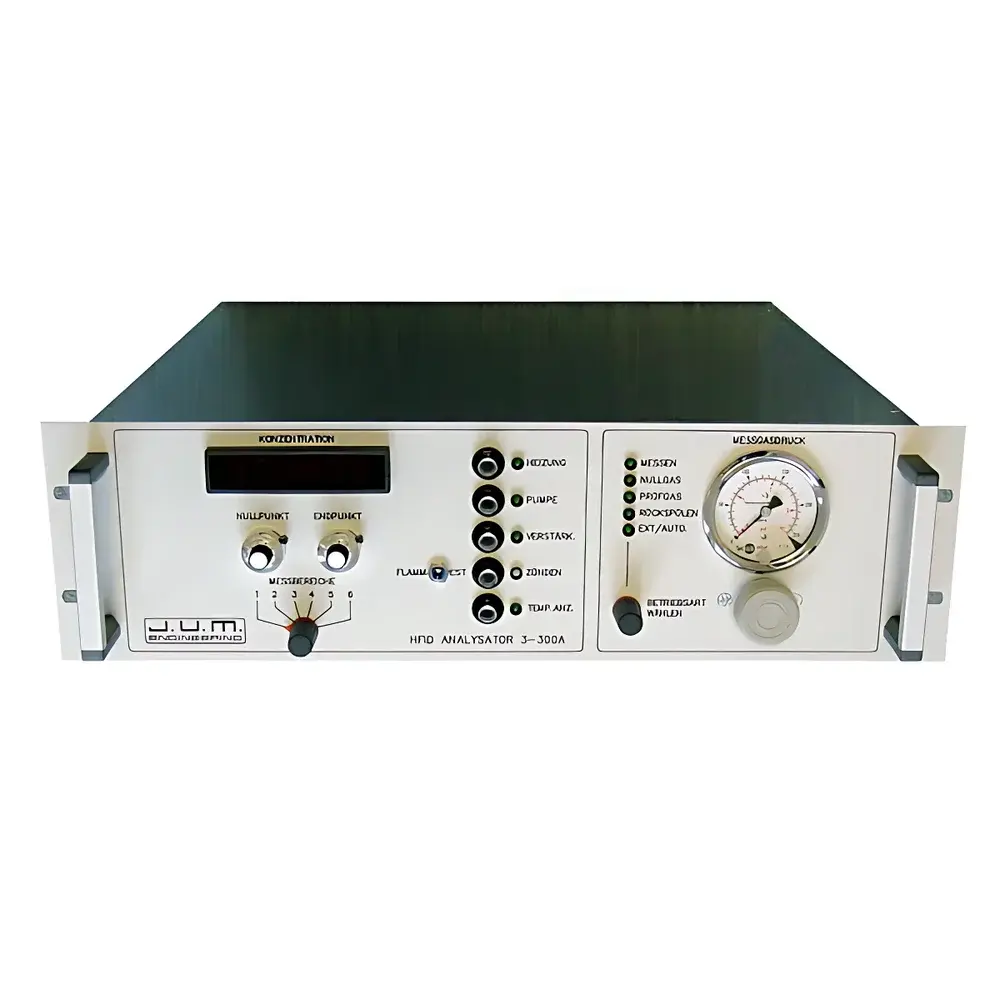
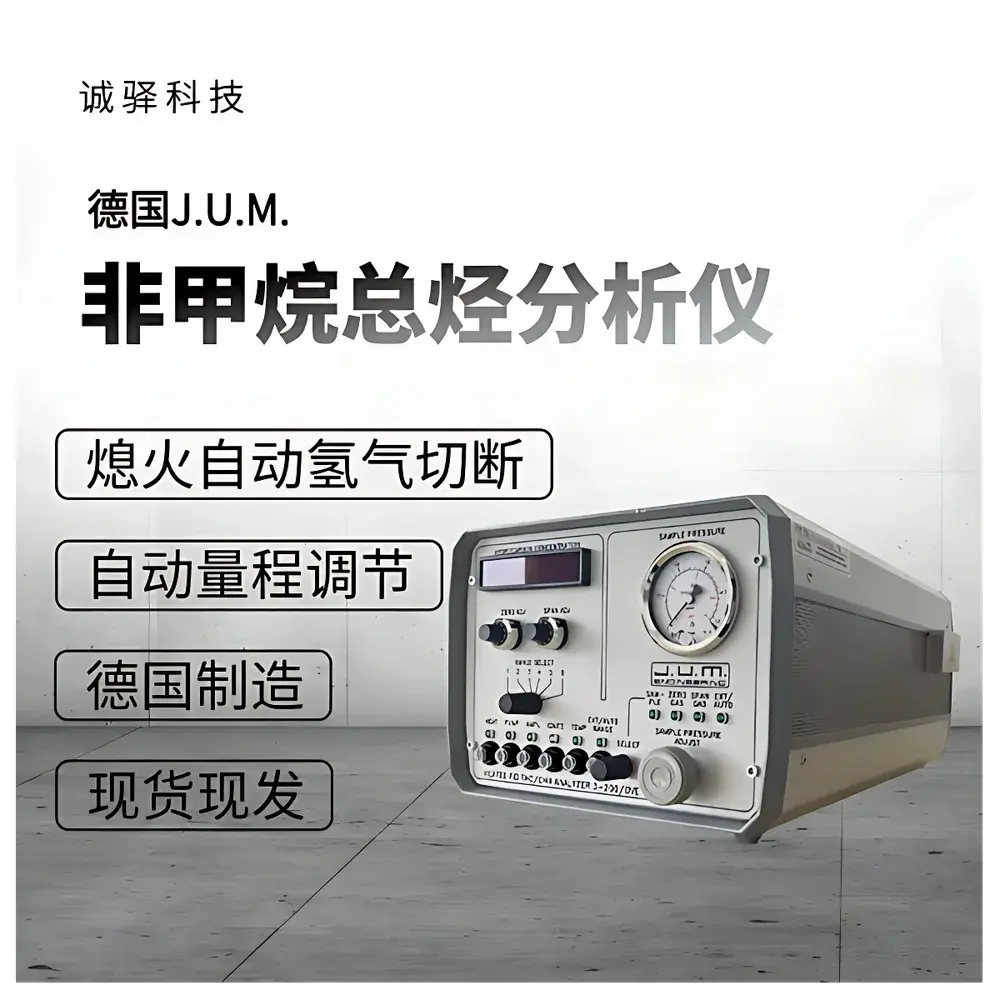
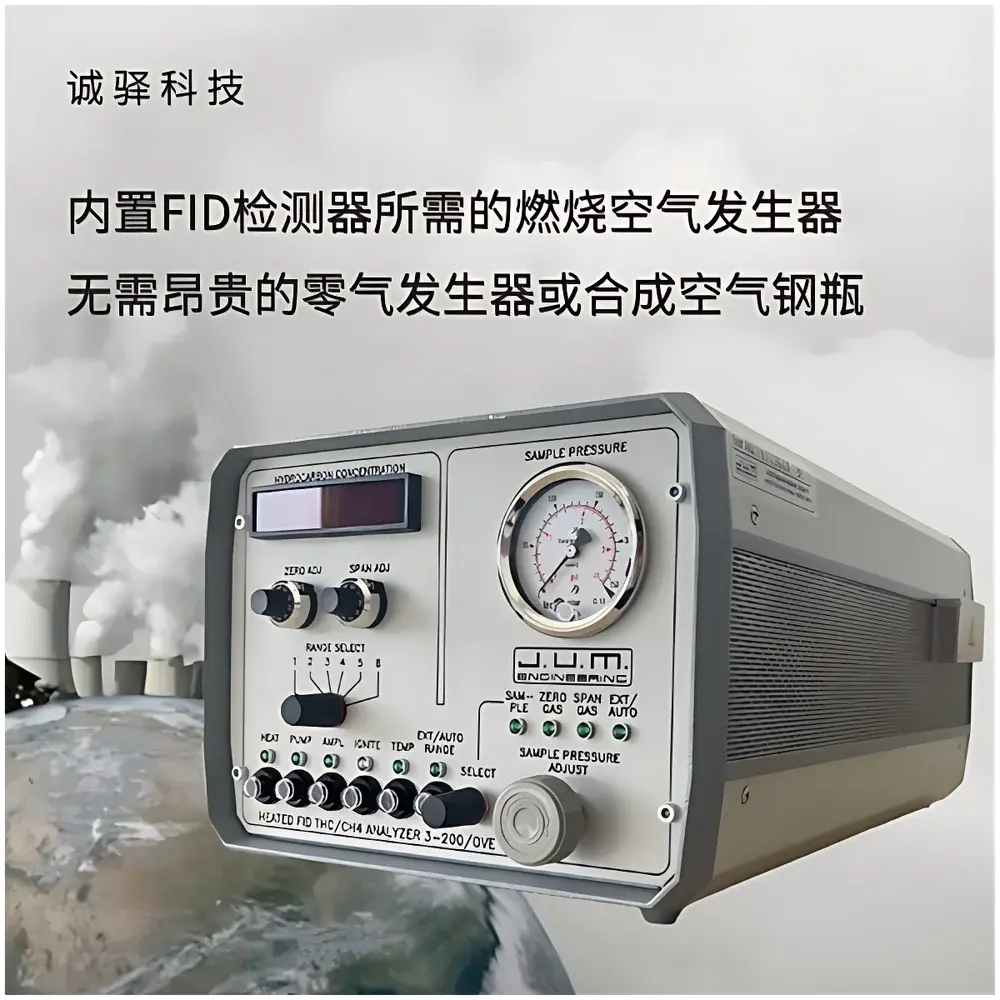
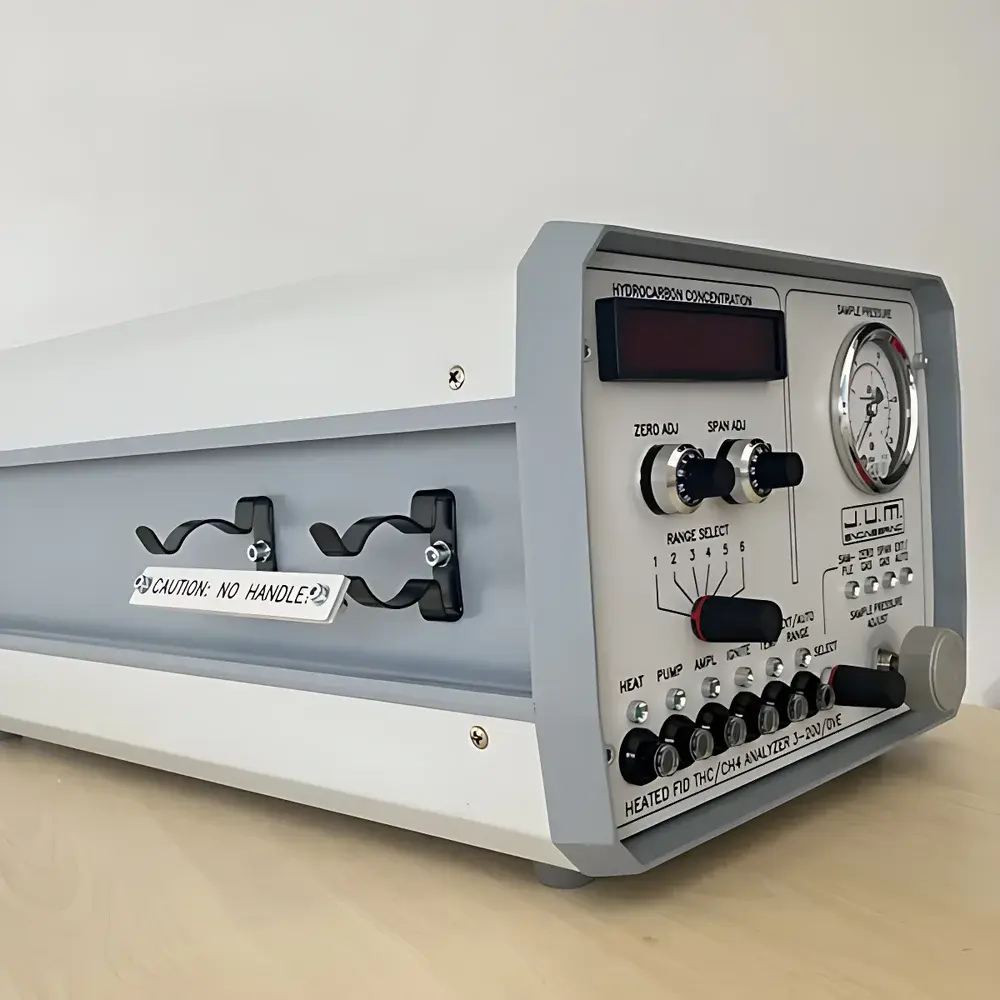
J.U.M. 3-200 Online Total Volatile Organic Compounds (TVOC) Analyzer
| Brand | CHINYEE |
|---|---|
| Origin | Germany |
| Manufacturer Type | Authorized Distributor |
| Origin Category | Imported |
| Model | 3-200-3 |
| Instrument Type | Online Analyzer |
| Typical Configuration | TVOC Analyzer |
| Measurement Range | 0–1000 ppm |
| Resolution | 0.1 ppm |
| Accuracy | ±5% of reading |
| Response Time | <60 s |
Overview
The J.U.M. 3-200 Online Total Volatile Organic Compounds (TVOC) Analyzer is a robust, high-reliability continuous emission monitoring system engineered for real-time quantification of non-methane hydrocarbons and total VOCs in industrial exhaust streams, ambient air, and process gases. Based on flame ionization detection (FID) technology—recognized globally for its linear response, wide dynamic range, and compound-independent sensitivity—the instrument delivers trace-level hydrocarbon measurement with exceptional stability under varying environmental and operational conditions. Unlike catalytic or photoionization-based sensors, the FID principle ensures consistent detection across aliphatic, aromatic, and oxygenated VOCs without bias toward specific functional groups. The 3-200-3 variant integrates J.U.M.’s proprietary heated sample path architecture, maintaining all wetted components—including sampling line, filter, and detector chamber—at elevated temperature (up to 190 °C) to prevent condensation, adsorption, or catalytic loss of high-boiling-point compounds such as xylenes, styrene, or heavier aldehydes. This design directly supports compliance with stringent regulatory frameworks governing continuous emissions monitoring systems (CEMS), including German BImSchV ordinances and European EN standards.
Key Features
- FID-based detection with inherent linearity over six decades (0.1–100,000 ppm C1-equivalent), calibrated to methane or propane per user specification
- Fully heated sample train (up to 190 °C) minimizing wall losses and ensuring representative analysis of semi-volatile organics
- Integrated zero-air generator and catalytic scrubber for automatic baseline stabilization and drift compensation
- Automatic back-purge filtration system extending maintenance intervals and reducing downtime in dusty or particulate-laden gas streams
- Modular electronics architecture supporting dual-range analog outputs (4–20 mA) and digital communication via RS-485/Modbus RTU
- IP65-rated enclosure rated for outdoor installation with optional climate-controlled housing for extreme ambient conditions
Sample Compatibility & Compliance
The 3-200-3 accommodates sample matrices ranging from clean ambient air to hot, humid, and particulate-rich flue gases (up to 200 °C inlet temperature with optional cooling probe). It complies with EN 12619:2017 (performance requirements for automated measuring systems for gaseous emissions), EN 13526:2002 (quality assurance for continuous monitoring equipment), and EPA Method 25A for total hydrocarbon determination. Its design satisfies the technical prerequisites for certification under German 13. BImSchV (large combustion plants) and 17. BImSchV (waste incineration facilities), including mandatory data logging, audit trail capability, and calibration verification protocols. All firmware and configuration changes are timestamped and logged in accordance with GLP/GMP-aligned record-keeping practices, supporting FDA 21 CFR Part 11 readiness when deployed in regulated manufacturing environments.
Software & Data Management
The analyzer operates with J.U.M.’s proprietary EmissionControl™ software suite, accessible via secure web interface or local HMI. Real-time data acquisition includes raw FID current, corrected concentration values, calibration status, and diagnostic flags (e.g., flame failure, pressure drop, temperature deviation). Historical datasets are stored internally (≥30 days at 1-minute resolution) and exportable in CSV or XML format. Optional cloud integration enables remote diagnostics, predictive maintenance alerts, and centralized fleet monitoring across multiple installations. Audit logs capture all operator actions—including span/zero adjustments, calibration events, and parameter modifications—with user ID, timestamp, and pre/post-change values, fulfilling ISO 17025 traceability requirements.
Applications
- Continuous monitoring of VOC emissions from chemical reactors, solvent recovery units, and paint booths
- Real-time tracking of hydrocarbon breakthrough in activated carbon beds and thermal oxidizer efficiency verification
- Process safety applications: LEL (lower explosive limit) surveillance in solvent-handling areas and inerting systems
- Environmental compliance reporting for waste-to-energy plants, municipal incinerators, and coating operations
- Research-grade quantification of trace hydrocarbons in ultra-high-purity gases used in semiconductor fabrication
- Engine test cell exhaust characterization during catalyst development and aftertreatment system validation
FAQ
What calibration gases are required for routine operation?
Certified methane-in-nitrogen or propane-in-air standards (traceable to NIST or PTB) at two concentrations—one near zero (e.g., 10 ppm) and one within the upper third of the selected range (e.g., 800 ppm)—are recommended for daily verification.
Can the 3-200-3 measure individual VOC species?
No. As a total hydrocarbon analyzer, it reports sum-concentration in ppm C1-equivalent. For speciated analysis, coupling with GC-FID or GC-MS instrumentation is required.
Is external sample conditioning necessary?
Not typically—the integrated heated sampling system eliminates need for external chillers or dilution units; however, a particulate pre-filter (e.g., sintered metal or ceramic) is advised upstream of the inlet for high-dust applications.
How often does the FID require maintenance?
Under normal operation, the jet and collector electrode require cleaning every 3–6 months; burner air filter replacement is recommended quarterly.
Does the system support remote firmware updates?
Yes—via secure HTTPS connection using signed firmware packages, with rollback capability and integrity verification prior to installation.







