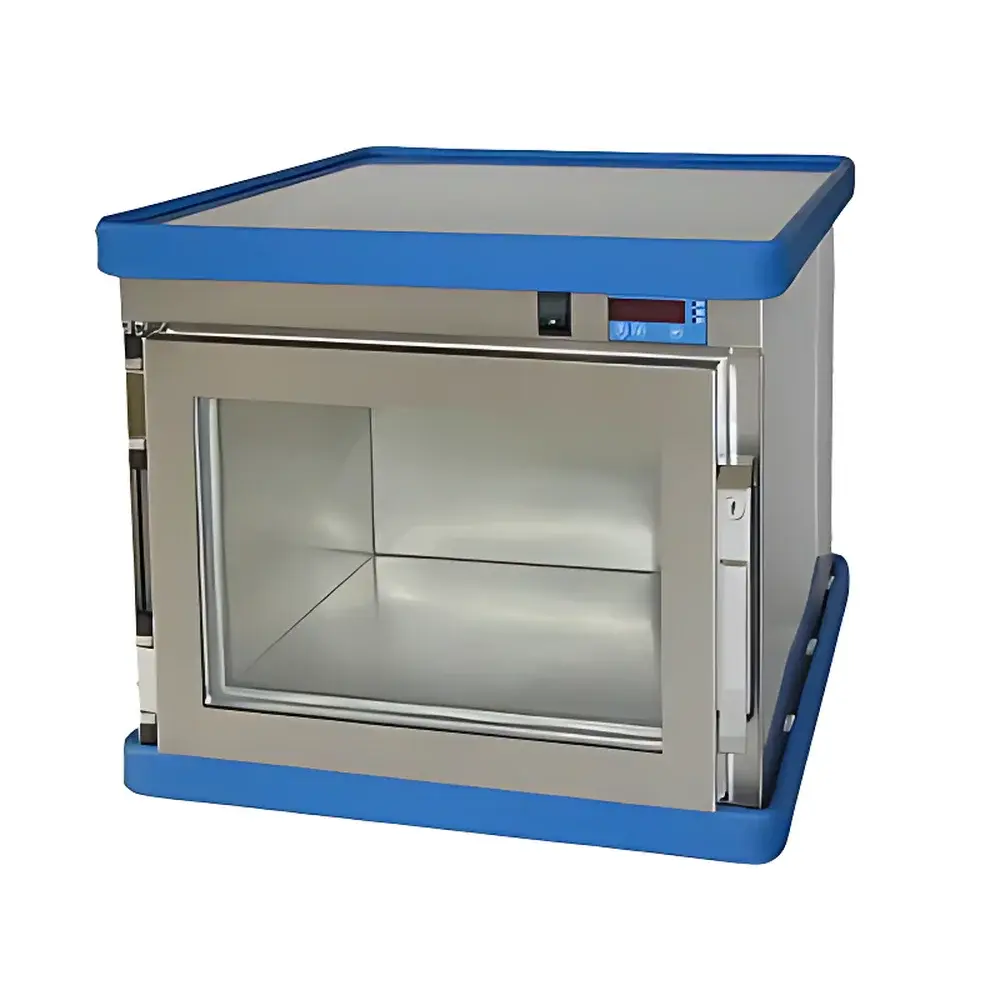
FRYKA B30-20 Compact Benchtop Refrigerated Cabinet
| Brand | FRYKA |
|---|---|
| Origin | Germany |
| Model | B30-20 |
| Temperature Range | –20 °C to +10 °C |
| Control Accuracy | ±1 °C |
| Net Capacity | 30 L |
| Internal Dimensions (W×D×H) | 360 × 350 × 230 mm |
| External Dimensions (W×D×H) | 530 × 700 × 460 mm |
| Weight | 45 kg |
| Ambient Operating Temperature | +12 °C to +30 °C |
| Power Supply | 230 V / 50 Hz |
Overview
The FRYKA B30-20 is a compact, benchtop refrigerated cabinet engineered for precise, stable temperature control in life science laboratories where space efficiency and operational reliability are critical. Designed and manufactured in Germany, this unit operates within a regulated range of –20 °C to +10 °C—making it suitable for cold storage of reagents, enzymes, cell culture media, primary antibodies, and other thermolabile biological materials requiring stabilization above ultra-low temperatures but below standard room conditions. Its forced-air, fully sealed cooling system ensures uniform temperature distribution across the entire chamber with minimal thermal gradients (< ±0.8 °C at setpoint), while eliminating condensation buildup and reducing long-term maintenance requirements. Unlike compressor-based ultra-low freezers, the B30-20 employs an optimized vapor-compression cycle with environmentally compliant refrigerant (R290 or R600a, depending on production batch), aligned with EU F-Gas Regulation (EU) No 517/2014.
Key Features
- Microprocessor-controlled digital thermostat with LED display and intuitive membrane keypad interface for precise setpoint adjustment and real-time monitoring.
- Transparent double-glazed tempered glass door with anti-fog coating and magnetic seal—enabling visual sample verification without opening, minimizing thermal load and energy consumption.
- Full stainless-steel interior and exterior construction (AISI 304 grade), corrosion-resistant and compatible with routine laboratory disinfection protocols (e.g., 70% ethanol, quaternary ammonium compounds).
- Integrated impact-absorbing bumper strips along top and bottom edges—enhancing durability during installation, relocation, or high-traffic lab environments.
- Stackable design: Up to three B30-20 units may be vertically configured using optional support brackets (sold separately), optimizing footprint in modular lab layouts without compromising airflow or safety clearance.
- Low-noise operation (<42 dB(A) at 1 m), achieved via acoustic insulation and brushless DC fan motor—ideal for placement in shared workspaces, cleanrooms, or near sensitive instrumentation.
Sample Compatibility & Compliance
The B30-20 supports storage of diverse biological and chemical samples including but not limited to: lyophilized proteins, PCR master mixes, restriction enzymes, RNA extraction kits, and short-term tissue specimens. Its temperature stability and uniformity meet performance criteria referenced in ISO 15197:2013 (in vitro diagnostic devices) and ASTM E2887–22 (standard practice for qualification of refrigerated cabinets). While not certified as a medical device under MDR 2017/745, the unit complies with IEC 61010-1:2010 for electrical safety in laboratory equipment and carries CE marking per EU Directive 2014/35/EU (LVD) and 2014/30/EU (EMC). It is validated for use in GLP-compliant environments when integrated into documented storage SOPs—including periodic temperature mapping and alarm log review.
Software & Data Management
The B30-20 operates as a standalone instrument with no embedded connectivity or cloud interface. However, its analog voltage output (0–10 V) for internal temperature signal enables integration with third-party building management systems (BMS) or centralized environmental monitoring platforms (e.g., SensiLog, TempTale, or custom LabVIEW DAQ configurations). Optional external data loggers (e.g., Testo 177-T4) can be deployed for continuous validation per FDA 21 CFR Part 11 requirements when paired with audit-trail-enabled software. All firmware updates—distributed exclusively through authorized FRYKA service partners—are performed locally via USB port and require technician-level access credentials.
Applications
- Short-to-medium term storage of clinical diagnostics reagents in hospital core labs.
- Temperature-controlled staging zone for samples prior to cryopreservation or downstream analysis (e.g., HPLC injection, ELISA plate preparation).
- Dedicated holding cabinet for quality control standards in pharmaceutical QC laboratories operating under ICH Q5C stability guidelines.
- Backup cold storage for biosafety level 2 (BSL-2) containment areas where redundancy is required alongside primary ultra-low freezers.
- Field-deployable cold unit for mobile research units or satellite testing sites with limited infrastructure—leveraging its 230 V/50 Hz compatibility and low power draw (~120 W average).
FAQ
Is the B30-20 suitable for storing frozen cell pellets at –20 °C?
Yes—its verified operating range includes –20 °C with ±1 °C control accuracy and <±0.8 °C chamber uniformity, meeting common requirements for non-cryogenic biomaterial storage.
Can the unit be installed under a laboratory counter?
No—minimum rear clearance of 100 mm and side clearance of 50 mm are required for heat dissipation; the B30-20 is designed for freestanding benchtop use only.
Does FRYKA provide IQ/OQ documentation packages?
Yes—validated qualification protocols (including Installation Qualification, Operational Qualification, and Performance Qualification templates) are available upon request through authorized distributors and include test procedures aligned with ISO/IEC 17025 and GAMP 5 principles.
What is the expected service life under continuous operation?
Based on accelerated lifecycle testing and field data from European academic institutions, mean time between failures (MTBF) exceeds 25,000 hours when operated within specified ambient conditions (+12 °C to +30 °C) and maintained per FRYKA’s biannual service schedule.
Is remote monitoring possible without third-party hardware?
No—the B30-20 does not feature built-in Ethernet, Wi-Fi, or Bluetooth; all monitoring must be conducted locally or via externally interfaced data acquisition systems.