
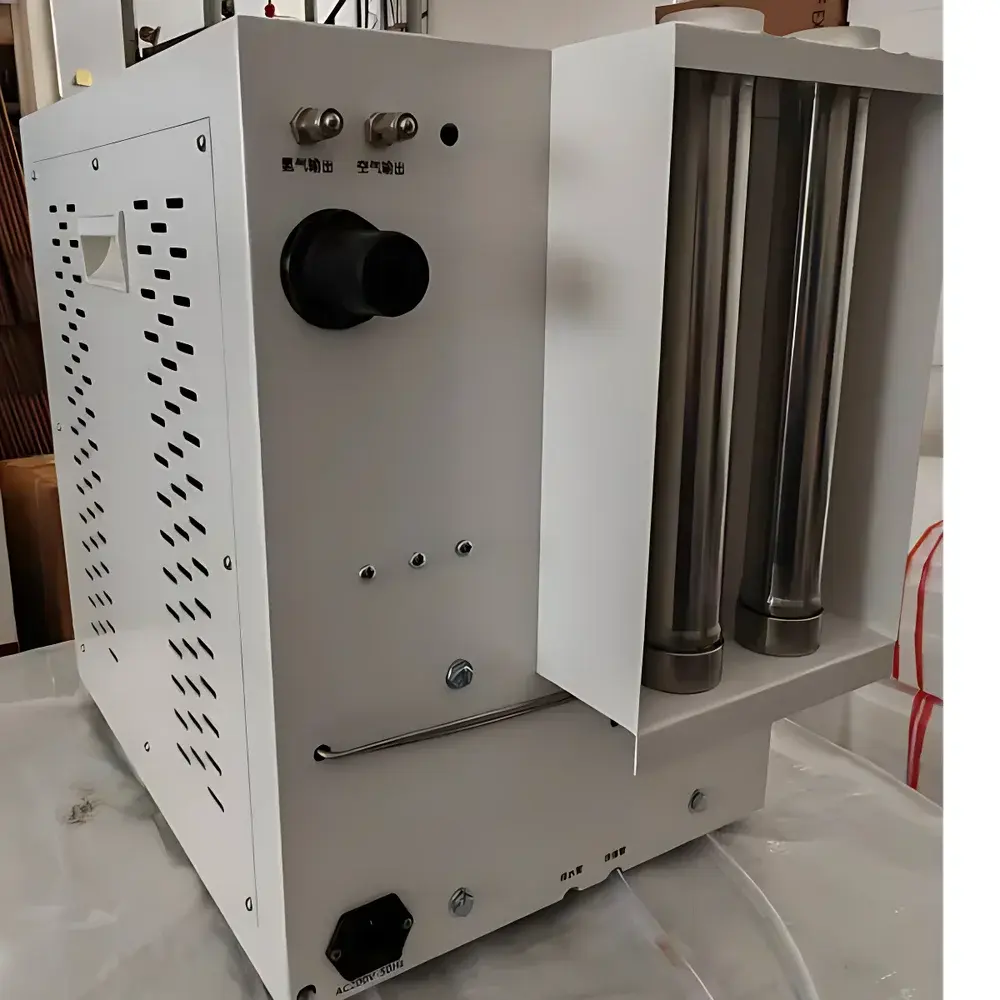
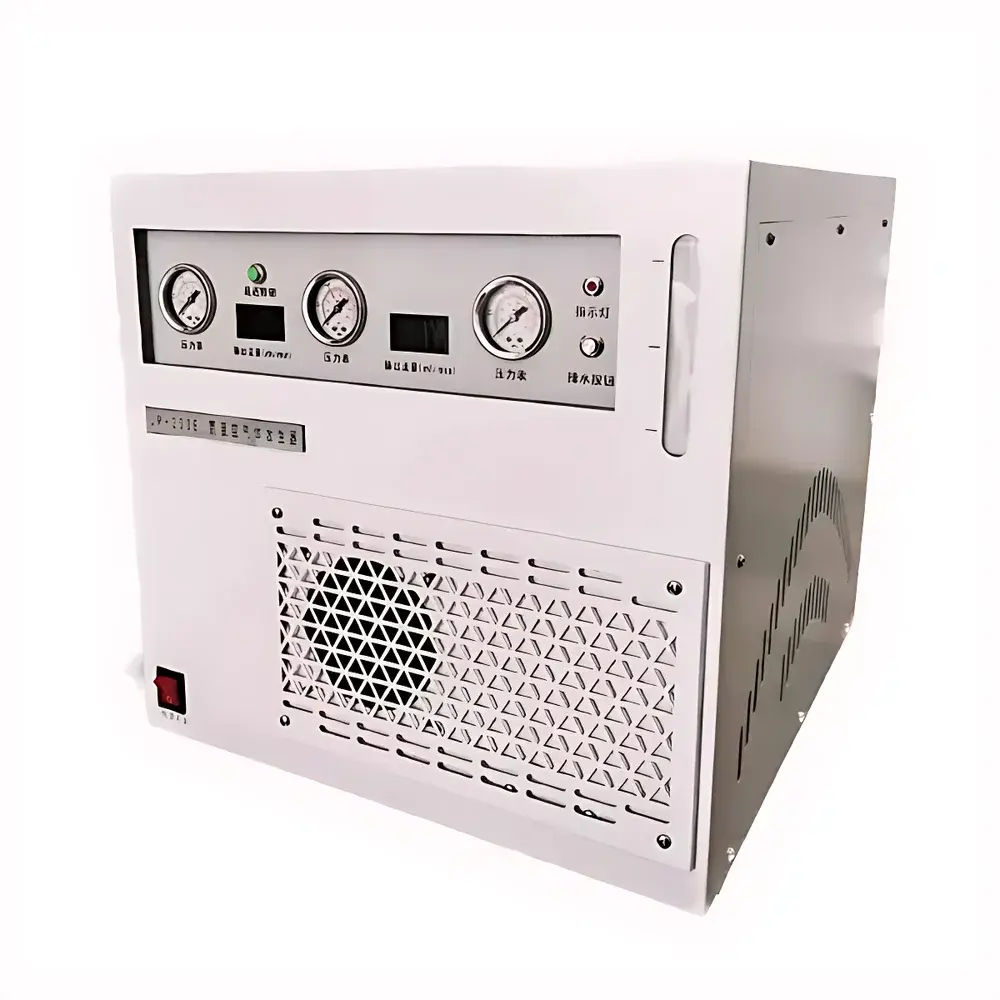
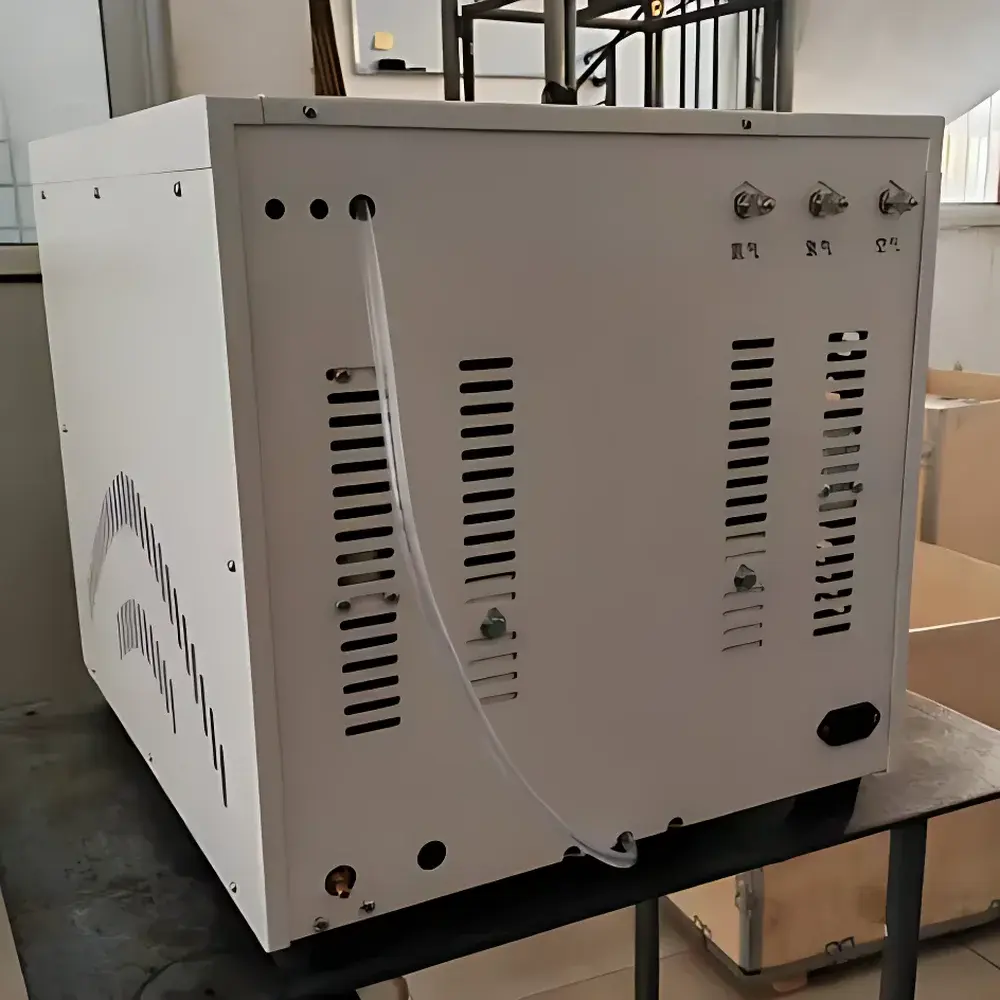
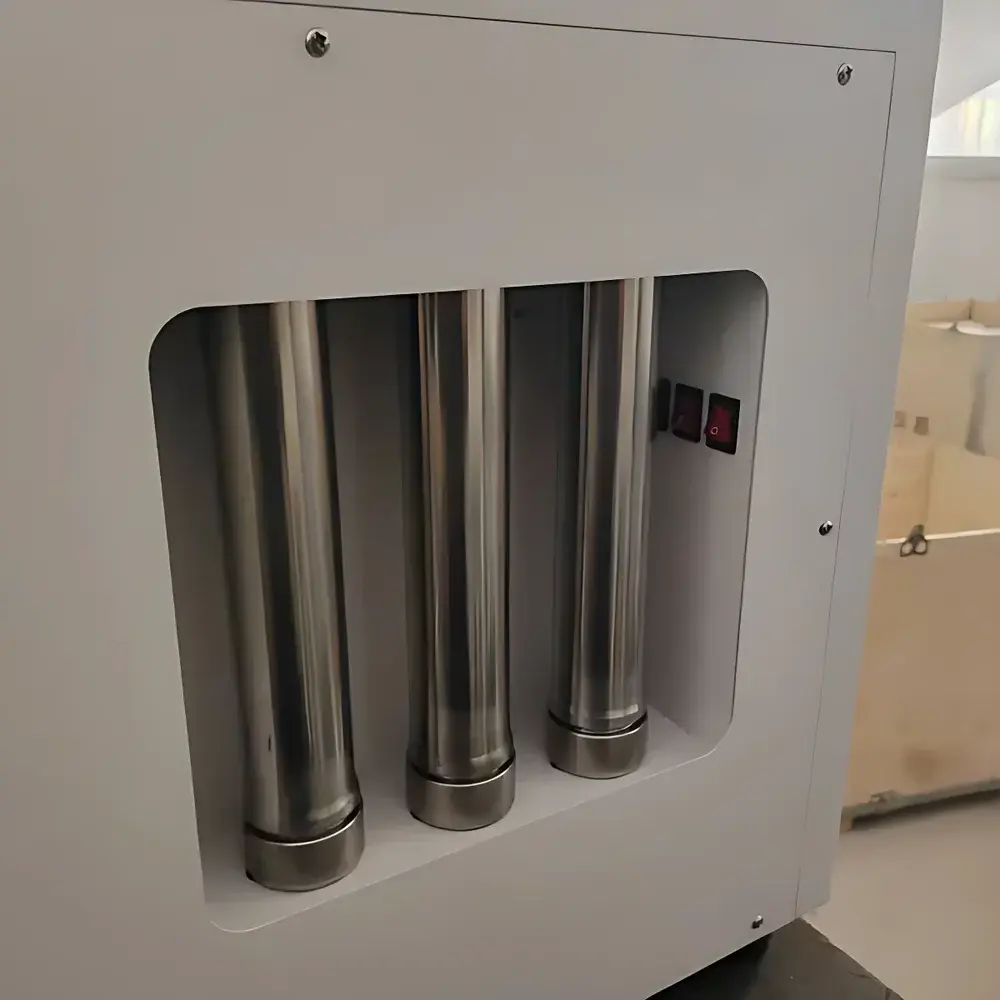
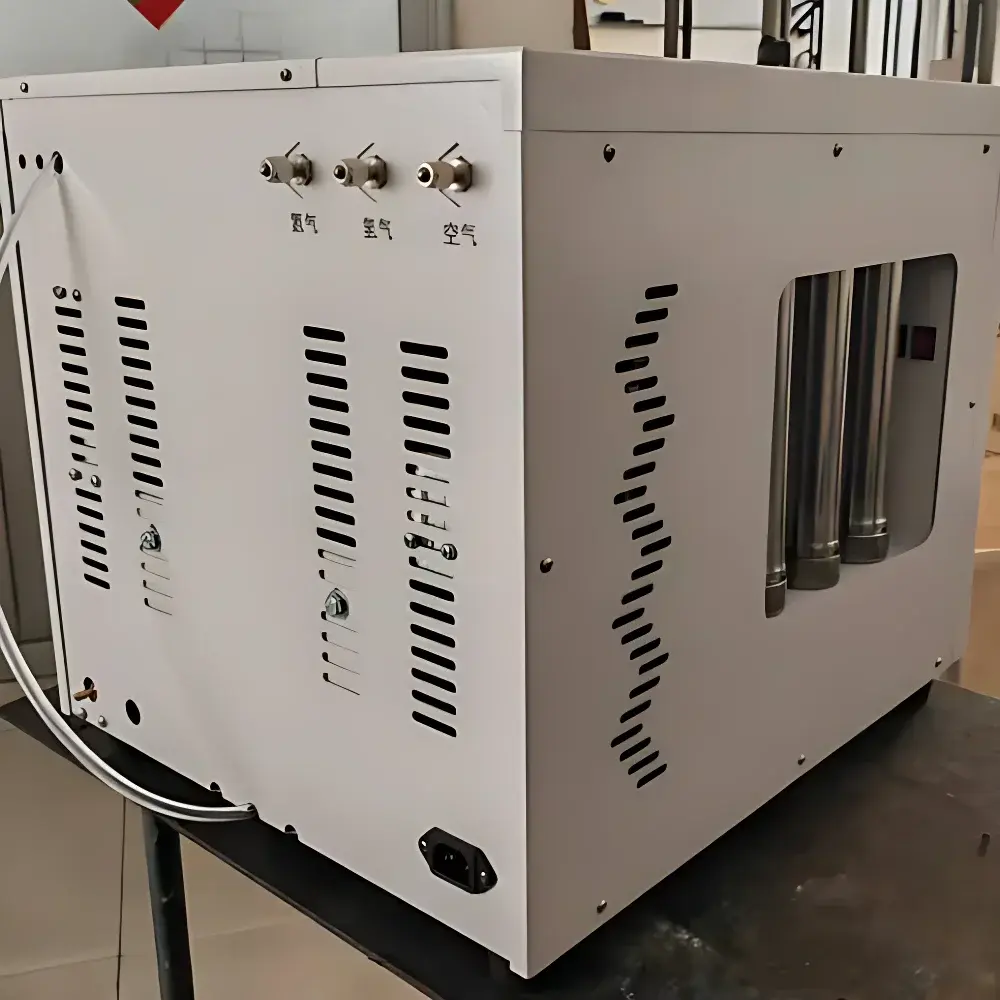
JP-300E Nitrogen-Hydrogen-Air Integrated Gas Generator
| Brand | Jinpu |
|---|---|
| Origin | Shandong, China |
| Model | JP-300E |
| Gas Purity | N₂ ≥ 99.999%, H₂ ≥ 99.99995%, Air (HC < 0.1 ppm) |
| Output Flow | N₂: 0–500 mL/min, H₂: 0–500 mL/min, Air: 0–5 L/min |
| Output Pressure | N₂/H₂: 0.3 MPa, Air: 0.4 MPa |
| Design | Integrated monolithic chassis |
| Power Supply | AC 220 V, 50 Hz |
| Max. Power Consumption | 550 W |
| Dimensions (L×W×H) | 480 × 420 × 480 mm |
| Weight | 45 kg |
| Operating Environment | 0–40 °C, RH < 85%, non-corrosive, low-dust ambient |
| Compliance | Designed for GLP-compliant GC laboratories |
Overview
The JP-300E Nitrogen-Hydrogen-Air Integrated Gas Generator is an engineered solution for laboratories requiring simultaneous, on-demand supply of high-purity carrier, fuel, and combustion-support gases for gas chromatography (GC) systems—particularly those equipped with Flame Ionization Detectors (FID), Thermal Conductivity Detectors (TCD), Electron Capture Detectors (ECD), and Flame Photometric Detectors (FPD). Unlike conventional cylinder-based gas delivery, this integrated generator employs three independent yet co-located gas production modules: a nitrogen generation system based on membrane-assisted pressure-swing purification following electrolytic oxygen removal; a hydrogen generation module utilizing a high-efficiency, low-temperature, tower-type alkaline electrolyzer with integrated oxygen venting and liquid storage; and an oil-free air compressor system coupled with triple-stage filtration (particulate → activated carbon → desiccant) and dual-stage pressure regulation. All subsystems operate under closed-loop pressure control with real-time digital monitoring of flow and pressure. The unit is designed for continuous, unattended operation in analytical laboratories complying with ISO/IEC 17025, USP , and FDA 21 CFR Part 11 requirements for instrument qualification and data integrity.
Key Features
- Integrated monolithic architecture eliminates inter-unit cabling, reduces footprint, and ensures synchronized startup/shutdown sequencing across all three gas streams.
- Nitrogen module achieves ≥99.999% purity (O₂ ≤ 1 ppm, H₂O ≤ 1 ppm) via multi-stage purification: electrolytic O₂ removal followed by catalytic recombination and ultra-high-efficiency membrane separation—eliminating the need for external nitrogen cylinders and resolving the “two-gas-one-bottle” workflow bottleneck.
- Hydrogen module employs a vertically oriented, large-surface-area alkaline electrolytic cell operating at <65 °C, delivering ≥99.99995% purity (O₂ ≤ 0.1 ppm, H₂O ≤ 0.5 ppm); includes anti-backflow check valves and integrated liquid-level safety cutoff to prevent electrolyte carryover into downstream GC lines.
- Air system features a brushless oil-free scroll compressor rated for >10,000 hours MTBF, followed by particulate filtration (0.01 µm), activated carbon adsorption (HC < 0.1 ppm), and desiccant drying (dew point ≤ –40 °C @ 0.4 MPa); pressure-regulated output maintains ±0.02 MPa stability under variable demand.
- Digital LED displays for N₂ and H₂ flow (derived from electrolysis current, calibrated per IEC 61000-4-30) provide real-time operational feedback; air status indicator confirms compression cycle completion and pressure stabilization.
- No consumable catalysts or replaceable membranes required during normal operation—only periodic replenishment of deionized water (every 6–8 weeks under continuous use) and scheduled replacement of silica gel (every ~1,000 h) and activated carbon (every ~1,000 h).
Sample Compatibility & Compliance
The JP-300E is compatible with all major GC platforms requiring ultra-high-purity N₂ (carrier), H₂ (fuel or make-up), and zero-grade air (oxidant for FID). It supports method transfer per ASTM D3612 (hydrocarbon analysis), EPA Method 8260 (VOCs), and ISO 10156 (gas compatibility testing). Its air output satisfies ISO 8573-1:2010 Class 1 for hydrocarbon content and Class 2 for particles and moisture—critical for trace-level detection. The generator’s pressure regulation, leak-tight construction (tested to 1.5× max operating pressure), and fail-safe shutdown logic (triggered by low electrolyte level, overpressure, or thermal overload) align with IEC 61010-1 safety standards. For regulated environments, audit trails can be maintained manually per GLP/GMP documentation practices; optional RS-232 interface enables integration with lab-wide asset management software.
Software & Data Management
The JP-300E operates as a standalone hardware platform without embedded firmware or cloud connectivity. All operational parameters—including runtime hours, electrolyte level status, pressure setpoints, and fault codes—are accessible via front-panel indicators and mechanical gauges. For compliance-driven labs, users are advised to log startup/shutdown events, water top-up dates, and consumable replacement records in a controlled electronic lab notebook (ELN) or paper-based logbook meeting ALCOA+ principles (Attributable, Legible, Contemporaneous, Original, Accurate, Complete, Consistent, Enduring, Available). While no proprietary software is provided, the unit’s stable analog outputs and predictable maintenance intervals support routine IQ/OQ/PQ validation per GAMP 5 guidelines.
Applications
- Routine QC/QA analysis in pharmaceutical, environmental, petrochemical, and food testing laboratories using GC-FID for residual solvent quantification (ICH Q2(R2)), pesticide screening (AOAC 2007.01), or fatty acid profiling (AOCS Ce 1h-05).
- Research applications requiring long-duration GC runs (e.g., metabolomics, polymer characterization) where cylinder changeovers introduce downtime and contamination risk.
- Multi-instrument labs deploying centralized gas supply to ≥3 GC systems via passive manifold distribution (recommended maximum line length: 15 m per gas stream, 1/8″ OD stainless steel tubing).
- Mobile or field-deployable GC setups where weight, footprint, and transport safety (no high-pressure cylinders) are critical constraints.
- Teaching laboratories seeking a safe, transparent demonstration platform for gas generation principles—electrolysis stoichiometry, membrane permeation selectivity, and adsorption kinetics.
FAQ
What is the expected service life of the electrolyzer stack?
Under continuous operation at rated load and proper maintenance (deionized water replenishment every 6–8 weeks), the alkaline electrolyzer is rated for ≥5,000 operational hours before performance degradation exceeds ±5% of nominal H₂ output.
Can the JP-300E supply multiple GC instruments simultaneously?
Yes—when configured with appropriate pressure-rated stainless steel manifolds and flow restrictors, it can serve up to three GC systems (e.g., two FID-equipped units + one TCD unit) without compromising purity or pressure stability.
Is the nitrogen output suitable for LC-MS applications?
No—this unit is optimized for GC carrier gas requirements (≤1 ppm O₂). LC-MS-grade nitrogen requires ≤10 ppb O₂ and is typically supplied via cryogenic or PSA systems with additional polishing stages.
How often must the silica gel and activated carbon be replaced?
Silica gel should be regenerated or replaced when ≥66% of the bed exhibits color transition (blue → pink); activated carbon requires replacement every 1,000 hours of compressor runtime or annually—whichever occurs first.
Does the unit require annual calibration?
No formal calibration is mandated; however, users performing GxP work must verify flow accuracy annually using a NIST-traceable wet-test meter (e.g., Brooks 5850E) and document results per internal SOPs.



